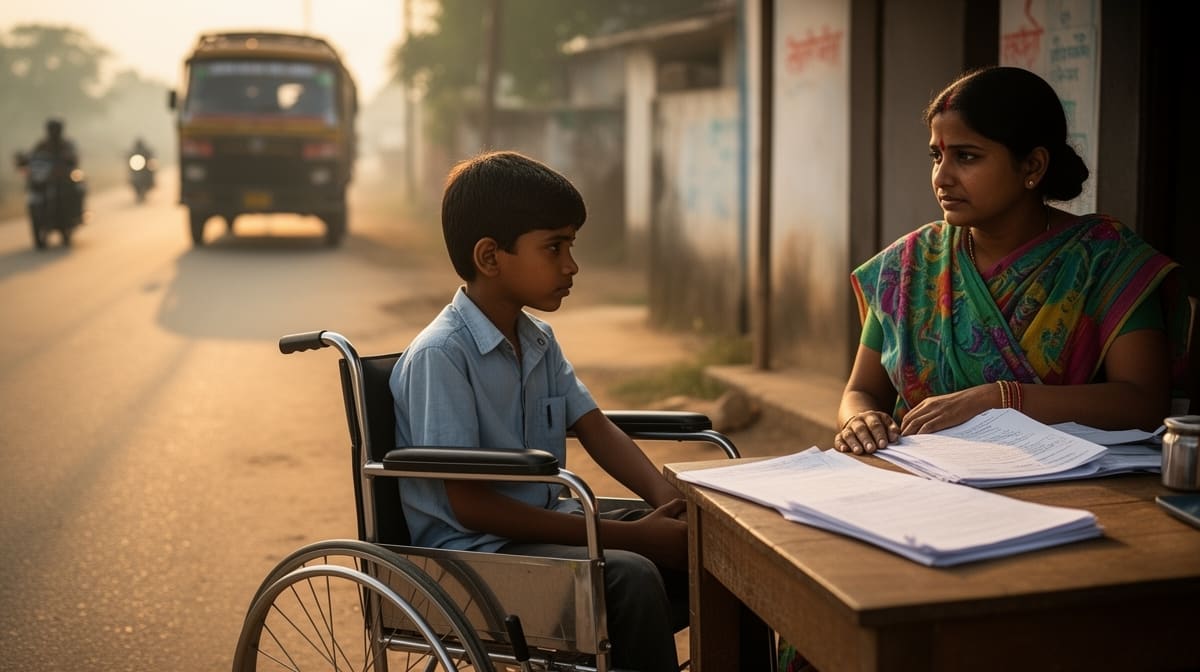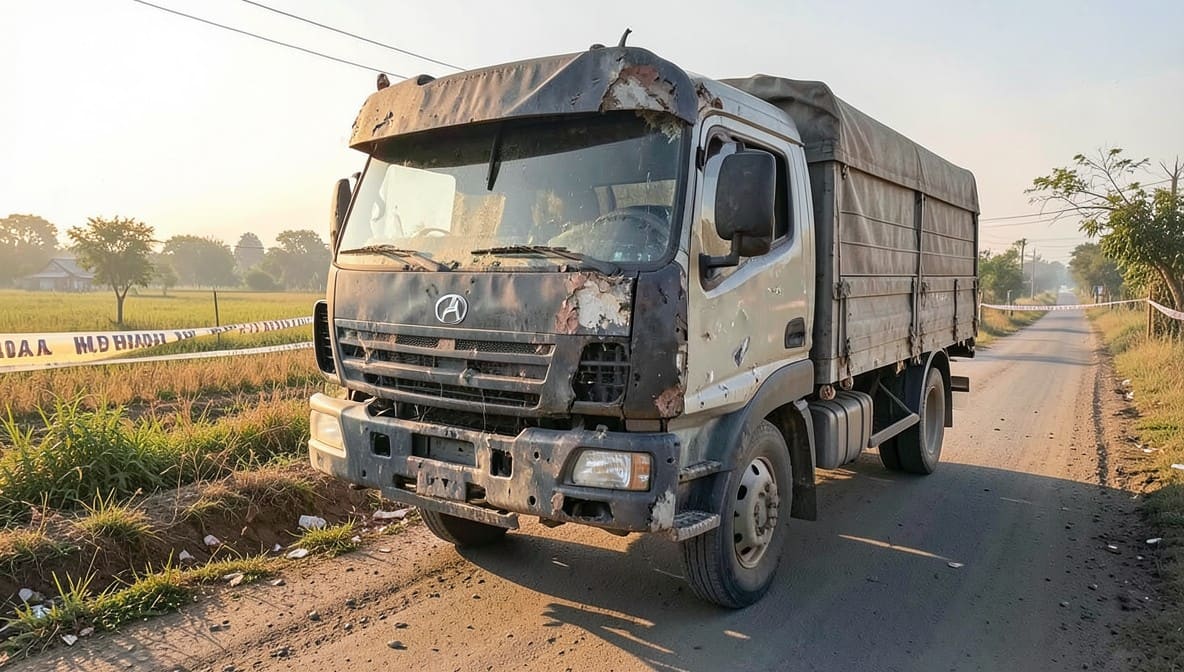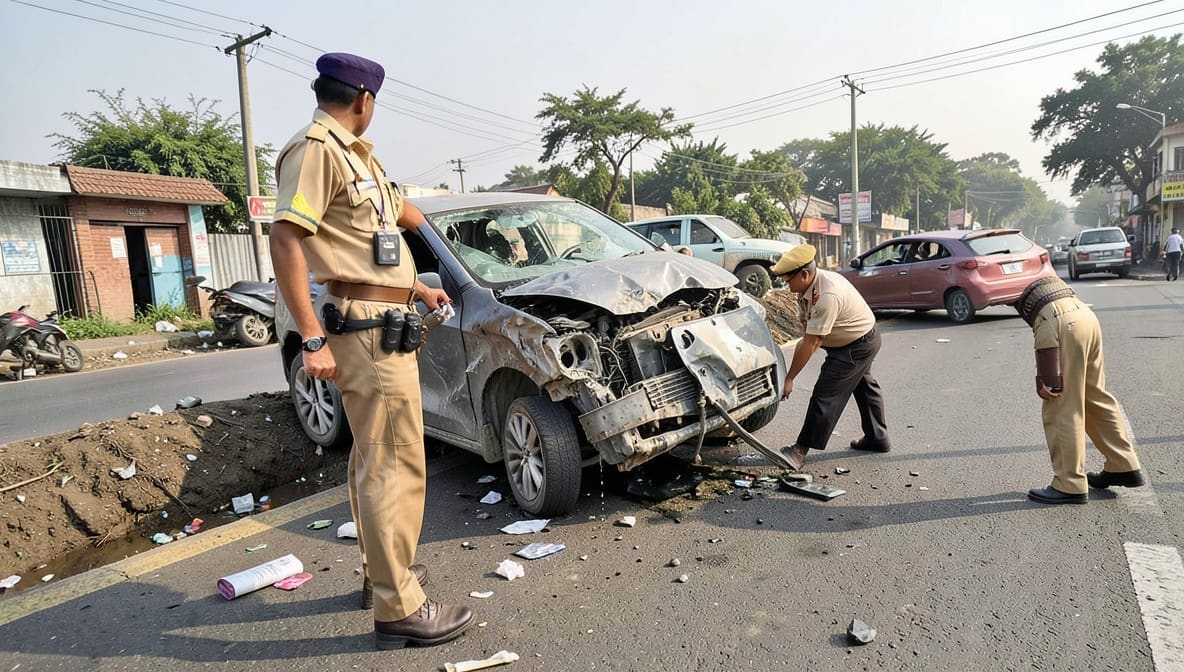
The Chhattisgarh High Court has clarified that an insurer cannot evade statutory liability to third-party victims in a motor accident merely because the offending vehicle lacked a valid fitness certificate. While the insurer is exonerated from direct liability to the owner, it must first pay compensation to the deceased’s dependents and then recover the amount from the owner and driver. The judgment also recalibrates income assessment and future prospects for self-employed victims under the Motor Vehicles Act.
Background & Facts
The Dispute
This case arises from a fatal motor accident that occurred on 11.12.2013 on the Ahivara - Kumhari Road in District Durg, Chhattisgarh. Two individuals - Ajay Kumar Yadav (aged 28) and Shyamlal Yadav (aged 17) - were riding bicycles on the left side of the road when they were struck by a motor vehicle bearing registration No. CG-08-B-1403. The vehicle, driven by Nandlal Sahu and owned by Tribhuvan Pandey, was insured with National Insurance Company Limited. Both victims sustained fatal injuries and were declared dead at the District Hospital, Durg.
Key Facts
- The offending vehicle was a transport vehicle used for commercial purposes.
- The driver, Nandlal Sahu, was employed as a driver and the owner, Tribhuvan Pandey, was the registered owner.
- The vehicle was insured under a third-party liability policy with National Insurance Company Limited.
- The claimants included the widows, children, and parents of both deceased persons.
- The claimants filed two separate claims before the Motor Accident Claims Tribunal: Claim Case No. 76/2015 (for Ajay Kumar Yadav) and Claim Case No. 77/2015 (for Shyamlal Yadav).
- The claimants alleged that the deceased were masons and dairy workers, earning Rs. 7,500/- and Rs. 6,000/- per month respectively, but produced no documentary evidence to substantiate these claims.
- The fitness certificate of the offending vehicle was valid from 15.11.2011 to 14.11.2012, then from 07.12.2012 to 06.12.2013, and again from 16.12.2013 to 15.12.2014. The accident occurred on 11.12.2013, during a gap between two valid periods.
- The RTO official, Hitesh Rao, confirmed via computerized records (Ex.D-1 and Ex.D-2) that no valid fitness certificate was in force on the date of the accident.
Procedural History
- 11.12.2013: Fatal accident occurred.
- 2015: Claim petitions filed before the 2nd Additional Motor Accident Claims Tribunal, Durg.
- 31.08.2016: Tribunal awarded Rs. 11,97,648/- to claimants of Ajay Kumar Yadav and Rs. 8,14,000/- to claimants of Shyamlal Yadav, both with 6% interest from date of filing.
- 2016: National Insurance Company Limited filed MAC No. 1608/2016 and MAC No. 1609/2016 challenging the award.
- 2017: Claimants filed MAC No. 379/2017 and MAC No. 380/2017 seeking enhancement of compensation.
- 20.03.2026: Judgment delivered by the Chhattisgarh High Court.
The Parties' Positions
Claimants (Appellants in MAC No. 379/2017 & 380/2017):
- Argued that the Tribunal undervalued the monthly income of the deceased.
- Contended that the Tribunal erred in awarding 50% future prospects instead of 40%.
- Sought enhancement of conventional heads (loss of estate, funeral expenses, consortium).
Insurance Company (Appellant in MAC No. 1608/2016 & 1609/2016):
- Argued that the vehicle lacked a valid fitness certificate on the date of accident, constituting a fundamental breach of policy terms.
- Relied on Sarla Verma, Pranay Sethi, and Aadesh v. Satarupa Bai to contend that insurer should be absolved of liability.
- Sought to overturn the Tribunal’s finding that insurer remains liable despite absence of fitness certificate.
Relief Sought
- Claimants sought enhancement of compensation to reflect actual income and higher future prospects.
- Insurance Company sought to be discharged from liability on grounds of policy breach.
- Both parties sought clarification on the applicability of statutory liability under the Motor Vehicles Act.
The Legal Issue
The central question was whether an insurer can be held liable to pay compensation to third-party victims under the Motor Vehicles Act when the offending vehicle lacked a valid fitness certificate at the time of the accident, and whether the Tribunal erred in assessing income and applying future prospects at 50% for deceased self-employed persons below 40 years of age.
Arguments Presented
For the Appellant/Petitioner (Insurance Company)
The insurer relied on Sarla Verma v. Delhi Transport Corporation and National Insurance Co. Ltd. v. Pranay Sethi to argue that absence of a fitness certificate constitutes a fundamental breach of policy conditions under Section 56 and Section 39 of the Motor Vehicles Act, 1988. It contended that since the vehicle was not validly registered due to lack of fitness certificate, the insurance contract was void ab initio, and the insurer cannot be held liable. It further argued that the Tribunal’s application of 50% future prospects was contrary to Pranay Sethi, which prescribes 40% for self-employed persons under 40 years.
For the Respondent/State (Claimants)
The claimants argued that statutory liability under Section 140 and Section 166 of the Motor Vehicles Act is absolute and independent of policy conditions. They relied on Amrit Paul Singh v. Tata AIG General Insurance Co. Ltd. to assert that insurers must compensate third-party victims regardless of technical breaches by the insured. They contended that the Tribunal’s income assessment of Rs. 4,500/- per month was arbitrary and that the deceased’s occupation as masons warranted higher income recognition.
The Court's Analysis
The Court undertook a detailed analysis of Section 39 and Section 56 of the Motor Vehicles Act, 1988. It held that a transport vehicle without a valid fitness certificate cannot be deemed validly registered under Section 39, and therefore, its operation on public roads constitutes a breach of statutory mandate. The Court cited the five-judge bench decision in Pareed Pillai v. Oriental Insurance Co. Ltd. to affirm that absence of fitness certificate is not a technical violation but a fundamental breach, as it directly impacts public safety.
"These requirements are quite 'fundamental' in nature; unlike a case where a transport vehicle carrying more passengers than the permitted capacity... such lapse... can only be regarded as a fundamental breach and not a technical breach."
However, the Court distinguished between the insurer’s liability to the insured and its liability to third parties. It held that while the insurer may be discharged from its contractual obligations to the owner/driver, its statutory liability under Section 166 to compensate third-party victims remains intact. The Court relied on Amrit Paul Singh, which mandates that insurers must first pay compensation to victims and then recover from the defaulting owner/driver.
Regarding income assessment, the Court found the Tribunal’s reliance on Rs. 4,500/- per month to be inadequate. It noted that the deceased were engaged in manual labor as masons and dairy workers, and that the minimum wage for unskilled labor in Chhattisgarh as of 2013 was Rs. 5,163/- per month. The Court adopted this figure as a reasonable benchmark.
On future prospects, the Court held that the Tribunal erred in applying 50%. Following Pranay Sethi, it ruled that for self-employed persons below 40 years, the correct percentage is 40%. The Court applied the multiplier of 17 for Ajay Kumar Yadav (aged 28) and 18 for Shyamlal Yadav (aged 17), in accordance with Sarla Verma.
The Verdict
The Chhattisgarh High Court allowed the appeals in part. The insurer was directed to pay the following compensation to the claimants, with 6% interest from the date of filing until realization:
- For Ajay Kumar Yadav (MAC No. 380/2017): Rs. 13,77,142/- (enhancement of Rs. 1,79,494/- over Tribunal’s award).
- For Shyamlal Yadav (MAC No. 379/2017): Rs. 10,10,570/- (enhancement of Rs. 1,96,570/- over Tribunal’s award).
The insurer must deposit the full amount immediately and may thereafter recover the entire sum from the owner and driver of the offending vehicle. The ratio of disbursement as per the Tribunal’s original award remains unchanged.
What This Means For Similar Cases
Statutory Liability to Third Parties Is Absolute
- Practitioners must argue that insurers cannot invoke policy breaches (e.g., lack of fitness certificate, expired permit) to deny compensation to third-party victims.
- The insurer’s liability under Section 166 is statutory and independent of contractual terms.
- The insurer’s recourse is to recover from the defaulting owner/driver after paying the victim.
Income Assessment Must Reflect Occupational Reality
- For self-employed victims without documentary proof, courts must use minimum wage norms or industry benchmarks.
- Rs. 4,500/- per month is no longer a default figure for rural laborers; Rs. 5,163/- per month (minimum wage) is now the baseline.
- Future prospects for self-employed persons under 40 must be capped at 40%, per Pranay Sethi.
Policy Breaches Do Not Nullify Victim Rights
- Insurers must be prepared to pay first and recover later.
- Claims tribunals and high courts must prioritize victim compensation over technical defenses raised by insurers.
- Advocates should cite Amrit Paul Singh and Pareed Pillai to counter insurer arguments based on policy conditions.