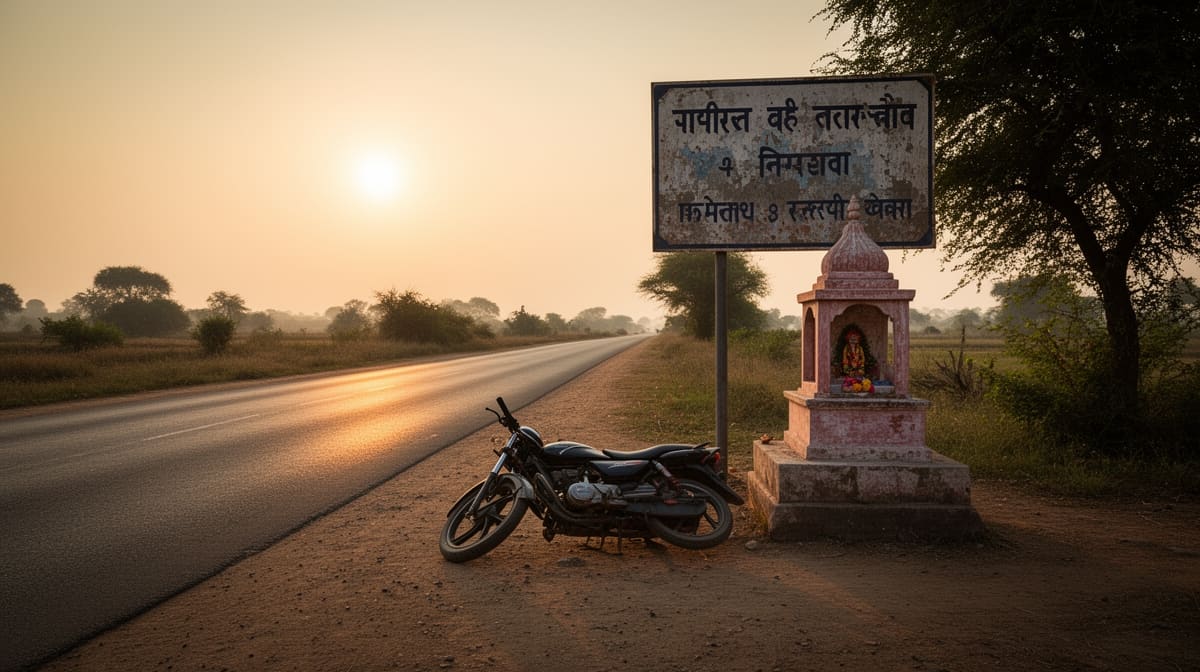
The Madhya Pradesh High Court has reaffirmed that a delayed First Information Report (FIR) cannot be used to dismiss a motor accident claim if the overall evidence establishes liability. This judgment clarifies that procedural delays, however concerning, must not override substantive proof of negligence and causation in compensation proceedings.
Background & Facts
The Dispute
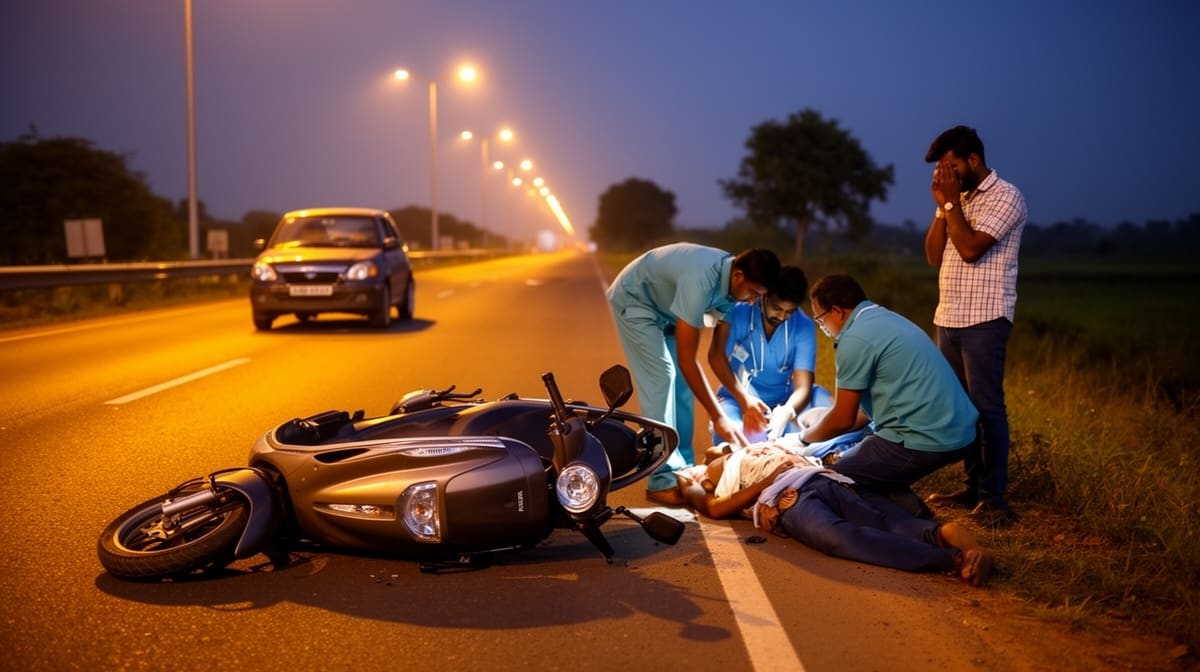
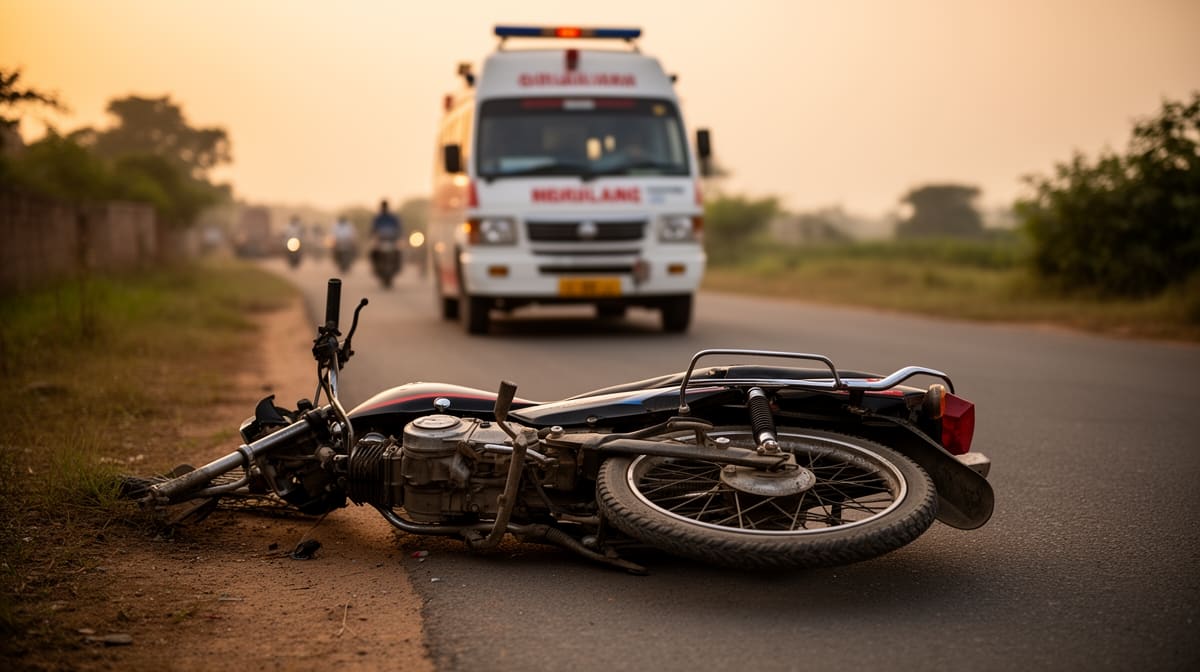
On 13 January 2011, the deceased, Jasmat Umre, was riding his motorcycle when he was struck by an Indica car (MP-04-CC-6198) driven by Radheshyam. He sustained severe head injuries and died on 22 January 2011 after treatment at Kasturba Hospital, Bhopal. The post-mortem confirmed fatal head trauma. The claimants, his family members, filed a compensation petition before the Motor Accident Claims Tribunal.
Procedural History
- 13 January 2011: Accident occurred
- 22 January 2011: Deceased died
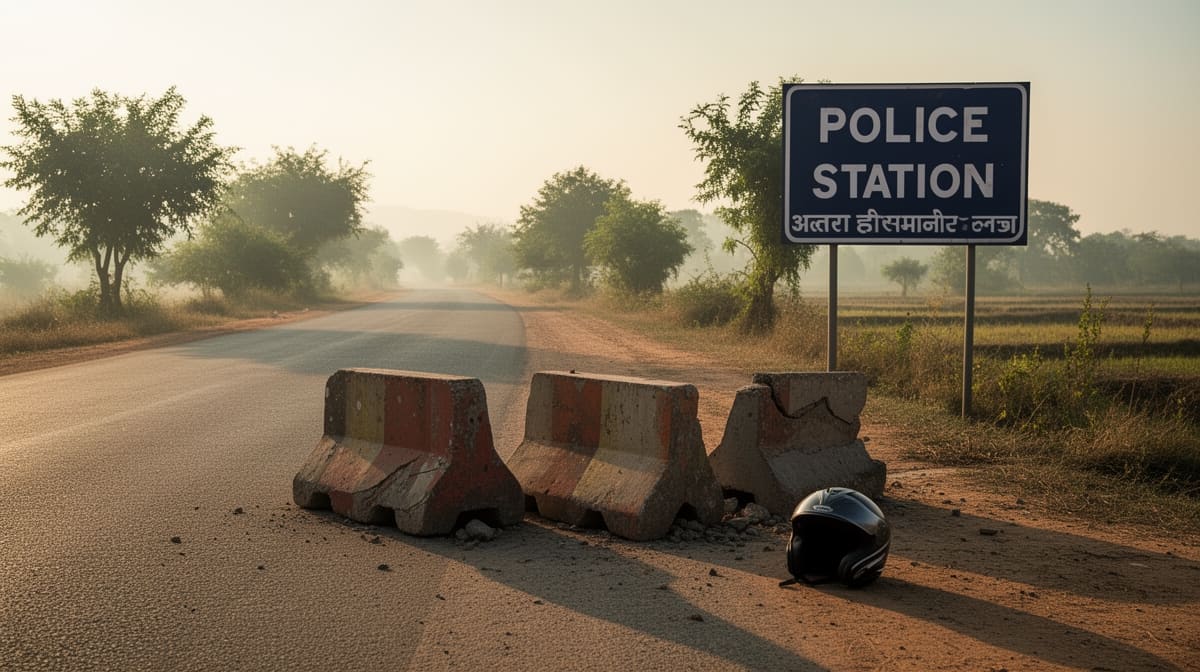
- 16 March 2011: FIR lodged, over two months after the incident
- 17 March 2011: Charge sheet filed against driver Radheshyam
- 31 July 2012: Tribunal awarded compensation of ₹12.5 lakh
- 2012: Insurance company filed appeal under Section 173(1) of the Motor Vehicles Act, 1988
Relief Sought
The appellant, Shriram General Insurance Company Ltd., sought dismissal of the claim petition or substantial reduction in compensation, arguing that the accident resulted from the deceased’s motorcycle slipping, that the FIR was fabricated due to collusion, and that the compensation was excessive and unsupported by evidence.
The Legal Issue
The central question was whether delay in lodging the FIR can be treated as a fatal defect in a motor accident claim petition, or whether the tribunal must assess the overall reliability of evidence - including eyewitness testimony, charge sheet, and medical records - to determine liability.
Arguments Presented
For the Appellant
The insurer contended that the delay of over two months in filing the FIR, coupled with the absence of a statement from the injured (who died), raised suspicion of collusion. It relied on Exhibit P-4 (challan) stating the accident was due to motorcycle slipping, and Exhibit P-6 (PMLC report) indicating the deceased was under the influence of alcohol. It cited Syed Basheer Ahamed v. Mohd. Jameel to argue that income estimation at ₹20,544/month lacked proof, and State of Haryana v. Jasbir Kaur to assert that compensation must not be excessive.
For the Respondent
The claimants argued that the FIR, charge sheet, and testimony of eyewitness Anil Sarvaiya (PW-2) consistently established the insured vehicle’s negligence. They emphasized that delay in FIR is common in rural India due to family priorities and trauma, and that the investigation culminated in a credible charge sheet. They relied on Ravi v. Badrinarayan to argue that authenticity of evidence, not timing of FIR, governs compensation claims.
The Court's Analysis
The Court conducted a rigorous review of the evidence and rejected the insurer’s contention that delay alone invalidated the claim. It emphasized that the purpose of an FIR in motor accident claims is to initiate investigation, not to serve as a condition precedent to compensation.
"Delay in lodging the FIR cannot be the ground to deny justice to the victim. Human nature and family responsibilities occupy the mind of kith and kin to such an extent that they give more importance to get the victim treated rather than to rush to the police station."
The Court noted that the delay was explained by the need to stabilize the victim’s condition and arrange for post-mortem and family coordination. It found no evidence of fabrication, collusion, or motive to falsely implicate the driver. The eyewitness testimony of PW-2 was consistent, unimpeached, and corroborated by the charge sheet and seizure memo.
The Court distinguished Ravi v. Badrinarayan as directly on point: delay is not fatal if the FIR’s contents are credible and the investigation yields a coherent narrative. It held that the Tribunal correctly appreciated the evidence and did not err in rejecting the insurer’s speculative allegations. The income assessment was upheld as reasonable based on occupation and local standards.
The Verdict
The appeal was dismissed. The Court affirmed the Tribunal’s award, holding that delay in filing the FIR does not invalidate a motor accident claim if corroborative evidence establishes negligence and causation. The compensation of ₹12.5 lakh was deemed just and reasonable under the law.
What This Means For Similar Cases
Delay in FIR Is Not Fatal to Compensation Claims
- Practitioners must argue that FIR timing is secondary to evidentiary consistency
- Insurers cannot rely on delay alone to challenge claims - burden shifts to them to prove fabrication
- Tribunals must examine the authenticity and coherence of the entire evidentiary record, not isolate procedural lapses
Eyewitness Testimony Carries Weight in Absence of Contradiction
- A single credible eyewitness, if unimpeached, can sustain a claim even without police testimony
- Defense attempts to discredit witnesses through minor inconsistencies must be scrutinized for bias
- Tribunals must avoid rejecting testimony on speculative grounds of collusion
Compensation Must Reflect Real Income, Not Speculation
- Income estimation must be grounded in occupation, locality, and documentary proof (e.g., wage slips, employer affidavits)
- Arbitrary multipliers or inflated figures will be struck down under State of Haryana v. Jasbir Kaur
- Courts will uphold reasonable estimates based on local economic conditions if no contrary evidence is presented