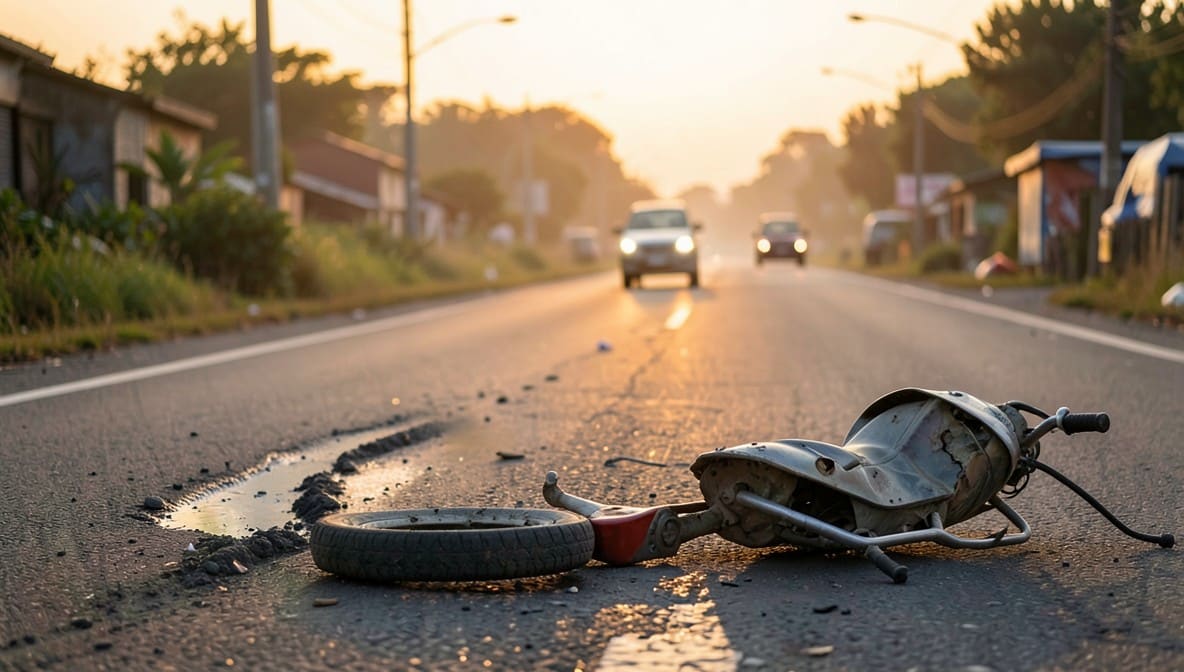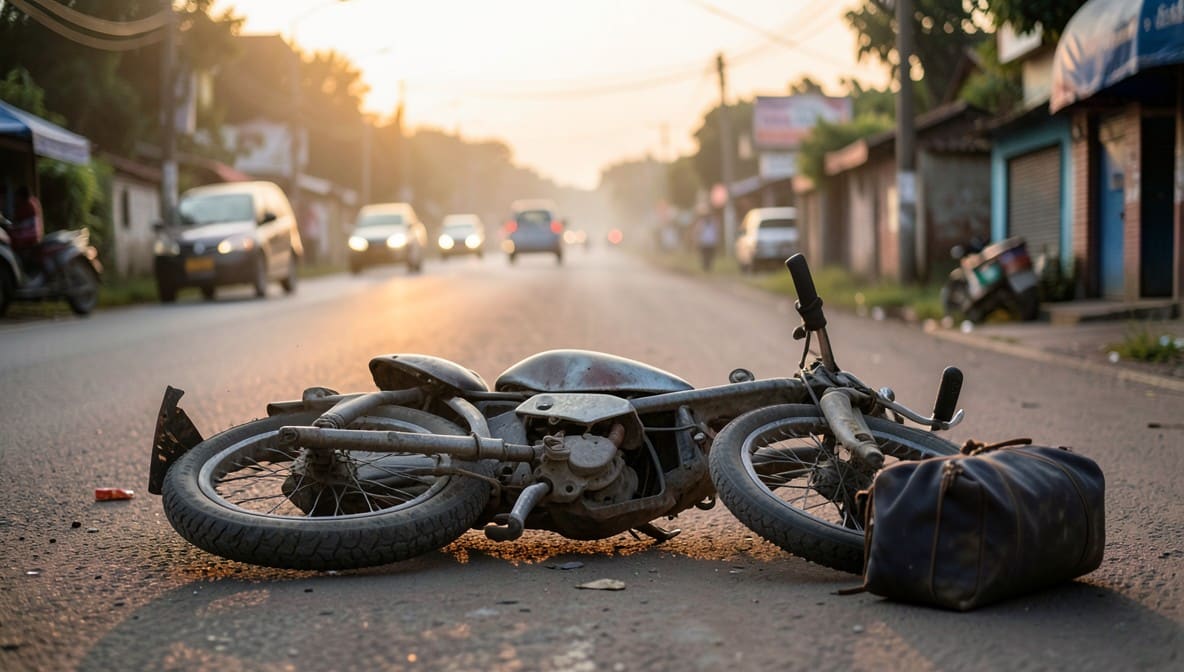
The Punjab & Haryana High Court has reaffirmed that in motor accident claims, the burden of proving causation rests squarely on the claimant, and failure to secure timely police documentation - especially an FIR or DDR - can fatally undermine even otherwise credible medical and testimonial evidence.
Background & Facts
The Dispute
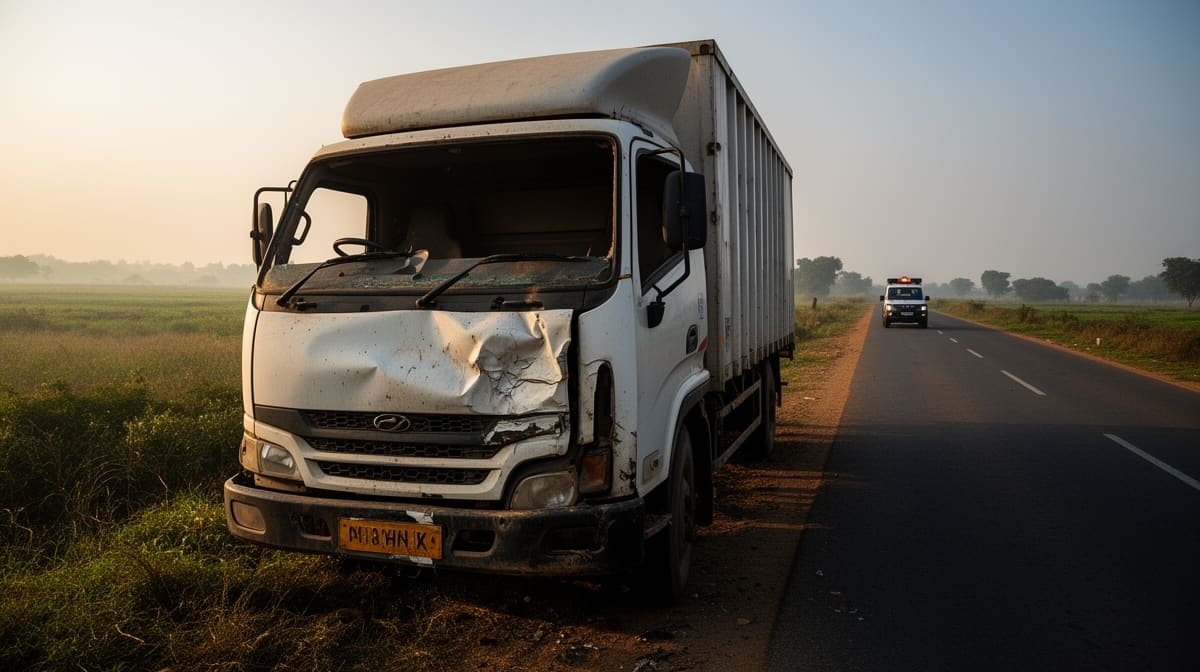
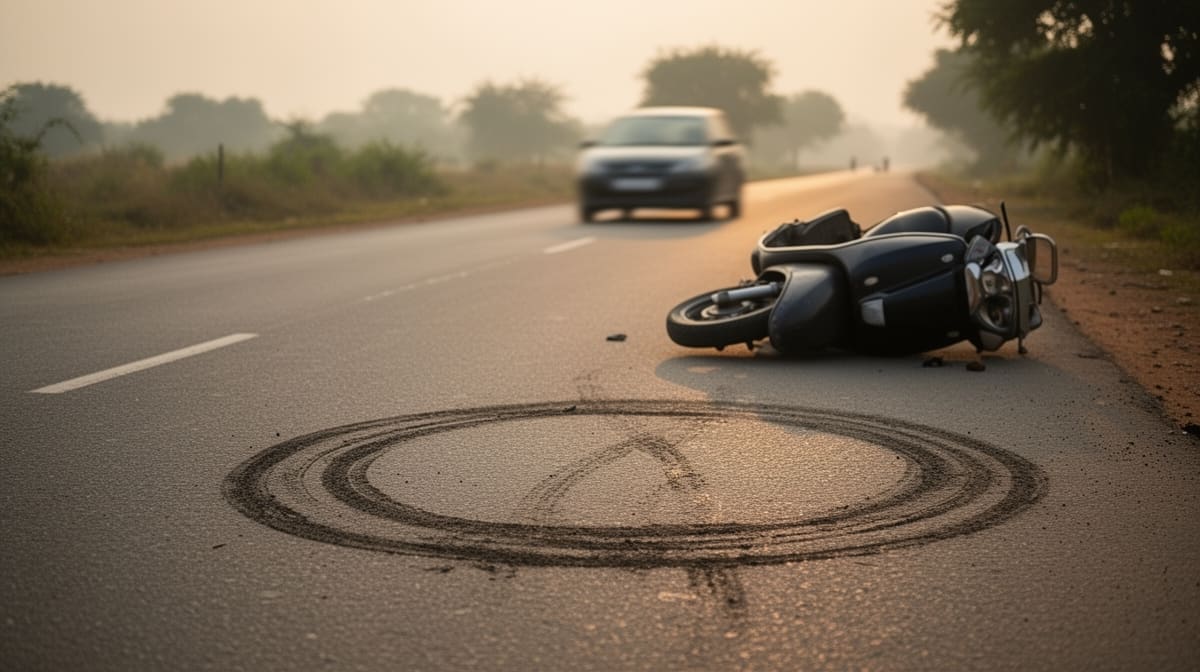
The appellant, Krishan Kumar Mittal, filed a claim petition before the Motor Accidents Claims Tribunal, Moga, seeking ₹9,00,000 in compensation for grievous injuries sustained in a head-on collision on 2 October 1998. He alleged that the accident was caused by respondent No. 2, Dharamjit Singh, who was driving a Swaraj Mazda (Canter) bearing registration PB-05-A-9698 in a rash and negligent manner while overtaking a scooter.
Procedural History
- 2 October 1998: Alleged accident occurred near Village Matwani, Moga.
- 10 November 2000: Claim petition filed before the Tribunal.
- 20 September 2001: Tribunal framed issues on causation, driver’s license validity, and maintainability.
- 13 January 2003: Tribunal dismissed the claim petition, holding that the accident and its causation by respondent No. 2 were not proved.
- 2003: Appeal filed before the Punjab & Haryana High Court.
Relief Sought
The appellant sought reversal of the Tribunal’s award and full compensation of ₹9,00,000, arguing that medical evidence and eyewitness testimony were sufficient to establish liability.
The Legal Issue
The central question was whether the failure to register an FIR or a Daily Diary Report (DDR) by the claimant or his eyewitness, combined with material inconsistencies in testimony and documentation, renders the claimant’s burden of proving causation under Section 166 of the Motor Vehicles Act, 1988 unfulfilled.
Arguments Presented
For the Appellant
The appellant argued that the testimony of Surjit Singh (PW-5), an eyewitness and occupant of the car, along with medical records from multiple hospitals, conclusively established that the accident was caused by respondent No. 2’s negligent driving. He contended that the Tribunal erred in disregarding this evidence and that the absence of an FIR should not be fatal where medical and testimonial evidence is consistent. He relied on Sarla Verma v. Delhi Transport Corporation to argue that in motor accident cases, the standard of proof is preponderance of probability, not beyond reasonable doubt.
For the Respondent (Insurance Company)
The insurance company contended that the absence of an FIR or DDR recorded by the claimant or eyewitness raised serious doubts about the veracity of the claim. It emphasized that the DDR (Ex. A-4) did not identify the driver or vehicle, the eyewitness could not recognize the vehicle in photographs, and no statement was recorded from the scooterist involved. It argued that the Tribunal correctly applied the principle that unexplained delay and lack of corroboration from independent sources vitiate the claim.
The Court's Analysis
The Court undertook a meticulous review of the evidentiary record and found that the appellant failed to discharge the burden of proving causation. While acknowledging that medical evidence confirmed the appellant’s injuries, the Court held that proof of injury alone does not establish liability.
"The failure to lodge an FIR or DDR by the appellant himself or by the alleged eye-witness Surjit Singh (PW-5) raises doubt regarding the allegation that the accident was caused by respondent No. 2-Dharamjit Singh."
The Court noted that Surjit Singh, despite being an eyewitness, could not identify the offending vehicle or its registration number during cross-examination. Further, he did not file any claim for his own injuries, despite sustaining them in the same accident - a fact the Court found inconsistent with the claim of a serious collision.
The Court also highlighted the discrepancy between the surveyor’s report (Ex. A-5), which placed the accident near Village Mehna, and the claimant’s assertion that it occurred near Village Matwani. The absence of any statement from the scooterist, who was allegedly the first point of impact, further weakened the claim.
The Court emphasized that in motor accident claims, the absence of contemporaneous police documentation is not merely procedural but goes to the root of credibility. The DDR, though not mandatory, serves as a critical contemporaneous record. Its non-creation by the claimant or eyewitness, without any plausible explanation, creates a reasonable doubt that cannot be resolved by post-facto medical testimony.
The Verdict
The appellant’s appeal was dismissed. The Court held that the burden of proving causation under Section 166 of the Motor Vehicles Act, 1988, remains unmet where there is no FIR or DDR, and eyewitness testimony is inconsistent or uncorroborated. The Tribunal’s dismissal of the claim was upheld.
What This Means For Similar Cases
Absence of FIR or DDR Is Not Merely Procedural
- Practitioners must now treat the failure to secure an FIR or DDR within 24 - 48 hours as a critical evidentiary defect in MACT claims.
- In cases where police documentation is absent, claimants must provide a compelling, documented reason (e.g., unconsciousness, remote location) to avoid adverse inference.
Eyewitness Credibility Must Be Corroborated
- An eyewitness who fails to identify the vehicle, does not file a claim for their own injuries, or gives inconsistent statements will be viewed with skepticism.
- Cross-examination of eyewitnesses must focus on their ability to recall vehicle details, timing, and sequence of events.
Independent Corroboration Is Essential
- Medical evidence alone is insufficient to establish liability.
- Surveyor reports, hospital records, and statements from third parties (e.g., scooterist) must be obtained and presented to substantiate the claimant’s version.
- Courts will not infer causation from injury alone; the chain of events must be logically and contemporaneously documented.