The State Consumer Disputes Redressal Commission, Uttarakhand upheld the award of insurance compensation to the nominee of a deceased vehicle owner, holding that the insurer could not repudiate the claim on grounds of non-registration and lack of permit where such grounds were absent from the repudiation letter. The Commission affirmed that the vehicle’s temporary registration and the deceased’s driving licence satisfied statutory requirements, reinforcing the principle that an insurer cannot take a stand beyond what is stated in its repudiation letter.
Background & Facts
The Dispute
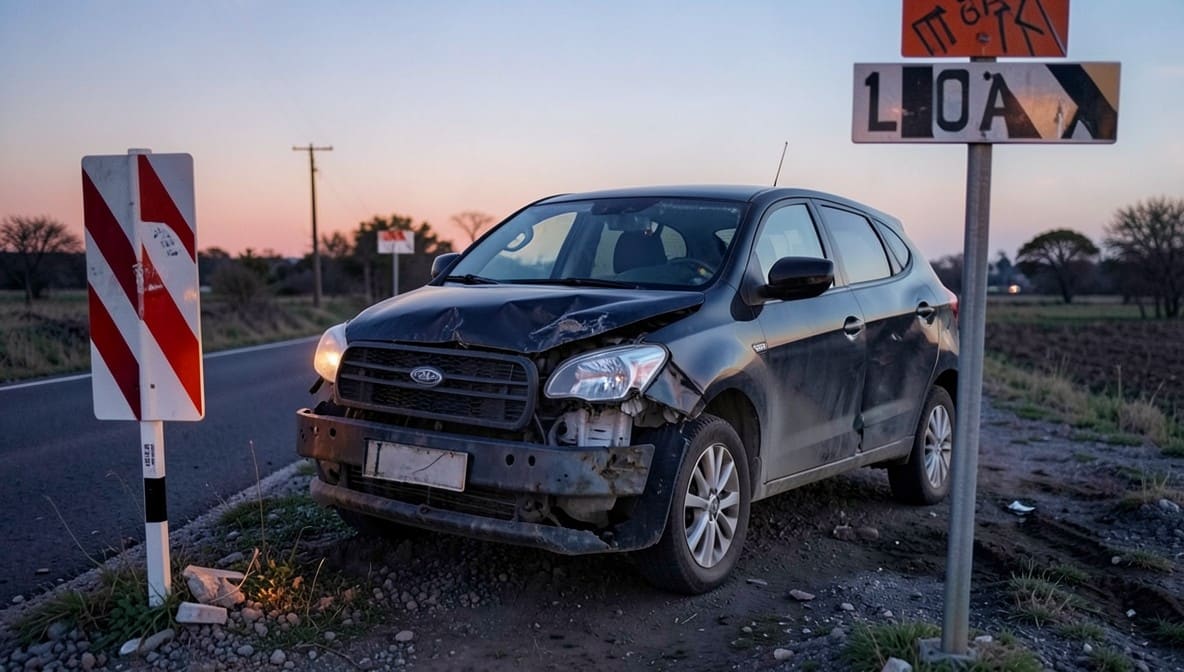
The dispute arises from a motor accident on 31.12.2017 in which the deceased, late Vinod Kumar Kohli, died while driving a Maruti Suzuki Alto 800 vehicle purchased on the same day. The vehicle was insured by National Insurance Company Limited (appellant) under a package policy with IDV of Rs. 2,40,385/-. The nominee, Smt. Chandrakala Devi (respondent No. 1), claimed insurance compensation for own damage and personal accident cover. The insurer repudiated the claim, alleging that the deceased drove without valid documents, registration, fitness, permit and that the vehicle was being used as a taxi. The District Commission allowed the claim, awarding IDV of Rs. 2,40,383/- and Rs. 2,00,000/- towards personal accident cover with interest at 6% per annum from the date of filing the complaint till payment. The insurer appealed under Section 41 of the Consumer Protection Act, 2019.
Key Facts
- The vehicle (ANR4XS8 Maruti Suzuki Alto 800) was purchased by the deceased from Nainital Motors Private Limited on 31.12.2017 vide invoice No. 40783.
- The deceased availed a term loan of Rs. 2,20,000/- from Canara Bank on 30.12.2017, the amount being paid to the dealer on the same day via RTGS.
- Insurance cover was obtained from the appellant for the period 31.12.2017 to 30.12.2018 under Package Policy No. 3510103117 6341123462 at an IDV of Rs. 2,40,385/-; the complainant was named as nominee.
- The deceased paid a premium of Rs. 22,465/- along with fees for temporary registration and completed formalities to ply the vehicle on road.
- On 30.12.2017 the deceased, accompanied by a friend, went to Haldwani to take delivery of the vehicle; on 31.12.2017, after taking delivery, they were returning to Pithoragarh when the accident occurred at about 9:30 p.m. at Danaula, Village Assembly, Gogna, Pithoragarh.
- Both occupants sustained grievous injuries and died on the spot.
- An FIR was lodged at P.S. Pithoragarh on 20.01.2018.
- The insurer repudiated the own damage claim and personal accident cover by letter dated 23.04.2018, stating that the deceased was not holding a valid and effective driving licence for a commercial vehicle (taxi) and that the vehicle was being plied without a valid permit.
- The repudiation letter did not mention non-registration of the vehicle with the Registering Authority.
- A temporary registration certificate issued by the Registering Authority, Haldwani (Paper No. 37) shows validity from 04.01.2018 to 03.02.2018.
- The deceased’s driving licence (No. UK05-7012/Pth/10, Paper No. 38) authorised him to drive private motor car and motorcycle only, and was valid from 01.04.2010 to 01.04.2027.
- The vehicle’s gross vehicle weight is 1,185 kg, which is less than 7,500 kg, thereby qualifying as a “light motor vehicle” under Section 2(21) of the Motor Vehicles Act, 1988.
- The surveyor’s report (Papers 30-36) estimated the repair cost at Rs. 2,71,920/- after deducting the policy excess of Rs. 500/-, exceeding 75% of the IDV.
- The District Commission, after hearing the parties, allowed the consumer complaint vide order dated 28.02.2023, awarding IDV of Rs. 2,40,383/- (slightly less than the policy IDV) and Rs. 2,00,000/- towards personal accident cover, together with interest at 6% per annum from the date of filing the complaint till actual payment.
Procedural History
- 20.04.2023: Date of admission of the appeal before the State Consumer Disputes Redressal Commission, Uttarakhand.
- 16.02.2021: Order of the District Commission closing the opportunity for respondent No. 3 (Nainital Motors) to file a written statement.
- 28.02.2023: Date of the impugned judgment and order of the District Commission allowing the claim.
- 27.08.2026: Order directing that the appeal shall proceed ex-parte against respondent No. 2 and respondent No. 3.
- 18.09.2026: Date of final hearing; no appearance on behalf of respondent No. 2 despite several calls, hence the appeal was heard ex-parte against respondent No. 2 as well.
- 24.09.2026: Date of pronouncement of the present order.
Relief Sought
The appellant sought to set aside the District Commission’s order dated 28.02.2023, to repudiate the claim on the grounds of non-registration and lack of permit, and to avoid payment of the awarded compensation. The respondent sought affirmation of the award and payment of the compensation with interest.
The Legal Issue
The central question was whether the insurer could rely on the defences of non-registration of the vehicle and absence of a commercial permit to repudiate the insurance claim when such grounds were not mentioned in the repudiation letter dated 23.04.2018, and whether the vehicle’s temporary registration and the deceased’s driving licence satisfied the statutory requirements under the Motor Vehicles Act, 1988.
Arguments Presented
For the Appellant/Petitioner
The appellant contended that at the time of the accident the deceased was driving the vehicle without valid registration, fitness, permit and without a licence authorising him to drive a commercial vehicle (taxi). It argued that the vehicle was being used for hire and reward, which rendered the own damage claim non-payable under the policy. The appellant further submitted that the temporary registration obtained after the accident could not validate the vehicle’s status on the date of accident, and that the insurer was entitled to repudiate the claim based on the repudiation letter’s allegations concerning licence and permit.
For the Respondent/State
The respondent (complainant) argued that the repudiation letter did not mention non-registration or lack of permit as grounds for denial, and therefore the insurer was precluded from raising those defences at a later stage, relying on the principle that an insurer cannot take a stand beyond what is stated in its repudiation communication. It emphasized that the temporary registration certificate issued on 04.01.2018 proved that the owner had applied for registration within seven days of taking delivery, as required by Rule 47 of the Central Motor Vehicles Rules, 1989. The respondent also highlighted that the deceased’s driving licence authorised him to drive a light motor vehicle, and since the vehicle’s gross vehicle weight of 1,185 kg fell within the light motor vehicle category, no separate endorsement was required to drive it as a taxi. Furthermore, the respondent pointed out that there was no reliable evidence on record to show that the vehicle was being used as a taxi for hire and reward at the time of accident.
The Court's Analysis
The Commission first considered the scope of the insurer’s repudiation. It observed that the repudiation letter dated 23.04.2018 only alleged that the deceased lacked a valid and effective driving licence for a commercial vehicle and that the vehicle was being plied without a valid permit. The letter made no reference to non-registration of the vehicle. Drawing on the precedent in M/s Galada Power an d Telecommunication Ltd. Vs. United India Insurance Co. Ltd. and another (IV (2016) CPJ 5 (SC)), the Commission held that the insurer could not be allowed to take a stand beyond what was stated in the repudiation letter. As the Commission noted:
“The letter of repudiation dated 20th September, 1999, which we have reproduced hereinbefore, interestingly, does not whisper a single word with regard to delay or, in fact, does not refer at all to the duration clause. … In the absence of any mention in the letter of repudiation and also from the conduct of the insurer in appointing a surveyor, it can safely be concluded that the insurer had waived the right which was in its favour under the duration clause.”
Applying that reasoning, the Commission concluded that the insurer could not rely on the ground of non-registration, which was absent from the repudiation letter.
Next, the Commission examined the substantive defences of lack of permit and licence. It noted that the vehicle’s gross vehicle weight of 1,185 kg qualified it as a light motor vehicle under Section 2(21) of the Motor Vehicles Act, 1988. Relying on Mukund Dewangan Vs. Oriental Insurance Company Limited ((2017) 4 SCC 663), the Commission found that a holder of a driving licence to drive the class of “light motor vehicle” is competent to drive a transport vehicle or omnibus whose gross vehicle weight does not exceed 7,500 kg, without requiring a separate endorsement. Since the deceased’s licence authorised him to drive private motor car and motorcycle, and the vehicle fell within the light motor vehicle category, the deceased was fully authorised to drive the vehicle.
Regarding the permit, the Commission observed that a commercial vehicle permit can be granted only after the vehicle obtains its official registration certificate. As the accident occurred prior to permanent registration, there was no occasion for the owner to have obtained a permit. Moreover, the insurer did not adduce any reliable evidence to prove that the vehicle was being used as a taxi for hire and reward at the time of the accident. The surveyor’s report merely recorded the deaths and did not establish the vehicle’s use for hire.
Finally, the Commission considered the quantum of compensation. It noted that the surveyor’s estimated repair cost of Rs. 2,71,920/- exceeded 75% of the IDV, justifying the award of IDV under the policy. The award of Rs. 2,40,383/- (slightly less than the policy IDV of Rs. 2,40,385/-) was deemed appropriate. The personal accident cover of Rs. 2,00,000/- was also upheld.
The Verdict
The appeal was dismissed. The Commission affirmed the District Commission’s order dated 28.02.2023, directing the appellant to pay IDV of Rs. 2,40,383/- and Rs. 2,00,000/- towards personal accident cover, together with interest at 6% per annum from the date of filing the consumer complaint till actual payment. The appellant was held entitled to the salvage of the insured vehicle and could recover the same from the accident spot. The respondent was directed to hand over the documents of the insured vehicle to the appellant and to execute a Letter of Subrogation in favour of the appellant. No costs were awarded.
What This Means For Similar Cases
Repudiation Letter Limits Insurer’s Defences
An insurer cannot raise defences in litigation that were not mentioned in its repudiation letter. The principle established in Galada Power and reiterated here confines the insurer’s case to the allegations expressly communicated to the insured at the time of repudiation.
- Practitioners must ensure that repudiation letters comprehensively cover all grounds on which the insurer intends to rely.
- Any omission in the letter waives the insurer’s right to later assert that ground.
Temporary Registration Satisfies Statutory Requirement
Where a temporary registration certificate is issued within seven days of taking delivery of a vehicle, it fulfils the requirement under Rule 47 of the Central Motor Vehicles Rules, 1989, and negates a defence of non-registration.
- The timing of the temporary registration (04.01.2018 for a vehicle delivered on 31.12.2017) demonstrates compliance with the seven-day rule.
- Surveyors and survey reports should verify the date of temporary registration to counter non-registration claims.
Light Vehicle Classification Broadens Driving Licence Authority
A driving licence authorising the holder to drive a light motor vehicle permits the operation of any transport vehicle or omnibus whose gross vehicle weight does not exceed 7,500 kg, without need for a separate endorsement.
- In cases involving vehicles such as Maruti Alto, Eeco, or similar light commercial vehicles, the licence holder’s authority extends to taxi use.
- Insurers must scrutinise the vehicle’s classification under Section 2(21) of the Motor Vehicles Act, 1988 before denying coverage on licence grounds.