In a significant ruling on motor insurance disputes, the West Bengal State Consumer Disputes Redressal Commission has clarified that insurers cannot repudiate claims solely on technical breaches like invalid driving licences when such breaches lack proximate causation to the loss. The Commission directed a non-standard settlement at 75% of the Insured Declared Value (IDV) with 7% interest, reinforcing equitable principles in insurance jurisprudence.
Background & Facts
The Dispute
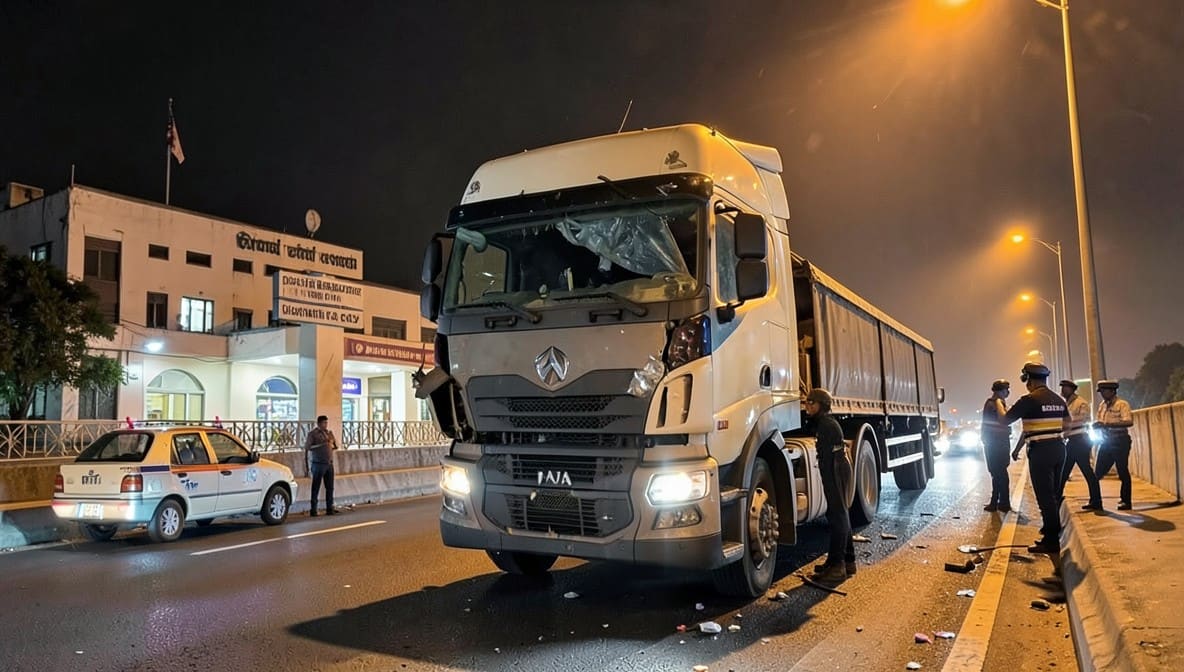
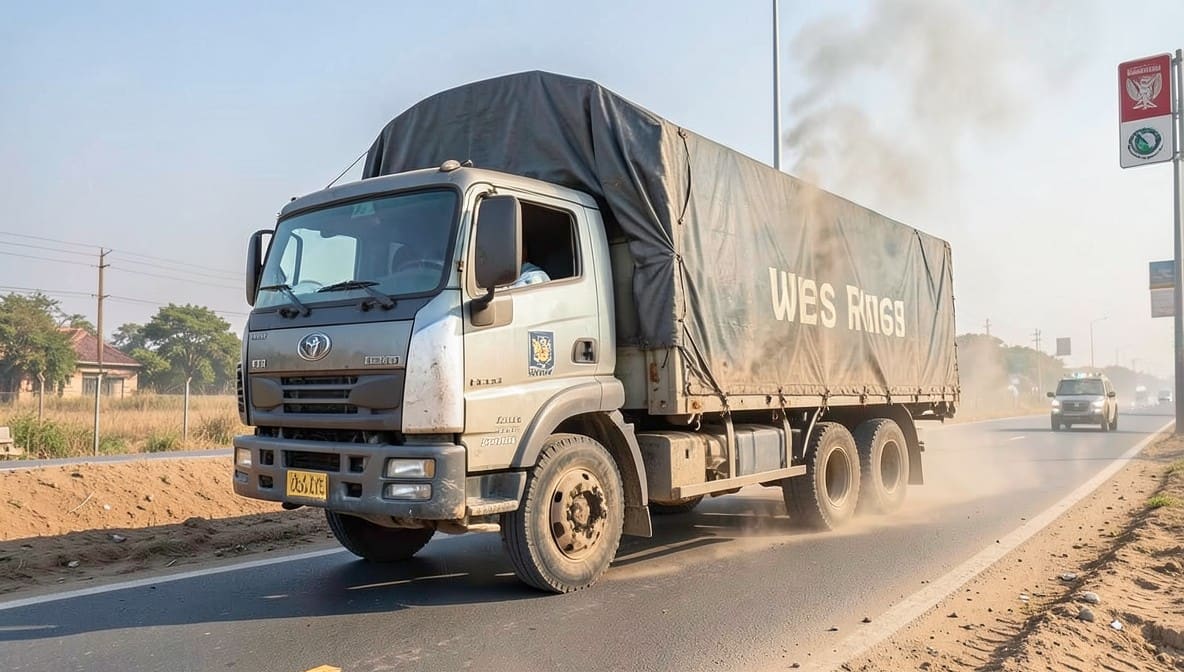
The complainant, Sri Subrata Biswas, owner of a commercial goods carriage vehicle (Registration No. WB23D4695), had obtained a motor insurance policy (No. 3379/01281092/000/01) from Cholamandalam MS General Insurance Co. Ltd. (Opposite Party No.1) covering the period from 29.10.2016 to 28.10.2017. The vehicle, financed by IndusInd Bank Ltd. (Opposite Party No.2), met with an accident on 06.06.2017 while transporting cargo from Haldia to Gujarat. The complainant alleged that a tyre burst due to excessive heat led to a fire, causing extensive damage to the vehicle and cargo. A General Diary was lodged with Bhawanipur Police Station, Purba Medinipur, and the insurer was intimated.
Key Facts
- Vehicle Details: Goods carriage with national permit, insured under a motor own-damage policy
- Policy Period: 29.10.2016 to 28.10.2017
- Accident Date: 06.06.2017
- Claim Lodged: Post-accident intimation to insurer
- Repudiation Letter: Dated 26.08.2017, citing invalid driving licence and policy breaches
- IDV: Rs. 21,06,000/-
- Claim Amount: Rs. 43,38,675/-
The insurer repudiated the claim on two primary grounds:
- The driver did not possess a valid and effective driving licence
- The vehicle was carrying Purified Terephthalic Acid (PTA), a hazardous substance, in violation of policy conditions
Procedural History
- 06.06.2017: Accident occurred; General Diary lodged
- 26.08.2017: Insurer repudiated the claim
- SC/19/CC/625/2019: Consumer complaint filed before the West Bengal State Consumer Disputes Redressal Commission
- 06.05.2026: Final order passed by the Commission
The Parties' Positions
Complainant:
- Asserted that the vehicle was halted at a lay-bay when the fire occurred
- Claimed the driver possessed a valid transport licence (valid till 15.02.2020)
- Contended that the insurer’s repudiation was unjustified and an afterthought
- Sought indemnification for the total loss, compensation for harassment, and other reliefs
Opposite Party No.1 (Insurer):
- Argued that the complaint was not maintainable as the vehicle was used for commercial purposes
- Contended that the driver’s licence had expired in 2013 and was not renewed
- Alleged that the vehicle was carrying PTA, a hazardous substance, without compliance with statutory norms
- Asserted that the claim was inflated beyond the IDV
Opposite Party No.2 (Financier Bank):
- Submitted that its role was limited to financing the vehicle purchase
- Denied any deficiency in service related to the insurance claim
Relief Sought
The complainant sought:
- Indemnification for the total loss of the vehicle (Rs. 43,38,675/-)
- Compensation for harassment and litigation costs
- Interest on the claim amount from the date of repudiation
The Legal Issue
The Commission framed the following legal questions:
- Whether the complainant qualifies as a consumer under Section 2(1)(d) of the Consumer Protection Act, 1986?
- Whether the insurer’s repudiation of the claim was justified in law and on facts?
- Whether the financier bank bears any liability for the repudiation?
- What relief, if any, is the complainant entitled to?
Arguments Presented
For the Complainant
- Consumer Status: Relied on National Insurance Co. Ltd. v. Harsolia Motors to argue that availing insurance services does not exclude protection under consumer law, even if the underlying asset is used for business
- Driving Licence: Contended that the insurer failed to prove the licence was invalid, and even if it were, the vehicle was parked when the fire occurred, making the licence issue irrelevant to causation
- Hazardous Cargo: Argued that the insurer’s reliance on PTA being hazardous was an afterthought, as the repudiation letter did not mention this ground
- Claim Amount: Asserted that the loss was genuine and the insurer’s repudiation was unjustified
For Opposite Party No.1 (Insurer)
- Consumer Status: Argued that the complainant was not a consumer as the vehicle was used for commercial purposes
- Driving Licence: Contended that the driver’s licence had expired in 2013 and was not renewed, constituting a fundamental breach of policy conditions
- Hazardous Cargo: Asserted that PTA is a hazardous substance, and its carriage violated statutory and policy conditions
- Claim Amount: Argued that the claim was inflated and could not exceed the IDV of Rs. 21,06,000/-
- Precedents: Cited National Insurance Co. Ltd. v. Laxmi Narain Dhut and Amalendu Sahoo v. Oriental Insurance Co. Ltd. to support repudiation
For Opposite Party No.2 (Financier Bank)
- Denied any role in the insurance repudiation, stating its involvement was limited to financing the vehicle purchase
- Submitted that any default in loan repayment was governed by separate contractual proceedings
The Court's Analysis
Consumer Status
The Commission rejected the insurer’s argument that the complainant was not a consumer. It held that hiring insurance services does not fall under the exclusion of commercial purpose under the Consumer Protection Act, 1986. The Commission relied on National Insurance Co. Ltd. v. Harsolia Motors, where the Supreme Court distinguished between profit-generating assets and protective indemnity services. Since the insurance policy was obtained to mitigate risk rather than generate profit, the complainant qualified as a consumer.
Justification for Repudiation
The Commission examined four key factors:
-
Invalid Driving Licence
- The insurer alleged that the driver’s licence had expired in 2013 and was not renewed
- The complainant produced a licence copy showing validity till 15.02.2020
- Neither party produced conclusive evidence (e.g., certified records from the licensing authority)
- The Commission held that while the insurer failed to prove fraud, the licence issue could not be entirely dismissed
- However, the complainant’s argument that the vehicle was parked when the fire occurred weakened the causal link between the licence breach and the loss
-
Hazardous Cargo (PTA)
- The insurer argued that PTA is a hazardous substance requiring special compliance
- The Commission found this defence unpersuasive for the following reasons:
- No statutory schedule or notification was produced to classify PTA as hazardous in the specific form carried
- No policy clause expressly excluded PTA carriage
- The complainant’s consistent case was that the fire originated from a tyre burst, not the cargo
- The repudiation letter did not mention PTA; this ground appeared to be an afterthought
- The Commission held that insurers cannot improve their case by raising new grounds not disclosed in the repudiation letter
-
Claim Beyond IDV
- The Commission agreed with the insurer that the claim could not exceed the Insured Declared Value (IDV) of Rs. 21,06,000/-
- The complainant’s enhanced claim of Rs. 43,38,675/- was unsustainable
-
Total Repudiation vs. Non-Standard Settlement
- The Commission found that:
- The occurrence of fire loss was not disproved
- There was no evidence of fraud or staged loss
- While policy breaches existed, they lacked proximate causation to the loss
- Relying on equitable principles, the Commission held that complete repudiation was excessive and directed a non-standard settlement at 75% of IDV
- The Commission found that:
Liability of Opposite Party No.2
The Commission dismissed the complaint against the financier bank, holding that it had no role in the insurance repudiation. Its liability was limited to protecting its hypothecation rights in the event of any payment.
The Verdict
The Commission allowed the complaint in part against Opposite Party No.1 (the insurer) and dismissed it against Opposite Party No.2 (the financier bank). The operative directions were:
- Non-Standard Settlement: Opposite Party No.1 shall pay Rs. 15,79,500/- (75% of IDV of Rs. 21,06,000/-) to the complainant
- Interest: The amount shall carry simple interest at 7% per annum from the date of repudiation (26.08.2017) till realisation
- Payment Timeline: The amount shall be paid within 45 days from the date of the order
- Hypothecation Adjustment: Any dues of IndusInd Bank Ltd. under the loan account shall be adjusted first from the settlement amount, with the balance paid to the complainant
- Costs: Opposite Party No.1 shall pay Rs. 25,000/- towards litigation costs to the complainant
What This Means For Similar Cases
Non-Standard Settlement as Equitable Relief
- Proximate Cause Over Technical Breaches: Insurers cannot repudiate claims solely on technical breaches (e.g., invalid licence) unless such breaches are proximately linked to the loss. Courts will examine causal connection between the breach and the accident
- Burden of Proof: Insurers must prove policy breaches with cogent evidence. Mere allegations without certified records (e.g., licensing authority verification) may not suffice
- Afterthought Defences: Insurers cannot raise new grounds (e.g., hazardous cargo) in litigation that were not disclosed in the repudiation letter. Consumer fora will scrutinise original decision-making basis
Consumer Protection in Insurance Disputes
- Insurance as Protective Service: Even commercial entities hiring insurance services qualify as consumers under the Consumer Protection Act, 1986. The distinction between profit-generating assets and risk-mitigation services is critical
- IDV Limits: Claim amounts cannot exceed the Insured Declared Value unless special endorsements exist. Courts will enforce policy limits strictly
Practical Takeaways for Practitioners
-
For Insureds:
- Ensure valid licences for drivers and compliance with cargo regulations to avoid repudiation grounds
- Document accident circumstances (e.g., parking vs. transit) to counter insurer arguments on causation
- Demand certified records from insurers if licence validity is disputed
-
For Insurers:
- Repudiation letters must disclose all grounds relied upon. New defences raised later may be rejected
- Produce primary evidence (e.g., licensing authority records) to prove policy breaches
- Consider non-standard settlements where breaches lack proximate causation to avoid harsh repudiation
-
For Financiers:
- Hypothecation rights are protected even if the complaint against the insurer succeeds. Ensure loan agreements include insurance claim assignment clauses