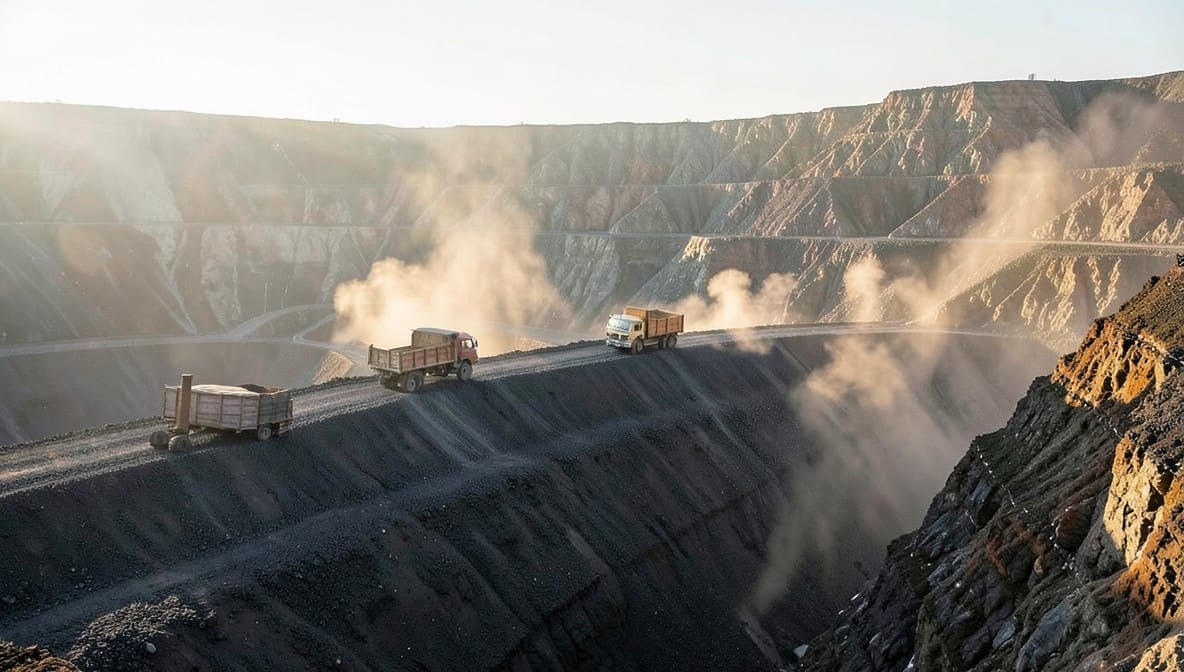
The Customs, Excise & Service Tax Appellate Tribunal, Kolkata Regional Bench, has definitively held that the crushing and screening of high-grade iron ore does not amount to manufacture of iron ore concentrate under the Central Excise Tariff Act, thereby preserving the statutory exemption for ores. This ruling, grounded in technical definitions and binding circulars, resolves a long-standing dispute affecting mining operations across Odisha and beyond.
Background & Facts
The Dispute
The appellant, M/s Tarini Prasad Mohanty, a proprietorship mine owner operating Naibuga Iron & Manganese Mines in Joda, Keonjhar, Odisha, was assessed for central excise duty on the grounds that its crushing and screening of iron ore constituted manufacture of "iron ore concentrate" under Chapter Note 4 to Chapter 26 of the Central Excise Tariff Act, 1985. The Department sought to impose a demand of Rs. 8,50,65,540/- in excise duty, along with interest and an equal penalty, for the period March 2011 to March 2015.
Key Facts
- The appellant holds a mining lease under the Mines and Minerals (Development and Regulation) Act, 1957, for extraction of high-grade iron ore (60%+ ferrous content)
- The ore is classified under sub-headings 26011110, 26011120, and 26011149 of the Central Excise Tariff and is unconditionally exempt as "ores" under Notification No. 4/2006-CE and its successor Notification No. 12/2012-CE
- The appellant does not possess any beneficiation, milling, magnetic separation, flotation, or concentration plant
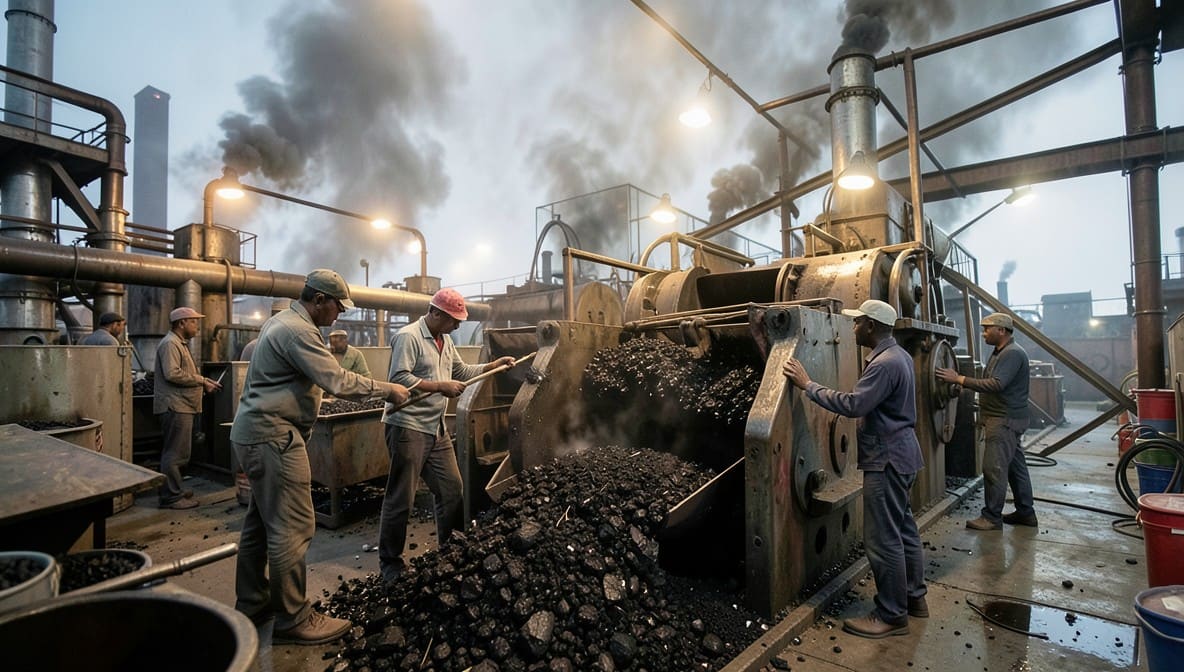
- The physical processes carried out are limited to: (i) raising/excavation of Run-of-Mine (ROM) ore, and (ii) crushing and screening to segregate lumps (5-18 mm) and fines
- These processes are performed by an independent contractor, M/s Sun Ispat Pvt. Ltd., under a Work Order dated 01.02.2010 (Exhibit A)
- The contractor invoices describe the services as "Providing Services in connection with raising of Iron Ore" and "Providing Services in connection with Crushing and Screening of Iron Ore" (Exhibit C)
- Service Tax was paid by the appellant on these services, with corresponding entries in the appellant’s ledger accounts (Exhibit B)
- The product remains chemically and commercially identical to the extracted ore; no enrichment or removal of gangue occurs
- The Ministry of Mines, Government of India, issued an Office Memorandum dated 25.01.2012 clarifying that crushing and screening of ROM to lumps and fines does not constitute production of concentrate
Procedural History
- March 2011 - March 2015: Period covered by five Show Cause Notices issued by the Commissioner of CGST & Central Excise, Bhubaneswar
- 28.02.2012: First Show Cause Notice (V(26)15/Adjn/B-II/41/2012/3260-62-A) covering Mar 2011 - Jan 2012
- 17.12.2012: Second Show Cause Notice (V(26)15/Adjn/B-II/163/2012/23258-2602-A) covering Feb 2012 - Sep 2012
- 06.12.2013: Third Show Cause Notice (V(26)15/Adjn/B-II/106/2013/20801-803-A) covering Oct 2012 - Aug 2013
- 29.09.2014: Fourth Show Cause Notice (V(26)15/Adjn/B-II/88/2014/17036-38-A) covering Sep 2013 - May 2014
- 22.06.2015: Fifth Show Cause Notice (V(26)15/Adjn/B-II/49/2015/10979-981-A) covering Jun 2014 - Mar 2015
- 04.03.2016: Order-in-Original No. BSR/EXCUS-002-COM-019-15-16 passed by Commissioner confirming demand of Rs. 8,50,65,540/- with interest and penalty
- 05.08.2025: Final Order No. 77196/2025 in Excise Appeal No. 75729 of 2016 (M/s Odisha Mining Corporation Ltd.) by CESTAT Kolkata, holding crushing and screening not manufacture
- 12.03.2026: Supreme Court dismissed Department’s appeal in Civil Appeal No. 3416/2026, affirming the above order
- 23.06.2026: Hearing before CESTAT Kolkata in present appeal
- 30.06.2026: Final Order pronounced
The Parties' Positions
For the Appellant
- Argued that crushing and screening are mere preparatory processes of size reduction and segregation, not manufacture
- Relied on HSN Explanatory Notes defining "concentrate" as requiring removal of foreign matter by "special treatment"
- Cited CBEC Circular No. 332/1/2012-TRU dated 17.02.2012, which clarified that crushing and screening do not constitute manufacture
- Highlighted that Ministry of Mines’ Office Memorandum dated 25.01.2012 confirmed that lumps and fines from crushing are still "ores"
- Pointed to consistent tribunal decisions in M/s Odisha Mining Corporation Ltd., M/s Khatau Narbheram & Co., and M/s Jindal Steel and Power Ltd.
- Emphasized that the same activity was taxed as a service under Service Tax, making dual taxation legally untenable
- Asserted that no evidence was produced by the Department to prove beneficiation or removal of gangue
For the Respondent
- Contended that crushing and screening removed loose earth and mud, thereby satisfying the definition of "removal of foreign matter"
- Argued that the resultant product was "fit for use and transport", thus qualifying as concentrate under Chapter Note 4
- Relied on the deeming fiction in Chapter Note 4 to treat any process rendering ore fit for use as manufacture
- Did not produce any technical or documentary evidence of beneficiation processes
- Did not dispute the absence of concentration plant or the contractor’s role
Relief Sought
The appellant sought:
- Setting aside of the impugned order dated 04.03.2016
- Cancellation of excise duty demand of Rs. 8,50,65,540/-
- Cancellation of interest under Sections 11AB/11AA
- Cancellation of penalty of Rs. 8,50,65,540/- under Section 11AC
- Declaration that crushing and screening do not constitute manufacture
- Recognition that the product remains exempt "ores" under Notification No. 12/2012-CE
The Legal Issue
The central question was whether the process of crushing and screening of high-grade iron ore, which effects only size reduction and segregation without beneficiation or removal of gangue, constitutes "manufacture" of "iron ore concentrate" under Chapter Note 4 to Chapter 26 of the Central Excise Tariff Act, 1985, thereby disqualifying it from exemption as "ores" under Notification No. 12/2012-CE.
Arguments Presented
For the Appellant
The appellant relied on the binding definition of "concentrate" in the HSN Explanatory Notes, which requires removal of foreign matter by "special treatment" - a term explicitly excluding crushing and screening. The appellant cited CBEC Circular No. 332/1/2012-TRU, Ministry of Mines’ Office Memorandum dated 25.01.2012, and technical literature from Kirk-Othmer’s Encyclopedia to establish that concentrate requires milling, magnetic separation, flotation, or thickening. The appellant further argued that the same activity had been taxed as a service under Service Tax, making the Department’s subsequent claim of manufacture legally inconsistent. The burden of proving manufacture, the appellant contended, lay squarely on the Department, which failed to discharge it.
For the Respondent
The Respondent argued that incidental removal of mud and loose earth during crushing and screening amounted to "removal of foreign matter" and that the product became "fit for use and transport", thereby triggering Chapter Note 4. However, the Respondent produced no evidence of beneficiation, no technical analysis of gangue removal, and no proof that the chemical composition of the ore was altered. The argument was largely based on presumption and failed to engage with the binding circulars or prior tribunal decisions.
The Court's Analysis
The Tribunal conducted a meticulous analysis of the statutory framework, technical definitions, and binding precedents. It emphasized that Chapter Note 4 operates only as a deeming fiction: it does not convert every preparatory process into manufacture, but only those that result in the conversion of ores into concentrates as defined by the HSN Explanatory Notes.
"For the purposes of headings 26.01 to 26.17, the term 'concentrates' applies to ores which have had part or all of the foreign matter removed by special treatments, either because such foreign matter might hamper subsequent metallurgical operations or with a view to economical transport."
The Tribunal held that the Department’s interpretation - equating incidental loss of loose earth with "special treatment" - was legally untenable and contradicted the very definition it sought to apply. The term "special treatment" was not a vague phrase but a technical one, explicitly enumerated in CBEC Circular No. 332/1/2012-TRU and Ministry of Mines’ clarification as including milling, hydraulic separation, magnetic separation, flotation, and concentrate thickening.
The Tribunal further noted that the appellant’s product remained chemically identical to the extracted ore, was classified and reported as "ore" under the MMDR Act, and was received by steel plants as "iron ore", not concentrate. The fact that the same activity was taxed as a service under Service Tax reinforced the conclusion that it was not manufacture.
The Tribunal also relied on the Supreme Court’s dismissal of the Department’s appeal in Commissioner v. M/s Odisha Mining Corporation Ltd. (2026 (3) TMI 862 (SC)), which affirmed the Tribunal’s earlier ruling on identical facts. The Tribunal observed:
"The issue is no longer res integra... the burden of proving manufacture of concentrate is squarely on the Department, and without the employment of special treatment and removal of foreign matter there cannot be any concentration."
The Tribunal rejected the Department’s reliance on the deeming fiction of Chapter Note 4 as a blanket expansion of manufacture, holding that the fiction is conditional upon the prior existence of a concentrate, which was not established.
The Verdict
The appeal was allowed. The impugned order dated 04.03.2016 was set aside. The demand of central excise duty of Rs. 8,50,65,540/-, along with interest under Sections 11AB/11AA and penalty of Rs. 8,50,65,540/- under Section 11AC, was cancelled. The Tribunal held that the appellant’s product remains exempt as "ores" under Notification No. 12/2012-CE. No consequential relief was required as the entire demand was quashed.
What This Means For Similar Cases
Crushing and Screening Are Not Manufacture
- Practitioners representing mining entities can now confidently argue that mere size reduction and segregation of high-grade iron ore do not constitute manufacture under Chapter Note 4
- Any demand based on this premise is legally unsustainable unless the Department proves beneficiation processes
- The burden of proof remains on the Revenue to establish removal of gangue by special treatment
Service Tax and Excise Duty Cannot Be Applied to the Same Activity
- Where an activity is taxed as a service under Service Tax (e.g., mining services under Section 65(105)(zzzy)), the same activity cannot later be reclassified as manufacture for excise duty
- The principle of approbation and reprobation bars the Revenue from taking contradictory positions
- This applies to all mining operations where contractors perform crushing, screening, or sizing
Circulars and Ministry Clarifications Are Binding
- CBEC Circular No. 332/1/2012-TRU and Ministry of Mines’ Office Memorandum dated 25.01.2012 are binding on the Department
- The Department cannot ignore or override such clarifications without judicial direction
- Practitioners must cite these circulars in all similar cases involving iron ore, bauxite, or other mineral processing
Exemption for Ores Is Preserved
- High-grade ores (DSO) processed only by crushing and screening remain exempt under Notification No. 12/2012-CE
- The definition of "ores" under Note 2 to Chapter 26 is not negated by preparatory processes
- This protects the entire direct-shipping ore segment from unwarranted excise demands
No Penalty or Interest Survives Without Valid Duty Demand
- Where the underlying duty demand is quashed, interest and penalty cannot survive
- Bona fide belief based on binding circulars negates mens rea for penalty under Section 11AC
- Extended period of limitation under Section 11A(4) is not applicable where the issue is one of interpretation