The Calcutta High Court has decisively clarified that Graphical User Interfaces (GUIs) are not per se excluded from design protection under India’s Designs Act, 2000. This landmark ruling dismantles long-standing administrative barriers and affirms that digital visual features, when applied to articles through industrial processes and judged solely by the eye, meet the statutory definition of a registrable design.
Background & Facts
The Dispute
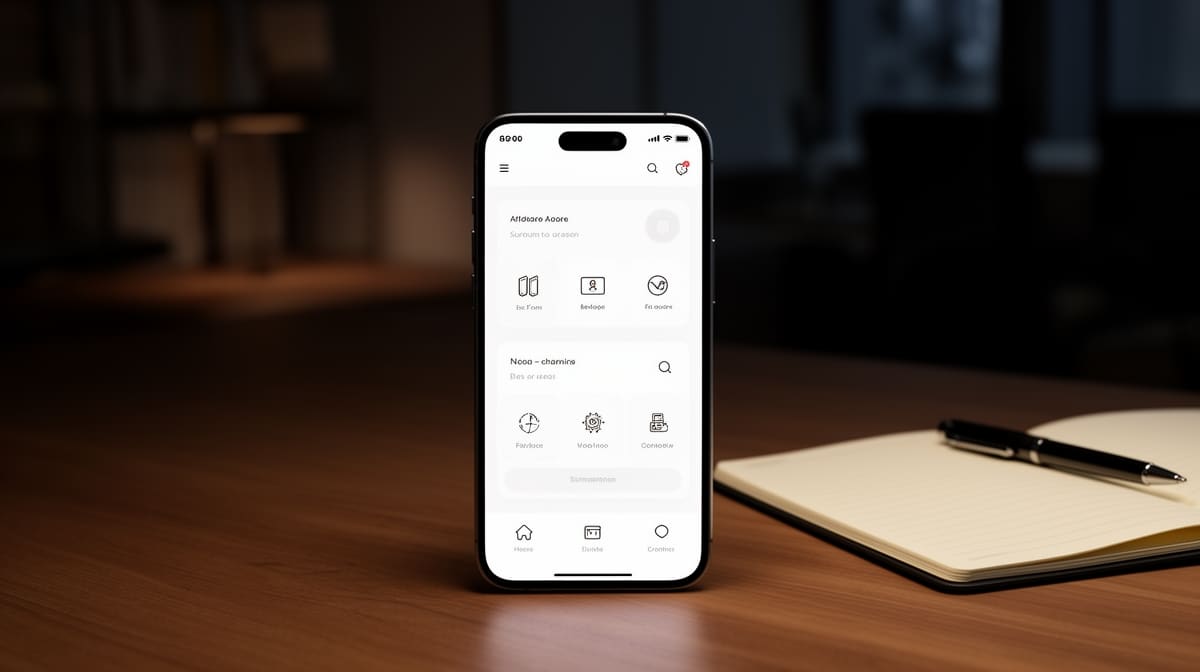
The appellants - NEC Corporation, ERBE Elektromedizin GMBH, ABIOMED INC, and TVS Motor Company Limited - sought registration of GUIs for electronic devices including smartphone interfaces, medical device displays, vehicle dashboards, and control panels. Each application was rejected by the Controller of Patents and Designs on grounds that GUIs do not constitute an "article" under Section 2(a), are not applied by an "industrial process" under Section 2(d), lack permanence, and are merely functional software elements.
Procedural History
- 2019: NEC’s application (No. 285453) rejected on grounds GUI is not an article and lacks permanence.
- 2019: ERBE’s application (No. 277243) rejected for being visible only when device is ON.
- 2023: UST Global (Singapore) case set precedent denying GUI registration, cited repeatedly by Controller.
- 2024: TVS’s application (No. 393339-001) rejected without reasoned order, violating natural justice.
- 2025: ABIOMED’s two applications rejected on identical grounds.
Relief Sought
The appellants sought setting aside of all impugned orders and remand for fresh consideration under correct legal principles. They also requested recognition that GUIs, when visually distinctive and industrially applied, qualify as designs under the Act.
The Legal Issue
The central question was whether a Graphical User Interface (GUI), visible only during device operation and inseparable from underlying software, satisfies the statutory definition of "design" under Section 2(d) of the Designs Act, 2000, particularly regarding application by an "industrial process," permanence, and whether it can be judged solely by the eye.
Arguments Presented
For the Appellant
The appellants argued that GUIs consist of visual features - iconography, layout, color schemes, and composition of lines - that are applied to articles like screens or dashboards through digital rendering processes. They cited Cryogas Equipment v. Inox India to show that industrial application includes modern electronic processes. They emphasized that the term "any industrial process" in Section 2(d) is inclusive, not exhaustive, and that permanence is not a statutory requirement. Reliance was placed on foreign precedents (Samsung v. Apple, Microsoft v. Corel) and the Locarno Classification, which India adopted via Rule 10(1) of the Design Rules.
For the Respondent
The Controller contended that GUIs are not applied by manual, mechanical, or chemical processes as required by Section 2(d), and that they lack physical permanence since they vanish when the device is switched off. They argued GUIs are merely software code protected under the Copyright Act, 1957, and dual protection is barred. The Controller also rejected foreign precedents, asserting that Indian law differs in definition and that no Indian court had previously recognized GUIs as designs.
The Court's Analysis
The Court undertook a purposive and technologically informed interpretation of Section 2(a) and Section 2(d). It held that the term "article" includes any part of a manufactured product capable of being sold separately - such as a display screen - and need not be a standalone physical object. The Court rejected the notion that an article must be tangible or permanently visible, noting that the Act does not contain such requirements.
"The concept of permanence of the design is not to be found in section 2(d) of the Act and this facet has been wrongly included in all the impugned orders."
The Court emphasized that "any industrial process" encompasses modern digital and electronic methods of rendering visual features onto a display surface. The process of generating a GUI through hardware manipulation and signal rendering qualifies as an industrial process under the broad, inclusive language of the statute. The Court distinguished between the underlying software (protected under copyright) and the visual configuration (a design), citing Hulm Entertainment and Cryogas Equipment to affirm that a GUI’s aesthetic arrangement is separable from its functional code.
The Court further held that the test of "judged solely by the eye" applies to the finished article as received by the consumer - such as a smartphone or vehicle dashboard - and not to the internal software. Dependency on external conditions (e.g., power) does not disqualify a design, as illustrated by lampshades or watch displays visible only when activated.
The Court also rejected the Controller’s blanket refusal to consider foreign jurisprudence, citing Forasol v. ONGC and Cryogas Equipment to affirm that foreign decisions are highly persuasive, especially where statutory language is pari materia. The Locarno Classification, while not creating rights, reflects legislative intent to accommodate digital designs.
The Verdict
The appellants succeeded. The Court held that GUIs are eligible for registration under the Designs Act, 2000 if they meet the criteria of Section 2(d): visual features applied to an article by an industrial process and judged solely by the eye. All impugned orders were set aside and the matters remanded for fresh adjudication with proper reasoning and opportunity of hearing.
What This Means For Similar Cases
GUIs Are Not Per Se Excluded
- Practitioners may now file design applications for GUIs without fear of automatic rejection.
- Applications must clearly identify the article (e.g., "display screen of a smartphone") and specify the design elements (icon layout, color scheme, animation transitions).
- Avoid framing GUIs as software or code; emphasize their visual, ornamental features.
Industrial Process Includes Digital Rendering
- The term "industrial process" now includes electronic, digital, and algorithmic methods of applying visual designs to screens.
- Evidence of hardware-software integration (e.g., rendering engines, pixel mapping) can substantiate industrial application.
- Reliance on Cryogas Equipment and Microsoft v. Corel is now legally sound.
Permanence and Visibility Are Not Barriers
- Designs visible only during normal use (e.g., dashboard interfaces, medical device screens) are registrable.
- The Manual of Designs Practice already permits use of dotted lines to disclaim non-protectable elements - this should be utilized.
- Objections based on "transience" or "dependency on power" are legally untenable.