The Madras High Court has clarified that economic significance, when demonstrably non-obvious, can independently satisfy the inventive step requirement under patent law, even in the absence of a technical advancement. This ruling redefines the threshold for patentability of mechanical and process inventions in India, particularly for industrial equipment where cost efficiency is a primary innovation driver.
Background & Facts
The Dispute
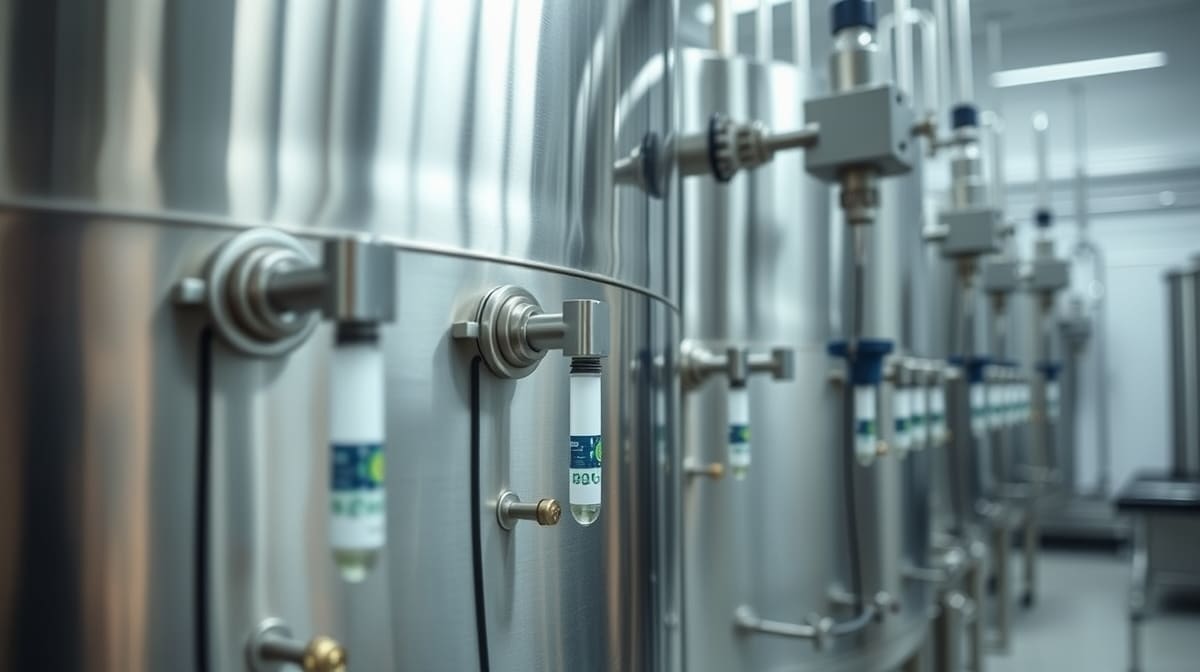
The appellant, Novozymes A/s, a Danish biotechnology company, filed Indian Patent Application No. 202047008467 for an invention titled "ejector equipped fermenter" - a fermentation system that replaces traditional mechanical stirrers with two-phase injectors and circulation loops to reduce energy consumption and capital costs. The Assistant Controller of Patents and Designs rejected the application on 17.02.2025, holding the invention lacked inventive step and fell within exclusions under Section 3(d) and Section 3(f) of the Patents Act, 1970.
Key Facts
- The claimed invention eliminates stirrers and their driving motors, replacing them with pumps and injectors to circulate fermentation media.
- The complete specification, filed on 18.02.2020, details cost reductions in construction, operation, and scalability.
- Experimental data in Example 3 and Table 4 (page 17 of the application) show a 40-60% reduction in energy consumption compared to conventional stirred tank reactors (STRs).
- The invention enables use of lighter materials, eliminates need for dedicated buildings, and allows shared equipment between multiple fermenters.
- The patent office acknowledged the economic benefits in its order but failed to analyze whether these benefits were non-obvious.
Procedural History
- 18.02.2020: Patent application filed with the Indian Patent Office.
- 17.02.2025: Assistant Controller issued order rejecting the application.
- 18.02.2025: Appellant filed Civil Miscellaneous Appeal (CMA(PT) No. 19 of 2025) before the Madras High Court.
- 01.04.2026: Judgment delivered by Justice Senthilkumar Ramamoorthy.
The Parties' Positions
For the Appellant: Argued that economic significance - demonstrated through quantified energy and capital cost reductions - is sufficient to establish inventive step under Section 2(1)(ja) of the Patents Act. Cited international jurisprudence and the absence of any statutory mandate requiring technical advancement. Contended that the patent office’s rejection was non-speaking and failed to apply the five-step obviousness test.
For the Respondent: Maintained that economic benefit alone is insufficient unless the feature producing it is non-obvious. Argued that the invention merely combines known components (pumps, injectors, loops) in a routine manner. Relied on internal guidelines asserting that Section 3(d) applies to machines unless they produce a new product or use a new reactant.
Relief Sought
The appellant sought quashing of the impugned order dated 17.02.2025 and a direction to the Patent Office to re-examine the application with proper application of inventive step criteria, including full consideration of economic significance.
The Legal Issue
Can economic significance, substantiated by empirical data and demonstrably non-obvious to a person skilled in the art, constitute an inventive step under Section 2(1)(ja) of the Patents Act, 1970, even in the absence of a technical advancement?
Arguments Presented
For the Appellant
The appellant relied on the language of Section 2(1)(ja), which defines inventive step as a feature involving technical advance as compared to prior art OR economic significance. Counsel argued that the statute uses "or", not "and", meaning either criterion suffices. The complete specification provided concrete data showing 40-60% lower energy costs, reduced capital expenditure, and scalability advantages - all attributable to the ejector-based design. The patent office’s failure to address these findings rendered its order non-speaking and arbitrary. The appellant cited Bayer CropScience v. Union of India to support that economic benefit is a valid basis for inventive step.
For the Respondent
The respondent contended that economic benefit must arise from a non-obvious technical feature. Merely reducing cost through known components, even if efficient, does not meet the threshold of inventiveness. The Patent Office applied a three-step obviousness analysis (prior art, claimed invention, obviousness to a skilled person) and concluded the combination was routine. The respondent also asserted that Section 3(d) barred the invention as it did not produce a new product or employ a new reactant, and Section 3(f) applied as it was a mere arrangement of known devices.
The Court's Analysis
The Court conducted a rigorous textual and purposive interpretation of Section 2(1)(ja). It observed that the statutory definition explicitly provides two alternative pathways to inventive step: technical advance OR economic significance. The use of "or" in the provision was decisive: "The legislature has deliberately provided two distinct criteria. One cannot be read to subsume the other."
"The fact that the invention results in lower operating costs, reduced capital expenditure, and enhanced scalability is not merely incidental - it is the core innovation. The Patent Office acknowledged these benefits but declined to analyse whether they were non-obvious. That omission is fatal."
The Court found the impugned order defective on multiple grounds. First, it noted the patent office’s failure to engage with the economic significance data presented in Examples 3 and 4. Second, it held that the conclusion that the invention was a "routine design choice" was unsupported by reasoning - no explanation was given as to why a skilled person would be motivated to replace stirrers with injectors and pumps. Third, the application of Section 3(d) and Section 3(f) was conclusory: no analysis was provided as to why the invention did not produce a new product or why the arrangement was not novel.
The Court emphasized that patent examination must be a reasoned process. "A non-speaking order, even if correct in outcome, is legally unsustainable. The applicant is entitled to know why their invention was rejected, not merely that it was rejected."
The Verdict
The Madras High Court set aside the order dated 17.02.2025. The matter was remanded to the Patent Office with the following directions: (i) Reconsideration must be conducted by an officer other than the one who issued the impugned order; (ii) A speaking order must be issued within four months of receipt of this judgment; (iii) The Patent Office must specifically address whether the economic benefits claimed are non-obvious to a person skilled in the art; (iv) No opinion is expressed on the merits of the patent application; and (v) There shall be no order as to costs.
What This Means For Similar Cases
Economic Significance Is a Standalone Ground for Inventive Step
- Practitioners may now rely on quantified cost savings, energy efficiency, or scalability improvements as primary evidence of inventive step, even for mechanical inventions.
- Patent applications should include comparative data (e.g., energy consumption, capital cost, maintenance cost) against prior art.
- The burden shifts to the Patent Office to disprove non-obviousness of economic benefits, not merely to assert they are "routine."
Patent Examiners Must Provide Reasoned Analysis
- Examiners must explicitly address each criterion under Section 2(1)(ja) if raised by the applicant.
- Generic assertions like "combination of known elements" or "routine design" without reasoning are legally insufficient.
- Failure to apply the five-step obviousness test (as per WIPO guidelines) may now be grounds for judicial review.
Section 3(d) and 3(f) Require Specific Application
- Section 3(d) cannot be invoked against apparatuses unless the invention produces a new product or employs a new reactant - mere efficiency gains do not trigger this exclusion.
- Section 3(f) applies only to arrangements that are purely mechanical and lack functional novelty; if the arrangement enables a new operational advantage (e.g., reduced energy use), it may qualify for patentability.