The Calcutta High Court has reaffirmed that registration of a design under the Designs Act 2000 cannot stand if the design lacks novelty or has been previously published, and that the Controller must conduct a rigorous, evidence-based analysis - not rely on superficial ocular impressions. This judgment clarifies the legal thresholds for design cancellation and reinforces the necessity of examining the state of the art before granting protection.
Background & Facts
The Dispute
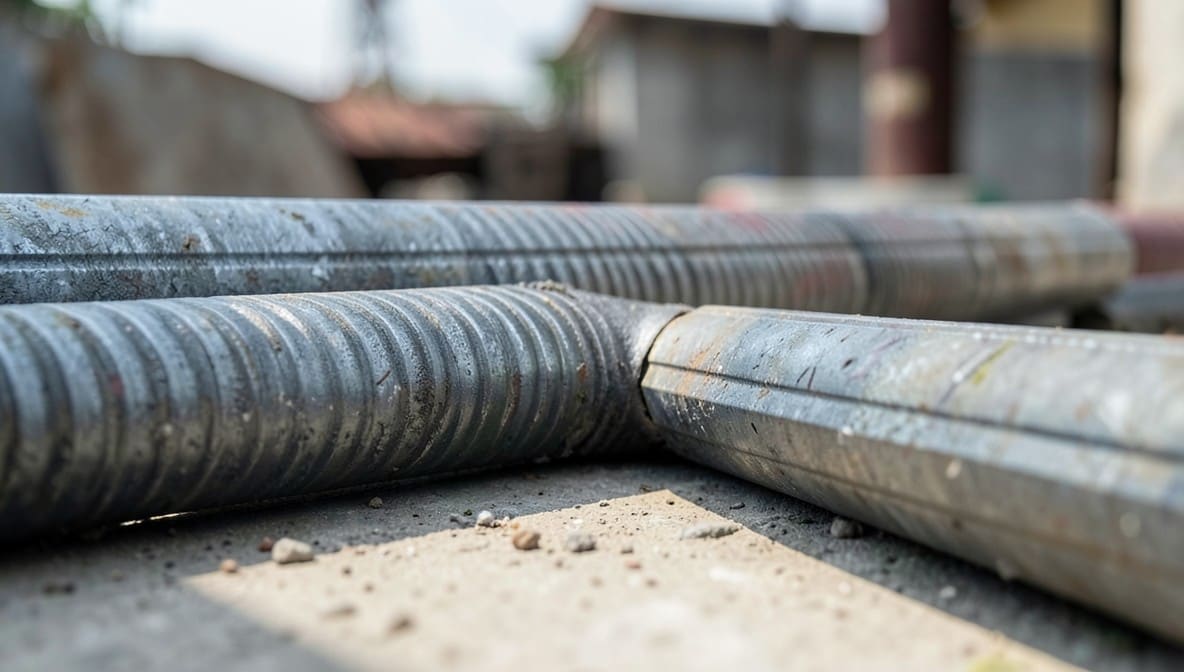
The appellant, ARS Steels and Alloy International Private Limited, sought cancellation of Design No. 257980 registered in favor of the private respondent, Souvik Steels Private Limited, for a ‘Construction Rod’ featuring a double ‘XX-Rib’ pattern under Class 25-01. The appellant alleged that the design was neither new nor original and had been publicly available since at least 2003, rendering it ineligible for registration under Sections 4 and 19 of the Designs Act 2000. The Deputy Controller rejected the cancellation petition on 10 April 2023, holding that the design had aesthetic appeal and was not purely functional.
Key Facts
- The impugned design (double ‘XX-Rib’ pattern) was registered on 6 November 2013.
- Souvik Steels issued a notice of infringement to ARS Steels in early 2016, prompting the cancellation petition.
- A separate infringement suit filed by Souvik Steels remains pending before the District Court, Bengaluru.
- ARS Steels submitted multiple documents as evidence of prior publication:
- Indian Concrete Journal (2004)
- Business Line (8 September 2004)
- The Hindu (18 June 2011)
- Invoices dated March and April 2003 for ‘X-Rib’ TMT rods
- Exhibits A-7, A-8, A-9 showing use of XX-Rib designs by M/s I Steel (since 2013), Indus Steel and Alloys Limited (since 2012), and M/s Blue Steel (since 2013)
- ARS Steels also relied on the 2011 Calcutta High Court decision in SRMB Srijan Limited vs. Triveni Industries Pvt. Ltd., which cancelled an identical ‘X-Rib’ design on grounds of prior publication and lack of originality.
Procedural History
- 06 November 2013: Design No. 257980 registered in favor of Souvik Steels Private Limited.
- Early 2016: Souvik Steels issued infringement notice to ARS Steels.
- 2020: ARS Steels filed petition for cancellation under Section 19 of the Designs Act 2000.
- 10 April 2023: Deputy Controller rejected cancellation petition, holding design was new, original, and non-functional.
- 23 February 2026: Appeal heard before the Calcutta High Court.
- 07 May 2026: Judgment delivered by Justice Ravi Krishan Kapur.
Relief Sought
The appellant sought cancellation of Design No. 257980 on grounds of prior publication, lack of novelty, and functionality, and requested that the Controller’s order be set aside and the matter remanded for fresh adjudication.
The Legal Issue
The central question was whether the Controller correctly applied the legal tests for novelty and originality under Section 2(d) and Section 4 of the Designs Act 2000, and whether documentary evidence of prior publication - such as trade journals and invoices - was properly evaluated before upholding registration.
Arguments Presented
For the Appellant
The appellant argued that the ‘XX-Rib’ design was not new or original, as the ‘X-Rib’ variant had been in public use since at least 2002 - 2003, as evidenced by trade publications and invoices. It relied on SRMB Srijan Limited vs. Triveni Industries, where the same ‘X-Rib’ design was cancelled for lack of novelty. The appellant contended that the Controller erred by ignoring this precedent and by relying on vague ocular impressions rather than a comparative analysis of prior art. It further argued that the design was purely functional, as the rib pattern served to enhance grip and structural integrity in concrete, and thus fell outside the statutory definition of ‘design’ under Section 2(d).
For the Respondent
The Controller and Souvik Steels contended that the impugned design was aesthetically distinct and not merely functional. They argued that the appellant failed to prove prior publication in tangible form that clearly depicted the exact design. They relied on KK Suwa Seikosha’s Design Application and TTK Prestige Ltd. vs. KCM Appliances, asserting that minor variations in rib patterns are sufficient to confer novelty. They maintained that the Controller’s order was well-reasoned and that the appellant’s evidence was speculative and insufficient to establish prior disclosure.
The Court's Analysis
The Court emphasized that novelty and originality are distinct legal requirements under the Designs Act. A design is ‘new’ if it has not been published or used prior to registration, and ‘original’ if it originates from the designer’s own intellectual effort, not from common trade variants. The Court held that the Controller’s conclusion - that the design had aesthetic appeal - was insufficient without a comparative assessment of prior designs.
"In order for a document to constitute prior publication, the reader of it possessed of ordinary knowledge of the subject must from his reading of the document be able to at least see the design in his mind and should not have to depend on his own originality to construct the design from the ideas which the document may put in his head."
The Court found that the Controller had ignored critical evidence, including the 2003 invoices and the SRMB Srijan precedent, which directly addressed the same design category. The Controller’s assertion that there was ‘no scope of enquiry’ into prior market availability was deemed perverse and legally untenable.
The Court further clarified that while a design with both functional and aesthetic elements may be registrable (Cow (P.B.) & Co. Ltd. vs. Cannon Rubber Manufacture Ltd.), the Controller must assess whether the aesthetic feature was independently chosen or dictated solely by function. In this case, no such analysis was conducted.
The Court also noted that the Controller failed to apply the ‘overall impression’ test, as required by Western Engineering Company and Anuradha Doval, which mandates comparing the registered design with prior art to determine whether they produce a materially different visual impression.
The Verdict
The appeal was allowed. The impugned order dated 10 April 2023 was set aside. The matter was remanded to a different Officer of the Controller of Patents and Designs for fresh adjudication. The fresh hearing must be completed within three months from the date of communication of this order. All findings in this judgment are expressly stated to be tentative and shall not bind the reconstituted authority. The appellant’s petition for cancellation shall be re-examined on its merits, with full consideration of all documentary evidence and applicable precedents.
What This Means For Similar Cases
Prior Publication Must Be Documented, Not Assumed
- Practitioners must compile and submit tangible evidence - trade journals, invoices, catalogs, or product samples - to prove prior publication.
- Mere assertions or vague references to market availability are insufficient; the document must enable an ordinary observer to visualize the exact design.
Novelty Requires Comparative Analysis, Not Ocular Impression
- The Controller must compare the registered design with prior art using the ‘overall impression’ test.
- Minor variations in rib patterns, textures, or spacing do not automatically confer novelty if the underlying configuration is substantially similar.
Functionality Is Not a Disqualifier Unless the Design Is Dictated Solely by Function
- A design with dual aesthetic and functional attributes may still be registrable.
- However, if the shape is dictated entirely by technical necessity, it falls outside the definition of ‘design’ under Section 2(d). The burden is on the applicant to demonstrate independent aesthetic intent.
Precedents in the Same Product Category Are Binding
- Decisions cancelling identical or substantially similar designs in the same class (e.g., TMT rods) must be considered and distinguished, not ignored.
- Failure to address directly relevant precedents renders the order legally unsustainable.