The Bombay High Court has affirmed that landless Scheduled Caste individuals possessing encroached government land for decades are entitled to a fair and reasoned consideration for regularization, even after the issuance of restrictive government resolutions. This judgment reinforces the principle that administrative discretion must yield to constitutional equity when fundamental socio-economic rights are at stake.
Background & Facts
The Dispute
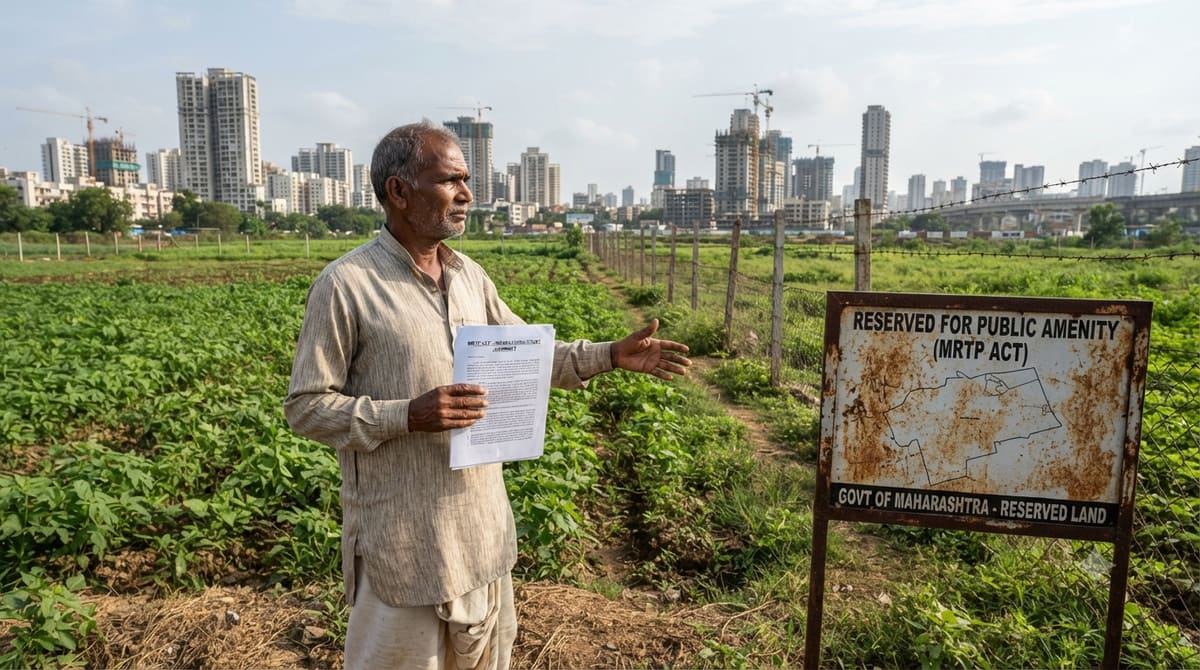
The petitioners, legal representatives of the deceased Vishwanath s/o Bhavanaji Thorat, challenged the order dated 16/03/2016 passed by the Collector, Hingoli, which disqualified Vishwanath’s application for regularization of his encroachment on Gayran land at Gut No. 271, admeasuring 0.30 Are, in village Bhendegaon, Taluka Vasmat, District Hingoli. The land in question was classified as government-owned forest or grazing land (Gayran) under the Maharashtra Land Revenue Code.
Key Facts
- Vishwanath Thorat, a landless Scheduled Caste individual, began cultivating the disputed land in 1977 and continued uninterrupted cultivation until his death.
- On 07/09/1977, the Tahsildar, Vasmat, issued a notice to all encroachers, including Vishwanath, directing removal of encroachments - indicating official awareness of his possession.
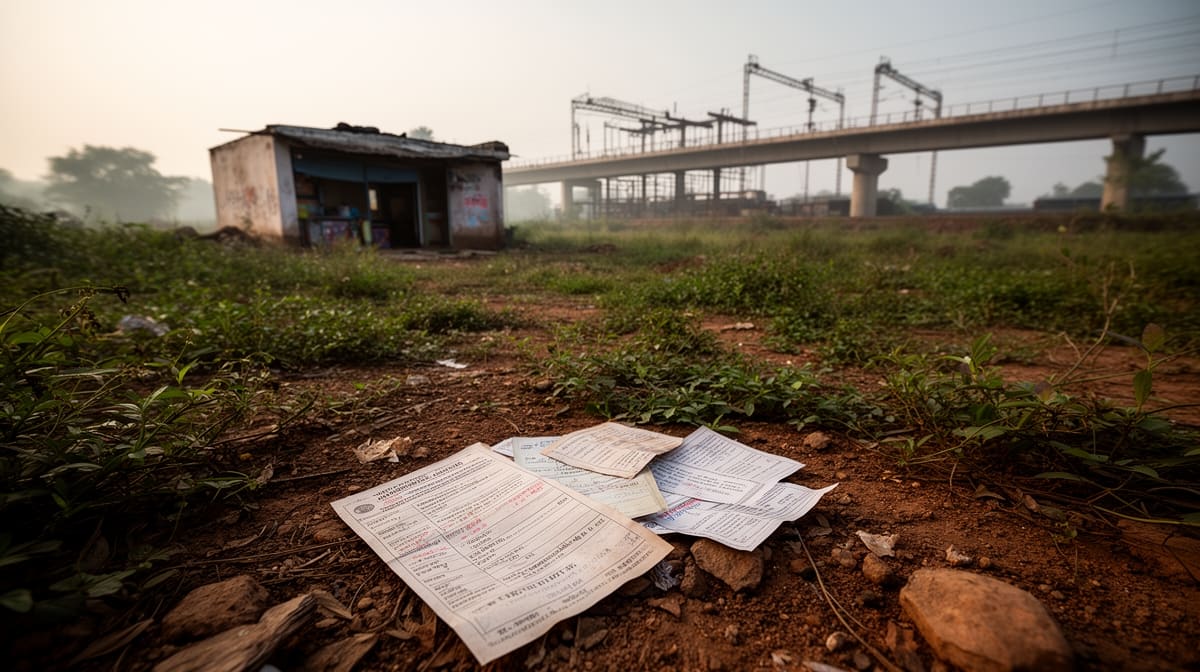
- A spot panchnama conducted by Revenue authorities confirmed Vishwanath’s possession of the land prior to 1990.
- In 2002, Vishwanath submitted a formal proposal for regularization. The Tahsildar submitted a report on 22/01/2002, but deficiencies were noted.
- The Sub-Divisional Officer, Vasmat, issued a letter on 07/11/2002 requesting rectification of deficiencies.
- The Collector, Hingoli, issued a further communication on 06/11/2003 directing compliance.
- The proposal was resubmitted and forwarded to the Collector on 10/02/2014.
- The Tahsildar and Sub-Divisional Officer both recommended regularization, citing continuous cultivation since 01/04/1978.
- Despite these recommendations and documentary evidence, the Collector rejected the proposal on 16/03/2016, citing non-compliance with Government Resolution dated 28/11/1991.
- The petitioners alleged discriminatory treatment, pointing to regularization granted to a similarly situated individual, Ganga Mahadu Thorat.
- Vishwanath Thorat passed away during the pendency of the writ petition. His legal representatives, including his widow Gayabai and sons Bhagwan, Gautam, and Uttam, were substituted as petitioners.
Procedural History
- 07/09/1977: Tahsildar issues notice to encroachers including Vishwanath Thorat
- 22/01/2002: Tahsildar submits initial regularization report
- 07/11/2002: Sub-Divisional Officer requests rectification of deficiencies
- 06/11/2003: Collector directs further compliance
- 10/02/2014: Final proposal forwarded to Collector for decision
- 16/03/2016: Collector issues impugned order rejecting regularization
- 20/03/2016: Writ Petition No. 8945 of 2016 filed before Bombay High Court, Aurangabad Bench
- 06/03/2026: Judgment reserved
- 26/03/2026: Judgment pronounced
The Parties' Positions
Petitioners: Argued that Vishwanath’s possession since 1977, continuous cultivation, landless status, and Scheduled Caste identity made his case eligible for regularization under the spirit of the Supreme Court’s judgment in Jagpal Singh and Government Resolution dated 12/07/2011. They emphasized the administrative delay and selective enforcement.
Respondents: Contended that the 1991 GR barred regularization of encroachments on Gayran land, and that the 2011 GR did not override this blanket prohibition. They argued that the petitioner failed to prove possession since 1971 and that no statutory right to regularization existed.
Relief Sought
The petitioners sought quashing of the impugned order dated 16/03/2016 and a direction to the Collector to reconsider the regularization application in accordance with law, granting opportunity of hearing and considering all records including panchnama and subordinate recommendations.
The Legal Issue
Whether the Collector can refuse to consider regularization of encroached land by a landless Scheduled Caste individual who has cultivated the land since 1977, solely on the ground of non-compliance with a 1991 Government Resolution, when the Supreme Court in Jagpal Singh and a subsequent 2011 Government Resolution contemplate exceptions for such vulnerable groups?
Arguments Presented
For the Petitioner
The petitioner’s counsel relied on Jagpal Singh and Others v. State of Punjab and Others (2011) 11 SCC 396, wherein the Supreme Court held that State Governments may, in exceptional circumstances, regularize encroachments on government land by landless laborers and members of Scheduled Castes and Scheduled Tribes. He argued that the 2011 Government Resolution was issued in compliance with this directive and created a policy framework for such regularization. He further cited Writ Petition No. 5099/2024 (Nandkishor Dhonduji Salwe), decided by the same Bench on 25/07/2024, where an identical claim was upheld and the Collector was directed to pass a reasoned order. The petitioner emphasized that the Revenue authorities themselves had recommended regularization, and that the Collector’s refusal was arbitrary and violative of Article 14.
For the Respondent/State
The Additional Government Pleader contended that the 1991 GR was a blanket prohibition on regularization of encroachments on Gayran land and that the 2011 GR did not expressly override it. She argued that the petitioner failed to establish continuous possession since 1971 as required under the 2011 GR and that no statutory right to regularization existed. She further submitted that the Collector’s decision was based on legal compliance and that judicial interference was unwarranted.
The Court's Analysis
The Court undertook a detailed review of the administrative record and found that the Tahsildar and Sub-Divisional Officer had consistently recommended regularization, citing possession since 1978 and continuous cultivation. The spot panchnama, issued in 1977 and reaffirmed in later proceedings, corroborated the petitioner’s long-standing possession. The Court noted that the Collector’s rejection was based solely on the 1991 GR without addressing the Supreme Court’s directive in Jagpal Singh or the policy intent of the 2011 GR.
"The panchnama conducted by the Revenue Authorities discloses that the original petitioner Vishwanath was possessing the encroached land... and is cultivating the same for his own purpose."
The Court emphasized that the 2011 GR was not merely advisory but a policy directive issued in response to the Supreme Court’s recognition of the constitutional imperative to protect vulnerable groups. The Collector’s failure to consider the petitioner’s Scheduled Caste status, landless condition, and three-decade-long cultivation constituted a failure to apply the correct legal standard.
The Court distinguished the 1991 GR as a general policy, while the 2011 GR created a specific exception for marginalized communities. The Collector’s refusal to engage with the recommendations of subordinate officers and the documentary evidence amounted to arbitrary administrative action. The Court held that the petitioner was entitled to a fair, reasoned, and speaking order, not a mechanical rejection.
The Verdict
The writ petition is allowed. The impugned order dated 16/03/2016 is quashed and set aside. The Collector, Hingoli, is directed to reconsider the petitioner’s application for regularization of the encroached land at Gut No. 271, taking into account all records including the panchnama, recommendations of the Tahsildar and Sub-Divisional Officer, and the petitioner’s status as a landless Scheduled Caste individual. The Collector shall afford the petitioners an opportunity of hearing and pass a reasoned order within three months from the date of this judgment. No order as to costs.
What This Means For Similar Cases
Regularization Is Not Discretionary - It Is Obligatory for Vulnerable Groups
- Practitioners must now argue that where a landless SC/ST individual has cultivated encroached government land for over 25 years, refusal to consider regularization under the 2011 GR is legally unsustainable
- The burden shifts to the State to justify denial with concrete, non-arbitrary reasons - mere reference to older GRs is insufficient
- Revenue authorities’ recommendations must be treated as substantive evidence, not advisory opinions
Administrative Delay Cannot Be Used to Deny Rights
- Delay by the State in processing regularization applications (here spanning 14 years from 2002 to 2016) cannot be used to penalize the applicant
- Courts will treat prolonged inaction as a violation of the right to equality and reasonable administrative procedure under Article 14
- Petitioners may now seek mandamus to compel timely decision-making in pending regularization cases
Precedent from Identical Cases Is Binding
- The Court’s reliance on Writ Petition No. 5099/2024 establishes that identical factual matrices must yield identical outcomes
- Practitioners should cite this judgment alongside Jagpal Singh and the 2011 GR as a tripartite legal framework for regularization claims by marginalized landholders
- Any future refusal to regularize under similar circumstances will be subject to immediate judicial intervention