The Allahabad High Court has reaffirmed that procedural delays cannot be used to extinguish the legitimate claims of marginalized communities to forest land, particularly where historical possession and socio-economic vulnerability are established. In a significant ruling under Article 227, the Court remanded the matter for fresh adjudication, emphasizing substantive justice over technicalities.
Background & Facts
The Dispute
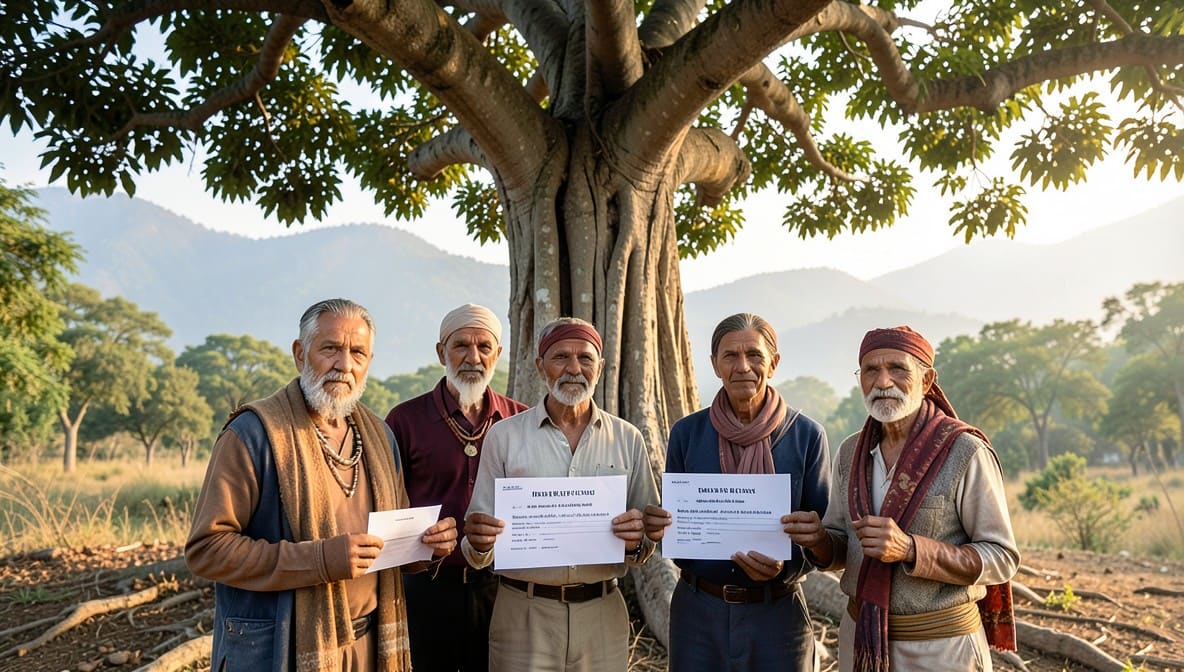
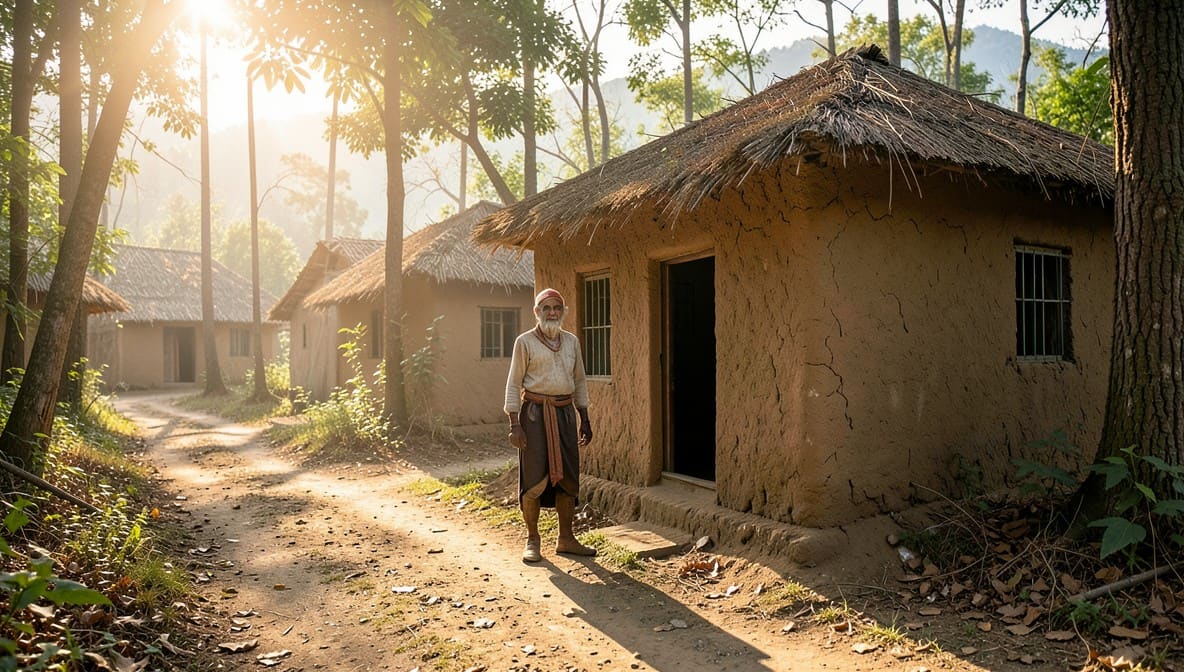
The petitioners, represented by Santosh Kumar and three others, claim ancestral possession of Gata No. 1547M, measuring 0.7500 hectare, located in Village Kuldumari, Pargana Singrauli, Tehsil Duddhi, District Sonebhadra. They assert that their predecessor-in-interest constructed a house on this land prior to the Fasli year 1385, which corresponds to approximately 1328 A.D. or 1271 A.D. in the Gregorian calendar, indicating long-standing, pre-colonial occupation. The land is situated within a forest area, and the petitioners contend that their possession predates any formal forest notification or settlement process.
Key Facts
- The petitioners’ claim is rooted in continuous, open, and peaceful possession since before 1385 Fasli
- The land was not formally notified as reserved forest under the Indian Forest Act, 1927, prior to the petitioners’ occupation
- The Forest Settlement Officer, Sonebhadra, initiated proceedings under the Uttar Pradesh Forest Settlement Rules to determine rights over the land
- The petitioners submitted written objections to the proposed settlement, asserting their customary rights
- The Forest Settlement Officer rejected these objections on 15.06.2020
- An appeal was filed before the Additional District Judge, Anpara Camp Obra, Sonebhadra
- The appellate order dated 16.03.2023 dismissed the appeal solely on the ground of delay, without examining the merits of the claim
- The petitioners argue that their delay in filing the appeal was due to illiteracy, remoteness of the area, and lack of legal awareness
Procedural History
- Prior to 1385 Fasli: Construction of house on Gata No. 1547M by predecessor-in-interest
- 2018-2019: Forest Department initiated settlement proceedings
- 15.06.2020: Forest Settlement Officer, Sonebhadra, rejected petitioners’ objections
- 16.03.2023: Additional District Judge, Anpara Camp Obra, dismissed appeal against rejection solely on ground of delay
- 2023: Writ Petition No. 7641 of 2023 filed under Article 227 before Allahabad High Court
- 11.05.2026: Hearing concluded; petition decided on the basis of joint statement that no further affidavits would be filed
Relief Sought
The petitioners sought quashing of the orders dated 15.06.2020 and 16.03.2023, and a direction to the Forest Settlement Officer to adjudicate their claim on merits, recognizing their historical possession and customary rights under the principles laid down in Banwasi Seva Ashram v. State of U.P.
The Legal Issue
The central question was whether a claim to forest land by a historically marginalized community, grounded in pre-notification possession, can be dismissed solely on the ground of delay in filing an appeal, without adjudicating the substantive merits of the claim.
Arguments Presented
For the Petitioner
Sri Anil Kumar Mishra argued that the petitioners belong to a downtrodden, rural, and religiously observant community residing in a forested region with limited access to legal infrastructure. He relied on the Supreme Court’s judgment in Banwasi Seva Ashram v. State of U.P., which held that forest settlement proceedings must recognize customary rights of forest-dwelling communities, even if documentation is lacking. He further cited Meera Devi v. State of U.P. (Matter under Article 227 No. 877 of 2020), where this Court had previously set aside an order rejecting a similar claim on technical grounds of delay, emphasizing that justice must not be denied on procedural technicalities when substantive rights are at stake.
For the Respondent
The Additional Chief Standing Counsel conceded that the Meera Devi precedent was applicable but argued that delay, even if unintentional, remains a relevant factor under the Limitation Act and must be weighed. He contended that the appellate authority had the discretion to dismiss the appeal on delay, particularly where no sufficient explanation was offered. However, he acknowledged that the factual matrix in the present case was substantially similar to Meera Devi.
The Court's Analysis
The Court observed that the petitioners are members of a community historically dispossessed of forest land, often lacking formal documentation due to socio-economic marginalization. The judgment in Banwasi Seva Ashram was cited with approval, wherein the Supreme Court held that forest settlement authorities must adopt a liberal and humane approach in recognizing customary rights, especially where possession predates formal notification.
"The doctrine of limitation is a procedural shield, not a sword to extinguish substantive rights of the poor and the powerless. When the claimant is a forest-dwelling community with no access to legal aid, delay cannot be the sole ground to reject a claim rooted in centuries of occupation."
The Court noted that the appellate authority had not examined the nature of possession, the historical context, or the applicability of Banwasi Seva Ashram. Instead, it mechanically dismissed the appeal on delay, without addressing whether the petitioners’ claim fell within the protective ambit of forest rights jurisprudence. The Court further held that the precedent in Meera Devi was directly on point and could not be ignored. The principle of equal treatment under Article 14 and the constitutional obligation to protect vulnerable groups under Article 21 compelled the Court to intervene.
The Court emphasized that Article 227 jurisdiction permits intervention not merely for legal error, but also to prevent manifest injustice. In this case, the dismissal on delay alone amounted to a denial of substantive justice.
The Verdict
The petition succeeded. The Court set aside the order dated 16.03.2023 of the Additional District Judge, Anpara Camp Obra, Sonebhadra, and the order dated 15.06.2020 of the Forest Settlement Officer, Sonebhadra. The matter was remitted to the Forest Settlement Officer to pass fresh orders on the merits of the petitioners’ claim, without reference to delay, within three months from the date of presentation of the certified copy of this order.
What This Means For Similar Cases
Delay Cannot Override Substantive Forest Rights
- Practitioners must argue that delay in filing appeals before forest authorities is irrelevant when the claimant belongs to a forest-dwelling community with historical possession
- Courts must apply the Banwasi Seva Ashram standard: possession prior to notification, even if undocumented, must be examined on its merits
- Technical dismissal on limitation grounds is impermissible where fundamental rights to livelihood and shelter are implicated
Article 227 as a Tool for Substantive Justice
- High Courts may intervene under Article 227 even in cases where no statutory appeal lies, if there is a clear miscarriage of justice
- The doctrine of laches must yield to constitutional obligations toward marginalized groups
- Precedents like Meera Devi establish a binding principle: equal treatment requires identical outcomes in materially identical cases
Procedural Fairness in Forest Settlement
- Forest Settlement Officers must record detailed findings on possession, community history, and customary usage
- Oral evidence and local testimony must be given due weight where documentary proof is absent
- The burden shifts to the State to prove that the claimant’s possession was unlawful or encroachment, not to the claimant to prove legality