The Delhi High Court has clarified that a delay in intimating an insurance company about a theft does not automatically invalidate a claim, provided the insured promptly files an FIR and substantiates the quantum of loss through credible documentation. This ruling reinforces the principle that technical breaches must yield to substantive justice in insurance disputes.
Background & Facts
The Dispute
The appellant, M/s L-Comps & Impex Pvt. Ltd., a private limited company engaged in the manufacture and trading of FMCG products, held a composite insurance policy with the respondent, United India Insurance Co. Ltd., covering its godown at C-20, Okhla Phase-I, New Delhi. The policy, bearing No. 110200/11/13/11/00000287, was issued on 18.02.2014 for a period of one year, with a sum insured of ₹6,95,00,000, of which ₹2,00,00,000 was specifically allocated to the Okhla godown.
Key Facts
- The policy covered losses arising from fire, special perils, and burglary.
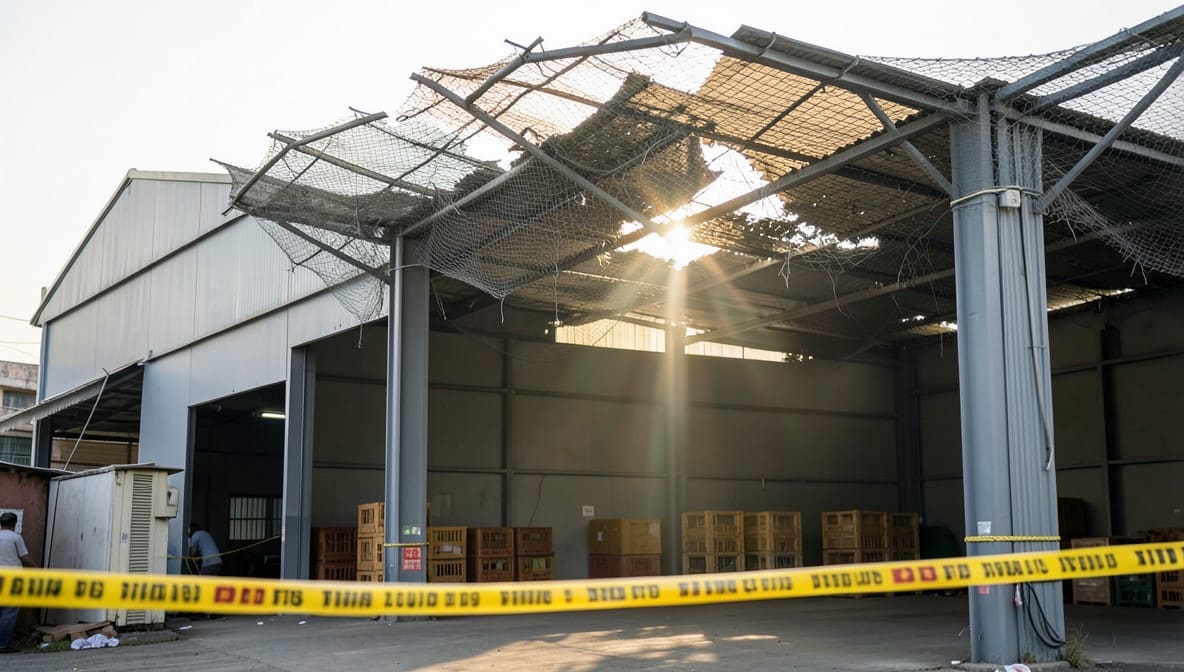
- On the morning of 12.03.2014, employees discovered that the roof net (jali) of the godown had been broken and a portion of the stock was missing.
- The manager, Mr. Bijay Kumar, immediately informed the police, and FIR No. 180/2014 under Section 380 IPC was registered at PS Okhla Industrial Area on the same day.
- An initial approximate list of missing goods, valued at ₹5,70,585, was submitted to the police on 12.03.2014, with a note that only about 50% of the stock had been counted.
- A detailed list of stolen items, valued at ₹13,92,223.25, was prepared on 21.04.2014 based on reconciliation with the computerized Stock Register and submitted to the Investigating Officer.
- The Final Untraced Report, Ex. PW-1/4, was filed by the police before the Metropolitan Magistrate on 20.05.2014.
- The appellant lodged a claim with the insurer on or about 23.04.2014, approximately 40 days after the theft.
- The insurer appointed M/s Alka Gupta & Associates as surveyor, who conducted an investigation.
- By letter dated 16.07.2015, the insurer repudiated the claim on three grounds: (i) alleged negligence due to pre-existing damage to the roof net; (ii) delay in intimation beyond 15 days; and (iii) absence of forcible entry at main entry points.
Procedural History
- 12.03.2014: Theft discovered; FIR registered.
- 20.05.2014: Final Untraced Report submitted to MM.
- 23.04.2014: Intimation sent to insurer.
- 16.07.2015: Claim repudiated by insurer.
- 28.08.2015: Suit filed before Additional District Judge for recovery of ₹16,28,901.15 (₹13,92,223.25 + pre-suit interest).
- 04.01.2019: Trial Court framed issues.
- 10.11.2021: Respondent proceeded ex parte for failure to lead evidence.
- 22.11.2022: Trial Court dismissed suit, holding negligence, delay, and lack of substantiation.
- 23.03.2026: Delhi High Court heard appeal and delivered judgment.
Relief Sought
The appellant sought: (i) recovery of ₹13,92,223.25 as value of stolen goods; (ii) pre-suit interest at 12% per annum from 13.03.2014 to 15.07.2015; and (iii) pendente lite and future interest.
The Legal Issue
The central questions were: (1) Whether the appellant’s failure to repair the roof net constituted negligence under the policy’s exclusion clause? (2) Whether a 40-day delay in intimating the insurer voids the claim despite prompt FIR filing? (3) Whether the claim amount of ₹13,92,223.25 was substantiated despite an initial lower estimate?
Arguments Presented
For the Appellant
The appellant argued that the roof net was broken during the theft, not prior to it, as evidenced by the FIR and unchallenged testimony of PW-1. It relied on Om Prakash v. Reliance General Insurance and Gurshinder Singh v. Shriram General Insurance to contend that delay in intimation cannot defeat a genuine claim when FIR is lodged immediately and loss is verified by police and surveyor. It submitted that the ₹13,92,223.25 figure was derived from the computerized Stock Register, corroborated by the Final Untraced Report, and was not inflated.
For the Respondent
The respondent did not file a reply to the appeal and did not cross-examine PW-1 or lead any evidence. It had initially repudiated the claim on technical grounds but failed to contest the substantive evidence during trial.
The Court's Analysis
The Court examined each ground of repudiation in light of the evidence and binding precedents.
Regarding negligence, the Court held that the FIR and PW-1’s testimony established that the net was broken during the commission of theft, not before. The Trial Court erred in treating the FIR as substantive evidence. As the respondent did not cross-examine PW-1 or adduce any evidence to prove pre-existing damage, the finding of negligence was unsustainable. The Court emphasized: > "No negligence on the part of the Appellant was therefore, established."
On delay in intimation, the Court relied on Gurshinder Singh v. Shriram General Insurance, which held that when an FIR is lodged immediately and the theft is verified by police and surveyor, mere delay cannot be a ground to deny the claim. The Court noted that the insurer itself investigated the claim through its surveyor and only raised delay as a secondary ground after processing the claim on merits. > "Once the insurer had itself verified the theft and the loss of goods through its Surveyor, a technical delay in intimation could not be treated as a mandatory ground to reject an otherwise, genuine claim."
On substantiation of loss, the Court rejected the Trial Court’s reliance on the initial estimate of ₹5,70,585. It clarified that such estimates are inherently provisional and that the final figure of ₹13,92,223.25, derived from the computerized Stock Register and confirmed in the Final Untraced Report, was credible. The Court observed: > "The stock position of roughly ₹27,782,707.59, out of which only about ₹13,92,223.25 is claimed as stolen, lends credibility to the claim inasmuch as the Appellant is not attempting to inflate the loss to the Policy limit."
The Verdict
The appeal was allowed. The Delhi High Court set aside the Trial Court’s judgment dated 22.11.2022 and decreed the suit in favor of the appellant for ₹13,92,223.25, along with pre-suit interest at 9% per annum from 13.03.2014 until realization. The Court directed the preparation of a decree sheet and disposed of all pending applications.
What This Means For Similar Cases
Delay in Intimation Is Not Fatal If FIR Is Prompt
- Practitioners must argue that immediate FIR filing negates the prejudice caused by delayed intimation.
- Insurers cannot rely on technical breaches when they have already investigated and verified the claim.
- Courts will prioritize substantive verification over procedural compliance in genuine theft claims.
Substantiation Through Digital Records Is Valid
- Computerized stock registers, when maintained regularly and cross-verified with police reports, constitute reliable evidence of loss.
- Initial rough estimates submitted to police do not limit the final claim amount if a detailed reconciliation follows.
- Insurers bear the burden to challenge the authenticity of digital records; silence amounts to admission.
Negligence Must Be Proven, Not Assumed
- Allegations of negligence under policy exclusions require positive evidence; mere suspicion or circumstantial inference is insufficient.
- The burden lies on the insurer to prove pre-existing vulnerability, not on the insured to prove absence of it.
- Unchallenged testimony and absence of cross-examination render allegations of negligence legally untenable.