The Bombay High Court has clarified that the imposition of damages under Section 85-B of the Employees' State Insurance Act, 1948, is not invalid merely because the authority did not explicitly enumerate factors like frequency of default or extent of delay - provided the employer was heard and the decision reflects reasoned application. This ruling reinforces procedural accountability in statutory penalty regimes.
Background & Facts
The Dispute
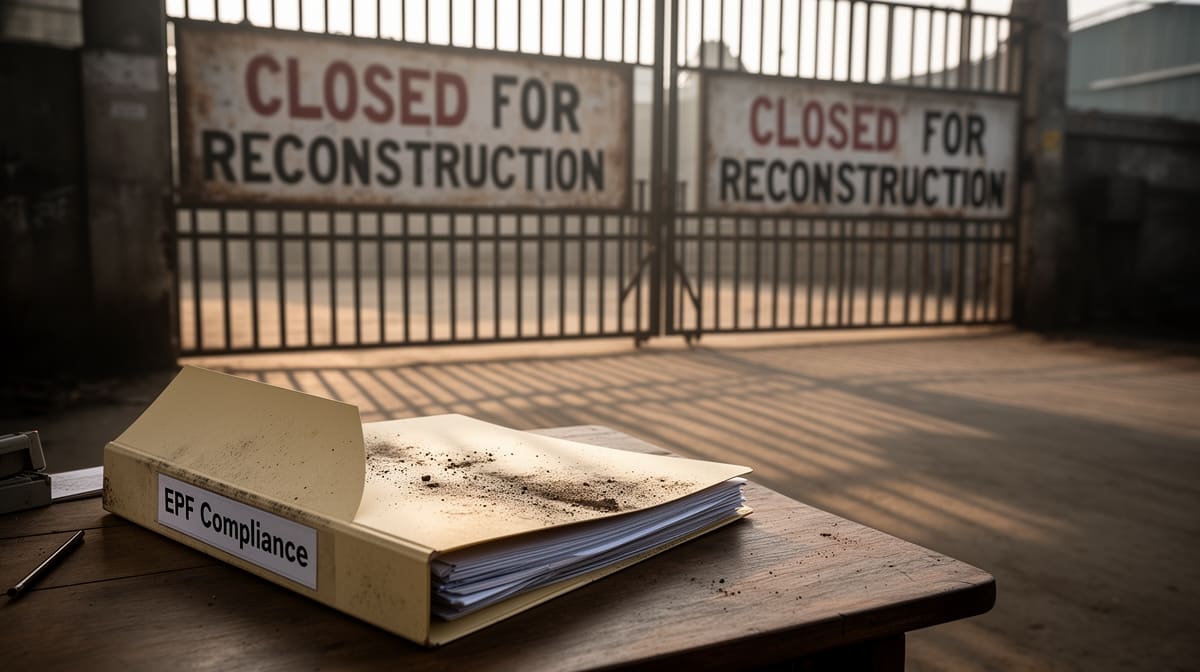
The respondent, M/s. Aashu Engineering Works, failed to pay statutory contributions under the Employees' State Insurance Act, 1948. An inspection revealed discrepancies between actual employment records and those submitted to the Corporation, including a wage register for 1997 that was backdated and printed on forms bearing a phone number introduced only in 1999. The Corporation issued a show cause notice, and after considering the respondent’s verbal request for installment payments and claim of unawareness, levied damages of Rs.27,849/- under Section 85-B - less than one-third of the arrears of Rs.96,705/-. The respondent challenged this order before the Employees’ State Insurance Court (ESI Court).
Procedural History
- January 2006: Appellants issued show cause notice and levied damages under Section 85-B.
- February 2010: ESI Court quashed the damages order, holding it was mechanical and failed to consider factors like number of defaults, delay, and frequency.
- August 2011: First Appeal admitted by Bombay High Court on the substantial question of law regarding the validity of the ESI Court’s interference.
Relief Sought
The appellants sought restoration of the original damages order, arguing that the ESI Court overstepped its review jurisdiction by substituting its own assessment without any factual basis raised by the respondent.
The Legal Issue
The central question was whether Section 85-B of the ESI Act permits an appellate court to set aside a damages order solely on the ground that the authority did not explicitly consider factors such as number of defaults or extent of delay, when those factors were never pleaded by the employer.
Arguments Presented
For the Appellant
The appellants contended that the order under Section 85-B was not mechanical but reflected reasoned application. They highlighted that the respondent was given a full opportunity to respond to the show cause notice and submitted only two grounds: (1) verbal request for installments, and (2) lack of awareness of consequences. The Corporation had already shown leniency by calculating arrears from the date of inspection rather than the statutory due date. Reliance was placed on Regional Director, ESIC v. Kumar Still and General Mills & Anr., which affirmed that discretion must be exercised based on facts raised by the employer - not assumed by the court.
For the Respondent
The respondent argued that the damages order was arbitrary and mechanical, citing Kumar Still to assert that authorities must consider mitigating factors such as delay, frequency, and circumstances beyond control. They claimed the Corporation failed to apply its mind and that the ESI Court was justified in quashing the order to prevent abuse of penal powers.
The Court's Analysis
The Court rejected the ESI Court’s reasoning that the order was mechanical for failing to consider unspecified factors. It emphasized that discretion under Section 85-B is not unguided, but it is not bound to articulate every possible factor unless those factors are brought to the authority’s attention by the employer. The Court observed:
"If the respondent wanted to take the benefit of these factors, they should have pleaded so in their reply to show cause notice. There is nothing on record that appellants gave assurance of non-levy of damages if payment is made in installments."
The Court further noted that the respondent’s conduct - backdating wage records and misrepresenting employment data - constituted malafide intention, which justified the imposition of penal damages. The amount levied was modest, representing only 28% of arrears, and the Corporation had already granted relief by adjusting the computation period. The Court distinguished Kumar Still by pointing out that in that case, the employer had raised genuine hardship; here, no such grounds were pleaded. The Court held that procedural fairness does not require the authority to anticipate unraised defenses.
The judgment also underscored the deterrent purpose of penal provisions in social welfare legislation: "Penal provisions have dual effect - to penalise the offender and to act as a deterrent to others." The Court warned against judicial overreach that undermines statutory enforcement by imposing subjective standards not grounded in the record.
The Verdict
The appellants won. The Bombay High Court held that Section 85-B allows for discretionary imposition of damages without mandatory enumeration of factors unless raised by the employer. The ESI Court’s order was set aside, and the original damages order was restored. The Court affirmed that reasoned application, not mechanical repetition, satisfies due process - provided the employer had a fair opportunity to be heard.
What This Means For Similar Cases
Employer Must Raise Mitigating Factors Explicitly
- Practitioners must ensure clients raise all mitigating circumstances - such as financial hardship, systemic delays, or reliance on official advice - in written replies to show cause notices.
- Oral submissions alone, without documentation, will not suffice to trigger judicial scrutiny of the authority’s discretion.
Discretion Is Presumed Reasoned Unless Proven Otherwise
- Authorities are not required to list every possible consideration in their orders if no relevant facts are placed before them.
- Courts will not substitute their own assessment of fairness unless the order is patently arbitrary or based on irrelevant considerations.
Penal Provisions in Welfare Laws Are Not to Be Diluted
- Courts must respect the deterrent intent behind statutory penalties in social security regimes.
- Reduction or waiver of damages under Section 85-B is a privilege, not a right, and must be grounded in specific, pleaded grounds - not judicial sympathy.