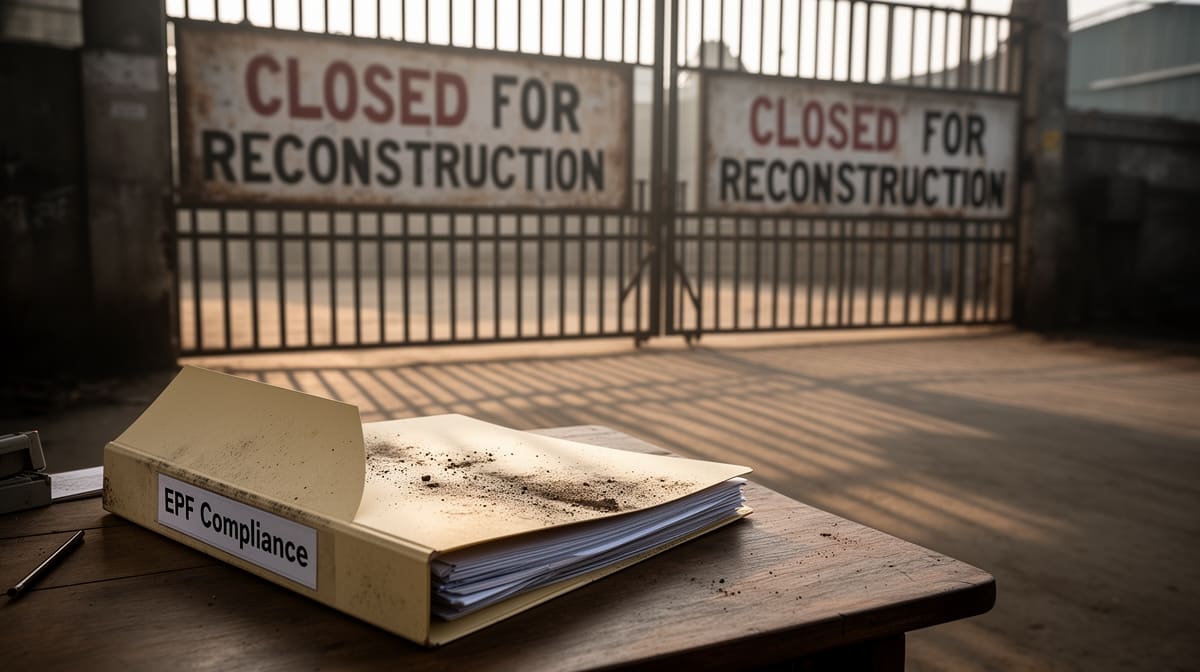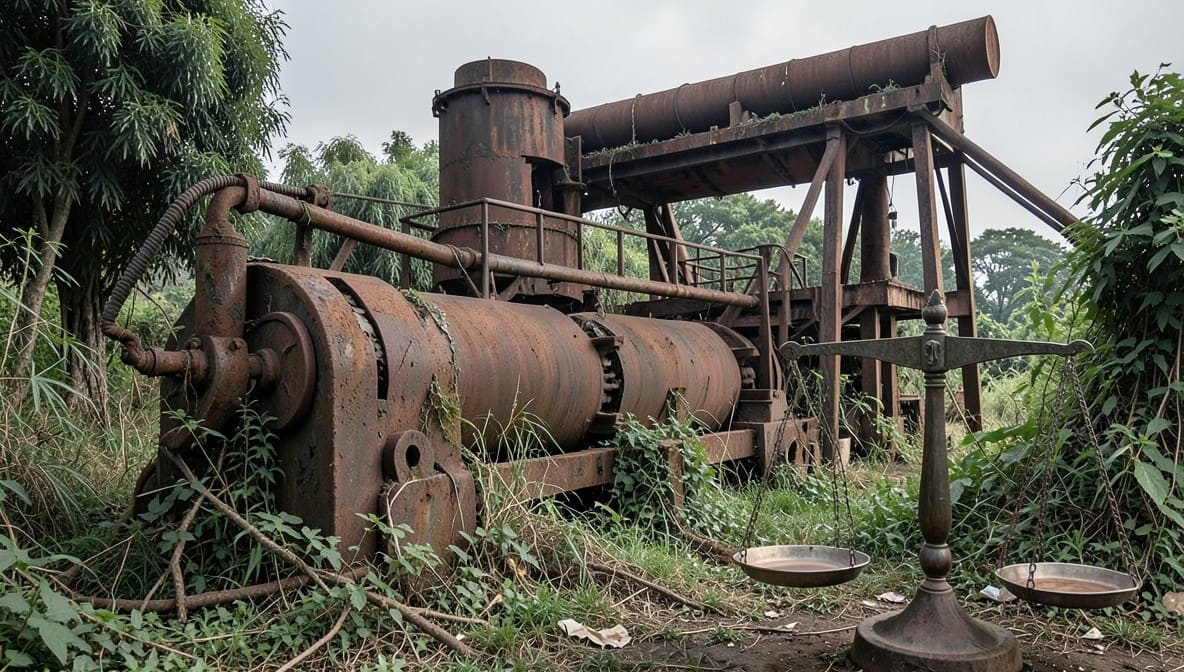
The Bombay High Court has delivered a significant ruling on the interpretation of Section 14-B of the Employees Provident Funds and Miscellaneous Provisions Act, 1952 (EPF Act), emphasizing that damages levied for default in provident fund contributions must be proportionate to the default and supported by reasoned orders. The Court reduced the damages imposed on a sugar mill from Rs. 8,27,425 to Rs. 3,00,000, citing inordinate delay of 15-19 years in initiating proceedings and the absence of reasons in the impugned order. The judgment underscores the quasi-judicial nature of Section 14-B proceedings and the necessity of adhering to principles of natural justice.
Background & Facts
The Dispute
The petitioner, Shree Changdeo Sugar Mills Ltd., a company registered under the Companies Act, 1956, operated a sugar mill in Putamba, Maharashtra. The mill secured credit facilities from Bank of Madura Ltd. prior to 1984 but defaulted on repayment, leading to the filing of Suit No. 1937 of 1985 in the Bombay High Court. The Court appointed a Receiver to manage the mill, resulting in the cessation of operations and non-payment of wages to employees from 23 October 1985. The employees' Trade Union challenged the Receiver's appointment before the Division Bench of the High Court and subsequently filed a Special Leave Petition (SLP) and a Writ Petition under Article 32 before the Supreme Court. On 21 March 1988, the Supreme Court directed the High Court to examine the feasibility of restructuring the mill or, failing that, to close it and retrench employees. The High Court fixed 31 October 1988 as the retrenchment date, terminating the employees' services.
In 1994, the Government of Maharashtra initiated a co-opertivisation scheme, allotting the mill to Ninaidevi Sahakari Kharkhana. Under the scheme, Rs. 1,10,00,000 was paid to the Trade Union towards arrears of wages, settling the employees' claims.
Key Facts
- 1984: Petitioner defaults on credit facilities; Suit No. 1937 of 1985 filed.
- 23 October 1985: Court Receiver takes over the mill; operations cease; no wages paid.
- 21 March 1988: Supreme Court disposes of SLP and Writ Petition, directing High Court to examine restructuring or retrenchment.
- 12 December 1988: High Court orders retrenchment of employees effective 31 October 1988.
- 1994: Maharashtra Government initiates co-opertivisation; Rs. 1,10,00,000 paid to Trade Union towards arrears.
- 3 July 1996: RPFC issues summons under Section 7-A EPF Act for provident fund dues from 1984-1988, demanding Rs. 8,48,929.
- 3 February 1997: Petitioner deposits Rs. 8,48,929 under protest.
- 26 February 1997: RPFC passes order under Section 7-A; Petitioner challenges it in Writ Petition No. 3230 of 1997.
- 12 August 1997: High Court dismisses the writ petition.
- 23 September 1997: Division Bench dismisses appeal.
- 5 December 1997: Supreme Court grants leave to appeal.
- 9 January 2001: Supreme Court dismisses appeal, crystallizing liability under Section 7-A.
- 6 October 2004: RPFC issues show cause notice under Section 14-B EPF Act for damages of Rs. 8,27,425.
- 6 March 2006: Petitioner replies to show cause notice.
- 29 June 2006: RPFC passes impugned order levying damages of Rs. 8,27,425.
- 28 November 2006: High Court admits writ petition and stays execution subject to deposit of Rs. 3,00,000.
Procedural History
- 1985-1988: Litigation before High Court and Supreme Court regarding Court Receiver and retrenchment.
- 1996-2001: Section 7-A proceedings; Petitioner's challenges dismissed up to Supreme Court.
- 2004-2006: Section 14-B proceedings; impugned order passed on 29 June 2006.
- 2006: Present writ petition filed; stay granted on deposit of Rs. 3,00,000.
Relief Sought
The petitioner sought:
- Quashing of the impugned order dated 29 June 2006.
- Reduction of damages from Rs. 8,27,425 to a proportionate amount.
- Directions to the RPFC to pass a reasoned order considering mitigating circumstances.
The Legal Issue
The central question was whether Section 14-B of the EPF Act permits levy of damages in cases where:
- The employer had no control over the establishment during the default period due to Court Receiver's appointment.
- There was an inordinate delay of 15-19 years in initiating proceedings.
- The impugned order lacked reasons and failed to consider mitigating circumstances.
Arguments Presented
For the Petitioner
- Default Requires Pre-Existing Liability: Section 14-B presupposes a determined liability and failure to discharge it by the due date. During 1985-1988, the mill was under Court Receiver, and no wages were paid, hence no liability arose.
- One-Time Settlement Not Basic Wages: The Rs. 1,10,00,000 paid under the co-opertivisation scheme was a one-time settlement, not basic wages, and thus not subject to provident fund contributions.
- Inordinate Delay: The show cause notice under Section 14-B was issued after 15-19 years, violating the Central Board of Trustees' Circular dated 28 November 1990, which directs finalization of Section 14-B cases within 3 years. Reliance was placed on National Marketing Corporation v. RPFC and K.T. Rolling Mills Pvt. Ltd. v. R.M. Gandhi.
- Absence of Mens Rea: The Petitioner acted in good faith, depositing the amount under protest immediately upon issuance of the Section 7-A notice.
- Non-Speaking Order: The impugned order merely reproduced facts without addressing the Petitioner's defence, violating principles of natural justice. Reliance was placed on Josts Engineering Limited v. Union of India.
- Colourable Exercise of Power: The damages levied (almost 100% of the contribution) were disproportionate and amounted to colourable exercise of power, especially since no interest under Section 7-Q was levied.
For the Respondents
- Maintainability: The order under Section 14-B is appealable before the Central Government Industrial Tribunal, rendering the writ petition non-maintainable.
- EPF Act is Beneficial Legislation: Section 14-B is intended to ensure compliance with provident fund obligations, and damages are penal and deterrent, not merely compensatory. Reliance was placed on Organo Chemical Industries v. Union of India.
- No Defence for Default: Financial stringency, closure, or retrenchment do not constitute valid defences to Section 14-B proceedings. Reliance was placed on Hindustan Times Ltd. v. Union of India.
- No Limitation Period: There is no prescribed period of limitation for initiating Section 14-B proceedings, and delay does not prejudice the employer unless irretrievable prejudice is established.
- Principles of Natural Justice Complied: The Petitioner was given a reasonable opportunity to be heard, and the Circular prescribing timelines is merely directory.
The Court's Analysis
The Court undertook a detailed examination of Section 14-B EPF Act, which empowers the RPFC to recover damages not exceeding the amount of arrears for default in payment of provident fund contributions. The Court relied on the following legal principles:
-
Quasi-Judicial Nature of Section 14-B: The Supreme Court in Organo Chemical Industries v. Union of India held that proceedings under Section 14-B are quasi-judicial and must adhere to principles of natural justice. The RPFC is obligated to pass a speaking order, recording reasons for rejecting the employer's defence. Justice Krishna Iyer, in his concurring judgment, emphasized the importance of reasoned orders.
-
Damages as Penalty: Damages under Section 14-B are not compensatory but penal and deterrent, intended to prevent defaults. However, the quantum must be proportionate to the default, and mitigating circumstances must be considered.
-
Delay in Initiating Proceedings: While the EPF Act does not prescribe a limitation period for Section 14-B proceedings, inordinate delay can vitiate the proceedings if it causes prejudice to the employer. The Court relied on Hindustan Times Ltd. v. Union of India, which recognized that delay may lead to irretrievable prejudice, such as loss of records or inability to reconstruct evidence.
The Court observed that the impugned order dated 29 June 2006 was non-speaking and arbitrary. It merely narrated facts without addressing the Petitioner's defence, including:
- The mill's operations being under the Court Receiver.
- The absence of wages during the default period.
- The Petitioner's immediate deposit of the demanded amount under protest.
The Court held that the RPFC failed to apply its mind to the peculiar facts of the case, including:
- The inordinate delay of 15-19 years in initiating Section 14-B proceedings.
- The financial hardship faced by the Petitioner, whose mill operations were shut down 20 years prior.
- The bonafide dispute regarding liability, which was crystallized only after the Supreme Court's judgment in 2001.
The Court noted that the RPFC mechanically levied damages equal to the contribution amount (Rs. 8,27,425), ignoring the principle of proportionality. The Petitioner had already deposited Rs. 3,00,000 pursuant to the High Court's interim order, and the Court held that this amount, along with accrued interest, would suffice as damages.
The Court also took judicial notice of Paragraph 32-B of the EPF Scheme, 1952, which empowers the Central Board of Trustees to reduce or waive damages up to 50%. Additionally, the Vishwas 2026 Scheme, introduced by the EPFO, permits levy of damages at a concessional rate of 1% per month for delays beyond 4 months, further supporting the Court's view that damages must be proportionate.
"The authority under Section 14-B has to apply his mind to the facts of the case and the reply to the show cause notice and pass a reasoned order after following principles of natural justice and giving a reasonable opportunity of being heard; the Regional Provident Fund Commissioner usually takes into consideration the number of defaults, the period of delay, the frequency of default and the amounts involved... mere delay in initiating action under section 14-B cannot amount to prejudice inasmuch as the delay on the part of the department, would have only allowed the employer to use the monies for his own purposes or for his business especially when there is no additional provision for charging interest. However, the employer can claim prejudice if there is proof that between the period of default and the date of initiation of action under section 14-B, he has changed his position to his detriment to such an extent that if the recovery is made after a large number of years, the prejudice to him is of an 'irretrievable' nature."
The Verdict
The writ petition succeeded in part. The Court:
- Set aside the impugned order dated 29 June 2006 to the extent of the quantum of damages.
- Directed that the Rs. 3,00,000 deposited by the Petitioner pursuant to the interim order dated 28 November 2006, along with accrued interest, shall represent the damages payable under Section 14-B EPF Act.
- Permitted the Respondent to withdraw the deposited amount with interest.
- Clarified that no further damages shall be demanded from the Petitioner pursuant to the impugned order.
The Court partly allowed the writ petition, making the rule partly absolute, with no order as to costs.
What This Means For Similar Cases
Damages Under Section 14-B Must Be Proportionate
- Mitigating Circumstances Matter: Employers can argue for reduction of damages by demonstrating financial hardship, bonafide disputes, or lack of control over the establishment during the default period.
- Proportionality is Key: Courts are likely to interfere if damages levied are disproportionate to the default, especially where the amount approaches 100% of the contribution.
Inordinate Delay Vitiates Proceedings
- Prejudice Must Be Established: While delay alone may not vitiate proceedings, employers can argue irretrievable prejudice if they can show loss of records, change in financial position, or inability to defend due to passage of time.
- Circulars Are Directory but Relevant: Though administrative circulars (e.g., the 3-year timeline for finalizing Section 14-B cases) are not binding, they can be cited to highlight procedural lapses.
Speaking Order Is Non-Negotiable
- Reasons Must Be Recorded: RPFC orders under Section 14-B must address the employer's defence and record reasons for rejecting mitigating circumstances. Non-speaking orders are liable to be set aside.
- Natural Justice Must Be Followed: Employers must be given a reasonable opportunity to present their case, and orders must reflect application of mind to the facts.
New Schemes Provide Relief
- Vishwas 2026 Scheme: Employers with pending EPF cases can avail concessional damages at 1% per month for delays beyond 4 months, offering a viable alternative to protracted litigation.
- Paragraph 32-B EPF Scheme: The Central Board of Trustees' power to reduce or waive damages up to 50% can be invoked in appropriate cases.