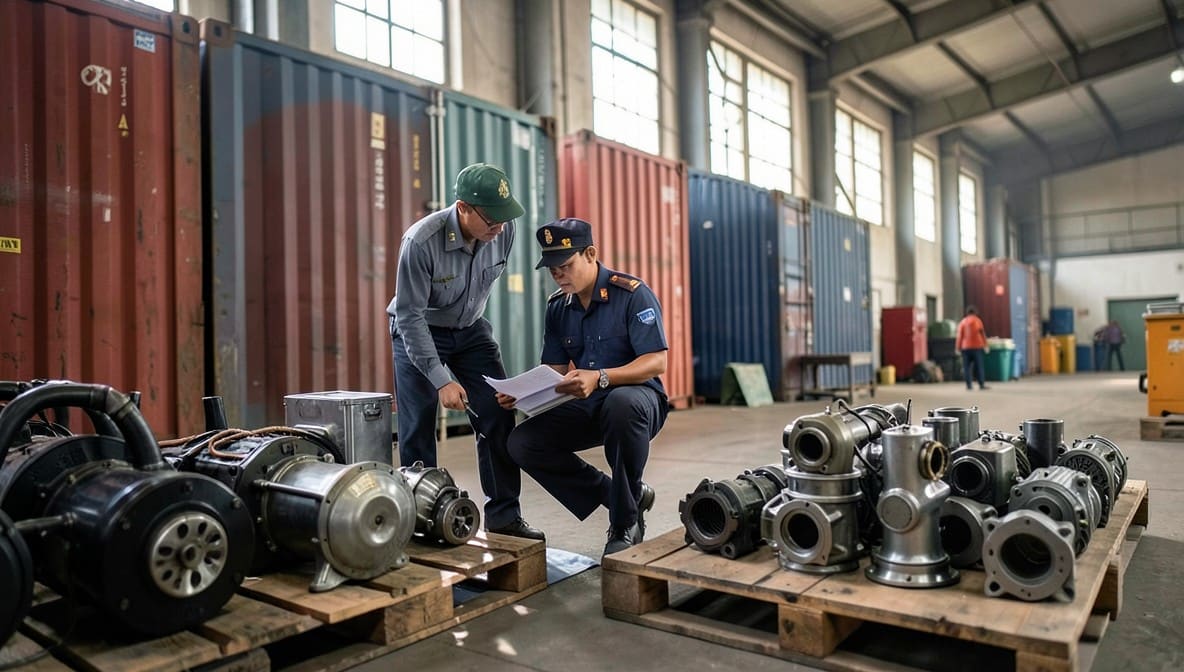
The Eastern Zonal Bench of the Customs, Excise and Service Tax Appellate Tribunal clarified that the definition of “capital goods” under Notification No. 104/2009-Cus. is expansive enough to include spares, accessories and components used for modernisation of plant equipment. By setting aside a demand of Rs 1,30,06,857 under Section 28(4) of the Customs Act, the Tribunal affirmed the appellant’s right to avail the SHIS benefit for such imports.
Background & Facts
The Dispute
M/s Usha Martin Limited (appellant), a manufacturer of steel wire ropes and related products, imported a series of items between January 2013 and November 2013 using seven Status Holder Incentive Scrips (SHIS). The Revenue alleged that the goods - “Whims Bottom Parts”, “Driving Wheels”, “Gaskets” and other spares for a coke-oven plant - were not capital goods and that duty was debited in excess of the 10 % ceiling prescribed in Notification 104/2009-Cus.
Key Facts
- Financial Years 2010-11 to 2012-13: Export earnings of Rs 13,15,84,13,708.
- SHIS credit: 1 % of export FOB value, i.e., Rs 13,15,84,136, split into 18 certificates.
- Two SHIS certificates purchased from M/s UM Cables Ltd: No. 0310713657 (duty credit Rs 26,17,861) and No. 0310713796 (duty credit Rs 16,16,952).
- Seven SHIS certificates (Nos. 0210172568, 0210172571, 0210174638, 0310713657, 0310713796, 0210184765, 0210184763) were used for nine Bills of Entry covering items such as gaskets, bushings, main springs, pneumatic motors, gear reducers, and wheels, with a total duty credit of Rs 1,30,06,857.
- Show-cause notice issued on 04-11-2015 by the Directorate of Revenue Intelligence alleging contravention of Conditions 4(i) and 4(iii) of Notification 104/2009-Cus.
- Appellant’s reply dated 05-01-2017 and personal hearing on 25-08-2017.
- Impugned order-in-original dated 31-10-2017 confirmed the duty demand, interest and penalty; confiscation under Section 111(o) was dropped.
Procedural History
- 31-10-2017: Order-in-Original confirming duty demand of Rs 1,30,06,857 under Section 28(4) of the Customs Act, 1962, with interest (Sec 28AA) and penalty (Sec 114A).
- 27-07-2026: Hearing of the appeal before the Eastern Zonal Bench, CESTAT.
- 05-08-2026: Final order delivered, setting aside the demand.
Parties' Positions
- Appellant: Asserted that the imported items were capital goods or accessories required for modernisation; the 10 % ceiling applies only to spares of previously imported capital goods; procedural time-bars under Section 28(9) were breached; no suppression or mis-representation occurred.
- Respondent (Commissioner of Customs, Port): Contended that the items were merely spares/parts, that duty credit exceeded the 10 % limit, that the appellant failed to furnish the undertaking under Condition 5A, and that the demand was within the extended limitation period.
Relief Sought
The appellant prayed that the order-in-original be set aside and the demand of Rs 1,30,06,857, together with interest and penalty, be vacated.
The Legal Issue
Whether the goods imported by M/s Usha Martin Limited - namely gaskets, bushings, wheels, gear reducers and other accessories - fall within the definition of “capital goods” under Notification 104/2009-Cus., thereby qualifying for exemption under the SHIS scheme, and whether the demand under Section 28(4) of the Customs Act, 1962, together with interest and penalty, is legally sustainable.
Arguments Presented
For the Appellant
- The definition of “capital goods” in Notification 104/2009-Cus. (and the identical definition in FTP 2009-14) is wide-ranging and expressly includes accessories and parts that contribute to efficiency of plant equipment.
- Cited precedents: M/s Cosmic Ferro Alloys Ltd. v. Commissioner of Customs (Port) (2024 (8) TMI 674), Ratnamani Metal & Tubes Ltd. v. Commissioner of Customs, Mundra (2022 (9) TMI 1170), M/s Jindal Stainless Ltd. v. Commissioner of Customs (Port) (2025 (3) TMI 855), among others, establishing that spares and accessories used for modernisation qualify as capital goods.
- The 10 % ceiling under Condition 4 applies only to components/spares of capital goods imported earlier; fresh capital goods (including accessories) are not subject to this restriction.
- The show-cause notice was issued on 04-11-2015 and the order passed on 31-10-2017, exceeding the one-year period prescribed by Section 28(9) of the Customs Act.
- No evidence of suppression or wilful mis-statement; the appellant disclosed the nature of the goods at customs clearance.
For the Respondent
- Argued that the imported items were merely spares/parts and therefore subject to the 10 % duty-credit ceiling.
- Maintained that the appellant failed to furnish the undertaking required under Condition 5A of Notification 104/2009, which is mandatory for components/spares of earlier imported capital goods.
- Contended that the extended limitation period under Section 28(4) was applicable because the alleged contravention involved duty not levied or short-levied.
- Emphasised that the duty demand, interest and penalty were lawfully imposed under Sections 28(4), 28AA and 114A respectively.
The Court's Analysis
The Tribunal began by examining the definition of “capital goods” in Notification 104/2009-Cus. and the corresponding provision in the Foreign Trade Policy (FTP) 2009-14. Both instruments describe capital goods as any plant, machinery, equipment or accessories required for manufacture or production, directly or indirectly, and expressly include items used for replacement, modernisation, technological up-gradation or expansion.
"The goods imported by the appellant are not spares/parts but are 'capital goods' covered under Notification No. 104/2009-Cus."
The Tribunal noted that the definition is deliberately expansive; it embraces accessories that enhance efficiency without altering the basic function of the equipment. Relying on Cosmic Ferro Alloys Ltd. and Ratnamani Metal & Tubes Ltd., the Tribunal held that the imported items - although classified under various tariff headings - satisfy the “user test” and therefore qualify as capital goods.
Regarding the 10 % ceiling, the Tribunal clarified that Condition 4(i) and 4(iii) of Notification 104/2009 limit the duty credit to 10 % only for components, spares or parts of capital goods that were imported earlier. The appellant’s imports were fresh capital goods (including accessories) for the setting up and modernisation of a coke-oven plant, pellet plant, arc furnace and related facilities; consequently, the ceiling was inapplicable.
On procedural grounds, the Tribunal observed that Section 28(9) of the Customs Act mandates that an adjudicating authority decide a show-cause notice within six months (normal period) or one year (extended period). The notice dated 04-11-2015 was answered on 05-01-2017, and the order was rendered on 31-10-2017 - well beyond the one-year limit. This breach rendered the order illegal.
The Tribunal also examined the allegation of suppression. It found that the appellant had disclosed the nature of the goods at the time of customs clearance and had not concealed any material fact. The burden of proving wilful suppression rests on the Revenue, which failed to produce any evidence.
Finally, the Tribunal considered the claim for penalty under Section 114A. Since the substantive demand under Section 28(4) was unsustainable, the penalty could not stand.
In sum, the Tribunal concluded that the demand, interest and penalty were legally untenable and set the impugned order aside.
The Verdict
The appeal was allowed. The Tribunal set aside the demand of Rs 1,30,06,857 under Section 28(4) of the Customs Act, 1962, along with the interest under Section 28AA and the penalty under Section 114A. No confiscation, redemption fine or additional penalty was imposed. The appellant was relieved of the duty liability.
What This Means For Similar Cases
Broad Interpretation of Capital Goods
- Practitioners should argue that accessories, spares and components used for modernisation fall within the definition of capital goods under Notification 104/2009-Cus. and FTP 2009-14.
- The “user test” - whether the item is required directly or indirectly for manufacture - is decisive, irrespective of tariff classification.
The 10 % Ceiling Applies Only to Earlier Imported Capital Goods
- The 10 % duty-credit limit under Condition 4 is confined to components/spares of capital goods that were already imported.
- Fresh capital goods, even if imported in multiple consignments, are exempt from this ceiling.
Strict Observance of Section 28(9) Time-Bars
- Adjudicating authorities must decide show-cause notices within the statutory period (six months or one year).
- Failure to do so renders any demand, interest or penalty illegal and subject to reversal.
Actionable Takeaways
- Cite the Tribunal’s expansive definition of capital goods in SHIS-related disputes.
- Verify whether the imported items are “new” capital goods or spares of previously imported equipment before invoking the 10 % limit.
- Ensure that any show-cause notice is responded to and adjudicated within the prescribed timeline to avoid procedural invalidation.