
Topic

CESTAT appeal

CESTAT appeals involve challenges to orders passed by customs, excise, and service tax authorities under India's indirect tax regime, particularly under the Central Excise Act and CENVAT Credit Rules.

9 articlesLatest August 2026
Concessional Basic Customs Duty (10%) Upheld for Mixed Polyester Warp-Knitted Fabrics | Revenue Failed to Prove Mis-classification : CESTAT
Case Law Analysis
|Custom, Excise & Service Tax Tribunal

Concessional Basic Customs Duty (10%) Upheld for Mixed Polyester Warp-Knitted Fabrics | Revenue Failed to Prove Mis-classification : CESTAT

CESTAT affirmed the importer’s classification of mixed polyester warp-knitted fabrics under tariff item 6005 9000 and upheld the 10 % concessional BCD, because the revenue could not produce technical evidence of mis-classification. The ruling shifts the evidential burden to customs authorities in similar classification disputes, benefiting textile importers.

FTP Para 6.15 | Destruction of Duty-Free Inputs by 100% EOUs Does Not Attract Customs/Excise Duty: CESTAT Chennai Holds 2015 Amendments Retrospective
Case Law Analysis
|Custom, Excise & Service Tax Tribunal

FTP Para 6.15 | Destruction of Duty-Free Inputs by 100% EOUs Does Not Attract Customs/Excise Duty: CESTAT Chennai Holds 2015 Amendments Retrospective

CESTAT Chennai rules that 100% Export Oriented Units (EOUs) destroying duty-free inputs under FTP Para 6.15 are not liable for Customs or Excise duty, even pre-2015. The Tribunal held the 2015 amendments clarificatory and retrospective, shielding EOUs from duty demands, interest, and penalties for obsolete inputs destroyed with due intimation to authorities.

CESTAT Upholds CTH 8708 94 00 Classification for EPS-ECU & Automotive Parts Under General Interpretative Rules : Delhi Bench
Case Law Analysis
|Custom, Excise & Service Tax Tribunal

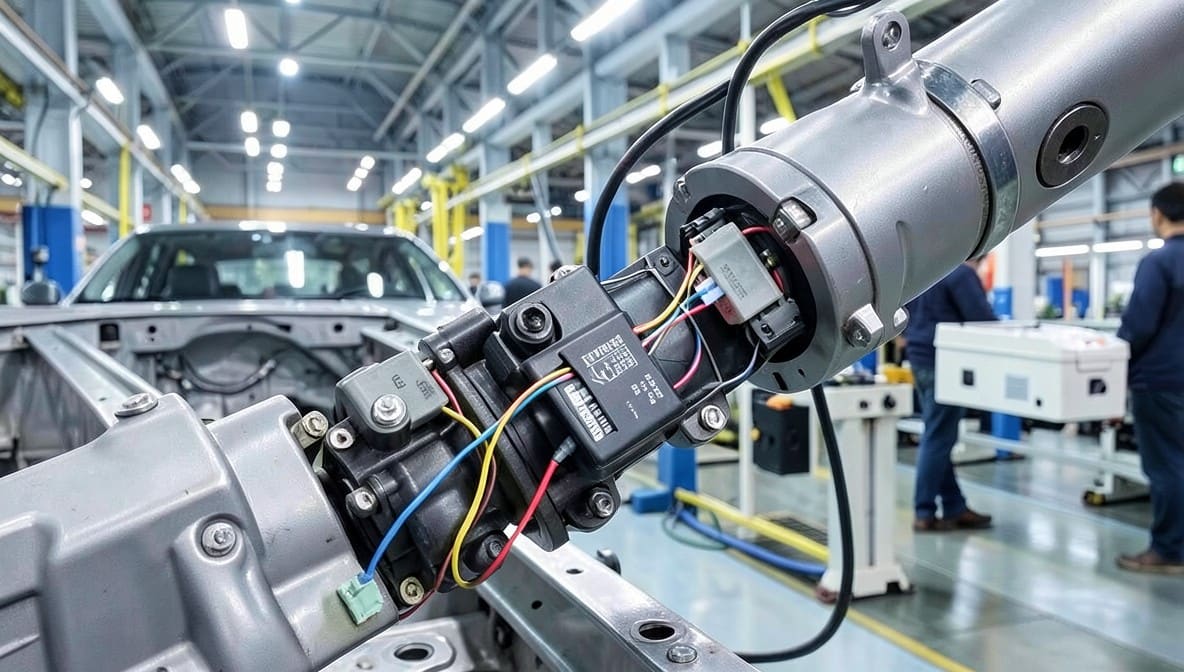
CESTAT Upholds CTH 8708 94 00 Classification for EPS-ECU & Automotive Parts Under General Interpretative Rules : Delhi Bench

The Customs, Excise and Service Tax Appellate Tribunal (CESTAT), Delhi, affirmed the classification of Electronic Control Units for Electronic Power Steering (EPS-ECU) and related parts under CTH 8708 94 00, dismissing appeals challenging differential duty demands. The ruling reinforces binding precedent on tariff classification under the General Interpretative Rules, impacting automotive manufacturers and importers.

EODC is Conclusive Proof of Export Obligation Fulfilment Under FTP Schemes: CESTAT Kolkata Quashes ₹14.97 Crore Demand | Customs Law
Case Law Analysis
|Custom, Excise & Service Tax Tribunal

EODC is Conclusive Proof of Export Obligation Fulfilment Under FTP Schemes: CESTAT Kolkata Quashes ₹14.97 Crore Demand | Customs Law

CESTAT Kolkata holds that Export Obligation Discharge Certificates (EODCs) issued by DGFT are binding and conclusive evidence of export obligation fulfilment under FTP schemes. The ruling sets aside a ₹14.97 crore customs demand, reinforcing legal certainty for exporters and importers relying on DGFT authorisations.

Section 3A Central Excise Act | Actual Production Records Prevail Over Delayed Statutory Documents: CESTAT Kolkata Quashes 18-Year-Old Demand
Case Law Analysis
|Custom, Excise & Service Tax Tribunal

Section 3A Central Excise Act | Actual Production Records Prevail Over Delayed Statutory Documents: CESTAT Kolkata Quashes 18-Year-Old Demand

CESTAT Kolkata ruled that when statutory documents are unavailable due to passage of time, actual production records submitted by the assessee hold legal precedence. The Tribunal set aside an excise duty demand of ₹73.1 lakh, reinforcing that tax authorities cannot rely on procedural lapses caused by delay to deny consequential relief to manufacturers.

Rule 6 CENVAT Credit Rules | Proportionate Reversal of Input Credit on Exempted Electricity Sales Does Not Constitute Non-Availment : CESTAT
Case Law Analysis
|Custom, Excise & Service Tax Tribunal

Rule 6 CENVAT Credit Rules | Proportionate Reversal of Input Credit on Exempted Electricity Sales Does Not Constitute Non-Availment : CESTAT

CESTAT ruled that reversing CENVAT credit proportionately on inputs used for exempted electricity sales does not amount to non-availment under Rule 6 of the CENVAT Credit Rules. The Tribunal set aside demands totaling ₹7.13 crore, clarifying that separate record-keeping is not mandatory if credit reversal is already effected, offering relief to manufacturers with captive power plants.

Cenvat Credit Rules 2004 | Insurance, Forex Hedging Fees & HR Training Services Are Input Services for Manufacturers : CESTAT
Case Law Analysis
|Custom, Excise & Service Tax Tribunal

Cenvat Credit Rules 2004 | Insurance, Forex Hedging Fees & HR Training Services Are Input Services for Manufacturers : CESTAT

CESTAT rules that insurance, professional fees for forex hedging, and HR training services qualify as input services under Rule 2(l) of the Cenvat Credit Rules, 2004, entitling manufacturers to credit. The decision clarifies the scope of 'input service' for indirect tax credit eligibility, impacting manufacturers availing such services.

CENVAT Credit Rules | Non-Availment of Input Credit on Non-Excisable Goods Exempts Rule 6(3) Payment : CESTAT
Case Law Analysis
|Custom, Excise & Service Tax Tribunal

CENVAT Credit Rules | Non-Availment of Input Credit on Non-Excisable Goods Exempts Rule 6(3) Payment : CESTAT

CESTAT ruled that manufacturers who do not avail CENVAT credit on inputs used for non-excisable goods are not liable to pay 5-6% of their value under Rule 6(3) of the CENVAT Credit Rules. The decision clarifies that non-excisable goods do not qualify as 'exempted goods' unless explicitly defined, offering relief to manufacturers dealing with by-products.

CRCL Test Reports Sufficient for Customs Tariff Classification Without Additional Evidence: CESTAT Ahmedabad
Case Law Analysis
|Custom, Excise & Service Tax Tribunal

CRCL Test Reports Sufficient for Customs Tariff Classification Without Additional Evidence: CESTAT Ahmedabad

CESTAT Ahmedabad ruled that Central Revenues Control Laboratory (CRCL) test reports alone are adequate for determining customs tariff classification, remanding the case for re-determination. The decision underscores that importers cannot be denied duty exemptions solely due to procedural lapses in sharing test reports if the substantive findings are conclusive.