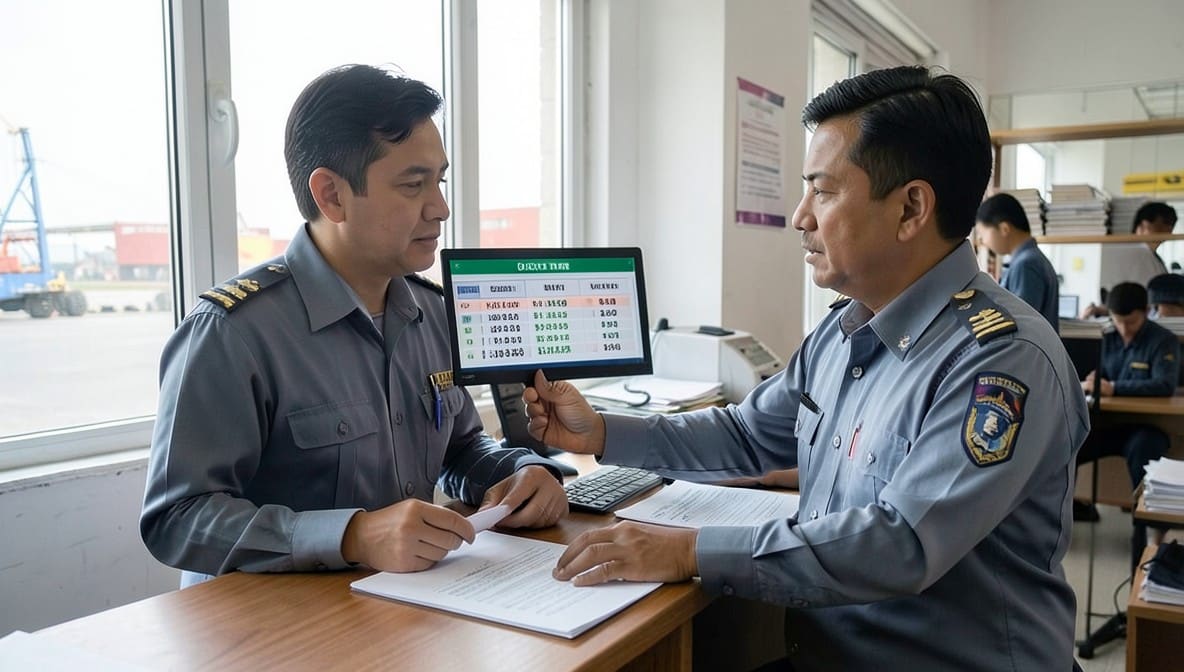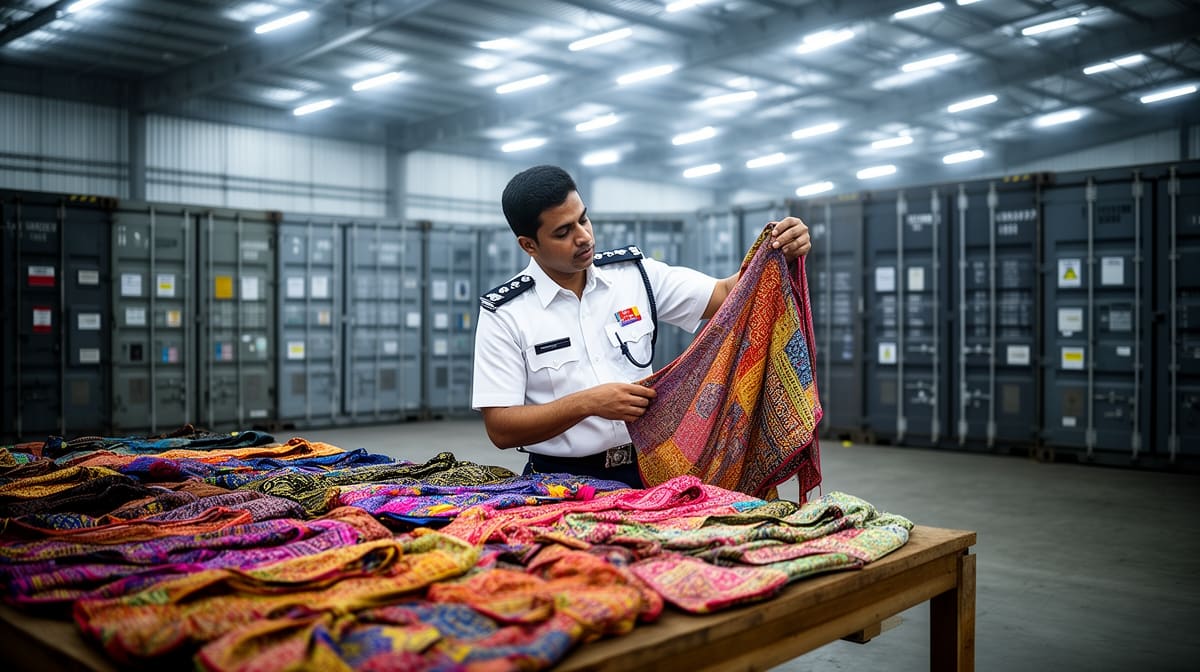
The Customs, Excise and Service Tax Appellate Tribunal (CESTAT) Kolkata has delivered a significant ruling clarifying that mere processing of mica beyond rifting and trimming does not automatically reclassify goods under Heading 6814, and that extended limitation under Section 28(4) cannot be invoked in the absence of wilful suppression or misdeclaration. The judgment reinforces the principle that classification disputes, even when involving substantial technical disagreement, are not equivalent to fraudulent intent.
Background & Facts
The Dispute
M/s. M.P. Mica Enterprises Private Limited, a Jharkhand-based importer, imported consignments of mica from Pamica Electric, China, declaring them as "Crude Mica Rifted into Sheets" and claiming classification under Tariff Item 25251090. The Principal Commissioner of Customs (Port), Kolkata, alleged that the goods were actually "Processed Mica Sheets of Regular Shapes & Sizes and Plain Edge," classifiable under Tariff Item 68149090, which attracts higher Basic Customs Duty (5% vs. 10%) and IGST (5% vs. 18%). The Department invoked the extended period of limitation under Section 28(4) of the Customs Act, 1962, to reassess 72 past Bills of Entry, in addition to two live consignments.
Key Facts
- The appellant imported goods under 74 Bills of Entry between 2023 and 2025.
- All import documents, including invoices, packing lists, and Bills of Entry, consistently described the goods as "Crude Mica Rifted into Sheets."
- The declared classification under CTH 25251090 matched the supplier’s documentation.
- Two consignments (Bills of Entry No. 8818052 dated 11.03.2025 and No. 9198035 dated 29.03.2025) were selected for sampling.
- Samples were sent to the Central Refractory and Chemical Laboratory (CRCL), Kolkata, on 01.04.2025 and 28.04.2025.
- CRCL reports (Lab. No. 14/68 and Lab. No. 204/25) stated: "Each of the two samples appears to be processed mica," and one report added: "mixed with polymer/additives."
- Physical examination under Panchnama noted the goods had "regular shapes, plain edges, and finished surfaces."
- The Director of the appellant admitted during interrogation that mechanical processing was done to obtain usable sheets but maintained the classification under 2525 was correct.
- No samples were drawn from the remaining 72 past consignments.
- The Department confirmed differential duty of Rs. 26,57,292 for the two live consignments and Rs. 4,89,96,957 for the 70 past consignments (excluding two provisionally assessed).
- Confiscation under Section 111(m), redemption fines under Section 125, and penalties under Sections 112, 114A, and 114AA were imposed.
Procedural History
- 11.03.2025: Bill of Entry No. 8818052 filed.
- 29.03.2025: Bill of Entry No. 9198035 filed.
- 01.04.2025: Sample drawn from B/E No. 8818052 and sent to CRCL.
- 28.04.2025: Sample drawn from B/E No. 9198035 and sent to CRCL.
- 17.04.2025: CRCL Report No. 14/68 issued.
- 04.06.2025: CRCL Report No. 204/25 issued.
- 23.04.2025: B/E No. 8818052 seized under Section 110.
- 17.06.2025: B/E No. 9198035 seized under Section 110.
- 13.11.2025: Order-in-Original issued by Principal Commissioner.
- 26.12.2025: Corrigendum issued.
- 22.05.2026: Hearing before CESTAT Kolkata.
- 26.05.2026: Final Order passed.
Relief Sought
The appellant sought: (i) setting aside of the reclassification under CTH 6814 for all 74 consignments; (ii) quashing of the demand for differential duty for the 72 past consignments; (iii) setting aside of confiscation, redemption fines, and penalties; and (iv) deletion of interest and extended period invocation under Section 28(4).
The Legal Issue
The central questions were: (1) Whether goods described as "crude mica rifted into sheets" with regular shapes and plain edges fall under CTH 25251090 or CTH 68149090; (2) Whether CRCL reports stating goods "appear to be processed" conclusively establish classification under CTH 6814; (3) Whether the extended period under Section 28(4) can be invoked in a pure classification dispute without proof of suppression; and (4) Whether test results from two consignments can be extrapolated to 72 past consignments.
Arguments Presented
For the Appellant
The appellant argued that CTH 2525 explicitly includes mica rifted into sheets, even after cleaning, splitting, trimming, and shaping into sheets, as per HSN Explanatory Notes. The term "processed" in the CRCL reports was vague and non-conclusive; it did not establish die-cutting, agglomeration, reconstitution, or cutting to shape - the precise criteria for CTH 6814. The appellant emphasized that classification is a legal question, not a laboratory one, and that the Supreme Court in Commissioner of Customs v. Dilip Kumar and Company held that ambiguity in tariff entries must be resolved in favor of the assessee. The appellant further cited Chemphar Drugs, Dabur India, and Television & Components Ltd. to argue that mere misclassification without suppression or wilful misstatement cannot trigger Section 28(4). The absence of samples from past consignments rendered their reclassification legally invalid.
For the Respondent
The Revenue contended that the CRCL reports confirmed the goods were "processed mica," and the physical description of "regular shapes and plain edges" was inconsistent with the irregular, untrimmed sheets covered under CTH 2525. The Department relied on Chapter Note 1 of Chapter 25, which excludes products subjected to processing beyond washing or crushing. The Revenue argued that the appellant’s consistent import pattern and admission of mechanical processing indicated deliberate misclassification to evade higher duty. The extended period under Section 28(4) was justified due to the apparent intent to evade duty.
The Court's Analysis
The Tribunal conducted a meticulous analysis of the tariff headings, HSN Explanatory Notes, and judicial precedents. It observed that CTH 2525 includes mica sheets obtained by rifting and trimming, even if shaped into sheets, and that CTH 6814 applies only when mica is further worked beyond trimming - such as by die-cutting, agglomeration, or reconstitution. The CRCL reports, which used the phrase "appears to be processed," were held to be inherently tentative and insufficient to establish the specific physical characteristics required for CTH 6814. The Tribunal emphasized that "processed" is a broad term and does not equate to "worked beyond rifting and trimming" as defined in the HSN notes.
"The description of the imported goods (regular shapes, plain edge) is fundamentally inconsistent with the definition of mica falling under CTH 2525."
The Tribunal accepted the appellant’s argument that the Director’s admission of mechanical processing did not equate to the statutory criteria for CTH 6814. It held that the Department failed to prove the goods were die-punched, agglomerated, or reconstituted - the very conditions that exclude goods from CTH 2525.
Regarding the 72 past consignments, the Tribunal held that classification is consignment-specific and that test results from two samples cannot be mechanically applied to untested goods. It relied on Stonex India Pvt. Ltd. and Penshibao Wang P. Ltd. to affirm that each Bill of Entry is a separate assessment. The Revenue’s assertion that the appellant was a "regular importer" was dismissed as unsubstantiated speculation.
On Section 28(4), the Tribunal held that the ingredients of suppression or wilful misstatement were absent. The appellant disclosed full details, declared the goods as per supplier documents, and claimed classification openly. The Tribunal reiterated that Dabur India and Television & Components Ltd. establish that classification disputes, however complex, do not constitute suppression.
Regarding penalties and confiscation, the Tribunal held that Section 111(m) requires material misdeclaration, which was absent. Penalties under Sections 112, 114A, and 114AA were set aside because no wilful intent, false documents, or suppression were established.
The Verdict
The appellant succeeded in part. The Tribunal upheld the reclassification of the two live consignments under CTH 68149090 and confirmed the differential duty of Rs. 26,57,292 with interest. However, it set aside the demand of Rs. 4,89,96,957 for the 72 past consignments, quashed the invocation of Section 28(4), cancelled the confiscation of goods, and deleted all redemption fines and penalties under Sections 112, 114A, and 114AA. The order was passed on 26.05.2026.
What This Means For Similar Cases
Classification Disputes Are Not Misdeclaration
- Practitioners must argue that any ambiguity in tariff classification must be resolved in favor of the assessee under Dilip Kumar and Company.
- Merely describing goods as "processed" does not trigger CTH 6814; the specific exclusions under HSN Notes must be proven.
- Customs authorities cannot equate technical classification differences with fraudulent intent.
Extended Limitation Requires Proven Suppression
- Section 28(4) cannot be invoked unless there is clear evidence of deliberate withholding, falsification, or concealment.
- Routine errors in tariff interpretation, even if erroneous, do not constitute suppression as per Chemphar Drugs and Dabur India.
- The burden of proving wilful misstatement lies entirely with the Revenue.
Sample Testing Cannot Be Extrapolated
- Test reports from one or two consignments cannot be used to reassess past imports unless identical samples are drawn from each.
- Each Bill of Entry is a separate assessment; extrapolation violates natural justice and evidentiary standards.
- Practitioners should challenge any reassessment based on "pattern of imports" without physical testing of each consignment.