The Customs, Excise and Service Tax Appellate Tribunal (CESTAT), Hyderabad, has clarified that a bona fide dispute over tariff classification cannot justify penalty imposition, and that circulars adverse to importers cannot be applied retrospectively. This judgment reinforces the principle that the burden of proving misclassification lies squarely with the department, not the importer.
Background & Facts
The Dispute
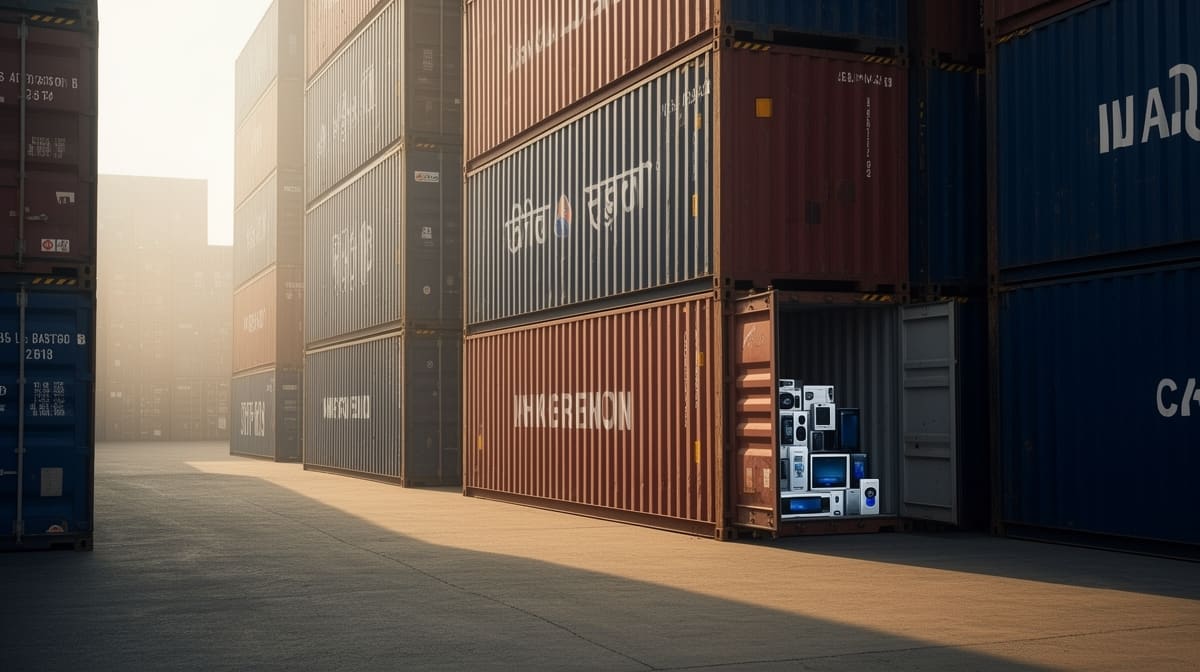
The appellant, M/s Space Technologies, imported facsimile machines and their parts from M/s Panasonic Asia Pacific, Singapore during the financial years 2007-08 and 2008-09. The appellant declared the goods under CTH 8443 3260, claiming exemption from Basic Customs Duty (BCD) under Notification No. 24/2005-Customs dated 01.03.2005. The Directorate of Revenue Intelligence (DRI) investigated and issued a Show Cause Notice (SCN) alleging misclassification, asserting that the machines should have been classified under CTH 8443 3970, which does not qualify for the exemption. The adjudicating authority confirmed the demand of customs duty of Rs. 8,55,011/-, along with interest and an equal amount as penalty. The Commissioner (Appeals) upheld this order on 27.06.2013.
Key Facts
- The imported facsimile machines were declared under CTH 8443 3260: "Facsimile machine, capable of connecting to an automatic data processing machine or to network"
- The department contended the machines fell under CTH 8443 3970: "Facsimile machine not capable of getting connected to automatic data processing machine"
- The appellant asserted that the machines could be connected to a network via external VBC of ATA adapters
- The department did not conduct any technical testing or provide expert evidence to prove the machines were incapable of network connectivity
- The goods were physically verified and cleared by customs authorities at the time of import
- Assessment was conducted by the department, not self-assessed by the importer
- Circular No. 11/2008-Cus dated 01.07.2008, which clarified classification criteria, was applied retrospectively by the department to cover imports from 2007-08
Procedural History
- 2007-08 & 2008-09: Import of facsimile machines and parts
- 2010-2011: DRI investigation initiated; SCN issued
- 27.06.2013: Order-in-Appeal No. 30/2013 (H-II) passed by Commissioner (Appeals) upholding demand and penalty
- 28.11.2013: Customs Appeal No. 28146 of 2013 filed before CESTAT Hyderabad
- 02.12.2025: Hearing held before CESTAT Hyderabad
- 13.03.2026: Final Order No. A/30160/2026 pronounced
Relief Sought
The appellant sought:
- Setting aside of the impugned order dated 27.06.2013
- Quashing of the demand for differential customs duty of Rs. 8,55,011/-
- Cancellation of the penalty of Rs. 8,55,011/-
- Declaration that the classification under CTH 8443 3260 was correct
- Ruling that Circular No. 11/2008-Cus could not be applied retrospectively
The Legal Issue
The central question was whether a bona fide classification dispute, based on technical interpretation of tariff headings, can justify imposition of penalty under Section 112 of the Customs Act, and whether a circular issued by CBEC that imposes a stricter interpretation can be applied retrospectively to imports made prior to its issuance.
Arguments Presented
For the Appellant
The appellant’s advocate argued:
- The tariff entry distinguishes facsimile machines based on their capability to connect to an ADP machine or network, not actual connection
- External devices like VBC of ATA adapters rendered the machines capable of networking, satisfying the criteria for CTH 8443 3260
- The department failed to produce any technical evidence proving the machines were incapable of connectivity
- The goods were assessed and cleared after physical verification, indicating departmental acceptance at the time of import
- Circular No. 11/2008-Cus, which clarified the classification, was issued on 01.07.2008 and could not be applied to imports prior to that date, as per HM Bags Manufacturer v. CCE
- Classification disputes involving technical interpretation do not amount to suppression or willful misstatement, as held in CC v. Indian Institute of Chemical Technology and Pearl Enterprises v. CC
- Penalty under Section 112 cannot be imposed where there is no mens rea or deliberate misdeclaration
For the Respondent
The Assistant Commissioner of Customs (AR) reiterated the findings of the Commissioner (Appeals), arguing:
- The machines were not inherently network-enabled and should have been classified under CTH 8443 3970
- The use of external adapters was an afterthought and not part of the original design
- The department’s classification was based on technical assessment and should prevail
- The retrospective application of Circular No. 11/2008-Cus was justified to ensure uniformity
The Court's Analysis
The Tribunal emphasized that tariff classification is a matter of technical interpretation, and the burden of proving that goods fall under a more restrictive or non-exempt tariff heading lies with the department. The court noted that the department had not conducted any technical examination, provided no expert report, and failed to demonstrate that the machines were incapable of network connectivity.
"It is a settled principle that the burden of proving classification under a particular tariff entry lies upon the department, as held by Hon'ble Bombay High Court in the case of UOI Vs Sahney Steel and Press Works Ltd (supra)."
The Tribunal further held that the physical verification and clearance of goods by customs authorities at the time of import constituted implicit acceptance of the classification declared. The absence of any evidence of suppression, misstatement, or fraudulent intent negated the grounds for penalty.
"Penalty cannot be imposed in cases involving bonafide interpretation of classification, as held by Coordinate Bench at Kolkata in the case of Pearl Enterprises Vs CC (Port), Kolkata (supra)."
Regarding Circular No. 11/2008-Cus, the Tribunal relied on HM Bags Manufacturer v. CCE, where the Supreme Court held that circulars which impose a burden adverse to the assessee cannot be applied retrospectively. The circular, issued on 01.07.2008, could not be used to reclassify imports made in 2007-08.
The Tribunal also cited Jet Speed Audio Pvt Ltd v. CCE and UMS Radio Factory Ltd v. CCE, affirming that classification must be based on the functional capability of the goods, not assumptions by the department.
The Verdict
The appeal was allowed. The impugned Order-in-Appeal dated 27.06.2013 was set aside. The demand for differential customs duty of Rs. 8,55,011/- and the penalty of Rs. 8,55,011/- were cancelled. The classification of the imported facsimile machines under CTH 8443 3260 was upheld. The department was directed not to invoke the extended period of limitation for reassessment in respect of these imports.
What This Means For Similar Cases
Classification Disputes Are Not Fraud
- Practitioners can now confidently argue that mere differences in technical interpretation of tariff headings do not constitute suppression or willful misstatement
- No penalty can be imposed unless there is clear evidence of intent to evade duty
- Physical verification and departmental clearance at the time of import create a strong presumption of bona fide declaration
Burden of Proof Rests on the Department
- The department must produce technical evidence - not assumptions - to prove non-compliance with a tariff entry
- Absence of testing reports, expert opinions, or lab analysis renders the department’s classification unsustainable
- Courts and tribunals will not accept speculative arguments about a machine’s capability
Circulars Cannot Be Applied Retrospectively
- Any CBEC circular that narrows exemption eligibility or imposes stricter classification must be applied prospectively only
- Importers are protected from retrospective application of adverse circulars under HM Bags Manufacturer
- Appeals against reassessments based on retrospective circulars should be filed on this ground alone