Kerala High Court judgments

453 Kerala High Court judgments explained in plain English: what was decided, the law applied and why it matters. Page 3 of 19.

Preventive Detention Under PIT NDPS Act | Delay in Detention Order Does Not Vitiate Legality If 'Live Link' Maintained : Kerala HC
Case Law Analysis
|Kerala High Court

Preventive Detention Under PIT NDPS Act | Delay in Detention Order Does Not Vitiate Legality If 'Live Link' Maintained : Kerala HC

Kerala High Court rules that mere delay in executing a preventive detention order under the PIT NDPS Act does not invalidate it, provided the authorities reasonably explain the delay and maintain the 'live link' with the detenu. The judgment reinforces that procedural lapses alone cannot snap the nexus between detention grounds and public safety concerns, offering critical clarity for detention jurisprudence.

Section 92 CPC | Locus Standi and Prima Facie Case Mandatory for Public Trust Suits: Kerala HC Dismisses Appeal Against Salvation Army Entities
Case Law Analysis
|Kerala High Court

Section 92 CPC | Locus Standi and Prima Facie Case Mandatory for Public Trust Suits: Kerala HC Dismisses Appeal Against Salvation Army Entities

Kerala High Court reinforces that plaintiffs under Section 92 CPC must establish both locus standi and a prima facie case to sue religious or charitable trusts. The ruling bars frivolous litigation against public trusts by setting a strict threshold for maintainability, impacting trustees, beneficiaries, and litigants in property disputes involving charitable organizations.

Academic Progression Overrides Semester Backlog | Kerala HC Rules B.Pharm Students Eligible for Final Exam Despite Seventh Semester Failure : Kerala HC
Case Law Analysis
|Kerala High Court

Academic Progression Overrides Semester Backlog | Kerala HC Rules B.Pharm Students Eligible for Final Exam Despite Seventh Semester Failure : Kerala HC

Kerala High Court held that B.Pharm students who cleared all prior semesters must be permitted to appear for the final (eighth) semester exam, even if they failed one subject in the seventh semester. The ruling emphasizes academic progression over rigid backlog rules, setting a precedent for student rights in professional degree programs.

NDPS Act Rule 14 | Delayed Chemical Report Mandates Statutory Bail Even for Intermediate Quantity: Kerala HC
Case Law Analysis
|Kerala High Court

NDPS Act Rule 14 | Delayed Chemical Report Mandates Statutory Bail Even for Intermediate Quantity: Kerala HC

Kerala High Court rules that failure to file a chemical analysis report within the NDPS Rules' stipulated timeline entitles accused to statutory bail, regardless of contraband quantity. The judgment reinforces procedural compliance as a non-negotiable safeguard under the NDPS Act, impacting all pending drug offence cases where forensic delays occur.

BNSS Section 355 | Video Linkage Permitted for Elderly Accused with Comorbidities: Kerala HC Sets Precedent for Trial Efficiency
Case Law Analysis
|Kerala High Court

BNSS Section 355 | Video Linkage Permitted for Elderly Accused with Comorbidities: Kerala HC Sets Precedent for Trial Efficiency

Kerala High Court allows a 78-year-old accused with cardiac ailments to participate in trial via video linkage under BNSS Section 355, emphasizing age and health considerations over rigid attendance rules. The ruling balances accused rights with trial efficiency, setting a precedent for similar cases involving vulnerable defendants.

Section 4(6) Kerala Professional Colleges Act | Admission Supervisory Committee Can Order Fee Refund Before Admission Closure: Kerala HC
Case Law Analysis
|Kerala High Court

Section 4(6) Kerala Professional Colleges Act | Admission Supervisory Committee Can Order Fee Refund Before Admission Closure: Kerala HC

Kerala High Court affirms that the Admission Supervisory Committee has jurisdiction under Section 4(6) of the Kerala Professional Colleges Act, 2006, to order fee refunds for students who leave before admission closure. This ruling clarifies the regulatory authority over self-financing institutions, ensuring accountability in fee refund policies.

NDPS Act Section 37 | Bail Granted When Contraband Reclassified from MDMA to Methamphetamine, Reducing Quantity to Intermediate Tier : Kerala HC
Case Law Analysis
|Kerala High Court

NDPS Act Section 37 | Bail Granted When Contraband Reclassified from MDMA to Methamphetamine, Reducing Quantity to Intermediate Tier : Kerala HC

The Kerala High Court granted bail after forensic analysis revealed the seized substance was methamphetamine, not MDMA, reducing the quantity from commercial to intermediate under the NDPS Act. This removes the mandatory bail bar under Section 37, affirming that precise chemical identification - not police allegations - determines statutory thresholds and bail eligibility in drug cases.

SARFAESI Act Section 13 | Court May Permit Installment-Based Loan Regularization to Halt Asset Recovery: Kerala HC
Case Law Analysis
|Kerala High Court

SARFAESI Act Section 13 | Court May Permit Installment-Based Loan Regularization to Halt Asset Recovery: Kerala HC

The Kerala High Court has ruled that banks may allow borrowers to clear SARFAESI-triggered arrears in structured installments, provided they continue regular EMIs, effectively suspending coercive recovery actions. This sets a precedent for judicial intervention in debt restructuring where borrowers demonstrate willingness to repay, balancing creditor rights with borrower dignity under Article 21.

Section 138 NI Act | NBW Invalid Without Service of Summons; Accused Permitted to Surrender Within 7 Days to Seek Bail Recall : Kerala HC
Case Law Analysis
|Kerala High Court

Section 138 NI Act | NBW Invalid Without Service of Summons; Accused Permitted to Surrender Within 7 Days to Seek Bail Recall : Kerala HC

The Kerala High Court has ruled that issuing a non-bailable warrant without prior service of summons violates natural justice, rendering the warrant procedurally defective. Accused persons in cheque bounce cases are now entitled to surrender within one week to seek bail recall, ensuring courts cannot bypass due process by skipping mandatory notice requirements.

Article 22(1) + BNSS Section 47 | Failure to Inform Relative of Arrest Grounds Vitiates Lawful Detention: Kerala HC
Case Law Analysis
|Kerala High Court

Article 22(1) + BNSS Section 47 | Failure to Inform Relative of Arrest Grounds Vitiates Lawful Detention: Kerala HC

The Kerala High Court ruled that not informing an accused person’s relative of the grounds of arrest constitutes a fundamental violation of procedural rights under Article 22(1) and BNSS Section 47, rendering the detention illegal even in serious NDPS cases. This sets a critical precedent for police compliance in drug-related arrests, ensuring familial notification is not a formality but a constitutional safeguard.

Section 18 SC/ST POA Act | Habitual Offenders Deny Bail Due to Witness Intimidation Risk and Pending Cases: Kerala HC
Case Law Analysis
|Kerala High Court

Section 18 SC/ST POA Act | Habitual Offenders Deny Bail Due to Witness Intimidation Risk and Pending Cases: Kerala HC

The Kerala High Court denied bail to an accused under the SC/ST (Prevention of Atrocities) Act, 1989, holding that a pattern of prior offenses combined with credible threats to witnesses justifies overriding the statutory presumption in favor of bail. This ruling reinforces that habitual criminality and intimidation risks are decisive factors in bail decisions under the Act, affecting how courts assess pre-trial liberty in caste-based atrocity cases.

Section 420 IPC | Criminal Cheating Requires Proof of Initial Dishonest Intent, Not Just Breach of Contract : Kerala HC
Case Law Analysis
|Kerala High Court

Section 420 IPC | Criminal Cheating Requires Proof of Initial Dishonest Intent, Not Just Breach of Contract : Kerala HC

The Kerala High Court has ruled that merely failing to deliver goods after receiving advance payment does not constitute criminal cheating under Section 420 IPC unless there is evidence the accused harbored dishonest intent at the time of receiving the payment. This clarifies the boundary between civil contract disputes and criminal fraud, protecting business owners from misuse of criminal law in commercial disagreements.

Seized Property | Owner Entitled to Interim Custody After Investigation Concludes, Subject to Conditions : Kerala HC
Case Law Analysis
|Kerala High Court

Seized Property | Owner Entitled to Interim Custody After Investigation Concludes, Subject to Conditions : Kerala HC

The Kerala High Court has ruled that once a criminal investigation is complete, the owner of a seized vehicle is entitled to interim custody, provided they furnish a bond and agree to restrictions on inter-state movement. This clarifies that prolonged retention of property without trial violates property rights under Article 300A and sets a precedent for timely return of assets in pending cases.

Bail Conditions | Father Cannot Be Mandated as Surety Under BNS Section 483: Kerala HC
Case Law Analysis
|Kerala High Court

Bail Conditions | Father Cannot Be Mandated as Surety Under BNS Section 483: Kerala HC

The Kerala High Court struck down a bail condition requiring the accused's father to serve as a surety, affirming that such familial mandates violate the principle of non-onerous conditions under BNS Section 483 and Supreme Court precedent in Moti Ram. This ruling protects accused persons from discriminatory, non-statutory bail requirements and reinforces that surety rules must be neutral, rational, and not tied to familial status.

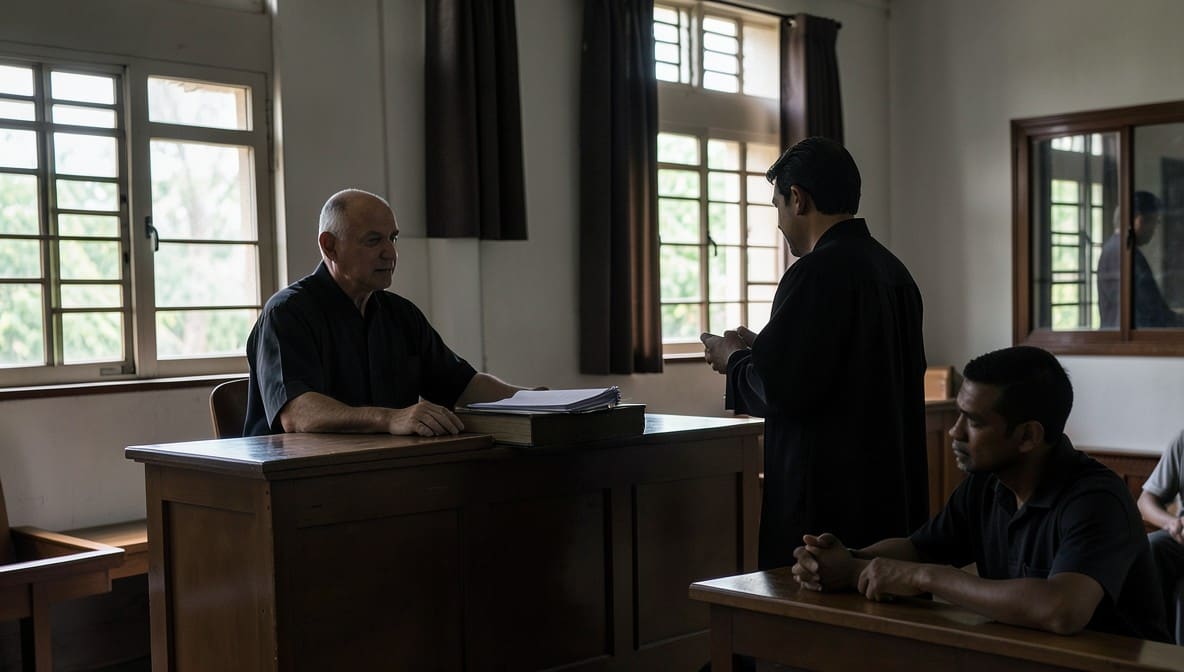
Dock Identification Doctrine | Mere General Attribution Insufficient for Conviction; Specific In-Court Identification Mandatory Under Section 313 CrPC : Kerala HC
Case Law Analysis
|Kerala High Court

Dock Identification Doctrine | Mere General Attribution Insufficient for Conviction; Specific In-Court Identification Mandatory Under Section 313 CrPC : Kerala HC

The Kerala High Court overturned a conviction because witnesses failed to specifically identify the accused at the dock, reinforcing that under Section 313 CrPC, general descriptions of involvement cannot satisfy the burden of proof beyond reasonable doubt. This ruling strengthens the rights of the accused in multi-accused cases and demands precise, individualized identification by eyewitnesses to sustain a conviction.

Police Clearance Certificate | Pending Criminal Case Does Not Automatically Bar Issuance for Overseas Employment : Kerala HC
Case Law Analysis
|Kerala High Court

Police Clearance Certificate | Pending Criminal Case Does Not Automatically Bar Issuance for Overseas Employment : Kerala HC

The Kerala High Court has ruled that an accused individual is entitled to a customized Police Clearance Certificate for overseas employment even with a pending criminal case, provided the certificate discloses the case details. This affirms the right to travel and work abroad as part of Article 21, preventing administrative overreach by passport authorities who treat pending cases as automatic disqualifiers.

Section 36AAA Banking Regulation Act | RBI Must Consult State Government Before Superseding Co-operative Bank Board : Kerala HC
Case Law Analysis
|Kerala High Court

Section 36AAA Banking Regulation Act | RBI Must Consult State Government Before Superseding Co-operative Bank Board : Kerala HC

The Kerala High Court has ruled that the Reserve Bank of India cannot supersede a co-operative bank’s board under Section 36AAA without first consulting the state government, making state consultation a mandatory procedural step. This decision strengthens the federal structure of co-operative banking regulation and protects state-level oversight, directly impacting RBI’s regulatory autonomy and co-operative banks’ governance across India.

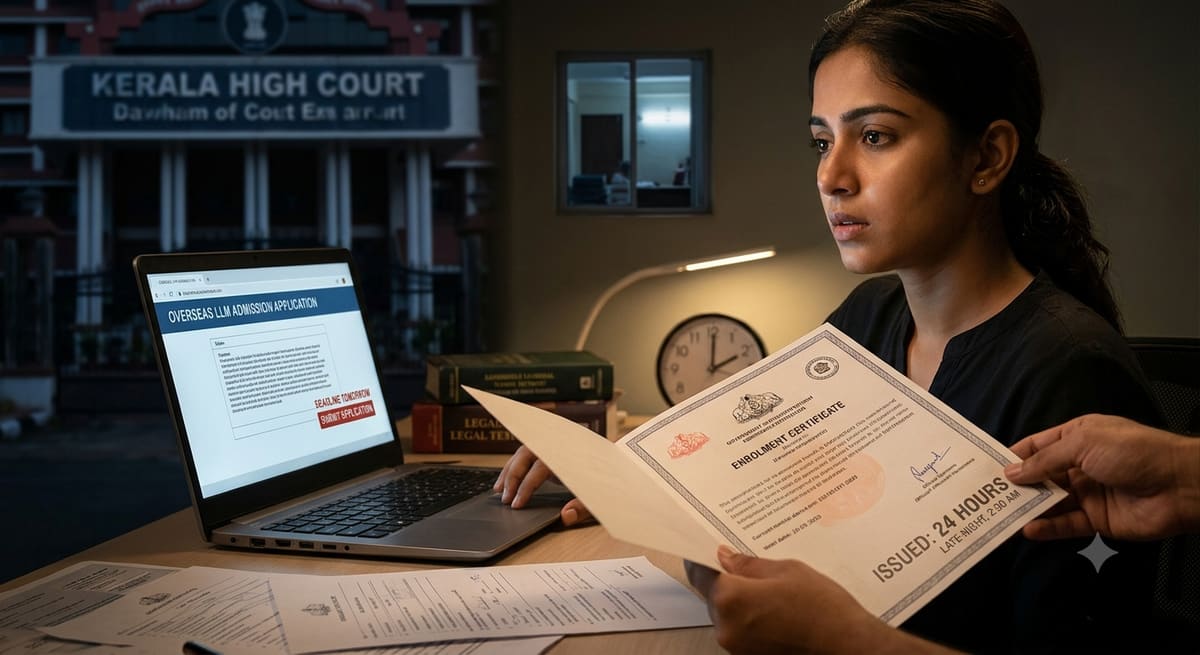
Article 226 | High Court Mandates 24-Hour Issuance of Enrolment Certificate for Overseas LLM Admission Amid Bar Council Administrative Vacuum : Kerala HC
Case Law Analysis
|Kerala High Court

Article 226 | High Court Mandates 24-Hour Issuance of Enrolment Certificate for Overseas LLM Admission Amid Bar Council Administrative Vacuum : Kerala HC

The Kerala High Court has ordered the Bar Council of Kerala to issue an original enrolment certificate within 24 hours to an advocate seeking admission to an LLM program in New Zealand, recognizing the administrative paralysis caused by the delayed assumption of office by the newly elected council. This ruling establishes that procedural delays by statutory bodies cannot deprive professionals of fundamental rights to pursue education abroad, setting a precedent for timely administrative action in professional licensing matters.

Section 376(2)(n) IPC | Bail Granted Where Consensual Relationship + Engagement History + Near-Complete Investigation Undermine Need for Custody : Kerala HC
Case Law Analysis
|Kerala High Court

Section 376(2)(n) IPC | Bail Granted Where Consensual Relationship + Engagement History + Near-Complete Investigation Undermine Need for Custody : Kerala HC

The Kerala High Court granted bail to an accused charged with aggravated rape under Section 376(2)(n) IPC, holding that a four-year consensual relationship followed by an engagement, coupled with an investigation nearly concluded and no criminal antecedents, negates the necessity for continued judicial custody. This ruling reinforces that the gravity of the offence alone cannot override constitutional protections when factual context and procedural progress favor liberty.

Carriers Act 1865, Section 7 | Absolute Liability for Transit Damage + Automatic Subrogation Valid Without Formal Assignment : Kerala HC
Case Law Analysis
|Kerala High Court

Carriers Act 1865, Section 7 | Absolute Liability for Transit Damage + Automatic Subrogation Valid Without Formal Assignment : Kerala HC

The Kerala High Court affirmed that common carriers are absolutely liable for goods damage during transit under Section 7 of the Carriers Act 1865, and that insurers automatically acquire subrogation rights upon indemnifying the consignor -无需 formal subrogation letters. This clarifies a critical procedural shortcut for insurance claims in logistics disputes, reducing litigation barriers for carriers and insurers alike.