In a significant ruling on the application of Section 355 of the Bharatiya Nagarik Suraksha Sanhita (BNSS), the Kerala High Court has set aside an order denying exemption from personal attendance to a 78-year-old accused, permitting him to participate in trial proceedings via electronic video linkage. The judgment underscores the court's discretion to balance the interests of justice with the accused's medical and age-related vulnerabilities.
Background & Facts
The Dispute
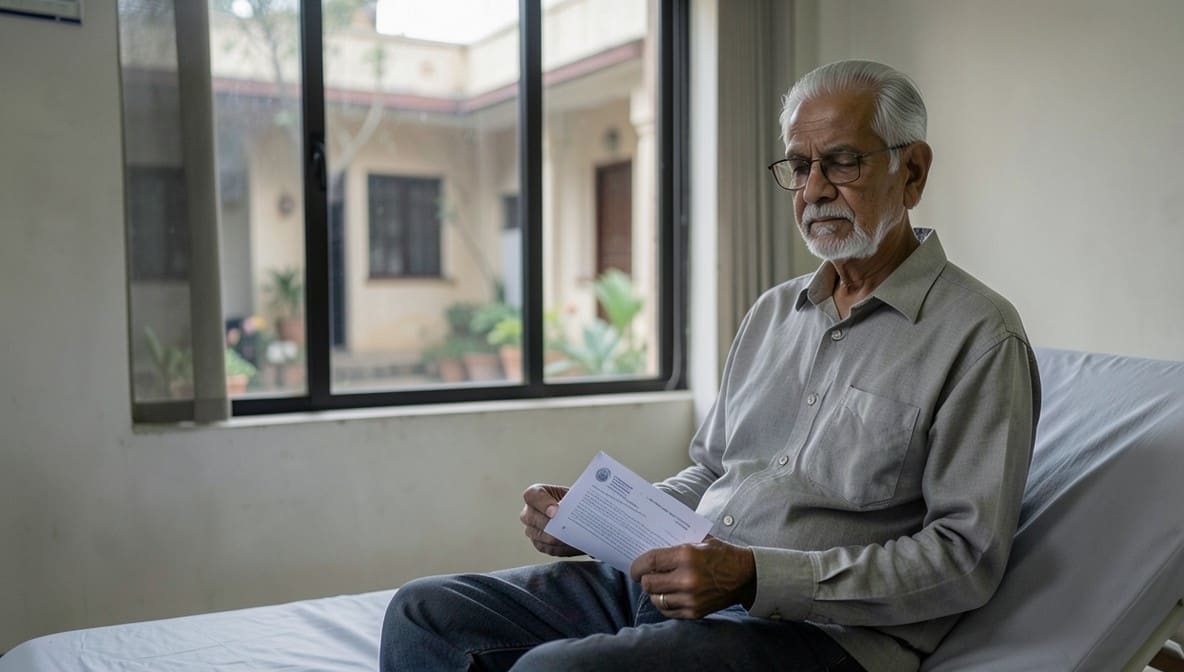
The petitioner, Maharaj Brelvi, aged 78, is the sole accused in S.C. No. 553/2015 pending before the Additional Sessions Court-VI, Thiruvananthapuram. The case arises from Crime No. 138/2014 registered by Poojappura Police Station, Thiruvananthapuram, alleging offences under Sections 324 and 307 of the Indian Penal Code (IPC) and Section 25(1)(a) of the Arms Act, 1959. The petitioner suffers from multiple comorbidities, including cardiac ailments, rendering him unable to attend court proceedings regularly.
Key Facts
- Crime Registration: The offence was registered in 2014, and the charge sheet was filed in 2015.
- Trial Delay: Despite a decade having elapsed, the trial had not commenced due to procedural delays.
- Medical Condition: The petitioner is a septuagenarian with severe health issues, requiring frequent hospitalization.
- Application for Exemption: The petitioner filed Crl.M.P. No. 01/2026 seeking exemption from personal attendance before the Trial Court.
- Impugned Order: The Trial Court dismissed the application (Annexure 4) on the grounds that the petitioner failed to produce medical records and that exemption might delay the trial.
Procedural History
- 15.06.2026: Trial Court issued an order noting the existence of a case and counter-case (S.C. No. 553/2015 and S.C. No. 1595/2021) arising from the same incident.
- 16.06.2026: Trial was scheduled, but the petitioner produced an order from the High Court directing non-insistence on personal attendance. A stop memo was issued to witnesses.
- 08.07.2026: Trial Court reported that the cases would require eight months for disposal.
- 10.07.2026: The present Crl.M.C. No. 4907/2026 was filed before the Kerala High Court challenging the impugned order.
Relief Sought
The petitioner sought:
- Setting aside of Annexure 4 order dated 16.03.2026.
- Exemption from personal attendance before the Trial Court.
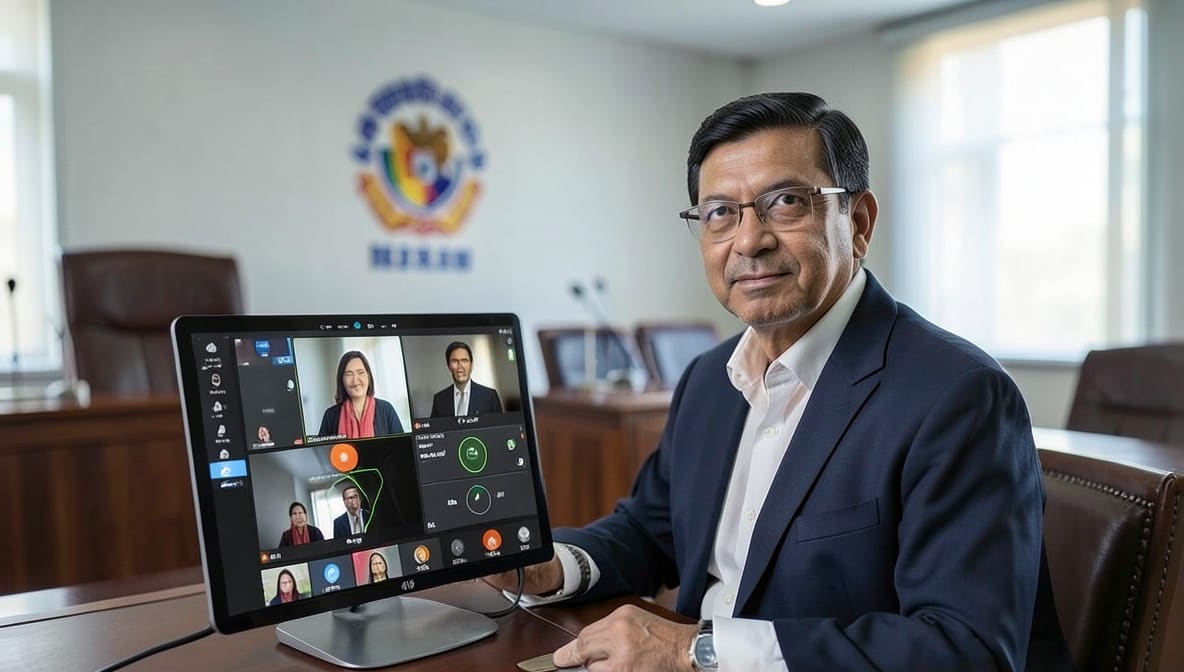
- Permission to participate in the trial via electronic video linkage under the Electronic Video Linkage Rules for Courts (Kerala), 2021.
The Legal Issue
The central question was whether Section 355 of the BNSS permits a court to exempt an accused's personal attendance, particularly when the accused is elderly, medically unfit, and represented by an advocate, and whether participation via video linkage suffices for the purposes of justice.
Arguments Presented
For the Petitioner
- Medical Vulnerability: The petitioner, being 78 years old and suffering from multiple ailments, cannot physically attend court proceedings.
- Statutory Basis: Relied on Section 355 BNSS, which empowers courts to dispense with personal attendance if the accused is represented by an advocate.
- Precedents: Cited Abhil C.R. v. State of Kerala (2025 KHC OnLine 1650), Sathisan v. State of Kerala (2025 KHC 2154), and Rameshan v. State of Kerala (2025 (6) KHC 545), where courts permitted video linkage for trial participation.
- Undue Delay: Emphasized that the trial had not commenced despite a decade passing since the charge sheet was filed.
For the Respondent/State
- Lack of Medical Evidence: Contended that the petitioner failed to produce sufficient medical records to substantiate his inability to attend court.
- Trial Efficiency: Argued that granting exemption might lead to unnecessary delays in the trial process.
- Identity Concerns: Raised concerns about the petitioner disputing his identity during the trial if exempted from personal attendance.
The Court's Analysis
The Court examined Section 355 BNSS, which provides discretion to courts to dispense with the personal attendance of an accused if:
- The accused is represented by an advocate.
- The court is satisfied that personal attendance is not necessary in the interests of justice.
- The accused does not persistently disturb court proceedings.
"A reading of the above provision substantiates that the personal attendance of the accused can be dispensed at the discretion of a court. Furthermore, the explanation to the above provision shows that the personal attendance of the accused includes attendance through audio-video electronic links."
The Court relied on the precedents cited by the petitioner, wherein it was held that an accused can avail electronic video linkage for recording pleas, participating in trials, and recording statements under Section 351 BNSS (corresponding to Section 313 Cr.P.C.).
The Court observed that the Trial Court had erred in dismissing the petitioner's application without considering:
- The petitioner's age and medical condition.
- The undue delay in trial commencement.
- The availability of video linkage as an alternative to physical attendance.
The Court emphasized that Section 355 BNSS is designed to ensure that trials are not unduly delayed due to the accused's inability to attend, while also safeguarding the accused's right to participate in proceedings.
The Verdict
The Kerala High Court allowed the petition in the following terms:
- Annexure 4 order dated 16.03.2026 was set aside.
- Crl.M.P. No. 01/2026 was allowed, subject to the condition that the petitioner files an undertaking before the Trial Court:
- Not to dispute his identity during the trial.
- To unconditionally appear before the Trial Court if deemed imperative.
- The petitioner was directed to file an application for electronic video linkage under the Electronic Video Linkage Rules for Courts (Kerala), 2021 within two weeks from the date of the judgment (10.07.2026).
- The Trial Court was directed to consider the application in accordance with the principles laid down in the cited precedents.
What This Means For Similar Cases
Discretion Under Section 355 BNSS Is Not Absolute but Context-Dependent
- Courts must balance the accused's right to a fair trial with practical constraints like age, health, and logistical challenges.
- Medical evidence is relevant but not conclusive; courts can exercise discretion based on circumstantial evidence (e.g., age, repeated hospitalizations).
- The burden is on the accused to demonstrate genuine inability to attend, but courts should not impose overly rigid evidentiary standards.
Video Linkage as a Viable Alternative to Physical Attendance
- Section 355 BNSS explicitly recognizes audio-video electronic means as a valid mode of attendance.
- Practitioners should proactively cite the Electronic Video Linkage Rules for Courts (Kerala), 2021 and relevant precedents (Abhil C.R., Sathisan, Rameshan) to argue for exemption.
- Undertakings (e.g., non-dispute of identity) may be required to address concerns about trial integrity.
Trial Courts Must Avoid Mechanical Rejections of Exemption Applications
- Delay in trials cannot be justified solely on the ground of the accused's absence, especially when alternatives like video linkage exist.
- Trial courts should record reasons for rejecting exemption applications, considering:
- The age and health of the accused.
- The stage of the trial (e.g., whether evidence recording has commenced).
- The availability of legal representation.
- Counter-cases or procedural complexities should not automatically preclude exemption; courts must assess proportionality.