The Kerala High Court has affirmed that the prolonged detention of seized property without necessity violates the owner’s fundamental right to property and economic dignity. In a significant ruling, the Court ordered the release of a truck seized in a criminal investigation, emphasizing that once investigative needs are fulfilled, custody must be restored to the rightful owner.
Background & Facts
The Dispute
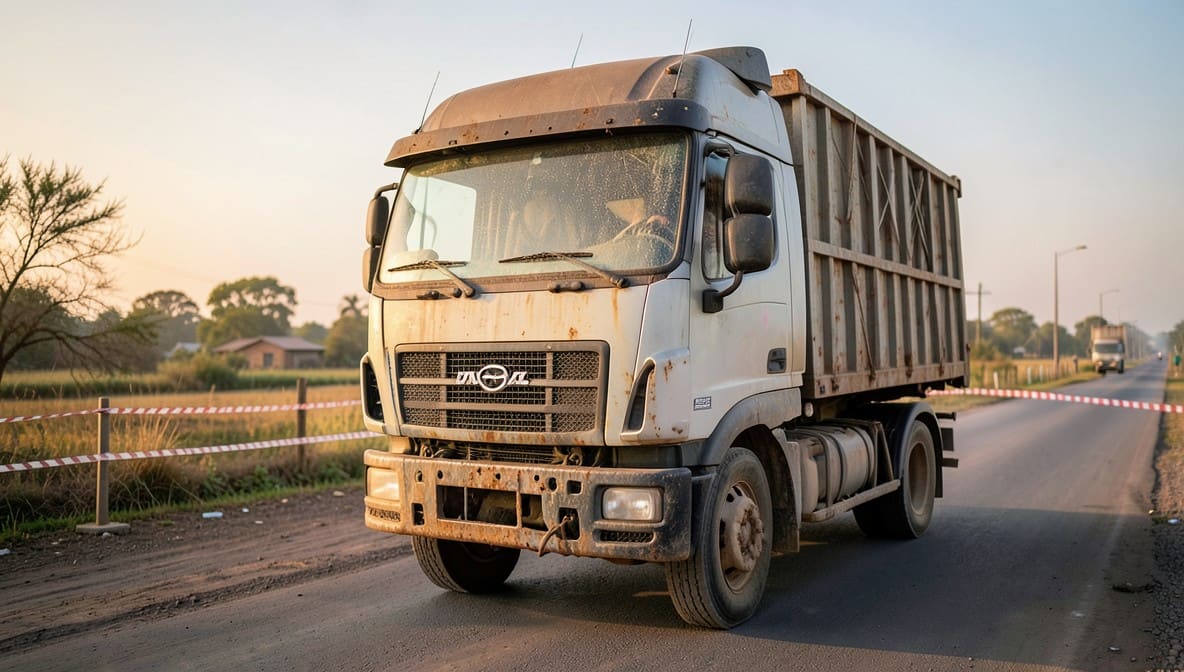
The petitioner, Ali Sher Khan, is the registered owner of a truck bearing Registration No. RJ-23-GD-4313, registered in Rajasthan. The vehicle was seized by the Nedumbassery Police Station on 16.04.2026 in connection with Crime No. 315/2026, allegedly involving the use of the vehicle in an unlawful activity. The police claimed the vehicle had two different registration numbers displayed on its front and rear, raising suspicion of tampering. The petitioner filed an application for interim custody of the vehicle before the Judicial First Class Magistrate, Angamaly, on 20.04.2026.
Key Facts
- The truck was registered in the petitioner’s name by the Government of Rajasthan on 26.09.2025 (Annexure AI)
- The vehicle was insured under United India Insurance Company Ltd. on 22.09.2025 (Annexure AII)
- The vehicle was seized on 16.04.2026 by Sub-Inspector of Police, Nedumbassery Police Station, under a seizure memo (Annexure AIII)
- The petitioner submitted a claim petition (CMP No. 1/2026) on 20.04.2026 seeking return of the vehicle
- The Investigating Officer submitted a report on 26.04.2026 confirming the seizure and stating the vehicle was being held for investigation (Annexure AV)
- The Magistrate dismissed the claim petition on 06.05.2026 (Annexure AVI), citing ongoing investigation and alleged discrepancy in registration numbers
- As of the hearing on 03.07.2026, the vehicle had been in police custody for over 48 days
Procedural History
- 16.04.2026: Vehicle seized by Nedumbassery Police
- 20.04.2026: Petitioner files Claim Petition (CMP No. 1/2026) before Judicial First Class Magistrate, Angamaly
- 26.04.2026: Investigating Officer submits report to Magistrate
- 06.05.2026: Magistrate dismisses claim petition, citing ongoing investigation and alleged registration discrepancy
- 03.07.2026: Criminal Miscellaneous Petition filed before Kerala High Court challenging the Magistrate’s order
Relief Sought
The petitioner sought quashing of the Magistrate’s order dated 06.05.2026 and immediate release of the vehicle with interim custody, subject to appropriate conditions.
The Legal Issue
The central question was whether a criminal court may deny interim custody of seized property to its lawful owner solely on the ground that the investigation is ongoing, even when the property’s evidentiary value has been fully secured.
Arguments Presented
For the Petitioner
The petitioner’s counsel relied on Sunderbhai Ambalal Desai v. State of Gujarat to argue that prolonged detention of property without necessity causes irreparable economic loss and violates the owner’s right to property under Article 300A of the Constitution. They submitted that the vehicle’s registration documents were authentic, the alleged discrepancy in numbers was a minor administrative issue, and the investigation had progressed sufficiently to allow release. The petitioner offered to execute a bond and undertake not to use the vehicle for any illegal purpose.
For the Respondent
The State, through the Public Prosecutor, contended that the vehicle was central to the investigation due to the alleged falsification of registration numbers, and its continued custody was necessary to preserve evidence. They argued that allowing release might lead to tampering or destruction of evidence, and that the Magistrate’s discretion should not be interfered with at this stage.
The Court's Analysis
The Court examined the principles laid down in Sunderbhai Ambalal Desai v. State of Gujarat, where the Supreme Court held that "criminal courts should ordinarily release seized property at the earliest to its rightful owner so as to prevent its deterioration, ruining and avoiding unnecessary loss to the owner." The Court noted that the vehicle had been in custody for over 48 days, with no indication that further forensic or evidentiary examination was pending. The alleged discrepancy in registration numbers, if any, could be documented through photographs and video, as permitted under law.
"The continued detention of the vehicle, especially when it is exposed to the vagaries of nature, serves no legitimate investigative purpose at this stage."
The Court observed that the Magistrate’s order was based on a blanket assertion of ongoing investigation without any specific justification for retaining the vehicle. The Court emphasized that the right to property, though not a fundamental right, is a constitutional right and cannot be arbitrarily infringed. The Court further held that the petitioner’s undertaking to not remove the vehicle from Kerala and to produce it on demand would adequately safeguard the interests of the investigation.
The Verdict
The petitioner succeeded. The Court set aside the Magistrate’s order dated 06.05.2026 and allowed the petition. The vehicle shall be released to the petitioner subject to: (a) execution of a bond of Rs. 30,00,000 with two solvent sureties of the like amount; (b) filing an undertaking not to take the vehicle outside the State of Kerala without prior permission; (c) refraining from using the vehicle for any offence; (d) permitting the Investigating Officer to photograph and video-graph the vehicle; (e) producing the vehicle before the Magistrate or Investigating Officer upon demand; and (f) granting the Magistrate liberty to modify conditions. The vehicle shall be released within 7 days of this order.
What This Means For Similar Cases
Interim Custody Is the Norm, Not the Exception
- Practitioners must now argue that prolonged detention of seized property without specific evidentiary need is unlawful
- Courts must record reasons for denial of interim custody, not rely on generic assertions of "ongoing investigation"
- The burden shifts to the prosecution to demonstrate why the property cannot be released without prejudice to the investigation
Documentation Replaces Physical Retention
- Photographs, video recordings, and digital evidence can satisfy investigative needs without physical custody
- Petitioners should be encouraged to submit proof of ownership (registration, insurance, purchase receipts) to strengthen claims
- Courts should routinely direct police to document seized property before release
Inter-State Movement Can Be Restricted Without Denial of Custody
- Courts may impose conditions restricting movement of property across state borders without denying release
- Bonds and undertakings are effective tools to balance owner rights and investigative integrity
- This approach prevents economic hardship while preserving prosecutorial interests