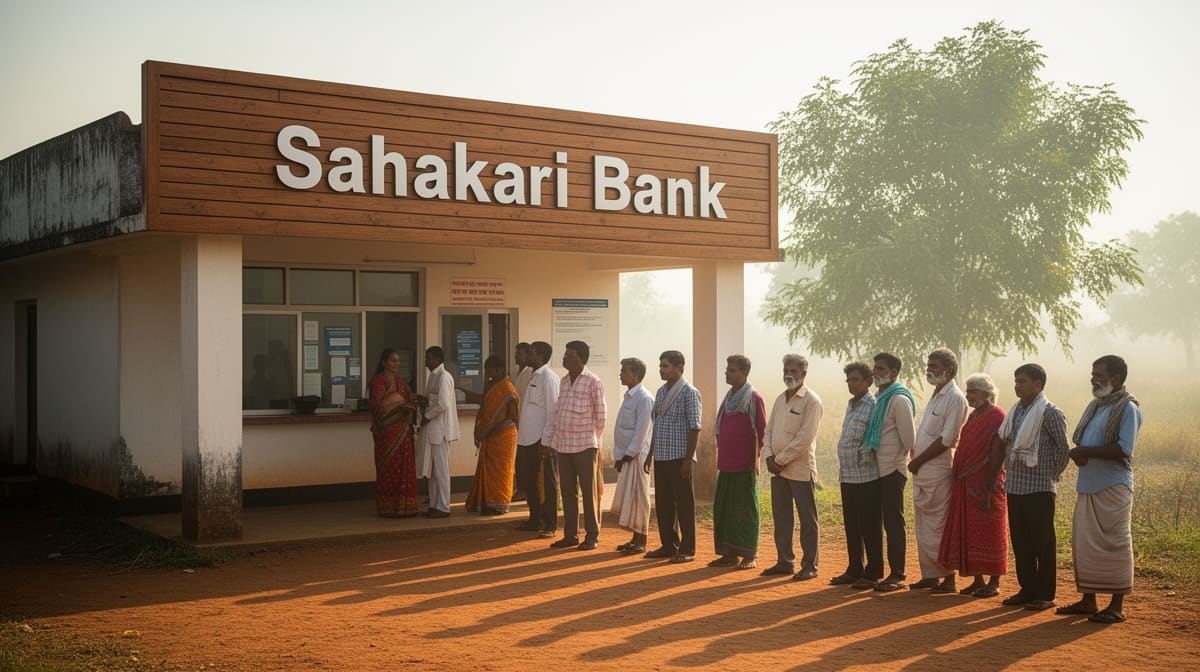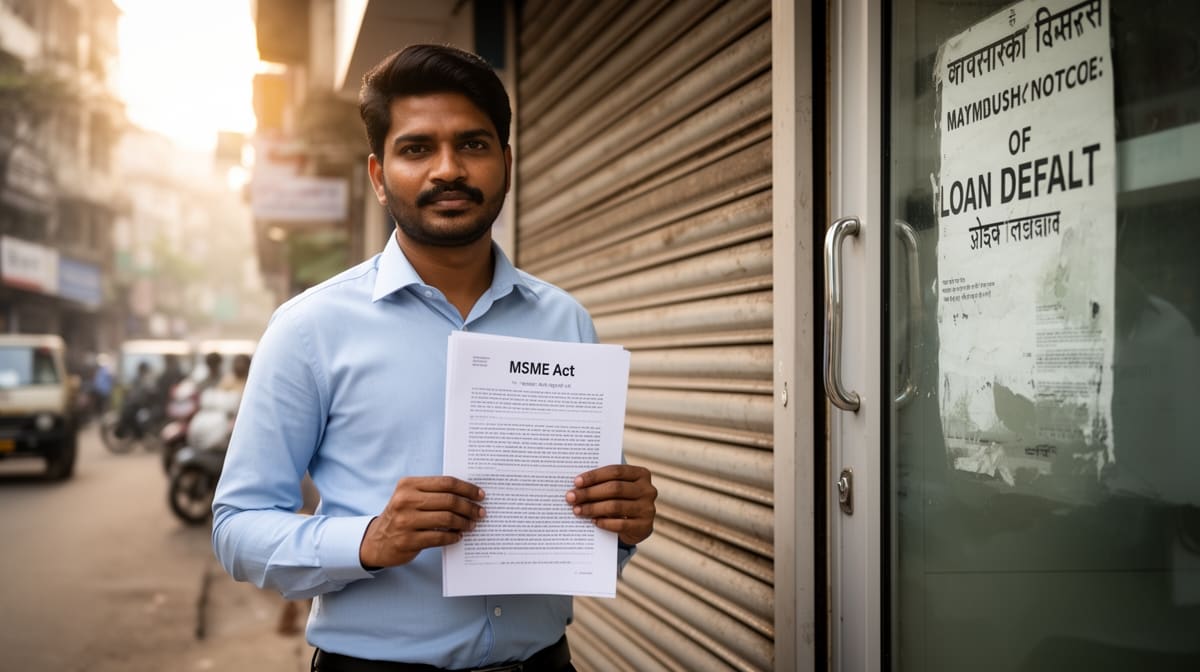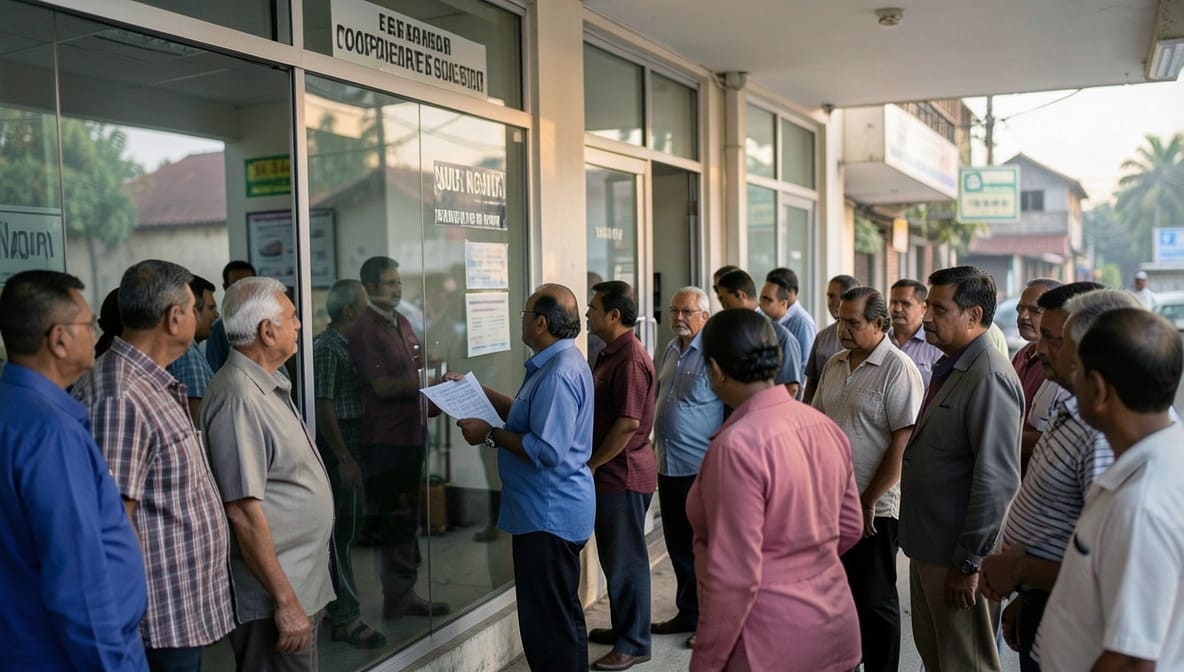
The Kerala High Court has clarified that while the Reserve Bank of India need not grant a hearing before superseding a co-operative bank’s board under Section 36AAA of the Banking Regulation Act, 1949, it must strictly consult the State Government - a failure to do so renders the order unsustainable. This judgment reinforces procedural rigour in financial regulation while upholding the RBI’s emergency powers.
Background & Facts
The Dispute
The Petitioner, M.P. Jackson, a former President of the Irinjalakuda Town Co-operative Bank (Respondent No.4), challenged the Reserve Bank of India’s (Respondent No.1) order dated 07.10.2025 (Ext.P5) superseding the democratically elected Managing Committee of the Bank and appointing an Administrator for a period of one year, from 07.10.2025 to 06.10.2026. The Petitioner contends that the order was issued without adherence to principles of natural justice, without mandatory consultation with the State Government of Kerala, and in violation of the democratic structure mandated under the Kerala Co-operative Societies Act, 1969.
Key Facts
- The Petitioner served as President of the Irinjalakuda Town Co-operative Bank, elected by the General Body for a term expiring on 24.01.2029 under Section 28 of the Kerala Co-operative Societies Act, 1969.
- The Reserve Bank of India conducted an inspection of the Bank as of 31.03.2022, resulting in Ext.P1 Inspection Report dated 2025, which identified serious financial irregularities.
- On 29.07.2025, the RBI issued Ext.P3 All-Inclusive Directions (AID) imposing regulatory restrictions on the Bank’s operations for six months, effective from 30.07.2025.
- On 08.09.2025, the Bank requested permission to sell Non-Banking Assets (NBAs) to improve liquidity, to which the RBI responded via Ext.P4 dated 24.09.2025, permitting such sales.
- Despite the Bank’s efforts to comply with AID, the RBI issued Ext.P5 supersession order on 07.10.2025, removing the elected Board and appointing an Administrator.
- The RBI consulted the Registrar of Co-operative Societies (Respondent No.3) via letter dated 08.08.2025 (Ext.R1(b)), receiving a response dated 14.08.2025 (Ext.R1(c)).
- The Petitioner filed this Writ Petition on 27.01.2026, over three months after the Administrator assumed charge.
- The Administrator has been managing the Bank’s affairs for nearly nine months as of the date of judgment (03.07.2026).
Procedural History
- 31.03.2022: Financial position of the Bank assessed by RBI inspection.
- 29.07.2025: RBI issued Ext.P3 All-Inclusive Directions (AID) imposing operational restrictions.
- 08.08.2025: RBI sought comments from Registrar of Co-operative Societies (Ext.R1(b)).
- 14.08.2025: Registrar of Co-operative Societies submitted comments (Ext.R1(c)).
- 07.10.2025: RBI issued Ext.P5 supersession order appointing Administrator.
- 27.01.2026: Writ Petition (WP(C) No.3275 of 2026) filed before the Kerala High Court.
- 03.07.2026: Judgment delivered by the Kerala High Court.
The Parties' Positions
Petitioner (M.P. Jackson): Argued that the supersession order violated: (1) Principles of natural justice, as it resulted in civil consequences (loss of office and reputation); (2) Mandatory consultation with the State Government under the Proviso to Section 36AAA(1), which was substituted by consultation with the Registrar of Co-operative Societies; (3) The democratic mandate under the Kerala Co-operative Societies Act, which reserves governance to the elected Managing Committee.
Respondent No.1 (RBI): Contended that: (1) Section 36AAA expressly omits a hearing requirement, unlike Section 36AA, indicating legislative intent to exclude natural justice; (2) Consultation with the Registrar of Co-operative Societies, as the principal officer of the Co-operation Department, satisfies the requirement of consultation with the State Government; (3) The RBI has exclusive authority under the Banking Regulation Act to supervise co-operative banks, and democratic governance under State law cannot override statutory powers conferred by Parliament.
Relief Sought
The Petitioner sought: (1) Declaration that principles of natural justice must be read into Section 36AAA; (2) Quashing of Ext.P5 order; (3) Restoration of the elected Managing Committee of the Bank; (4) Costs.
The Legal Issue
The central questions were: (1) Whether the principles of natural justice must be read into Section 36AAA of the Banking Regulation Act, 1949, before issuing a supersession order? (2) Whether consultation with the Registrar of Co-operative Societies satisfies the statutory requirement of consultation with the State Government? (3) Whether the RBI may supersede a democratically elected Managing Committee of a co-operative bank without recourse to the Kerala Co-operative Societies Act?
Arguments Presented
For the Appellant/Petitioner
The Petitioner relied on Reserve Bank of India v. M. Hanumaiah, Sahara India, Brigadier Nalin Kumar Bhatia, and State Bank of India v. Rajesh Agarwal to argue that any order causing civil consequences - such as removal from office and reputational harm - must comply with audi alteram partem. He emphasized that Section 36AAA, though silent on hearing, cannot override constitutional guarantees under Article 14. He further contended that the Registrar of Co-operative Societies is a subordinate officer under the Kerala Co-operative Societies Act, 1969, and cannot substitute the State Government, citing Babu Verghese and OPTO Circuit India Limited. He also argued that the democratic mandate under Section 28 of the Kerala Act, which provides for five-year terms, cannot be overridden by an executive order under a central banking statute.
For the Respondent/State
The RBI relied on Sandeep S. Ghandat v. RBI to argue that the Legislature deliberately omitted a hearing requirement in Section 36AAA, unlike Section 36AA, indicating an intentional exclusion of natural justice. It contended that consultation with the Registrar of Co-operative Societies - being the principal officer of the Co-operation Department and the statutory interface with co-operative banks - is functionally equivalent to consultation with the State Government. It further argued that Section 36AAA is a special provision under Part V of the Banking Regulation Act, which expressly applies to co-operative banks, and that the Kerala Act’s First Proviso to Section 32(1) allows concurrent application of the Banking Regulation Act. The RBI emphasized the urgency of action to protect depositors’ interests and prevent further deterioration of the Bank’s financial condition.
The Court's Analysis
The Court undertook a three-part analysis, examining each legal issue in light of statutory language, legislative intent, and precedent.
On the first issue - natural justice - the Court noted that while Rajesh Agarwal and Sahara India support reading audi alteram partem into statutes with civil consequences, the Legislature’s deliberate omission of a hearing provision in Section 36AAA, in contrast to its explicit inclusion in Section 36AA, indicates a conscious exclusion. The Court adopted the reasoning of the Bombay High Court in Sandeep S. Ghandat, observing that requiring a hearing in cases of imminent financial collapse would defeat the very purpose of Section 36AAA: to enable swift intervention to protect depositors. The Court held: > "When the Legislature has decided to avoid the application of the principle of natural justice to the proceedings under Section 36AAA, it could not be read into the language of the said provision."
On the second issue - consultation with the State Government - the Court found the RBI’s reliance on the Registrar of Co-operative Societies to be legally insufficient. Citing Babu Verghese and OPTO Circuit India Limited, the Court reiterated that when a statute prescribes a specific manner of doing an act, it must be done in that manner alone. The Registrar, though a State officer, is subordinate to the State Government and cannot represent it in a statutory consultation. The Court emphasized: > "The State Government, represented by the Secretary of the Cooperation Department, is the competent authority to be consulted... The absence of any objection from the State Government is irrelevant."
On the third issue - democratic governance - the Court held that the Banking Regulation Act, 1949, as a central statute, prevails over State co-operative laws in matters of financial supervision. The First Proviso to Section 32(1) of the Kerala Act explicitly permits the application of the Banking Regulation Act to co-operative banks. The Court concluded: > "The Co-operative Bank cannot claim any immunity from the proceedings initiated under the Banking Regulation Act, on the ground that it has been working under a democratic setup provided by the Kerala Co-operative Societies Act."
The Verdict
The Writ Petition was dismissed. The Court held that while the RBI’s failure to consult the State Government rendered Ext.P5 order legally defective, the order would not be set aside due to the lapse of time and public interest. The Administrator has been in charge since 07.10.2025, nearly nine months at the time of judgment, and the order is due to expire on 06.10.2026. The Court directed that if the RBI seeks to extend the supersession beyond 06.10.2026, it must strictly comply with the mandatory consultation requirement under the Proviso to Section 36AAA(1) with the State Government of Kerala.
What This Means For Similar Cases
Consultation Must Be with the State Government, Not Its Subordinate Officers
- Practitioners must now insist that any statutory requirement to consult the "State Government" means consultation with the principal executive authority (e.g., Secretary, Department), not subordinate agencies like Registrars or Commissioners.
- Orders issued on the basis of consultation with subordinate officers are vulnerable to challenge, even if the State Government does not object.
- Administrative agencies must maintain documentary proof of consultation with the correct authority, not merely the "relevant" officer.
Natural Justice Is Not Automatically Applicable in Emergency Banking Powers
- Where a statute explicitly omits a hearing requirement and the power is conferred for urgent financial stabilization (e.g., protecting depositors), courts may uphold the exclusion of natural justice.
- This creates a narrow exception to the Rajesh Agarwal principle: statutory silence on hearing, coupled with emergency intent, may justify non-compliance.
- Practitioners should distinguish between routine administrative actions and emergency regulatory interventions when arguing for audi alteram partem.
Central Banking Law Overrides State Co-operative Governance in Financial Matters
- Co-operative banks cannot invoke democratic governance under State co-operative laws to resist supersession under the Banking Regulation Act.
- The Banking Regulation Act’s special provisions (e.g., Sections 36AA, 36AAA) prevail over State laws when there is a conflict in financial supervision.
- Any challenge to RBI’s supersession must focus on procedural compliance with the central statute, not on the legitimacy of the elected body.