The Karnataka High Court has reaffirmed that tax assessments conducted without affording the assessee a meaningful opportunity to be heard are legally unsustainable, particularly when a claim for statutory deduction under Section 80P of the Income Tax Act is at stake. This judgment restores procedural fairness in income tax proceedings involving cooperative societies engaged in agricultural credit.
Background & Facts
The Dispute
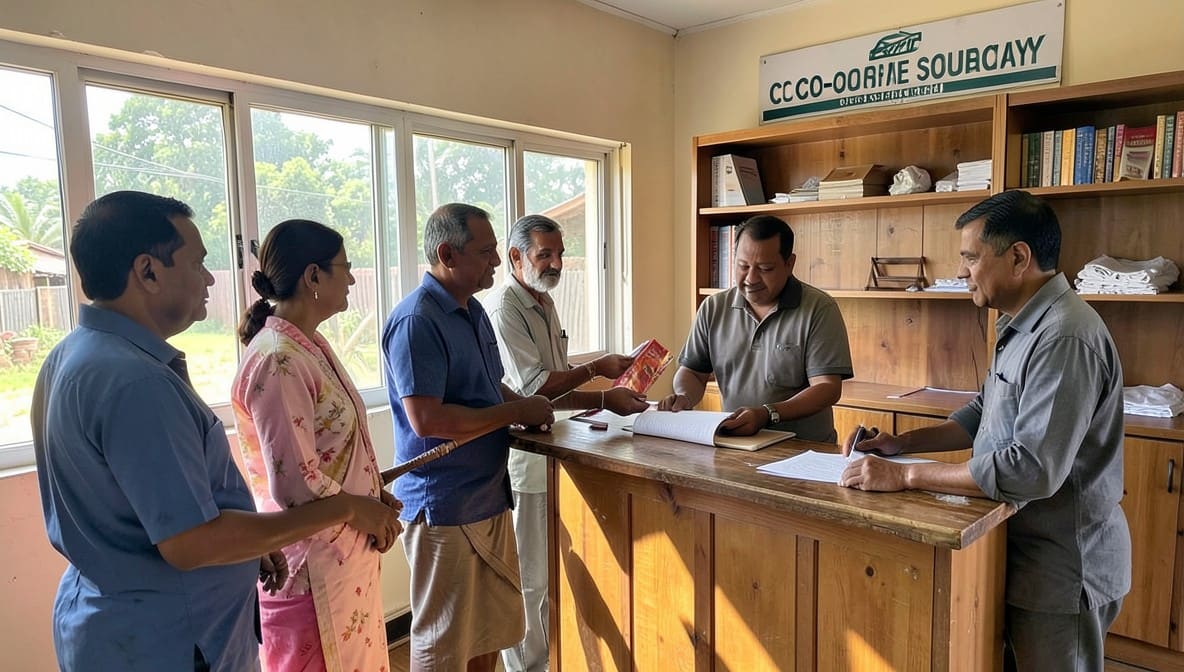
The petitioner, Prathamika Krushi Pathina Sahakara Sangha Niyamitha, is a Primary Agricultural Co-operative Society registered under the Karnataka Co-operative Societies Act, 1959. It operates as an intermediary institution facilitating agricultural credit to its members by sourcing funds from the Hassan District Central Co-operative Bank Limited (HDCC Bank). The society does not engage in any business with non-members. For the assessment year 2018-19, the petitioner did not file an income tax return, citing nominal income of Rs. 3,82,496.
Key Facts
- The petitioner’s primary activity is extending credit to its farmer-members using funds obtained from HDCC Bank
- All transactions are internal to the co-operative structure; no commercial dealings with non-members occur
- The society’s income for AY 2018-19 was Rs. 3,82,496, which it believed qualified for deduction under Section 80P of the Income Tax Act
- No return was filed on the assumption that the income was exempt
- The Assessing Officer initiated proceedings under Section 148A(b) of the Income Tax Act on 04.08.2024, alleging escapement of income
- The petitioner did not respond to the Section 148A(b) notice, citing lack of awareness of procedural requirements
- An order under Section 148A(d) was passed on 27.08.2024, followed by a notice under Section 148
- The assessment was completed under Section 144 on 14.01.2026 without any participation from the petitioner
- A demand notice dated 14.01.2026 and a bank account attachment order dated 30.03.2026 were issued
Procedural History
- 04.08.2024: Notice under Section 148A(b) issued by the Assessing Officer
- 27.08.2024: Order under Section 148A(d) and Notice under Section 148 issued
- 14.01.2026: Assessment Order passed under Section 144 (Annexure-N)
- 14.01.2026: Demand Notice issued (Annexure-P)
- 30.03.2026: Bank account attachment order issued (Annexure-V)
- 16.06.2026: Writ Petition No. 16497 of 2026 filed before the Karnataka High Court under Articles 226 and 227
The Parties' Positions
Petitioner: Argued that it is a primary agricultural co-operative society entitled to claim deduction under Section 80P, and that its non-filing of return was due to bona fide belief in exemption. It was not given a fair opportunity to present its case during the assessment proceedings.
Respondents: Did not dispute the nature of the petitioner’s activities but maintained that the failure to file a return and respond to notices rendered the assessment valid under Section 144.
Relief Sought
The petitioner sought quashing of the assessment order dated 14.01.2026, the demand notice dated 14.01.2026, and the bank attachment order dated 30.03.2026. It also sought directions to unfreeze its bank account and restore proceedings to allow it to file a response to the Section 148A(b) notice and claim deduction under Section 80P.
The Legal Issue
The central question was whether an assessment under Section 144 of the Income Tax Act can be sustained when the assessee, a co-operative society claiming eligibility for deduction under Section 80P, was not afforded any opportunity to participate in the proceedings initiated under Section 148A.
Arguments Presented
For the Petitioner
Sri Girish V. Bhat argued that the petitioner’s activities fall squarely within the scope of Section 80P, which grants deduction for income derived from agricultural credit activities by primary co-operative societies. He emphasized that the failure to file a return was not an act of evasion but a result of misunderstanding the law. He relied on W.P. No. 12474/2026, where this Court had previously quashed similar proceedings and directed that the assessee be given an opportunity to respond to the Section 148A(b) notice. He contended that the assessment under Section 144, passed without any hearing or submission from the petitioner, violated the principles of natural justice.
For the Respondent
Sri Thirumalesh M., standing counsel for the respondents, did not contest the nature of the petitioner’s operations or its potential eligibility under Section 80P. He acknowledged that the petitioner had not participated in the proceedings but maintained that the statutory framework under Section 144 permits assessment based on best judgment when no return is filed and no response is received. He did not dispute the applicability of W.P. No. 12474/2026 but argued that the present case required a fresh determination.
The Court's Analysis
The Court observed that the petitioner’s claim under Section 80P is not a speculative assertion but a statutory right available to primary agricultural co-operative societies engaged in lending credit to members. The Court noted that the Assessing Officer had initiated proceedings under Section 148A(b), which is a preliminary inquiry stage designed to determine whether income has escaped assessment. The failure of the petitioner to respond to this notice does not, by itself, justify a complete denial of hearing or a best judgment assessment under Section 144.
"It is not in dispute that if the petitioner can really bring forth the essential circumstances... it would be open to the petitioner to claim deduction under Section 80P of the Act."
The Court emphasized that the proceedings under Section 148A are not a mere formality but a statutory mechanism to ensure that the assessee is given an opportunity to explain the source of income before any assessment is made. The absence of any participation by the petitioner, even if due to inadvertence, cannot be treated as a waiver of fundamental rights under Article 14 and Article 21 of the Constitution.
The Court further held that the bank account attachment order dated 30.03.2026, issued without any adjudication of the claim under Section 80P, was coercive and premature. The Court drew a parallel with its earlier decision in W.P. No. 12474/2026, where it had directed that the assessee be given an opportunity to respond to the Section 148A(b) notice and appear for personal hearing. The Court found no material to distinguish the present case from that precedent.
The Court rejected the notion that non-filing of return equates to admission of tax liability, particularly where the assessee is a cooperative society operating under a specific statutory regime designed to promote rural credit.
The Verdict
The petition was allowed in part. The Court quashed the assessment order dated 14.01.2026, the demand notice dated 14.01.2026, and the bank account attachment order dated 30.03.2026. The proceedings were restored to the stage of the Section 148A(b) notice dated 04.08.2024. The petitioner was granted liberty to file its response and appear before the Assessing Officer on 17.07.2026. The bank account of the petitioner was directed to be unfrozen immediately.
What This Means For Similar Cases
Section 80P Claims Cannot Be Dismissed Without Hearing
- Practitioners representing agricultural co-operative societies must assert Section 80P eligibility at the earliest stage, even if no return has been filed
- Assessing Officers cannot bypass Section 148A(b) proceedings and proceed directly to Section 144 assessment when a statutory deduction claim is plausible
- The burden is on the department to provide a fair opportunity to substantiate claims under Section 80P before initiating coercive action
Non-Response to Notice Does Not Waive Natural Justice
- Failure to respond to a notice under Section 148A(b) does not automatically validate a best judgment assessment
- Courts will intervene where the assessee demonstrates bona fide intent and a plausible claim under a specific statutory provision
- Procedural compliance under the Income Tax Act is non-negotiable; substantive rights under Section 80P cannot be extinguished by administrative default
Bank Attachments Require Prior Adjudication
- Attachment of bank accounts under Section 226(3) cannot precede adjudication of a claim under Section 80P
- Coercive measures must be proportionate and preceded by a fair opportunity to be heard
- Practitioners should immediately move for stay or quashing of bank attachments when statutory exemptions are at stake