The Bombay High Court has affirmed that contractual employees performing the same duties as regular staff, particularly those with over ten years of continuous service under the National Health Mission, are entitled to wages at the minimum regular pay scale and must be considered for regularization. This judgment reinforces the principle of pay parity and procedural fairness for long-serving non-regular employees.
Background & Facts
The Dispute
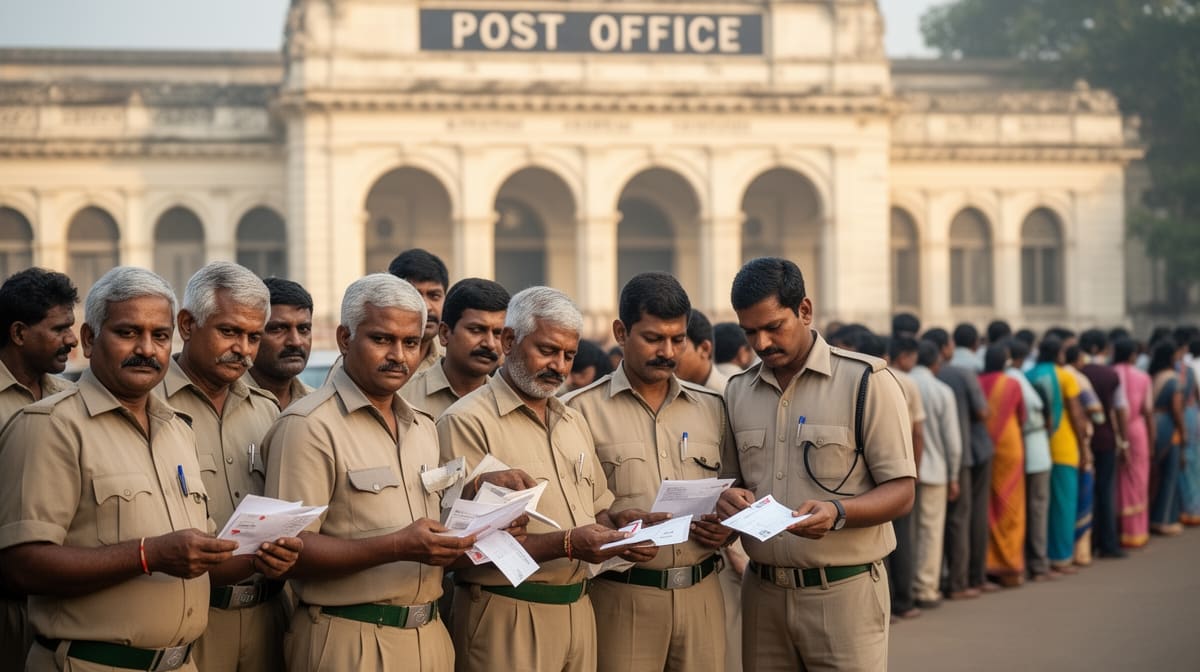
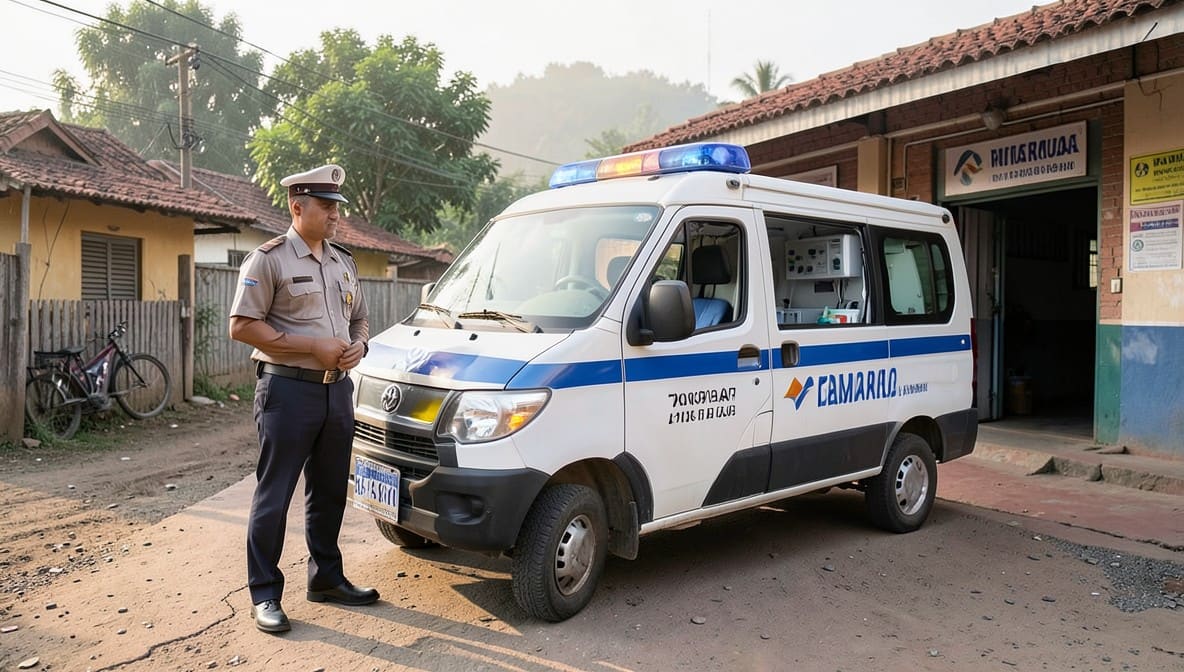
The petitioners, Hari Ramrao Upase and Ganesh Rajendra Gaikwad, are ambulance drivers appointed through the agency Shri Sant Gadge Baba Maharaj Berojgar Sanstha. They were deployed at Primary Health Centres in Mulaj and Diggi, Taluka Omarga, District Osmanabad, on 01/01/2011 and have been continuously serving since then. Despite discharging duties identical to those of regular ambulance drivers under the supervision of the Medical Officer and Basic Health Officer, Zilla Parishad, Osmanabad, they were never regularized and remained on contractual terms without benefits or pay parity.
Key Facts
- Both petitioners were appointed on 01/01/2011 through a private agency under the National Health Mission
- They have rendered continuous service for over 14 years as of the date of judgment (18/06/2026)
- Their duties include driving ambulances, assisting medical staff, and responding to emergencies under direct control of government health officers
- No formal regularization process was initiated despite their long tenure
- They were paid wages significantly below the minimum scale applicable to regular ambulance drivers
- No performance-based or contractual termination occurred during their service
Procedural History
- 01/01/2011: Appointment of petitioners as contractual ambulance drivers
- 20/11/2019: Dhiraj S. Wankhede v. Zilla Parishad, Chandrapur decided by Bombay High Court, granting wage parity to similar contractual ambulance drivers
- 08/12/2020: Nagendrayya P. Hiremath v. State of Maharashtra decided, affirming Wankhede and directing payment of minimum regular pay scale
- 23/03/2022: Supreme Court dismissed SLPs filed by the State in CEO, Zilla Parishad, Solapur v. Ashok Dhondiba Meher, upholding the Bombay HC’s direction on wage parity
- 04/12/2024: State Government issued Government Resolution (GR) regularizing contractual ambulance drivers under NHM with over ten years of service
- 27/02/2025: Shaikh Matin Shaikh Amin v. State of Maharashtra decided, applying GR 04/12/2024 to grant regularization relief
- 2025: Writ Petition No. 3509 of 2025 filed before Bombay High Court, Aurangabad Bench
- 18/06/2026: Judgment delivered
The Parties' Positions
For the Petitioners: Counsel relied on Dhiraj S. Wankhede, Nagendrayya P. Hiremath, and Shaikh Matin Shaikh Amin to argue that the petitioners’ long, continuous, and integral service entitles them to wage parity and regularization under the State’s own policy (GR 04/12/2024). They emphasized that the State had already recognized the injustice by regularizing others in identical circumstances.
For the Respondents: Respondents No. 3 and 4 conceded that petitioners were appointed through an agency but argued that no proposal for regularization had been forwarded by them. They did not dispute the factual continuity of service or the similarity of duties.
Relief Sought
The petitioners sought:
- Payment of wages at the minimum of the regular pay scale for Ambulance Drivers, with arrears from 01/01/2011
- Direction to forward a proposal for regularization under GR 04/12/2024
- Interest on arrears and costs
The Legal Issue
The central question was whether contractual employees with over ten years of continuous service under the National Health Mission, performing duties identical to regular employees and covered by a State policy granting regularization to such persons, are entitled to wage parity and procedural consideration for regularization, even if initially appointed through an agency.
Arguments Presented
For the Petitioner
The petitioners’ counsel relied on binding precedents: Dhiraj S. Wankhede v. Zilla Parishad, Chandrapur and Nagendrayya P. Hiremath v. State of Maharashtra, both of which held that long-serving contractual ambulance drivers are entitled to wages at the minimum regular pay scale. He further cited the Supreme Court’s dismissal of the State’s SLP in CEO, Zilla Parishad, Solapur v. Ashok Dhondiba Meher, which affirmed these principles. He emphasized that the State’s own GR dated 04/12/2024 created a clear policy framework for regularization of such employees, making denial of relief arbitrary and violative of Article 14. He also invoked Shaikh Matin Shaikh Amin, where the Court had directed regularization despite prior refusal, on the strength of the GR.
For the Respondent
Respondents No. 3 and 4 did not contest the factual matrix of service or the similarity of duties. Their sole contention was that no proposal for regularization had been forwarded by them, implying procedural non-compliance. They did not challenge the applicability of the precedents or the GR, nor did they dispute that the petitioners met the criteria under GR 04/12/2024.
The Court's Analysis
The Court observed that the petitioners’ case was squarely covered by Dhiraj S. Wankhede and Nagendrayya P. Hiremath, which established that contractual ambulance drivers with long service are entitled to wage parity. The Supreme Court’s dismissal of the State’s SLP in Ashok Dhondiba Meher rendered these principles binding and non-appealable.
"The State cannot deny equal pay to employees who have rendered over a decade of uninterrupted service, while simultaneously extending regularization benefits to others in identical circumstances under its own policy."
The Court further noted that the Government Resolution dated 04/12/2024 was a policy decision explicitly intended to regularize contractual ambulance drivers with more than ten years of service. The petitioners met this criterion. The Court rejected the argument that procedural delay or non-forwarding of proposals by Respondents No. 3 and 4 could defeat substantive rights. It held that where a policy exists and the employee qualifies, the State cannot evade its obligation by citing internal administrative inaction.
The Court distinguished Shaikh Matin Shaikh Amin, where regularization was initially refused but later granted due to the GR. The same logic applied here: the GR overrides prior administrative inaction and mandates a fresh consideration.
The Verdict
The writ petition was partly allowed. The Court directed:
- Respondent Nos. 3 and 4 to pay the petitioners wages at the minimum of the regular pay scale for Ambulance Drivers, with effect from the date of the petition (01/01/2011)
- Arrears to be paid within four months from the date of judgment (18/06/2026)
- Respondent Nos. 3 and 4 to forward a proposal for regularization to Respondent Nos. 1 and 2 within four weeks
- Respondent Nos. 1 and 2 to scrutinize the proposal and extend benefits under GR 04/12/2024 within three months thereafter
What This Means For Similar Cases
Wage Parity Is Not Discretionary
- Practitioners representing contractual employees with over ten years of service under public health schemes must now assert wage parity as a right, not a privilege
- The minimum regular pay scale must be applied retroactively from the date of appointment, not from the date of petition
- Any delay in payment must be challenged as a violation of Article 14 and Article 21
Policy Overrides Administrative Inaction
- Government Resolutions creating regularization pathways cannot be circumvented by local authorities failing to forward proposals
- Courts will compel procedural compliance when substantive eligibility is established
- The burden shifts to the State to justify non-regularization, not to the employee to prove entitlement
Precedent Binding Across Jurisdictions
- Judgments from the Principal Seat (Mumbai) apply equally to all Benches of the Bombay High Court
- The Supreme Court’s dismissal of SLPs in similar cases creates de facto binding precedent
- All State departments must now audit their contractual workforce for NHM employees meeting the 10-year threshold