Central Administrative Tribunal judgments

151 Central Administrative Tribunal judgments explained in plain English: what was decided, the law applied and why it matters. Page 4 of 7.

Technical Resignation Does Not Invalidate Cleared Departmental Exam | Estoppel & Legitimate Expectation Bar Re-Examination Demand : CAT Allahabad
Case Law Analysis
|Central Administrative Tribunal

Technical Resignation Does Not Invalidate Cleared Departmental Exam | Estoppel & Legitimate Expectation Bar Re-Examination Demand : CAT Allahabad

CAT Allahabad rules that an officer who cleared a departmental exam in a prior posting retains that qualification after a technical resignation, and denying promotion on grounds of re-examination violates principles of estoppel and legitimate expectation. The ruling protects government employees from arbitrary re-testing demands post-resignation.
FR 56(k) | Mere FIR Registration Does Not Constitute 'Pending Judicial Proceedings' to Block Deemed Voluntary Retirement : CAT
Case Law Analysis
|Central Administrative Tribunal

FR 56(k) | Mere FIR Registration Does Not Constitute 'Pending Judicial Proceedings' to Block Deemed Voluntary Retirement : CAT

Central Administrative Tribunal rules that an FIR alone does not qualify as 'pending judicial proceedings' under Fundamental Rule 56(k), allowing deemed voluntary retirement to take effect upon notice expiry. The ruling clarifies procedural safeguards for government employees facing disciplinary action while seeking voluntary retirement.

Seniority-Cum-Merit Selection | Notional Promotion Mandatory When Vacancy Unfilled Despite Higher Marks : CAT Allahabad
Case Law Analysis
|Central Administrative Tribunal

Seniority-Cum-Merit Selection | Notional Promotion Mandatory When Vacancy Unfilled Despite Higher Marks : CAT Allahabad

CAT Allahabad rules that denial of promotion despite higher marks and an unfilled vacancy violates principles of equality in employment. The tribunal directs notional promotion with retrospective benefits, setting a precedent for service jurisprudence where administrative discretion cannot override merit-based entitlements.

Fixed Medical Allowance Does Not Bar Reimbursement for Life-Threatening Treatment Under CS(MA) Rules : CAT Kolkata
Case Law Analysis
|Central Administrative Tribunal

Fixed Medical Allowance Does Not Bar Reimbursement for Life-Threatening Treatment Under CS(MA) Rules : CAT Kolkata

CAT Kolkata rules that pensioners receiving Fixed Medical Allowance remain entitled to reimbursement for specialized or life-threatening treatments under the CS(MA) Rules. The judgment clarifies that the allowance is supplementary, not substitutive, ensuring pensioners' right to health is protected without opting for CGHS or PMJAY.

Medical Emergency Overrides Transfer Policy | CAT Guwahati Suspends Transfer of Kidney Transplant Patient Pending Reconsideration : CAT Guwahati
Case Law Analysis
|Central Administrative Tribunal

Medical Emergency Overrides Transfer Policy | CAT Guwahati Suspends Transfer of Kidney Transplant Patient Pending Reconsideration : CAT Guwahati

CAT Guwahati directed authorities to reconsider the transfer of a government employee who underwent a kidney transplant, suspending the impugned order until a reasoned decision is made within six weeks. The ruling underscores that medical emergencies warrant sympathetic consideration under administrative discretion, even when transfer policies are in place.

Emergency Medical Treatment in Non-Empanelled Hospitals | Full Reimbursement Mandated for CGHS Pensioners Under Shiva Kant Jha Principle : CAT
Case Law Analysis
|Central Administrative Tribunal

Emergency Medical Treatment in Non-Empanelled Hospitals | Full Reimbursement Mandated for CGHS Pensioners Under Shiva Kant Jha Principle : CAT

CAT reaffirms that government pensioners are entitled to full reimbursement for emergency medical treatment in non-empanelled hospitals, extending the principle from Shiva Kant Jha v. UoI. The ruling mandates CGHS authorities to honor claims without arbitrary deductions, ensuring welfare state obligations are met for retirees.

Quashed Suspension Period Must Be Regularized as Duty for Pension & Service Benefits: CAT Ernakulam
Case Law Analysis
|Central Administrative Tribunal

Quashed Suspension Period Must Be Regularized as Duty for Pension & Service Benefits: CAT Ernakulam

CAT Ernakulam rules that once a suspension order is quashed and not revived, the period of unauthorized absence must be treated as duty for pension and service benefits. The ruling reinforces that disciplinary proceedings, if invalidated, cannot deprive employees of retiral dues, setting a precedent for service law disputes involving government servants.

Nomination Under CCS Pension Rules Does Not Override Legal Heir Rights | Family Pension Entitlement Based on SDM Certificate: CAT
Case Law Analysis
|Central Administrative Tribunal

Nomination Under CCS Pension Rules Does Not Override Legal Heir Rights | Family Pension Entitlement Based on SDM Certificate: CAT

Central Administrative Tribunal rules that a nomination for family pension under CCS Pension Rules is not absolute; the legal heir (spouse) proven by an SDM certificate is entitled to the pension, even if the deceased nominated others. The ruling clarifies that nomination merely facilitates disbursement but does not extinguish the rights of legal heirs under succession laws.

Legitimate Expectation Doctrine | Railway Employee Entitled to Leave Encashment Despite Administrative Errors in Service Records : CAT Ernakulam
Case Law Analysis
|Central Administrative Tribunal

Legitimate Expectation Doctrine | Railway Employee Entitled to Leave Encashment Despite Administrative Errors in Service Records : CAT Ernakulam

CAT Ernakulam ruled that a retired railway employee cannot be denied leave encashment due to administrative errors in service records, upholding the principle of legitimate expectation. The tribunal emphasized that certified pay slips and grievance records must prevail over retrospective corrections, protecting employees from bureaucratic oversights.

Rule 50(9)(j) CCS (Pension) Rules | Elder Unmarried Daughter Entitled to Family Pension After Minor Children's Eligibility Expires : CAT Patna
Case Law Analysis
|Central Administrative Tribunal

Rule 50(9)(j) CCS (Pension) Rules | Elder Unmarried Daughter Entitled to Family Pension After Minor Children's Eligibility Expires : CAT Patna

CAT Patna reinforces the statutory entitlement of elder unmarried daughters to family pension under Rule 50(9)(j) of the CCS (Pension) Rules, 2021, once all minor children cease to qualify. The ruling clarifies that dependency, not age, determines eligibility, ensuring financial security for unmarried daughters of deceased government employees.

CCS (CCA) Rules | Procedural Defects in Departmental Inquiry Vitiate Dismissal Even for Unauthorized Absence: CAT Quashes Order, Orders Reinstatement
Case Law Analysis
|Central Administrative Tribunal

CCS (CCA) Rules | Procedural Defects in Departmental Inquiry Vitiate Dismissal Even for Unauthorized Absence: CAT Quashes Order, Orders Reinstatement

Central Administrative Tribunal sets aside dismissal of a Group A officer, ruling that violations of CCS (CCA) Rules and principles of natural justice render disciplinary action void. The Tribunal directed reinstatement with full retiral benefits, reinforcing that procedural fairness is non-negotiable in service law.

6th Central Pay Commission | Pre-2006 Retirees Entitled to Minimum Pension of Rs. 9,230/- : CAT Patna Upholds Non-Discrimination Principle
Case Law Analysis
|Central Administrative Tribunal

6th Central Pay Commission | Pre-2006 Retirees Entitled to Minimum Pension of Rs. 9,230/- : CAT Patna Upholds Non-Discrimination Principle

CAT Patna rules that pre-2006 retirees must receive a minimum pension of Rs. 9,230/- under the 6th Central Pay Commission, rejecting arbitrary differentiation. The tribunal affirms that pension policy must be interpreted purposively to ensure parity, directing payment of arrears from 01.01.2006 for affected retirees.

Natural Justice | Appointment of Presenting Officer with Personal Bias Vitiates Disciplinary Proceedings : CAT Cuttack
Case Law Analysis
|Central Administrative Tribunal

Natural Justice | Appointment of Presenting Officer with Personal Bias Vitiates Disciplinary Proceedings : CAT Cuttack

The Central Administrative Tribunal, Cuttack, held that appointing a Presenting Officer with a history of personal enmity against the accused officer fundamentally undermines procedural fairness in disciplinary inquiries. This ruling reinforces that bias, even if not overtly malicious, invalidates proceedings regardless of administrative delays or pandemic-related disruptions, setting a critical precedent for public sector employment cases.

Article 21 | Administrative Inaction on Security-Based Teacher Transfer Violates Right to Life and Personal Security : CAT Srinagar
Case Law Analysis
|Central Administrative Tribunal

Article 21 | Administrative Inaction on Security-Based Teacher Transfer Violates Right to Life and Personal Security : CAT Srinagar

The Central Administrative Tribunal holds that prolonged delay in deciding a teacher's transfer request on verified security grounds constitutes a violation of her Article 21 rights, compelling authorities to act within a fixed timeline. This ruling reinforces that public employers cannot treat humanitarian and safety concerns as discretionary when lives are at risk, setting a precedent for vulnerable government employees in conflict-affected regions.

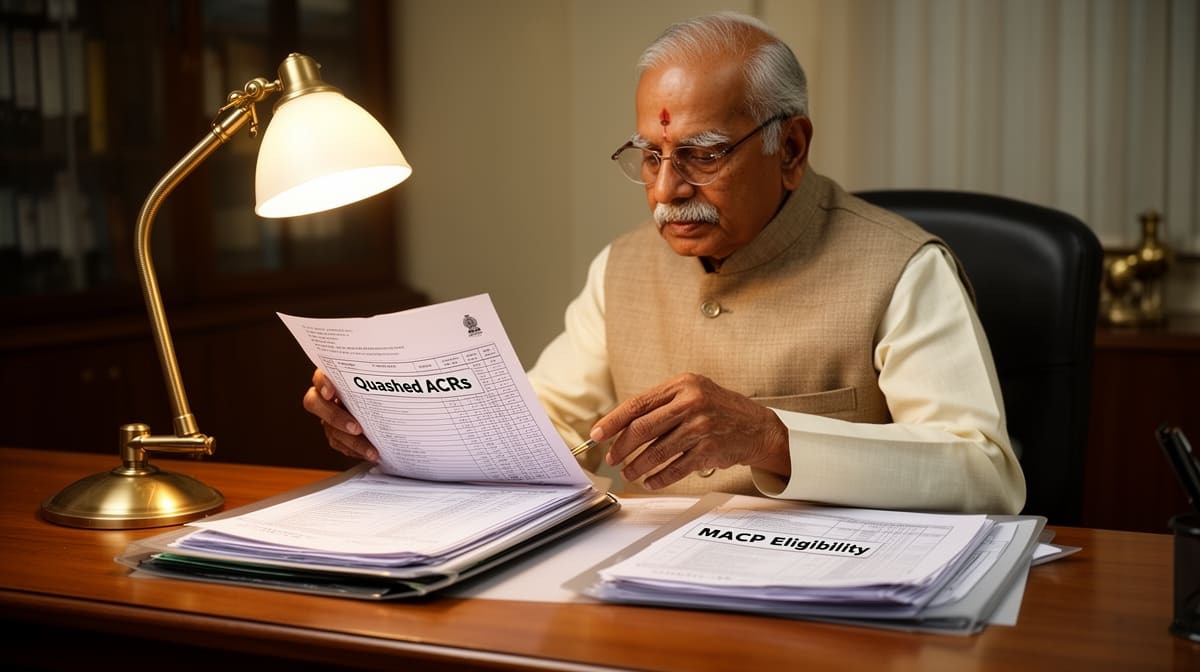
MACP Scheme | Quashed ACRs Cannot Be Reused to Deny Financial Upgradation: CAT Ernakulam
Case Law Analysis
|Central Administrative Tribunal

MACP Scheme | Quashed ACRs Cannot Be Reused to Deny Financial Upgradation: CAT Ernakulam

The Central Administrative Tribunal holds that administrative authorities cannot rely on ACRs previously set aside by court order to deny financial upgradation under the MACP Scheme, reinforcing that service benefits must be assessed on legally valid records alone. This protects public employees from retrospective penalization based on invalidated evaluations and strengthens the doctrine of consistency in administrative decision-making.

Administrative Transfers Must Respect Compassionate Grounds & Article 14 | Gazetted Officer Transfer Denied Without Justification : CAT Ernakulam
Case Law Analysis
|Central Administrative Tribunal

Administrative Transfers Must Respect Compassionate Grounds & Article 14 | Gazetted Officer Transfer Denied Without Justification : CAT Ernakulam

CAT Ernakulam ruled that transferring a gazetted officer despite acknowledged compassionate grounds-such as long-term family separation and Scheduled Caste status-constitutes arbitrariness violating Article 14. The decision mandates that service exigencies cannot override personal hardship without documented, objective justification, setting a new standard for fairness in public sector transfers.

Uma Devi Doctrine Misapplication | Decades of Casual Service Entitles Regularization Despite Procedural Lapses : CAT Cuttack
Case Law Analysis
|Central Administrative Tribunal

Uma Devi Doctrine Misapplication | Decades of Casual Service Entitles Regularization Despite Procedural Lapses : CAT Cuttack

CAT Cuttack rules that long-term casual workers in government institutions are entitled to regularization even if procedural requirements under the DoPT OM are not met, overriding the strict application of the Uma Devi doctrine. The ruling emphasizes substantive justice over technicalities, impacting thousands of similarly placed workers.

Finality of Judicial Orders | Retrospective Notional Promotions Under 1979 Service Rules Cannot Be Reopened : CAT Lucknow
Case Law Analysis
|Central Administrative Tribunal

Finality of Judicial Orders | Retrospective Notional Promotions Under 1979 Service Rules Cannot Be Reopened : CAT Lucknow

CAT Lucknow rules that once promotions under the 1979 Service Rules are settled by judicial order, they acquire finality and cannot be undone-even if the original reasoning contained legal errors. The decision reinforces vested rights in service matters, protecting employees from retrospective administrative revisions post-cadre restructuring.