Calcutta High Court judgments

302 Calcutta High Court judgments explained in plain English: what was decided, the law applied and why it matters. Page 11 of 13.

Section 2(1)(e) Arbitration Act | Seat Designation Confers Exclusive Jurisdiction Overriding Territorial Links : Calcutta HC
Case Law Analysis
|Calcutta High Court

Section 2(1)(e) Arbitration Act | Seat Designation Confers Exclusive Jurisdiction Overriding Territorial Links : Calcutta HC

Calcutta High Court rules that contractual designation of the seat of arbitration under Section 2(1)(e) of the Arbitration Act grants exclusive jurisdiction to courts at the seat, superseding objections based on territorial connections or pending stamp duty adjudication. The court also extended the arbitrator's mandate for six months to conclude proceedings, reinforcing the primacy of the seat in determining jurisdiction.


Section 34 Arbitration Act | Non-Speaking Award Upheld If Arbitrator Demonstrates Plausible Reasoning : Calcutta HC
Case Law Analysis
|Calcutta High Court

Section 34 Arbitration Act | Non-Speaking Award Upheld If Arbitrator Demonstrates Plausible Reasoning : Calcutta HC

Calcutta High Court reinforces the limited scope of judicial review under Section 34 of the Arbitration and Conciliation Act, holding that an arbitral award need not be exhaustive in reasoning if it shows a plausible application of mind to evidence and contractual terms. The ruling underscores that courts cannot substitute their judgment for that of the arbitrator, provided the award is not perverse or patently illegal.

Contract Termination Without Stated Grounds | Valid If Factual Record Supports Misrepresentation: Calcutta HC
Case Law Analysis
|Calcutta High Court

Contract Termination Without Stated Grounds | Valid If Factual Record Supports Misrepresentation: Calcutta HC

Calcutta High Court rules that a contract termination lacking explicit reasons may still be upheld if the trial record establishes a valid ground like misrepresentation, provided the affected party had full opportunity to respond. The decision underscores that administrative actions need not always state reasons upfront if the factual matrix justifies the termination.

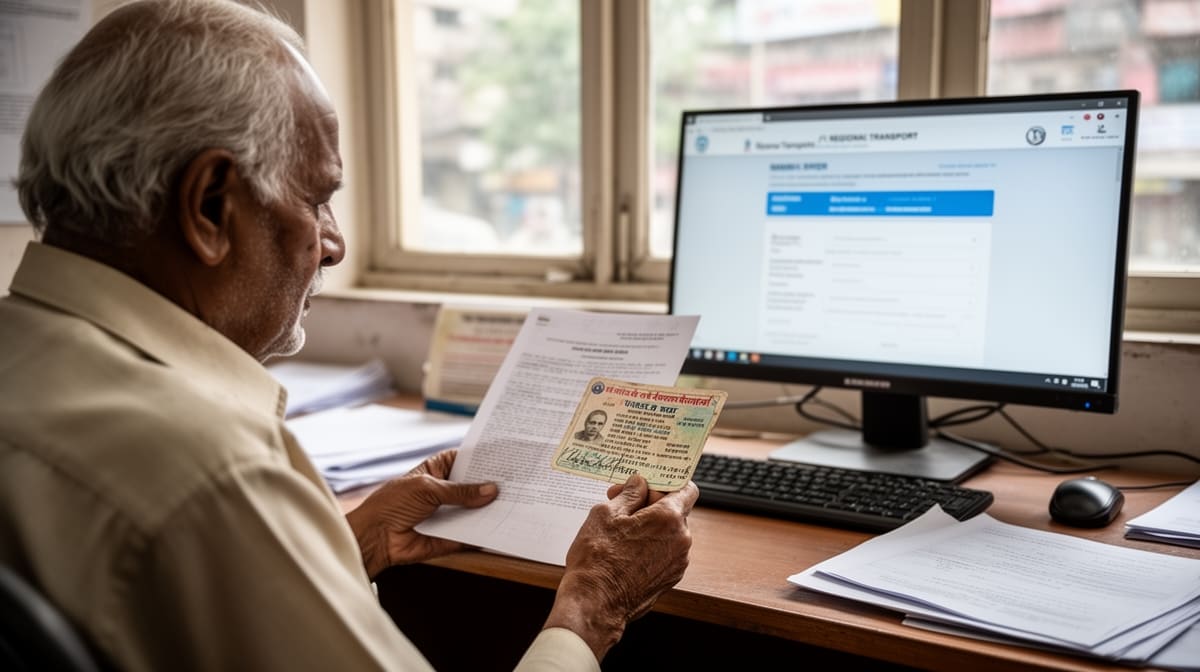
Section 81(3) Motor Vehicles Act | Delay in Permit Renewal Condonable on Good Cause, Calcutta HC Mandates Reasoned Orders Within 60 Days
Case Law Analysis
|Calcutta High Court

Section 81(3) Motor Vehicles Act | Delay in Permit Renewal Condonable on Good Cause, Calcutta HC Mandates Reasoned Orders Within 60 Days

Calcutta High Court rules that transport authorities must condone delays in permit renewal applications if the applicant demonstrates 'good and sufficient cause', such as medical hardship. The Court directed authorities to pass reasoned orders within 60 days, reinforcing administrative accountability under the Motor Vehicles Act.

Section 29(7) West Bengal Co-operative Societies Act | Co-operative Election Commission Must Hold Elections Within Four Weeks Despite Police Constraints : Calcutta HC
Case Law Analysis
|Calcutta High Court

Section 29(7) West Bengal Co-operative Societies Act | Co-operative Election Commission Must Hold Elections Within Four Weeks Despite Police Constraints : Calcutta HC

Calcutta High Court mandates that the Co-operative Election Commission cannot indefinitely delay elections due to police unavailability, directing completion within four weeks. The court upheld the Registrar’s power to constitute an interim board under Section 29(7) of the West Bengal Co-operative Societies Act, 2006, reinforcing timely democratic governance in co-operative societies.

GUIs Qualify as Registrable Designs Under Section 2(d) of Designs Act 2000 If Visually Perceivable and Not Merely Functional : Calcutta HC
Case Law Analysis
|Calcutta High Court

GUIs Qualify as Registrable Designs Under Section 2(d) of Designs Act 2000 If Visually Perceivable and Not Merely Functional : Calcutta HC

The Calcutta High Court has held that Graphical User Interfaces can be registered as designs under the Designs Act, 2000 if their visual features are applied to an article by an industrial process and judged solely by the eye, rejecting the misconception that GUIs are inherently functional or transient. This landmark ruling opens the door for tech and consumer electronics firms to protect innovative interface designs, aligning Indian IP law with global standards for digital aesthetics.

Section 16 LA Act 1894 | Statutory Vesting Extinguishes All Prior Claims to Surplus Land, Even After Consent Orders : Calcutta HC
Case Law Analysis
|Calcutta High Court

Section 16 LA Act 1894 | Statutory Vesting Extinguishes All Prior Claims to Surplus Land, Even After Consent Orders : Calcutta HC

The Calcutta High Court has ruled that once land is acquired under the Land Acquisition Act, 1894, statutory vesting under Section 16 irrevocably extinguishes all prior rights, including promises made in consent orders to return surplus land. This means subsequent purchasers, even those with revenue record mutations, cannot claim title or possession to unutilized portions - reinforcing that only the state holds legal ownership post-acquisition.

Section 13(1)(ia) Hindu Marriage Act | Unsubstantiated Criminal Allegations in Matrimonial Pleadings Constitute Mental Cruelty : Calcutta HC
Case Law Analysis
|Calcutta High Court

Section 13(1)(ia) Hindu Marriage Act | Unsubstantiated Criminal Allegations in Matrimonial Pleadings Constitute Mental Cruelty : Calcutta HC

The Calcutta High Court has ruled that filing baseless criminal allegations-such as attempted murder or extramarital affairs-in divorce proceedings amounts to mental cruelty under Section 13(1)(ia) of the Hindu Marriage Act, even without physical abuse. This sets a critical precedent for spouses facing weaponized litigation, affirming that the law protects against psychological harm inflicted through the judicial system itself.

Order XII Rule 6 CPC | Balance Sheet Admission Bars Debt Absorption Defense Despite CIRP : Calcutta HC
Case Law Analysis
|Calcutta High Court

Order XII Rule 6 CPC | Balance Sheet Admission Bars Debt Absorption Defense Despite CIRP : Calcutta HC

The Calcutta High Court ruled that an unconditional liability admitted in a balance sheet constitutes a binding judicial admission under Order XII Rule 6 CPC, which overrides any defense based on debt absorption during a third party’s Corporate Insolvency Resolution Process. This sets a critical precedent for creditors seeking recovery against guarantors or third-party obligors even when the original debtor is under IBC proceedings.

Section 188 IPC Cognizance Invalid Without Written Complaint by Public Servant: Calcutta HC Quashes Police-Reported Charge Sheet
Case Law Analysis
|Calcutta High Court

Section 188 IPC Cognizance Invalid Without Written Complaint by Public Servant: Calcutta HC Quashes Police-Reported Charge Sheet

Calcutta High Court rules that cognizance under Section 188 IPC cannot be taken on a police report alone-mandatory written complaint by the public servant is essential. The judgment quashes proceedings initiated without compliance with CrPC 195(1)(a), reinforcing Sharif Ahmed standards and curbing arbitrary police action in contempt-related offenses.

Section 3(1)(r) SC/ST (POA) Act | Caste-Based Insult Requires Public View or Intent to Humiliate : Calcutta HC Quashes Charges in Private Dispute
Case Law Analysis
|Calcutta High Court

Section 3(1)(r) SC/ST (POA) Act | Caste-Based Insult Requires Public View or Intent to Humiliate : Calcutta HC Quashes Charges in Private Dispute

The Calcutta High Court ruled that caste-based insults under Section 3(1)(r) of the SC/ST (POA) Act must occur in public view or with intent to humiliate to attract penal provisions. The court quashed charges in a private civil dispute, emphasizing that procedural safeguards under CrPC must be strictly complied with to prevent misuse of the Act in property or personal disputes.

Article 226 | State Cannot Withhold Contractual Refunds to Evade Judicial Restraint on Tax Claims : Calcutta HC
Case Law Analysis
|Calcutta High Court

Article 226 | State Cannot Withhold Contractual Refunds to Evade Judicial Restraint on Tax Claims : Calcutta HC

Calcutta High Court rules that state entities cannot retain contractual refunds to indirectly enforce tax claims barred by judicial orders, reinforcing that arbitrariness in commercial dealings triggers writ jurisdiction. The judgment underscores that contractual obligations must be honored independently of tax disputes, protecting private parties from state overreach.

Section 3A Central Excise Act | Capacity-Based Taxation Valid Despite Disconnect from Actual Output : Calcutta HC Upholds Deeming Fiction to Curb Evasion
Case Law Analysis
|Calcutta High Court

Section 3A Central Excise Act | Capacity-Based Taxation Valid Despite Disconnect from Actual Output : Calcutta HC Upholds Deeming Fiction to Curb Evasion

Calcutta High Court ruled that excise duty levied on production capacity under Section 3A of the Central Excise Act need not align with actual output, provided the mechanism serves the legislative intent to prevent tax evasion. The judgment validates the use of 'deeming fiction' in taxation, impacting manufacturers of notified goods like chewing tobacco.

Vested Rights in Service Law | Teachers Acquiring Postgraduate Degrees After Appointment Entitled to Higher Pay Scales : Calcutta HC
Case Law Analysis
|Calcutta High Court

Vested Rights in Service Law | Teachers Acquiring Postgraduate Degrees After Appointment Entitled to Higher Pay Scales : Calcutta HC

Calcutta High Court affirms that teachers who obtain postgraduate qualifications during service with official permission retain their right to higher pay scales under pre-enactment service terms. The ruling protects vested rights from being nullified by subsequent restrictive notifications under the West Bengal Schools (Control of Expenditure) Act, 2005, impacting pay scale entitlements for thousands of educators.

Judicial Bifurcation | Optional Transfer Rights Must Be Honored Without Administrative Delay : Calcutta High Court
Case Law Analysis
|Calcutta High Court

Judicial Bifurcation | Optional Transfer Rights Must Be Honored Without Administrative Delay : Calcutta High Court

The Calcutta High Court ruled that judicial staff who lawfully exercised their transfer options post-bifurcation cannot be denied relocation due to administrative delays. The court mandated preservation of seniority and immediate processing of transfers for sanctioned posts, rejecting the District Judge's decision to suspend transfer provisions pending vacancy assessment. This judgment reinforces the binding nature of optional transfer rights under service law.

Reconstruction Exceeding 50% of Structure Volume is 'New Building' Under Section 287 of West Bengal Municipal Corporation Act | Prior Sanction Mandatory : Calcutta High Court
Case Law Analysis
|Calcutta High Court

Reconstruction Exceeding 50% of Structure Volume is 'New Building' Under Section 287 of West Bengal Municipal Corporation Act | Prior Sanction Mandatory : Calcutta High Court

The Calcutta High Court ruled that reconstructing a building after fire damage exceeding 50% of its original volume constitutes a 'new building' under Section 287 of the West Bengal Municipal Corporation Act, 1993, requiring prior municipal sanction. The Court held that absence of such sanction renders the construction unauthorized, irrespective of historical possession or prior existence of the structure. This decision reinforces compliance obligations for property owners and municipal authorities in West Bengal.

Article 300-A Mandates Compensation for State Vesting of Property | Calcutta HC Invalidates Uncompensated Land Acquisition Under West Bengal Land Reforms Act
Case Law Analysis
|Calcutta High Court

Article 300-A Mandates Compensation for State Vesting of Property | Calcutta HC Invalidates Uncompensated Land Acquisition Under West Bengal Land Reforms Act

The Calcutta High Court ruled that any state vesting of property under the West Bengal Land Reforms Act, 1955, without a compensation mechanism violates Article 300-A of the Constitution. The judgment underscores that compensation is not merely procedural but a constitutional necessity, affecting landowners facing uncompensated acquisitions. This holding reinforces the principle of natural justice in property rights cases.

Section 498A & 306 IPC | Prosecution Must Prove Specific Acts of Cruelty and Direct Causal Link to Suicide : Calcutta High Court Acquits Accused
Case Law Analysis
|Calcutta High Court

Section 498A & 306 IPC | Prosecution Must Prove Specific Acts of Cruelty and Direct Causal Link to Suicide : Calcutta High Court Acquits Accused

The Calcutta High Court set aside a conviction under Sections 498A and 306 IPC, ruling that vague allegations, uncorroborated testimony, and the absence of a post-mortem report fail to establish the required nexus between cruelty and suicide. The judgment reinforces that dowry harassment and abetment charges demand concrete evidence of specific acts and direct causation, impacting future prosecutions under these provisions.

Promissory Estoppel Bars Arbitrary Termination of Government Leases | Railway Rake Conversion Policy Change : Calcutta High Court
Case Law Analysis
|Calcutta High Court

Promissory Estoppel Bars Arbitrary Termination of Government Leases | Railway Rake Conversion Policy Change : Calcutta High Court

The Calcutta High Court ruled that promissory estoppel prevents the government from terminating existing leases without valid justification, even amid policy shifts like the transition from ICF to LHB rakes. The judgment reinforces that public authorities cannot disregard legitimate expectations of private parties in contractual agreements, setting a precedent for fairness in government contracts.

Child Witness Testimony Under Section 164 CrPC | Voluntariness and Corroboration Override Familial Bias and Lighting Concerns : Calcutta High Court
Case Law Analysis
|Calcutta High Court

Child Witness Testimony Under Section 164 CrPC | Voluntariness and Corroboration Override Familial Bias and Lighting Concerns : Calcutta High Court

In a murder conviction upheld on a child witness’s testimony, the Calcutta High Court ruled that voluntariness and corroboration of a child’s account prevail over doubts about familial association or visibility conditions. The judgment reinforces that child witnesses can be reliable if their statements meet legal tests under Section 164 CrPC, impacting criminal trials relying on minor testimonies.