Bombay High Court judgments

2134 Bombay High Court judgments explained in plain English: what was decided, the law applied and why it matters. Page 65 of 89.

Deemed Conveyance Under Maharashtra Ownership Flats Act Limited to Authorized Construction Only | Municipal Enforcement Powers Upheld: Bombay High Court
Case Law Analysis
|Bombay High Court

Deemed Conveyance Under Maharashtra Ownership Flats Act Limited to Authorized Construction Only | Municipal Enforcement Powers Upheld: Bombay High Court

The Bombay High Court ruled that deemed conveyance under the Maharashtra Ownership Flats Act applies exclusively to authorized portions of a housing project, reinforcing that statutory protections for flat purchasers do not override municipal authorities' powers to act against unauthorized constructions. This judgment clarifies the boundaries of deemed conveyance rights and underscores the primacy of regulatory enforcement in property disputes, impacting cooperative housing societies and developers across Maharashtra.


Section 138 NI Act | Bank Ledger as Material Evidence Must Be Considered in Cheque Validity Disputes : Bombay High Court, Aurangabad Bench
Case Law Analysis
|Bombay High Court

Section 138 NI Act | Bank Ledger as Material Evidence Must Be Considered in Cheque Validity Disputes : Bombay High Court, Aurangabad Bench

The Bombay High Court set aside an appellate order that dismissed a Section 138 NI Act complaint on grounds of cheque validity, holding that the lower court erred by ignoring crucial bank ledger evidence proving timely presentation. The ruling reinforces that documentary proof of cheque presentation within the validity period is essential for establishing liability under the NI Act, impacting creditors and businesses relying on cheque-based transactions.

Natural Justice in Departmental Enquiries | Right to Document Access & Fair Hearing Mandatory: Bombay High Court
Case Law Analysis
|Bombay High Court

Natural Justice in Departmental Enquiries | Right to Document Access & Fair Hearing Mandatory: Bombay High Court

The Bombay High Court quashed a disciplinary action where the departmental enquiry failed to provide the employee access to documents, evidence, or a fair hearing. The ruling reaffirms that natural justice principles-including adequate notice, document disclosure, and a reasonable opportunity to defend-are non-negotiable in service law, impacting all public and private sector employees facing disciplinary proceedings.

Order I Rule 10(2) CPC | Courts Must Analyze Cause of Action Before Striking Off Government Departments as Necessary Parties : Bombay High Court at Goa
Case Law Analysis
|Bombay High Court

Order I Rule 10(2) CPC | Courts Must Analyze Cause of Action Before Striking Off Government Departments as Necessary Parties : Bombay High Court at Goa

The Bombay High Court at Goa has ruled that government departments cannot be removed as defendants in a civil suit without a detailed examination of their connection to the cause of action under Order I Rule 10(2) CPC. This decision reinforces administrative accountability by preventing courts from arbitrarily dismissing public bodies whose involvement is legally relevant, ensuring that victims of multi-party administrative failures have full recourse to justice.

Maintenance Tribunal Cannot Order Eviction Under Senior Citizens Act Without Valid Maintenance Claim | Bombay High Court Clarifies Jurisdictional Limits
Case Law Analysis
|Bombay High Court

Maintenance Tribunal Cannot Order Eviction Under Senior Citizens Act Without Valid Maintenance Claim | Bombay High Court Clarifies Jurisdictional Limits

The Bombay High Court ruled that eviction orders under the Maintenance and Welfare of Parents and Senior Citizens Act, 2007, are invalid unless tied to a legitimate maintenance claim. The judgment restricts Maintenance Tribunals from adjudicating property disputes, reinforcing that eviction powers are ancillary to maintenance obligations. This decision impacts senior citizens seeking eviction of relatives and sets a precedent for jurisdictional boundaries under the Act.

Section 227 CrPC | Prima Facie Evidence Suffices for Trial Commencement Despite Ambiguities : Bombay High Court, Aurangabad Bench
Case Law Analysis
|Bombay High Court

Section 227 CrPC | Prima Facie Evidence Suffices for Trial Commencement Despite Ambiguities : Bombay High Court, Aurangabad Bench

The Bombay High Court, Aurangabad Bench, ruled that discharge under Section 227 CrPC cannot be granted merely due to ambiguities in prosecution evidence. If the material, if accepted as true, could sustain a conviction, a prima facie case is established, warranting trial. This decision reinforces the threshold for discharge applications under the Prevention of Corruption Act, impacting public servants facing bribery allegations.

Section 60(3) NDPS Act | Owner Must Prove Lack of Knowledge or Connivance to Claim Release of Seized Conveyance : Bombay High Court, Nagpur Bench
Case Law Analysis
|Bombay High Court

Section 60(3) NDPS Act | Owner Must Prove Lack of Knowledge or Connivance to Claim Release of Seized Conveyance : Bombay High Court, Nagpur Bench

The Bombay High Court has ruled that mere ownership of a vehicle seized under the NDPS Act does not entitle the owner to its release. To reclaim the conveyance, the owner must affirmatively demonstrate they had no knowledge of or involvement in its use for narcotic transportation, reinforcing the statutory burden under Section 60(3). This sets a critical precedent for property owners facing confiscation in drug-related cases across Maharashtra.
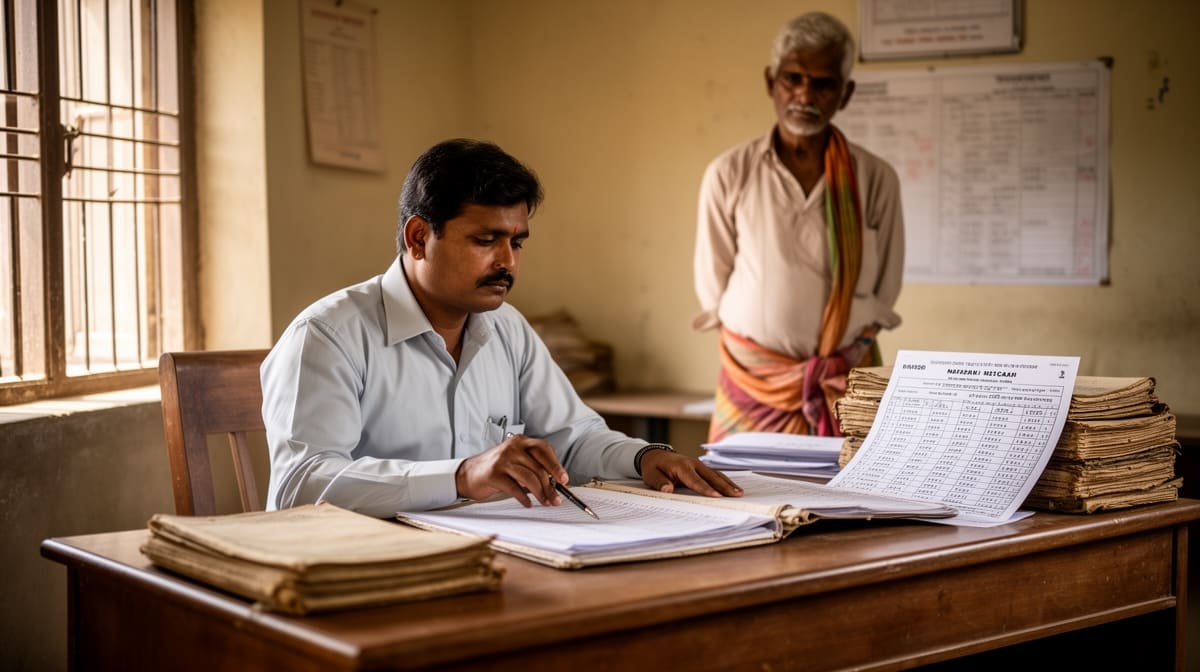
Section 409 IPC | Misappropriation of Public Funds by Gramsevak Constitutes Criminal Breach of Trust if Entrustment and Dishonest Intent Proven : Bombay High Court, Nagpur Bench
Case Law Analysis
|Bombay High Court

Section 409 IPC | Misappropriation of Public Funds by Gramsevak Constitutes Criminal Breach of Trust if Entrustment and Dishonest Intent Proven : Bombay High Court, Nagpur Bench

The Bombay High Court, Nagpur Bench, upheld the conviction of a Gramsevak under Section 409 IPC for misappropriating ₹6,500 from Gram Panchayat funds, emphasizing that criminal breach of trust requires proof of entrustment and dishonest intent. The ruling reinforces accountability for public servants handling public funds and sets a precedent for similar cases involving financial misconduct by government employees.

Section 32 Maharashtra Tenancy Act | Tiller’s Day (1 April 1957) Deemed Purchase Irreversible Despite Subsequent Transfers : Bombay High Court
Case Law Analysis
|Bombay High Court

Section 32 Maharashtra Tenancy Act | Tiller’s Day (1 April 1957) Deemed Purchase Irreversible Despite Subsequent Transfers : Bombay High Court

The Bombay High Court ruled that a tenant’s deemed purchase under Section 32 of the Maharashtra Tenancy Act, fixed on the statutory 'tiller’s day' of 1 April 1957, remains valid and cannot be nullified by later property transfers or invalidation of Section 88C certificates. This decision reinforces the irrevocable nature of statutory tenancy rights once vested, impacting landowners, tenants, and revenue authorities in Maharashtra.

Section 17 Arbitration Act | Registered Sale Agreements Override Developer's Lien: Bombay High Court Grants Possession to Third-Party Buyers
Case Law Analysis
|Bombay High Court

Section 17 Arbitration Act | Registered Sale Agreements Override Developer's Lien: Bombay High Court Grants Possession to Third-Party Buyers

The Bombay High Court ruled that third-party buyers with registered sale agreements hold superior rights over a developer's lien under Section 17 of the Arbitration and Conciliation Act. The court directed possession of flats to be handed over to buyers upon deposit of the balance consideration, reinforcing that arbitration interim measures cannot override duly executed property transfers. This decision impacts developers, flat purchasers, and arbitration proceedings involving real estate disputes.

Enforcement of Foreign Arbitral Awards Under Section 48 of Arbitration Act | Party Autonomy Overrides Conflicting Clauses : Bombay High Court
Case Law Analysis
|Bombay High Court

Enforcement of Foreign Arbitral Awards Under Section 48 of Arbitration Act | Party Autonomy Overrides Conflicting Clauses : Bombay High Court

The Bombay High Court enforced five foreign arbitral awards despite conflicting arbitration clauses, holding that party autonomy and commercial pragmatism prevail over technical defects under Section 48 of the Arbitration and Conciliation Act, 1996. The ruling underscores that Indian courts will not refuse enforcement merely on procedural discrepancies if the awards align with the parties' substantive intent. This decision reinforces the pro-enforcement stance under the Act, benefiting international commercial arbitration stakeholders.

Section 125 CrPC | Maintenance Cannot Be Denied Based on Speculative Claims of Wife's Family Income or Self-Sufficiency : Bombay High Court, Aurangabad Bench
Case Law Analysis
|Bombay High Court

Section 125 CrPC | Maintenance Cannot Be Denied Based on Speculative Claims of Wife's Family Income or Self-Sufficiency : Bombay High Court, Aurangabad Bench

The Bombay High Court held that a wife’s entitlement to maintenance under Section 125 CrPC cannot be denied merely because her father owns agricultural land or rental properties, unless her actual access to and control over such resources is proven. This ruling reinforces that the focus must be on the wife’s independent means and genuine need, not speculative family wealth, ensuring statutory protection for economically vulnerable women remains meaningful.

Section 34 Arbitration Act | Fixed License Fees Payable Regardless of Telecast: Bombay High Court Upholds Arbitral Award
Case Law Analysis
|Bombay High Court

Section 34 Arbitration Act | Fixed License Fees Payable Regardless of Telecast: Bombay High Court Upholds Arbitral Award

The Bombay High Court ruled that license fees under a broadcast agreement are payable in full upon execution, even if episodes remain untelecast. The judgment reinforces that Section 34 challenges cannot override arbitral interpretation of contractual obligations, impacting media and commercial contracts where fixed fees are stipulated.

Section 201(3) Income Tax Act | Limitation for TDS Default Proceedings Runs Quarter-Wise, Not Annually : Bombay High Court
Case Law Analysis
|Bombay High Court

Section 201(3) Income Tax Act | Limitation for TDS Default Proceedings Runs Quarter-Wise, Not Annually : Bombay High Court

The Bombay High Court ruled that the limitation period for TDS default proceedings under Section 201(3) of the Income Tax Act begins separately for each quarterly return, not cumulatively for the financial year. This interpretation strengthens taxpayer protections by preventing retrospective defaults for earlier quarters. Businesses and tax practitioners must now ensure compliance on a quarterly basis to avoid time-barred proceedings.

Section 6 Specific Relief Act | Proof of Settled Possession on Date of Dispossession Mandatory for Summary Remedy: Bombay High Court
Case Law Analysis
|Bombay High Court

Section 6 Specific Relief Act | Proof of Settled Possession on Date of Dispossession Mandatory for Summary Remedy: Bombay High Court

The Bombay High Court ruled that under Section 6 of the Specific Relief Act, plaintiffs must establish settled possession on the exact date of dispossession-not merely historical occupancy-to avail the summary remedy. The judgment underscores that failure to meet this strict evidentiary standard will bar relief, impacting property disputes where possession is contested without clear contemporaneous proof.

Section 12(5) Arbitration Act | Unilateral Arbitrator Appointment Cannot Be Waived by Participation : Bombay High Court
Case Law Analysis
|Bombay High Court

Section 12(5) Arbitration Act | Unilateral Arbitrator Appointment Cannot Be Waived by Participation : Bombay High Court

The Bombay High Court ruled that participation in arbitration proceedings does not constitute a valid waiver of objections to a unilateral arbitrator appointment under Section 12(5) of the Arbitration Act. Only an express written agreement can override the statutory bar, reinforcing the need for mutual consent in arbitrator selection. This decision impacts businesses relying on arbitration clauses, emphasizing strict compliance with procedural fairness.

MPID Act Covers Investments Promising Fixed Returns as 'Deposits' | Discharge Application Rejected at Preliminary Stage : Bombay High Court, Nagpur Bench
Case Law Analysis
|Bombay High Court

MPID Act Covers Investments Promising Fixed Returns as 'Deposits' | Discharge Application Rejected at Preliminary Stage : Bombay High Court, Nagpur Bench

The Bombay High Court, Nagpur Bench, ruled that investments offering fixed returns qualify as 'deposits' under the Maharashtra Protection of Interest of Depositors (MPID) Act, 1999. The court rejected the discharge application at the preliminary stage, reinforcing that such financial schemes fall within the ambit of the Act, impacting investors and promoters of similar ventures. This decision underscores the strict interpretation of the MPID Act in safeguarding depositors' interests.

Interim Relief in Commercial Contracts | Bombay HC Mandates Deposit of Title Deeds to Secure Contractual Claims Under LOUs
Case Law Analysis
|Bombay High Court

Interim Relief in Commercial Contracts | Bombay HC Mandates Deposit of Title Deeds to Secure Contractual Claims Under LOUs

The Bombay High Court ruled that title deeds must be deposited with the court as security for contractual claims under Letters of Understanding (LOUs), even if sale obligations remain unfulfilled. This decision reinforces the enforceability of interim relief mechanisms in commercial disputes, ensuring creditors' interests are protected pending final adjudication. Developers and contracting parties must now factor this heightened security requirement into their transaction structures.

Section 6 Specific Relief Act | Proof of Actual Possession on Date of Dispossession Mandatory for Summary Remedy : Bombay High Court
Case Law Analysis
|Bombay High Court

Section 6 Specific Relief Act | Proof of Actual Possession on Date of Dispossession Mandatory for Summary Remedy : Bombay High Court

The Bombay High Court ruled that plaintiffs seeking relief under Section 6 of the Specific Relief Act must establish actual possession on the exact date of dispossession, not merely past possession. This holding reinforces the strict evidentiary standard for summary remedies in property disputes, impacting litigants relying on possessory claims without contemporaneous proof.

Final Orders Under Maharashtra Private Forest Act Trump Forest Conservation Act | Revenue Mutation Must Proceed : Bombay High Court
Case Law Analysis
|Bombay High Court

Final Orders Under Maharashtra Private Forest Act Trump Forest Conservation Act | Revenue Mutation Must Proceed : Bombay High Court

The Bombay High Court ruled that once land is declared agricultural under final orders of the Maharashtra Private Forest Act, 1975, state authorities cannot invoke the Forest Conservation Act, 1980 to block revenue record mutation. The judgment reinforces the binding nature of concurrent orders under the MPF Act, ensuring landowners' rights to updated revenue records are protected against conflicting forest laws.

Senior Citizens Act | Right to Residence Trumps Ownership: Eviction Permissible Without Monetary Maintenance Claim | Bombay High Court
Case Law Analysis
|Bombay High Court

Senior Citizens Act | Right to Residence Trumps Ownership: Eviction Permissible Without Monetary Maintenance Claim | Bombay High Court

The Bombay High Court upheld that senior citizens can evict abusive children from their property under the Maintenance and Welfare of Parents and Senior Citizens Act, 2007, even without a monetary maintenance claim, if residence is essential for a dignified life. The ruling clarifies that the Act's protective provisions extend beyond financial support, prioritizing the senior citizen's right to peaceful occupation. This decision sets a precedent for similar cases involving elder abuse and property disputes.

Section 263 Indian Succession Act | Fraudulent Suppression of Class-II Heirs Voids Letters of Administration : Bombay High Court
Case Law Analysis
|Bombay High Court

Section 263 Indian Succession Act | Fraudulent Suppression of Class-II Heirs Voids Letters of Administration : Bombay High Court

Bombay High Court ruled that concealing surviving Class-II heirs in a testamentary petition constitutes fraud under Section 263 of the Indian Succession Act, warranting revocation of letters of administration. The judgment underscores the duty to cite all material heirs, failing which the grant is deemed fraudulently obtained and void. This holding reinforces natural justice in probate proceedings, impacting property disputes involving suppressed legal heirs.