The Bombay High Court has clarified that ticketed commercial events, even if culturally themed like a Diwali celebration, do not qualify for the private use exemption under Section 52(1)(za) of the Copyright Act, 1957. This ruling reinforces the obligation of venue owners to secure public performance licenses from copyright holders, setting a critical precedent for event organizers and hospitality businesses across India.
Background & Facts
The Dispute
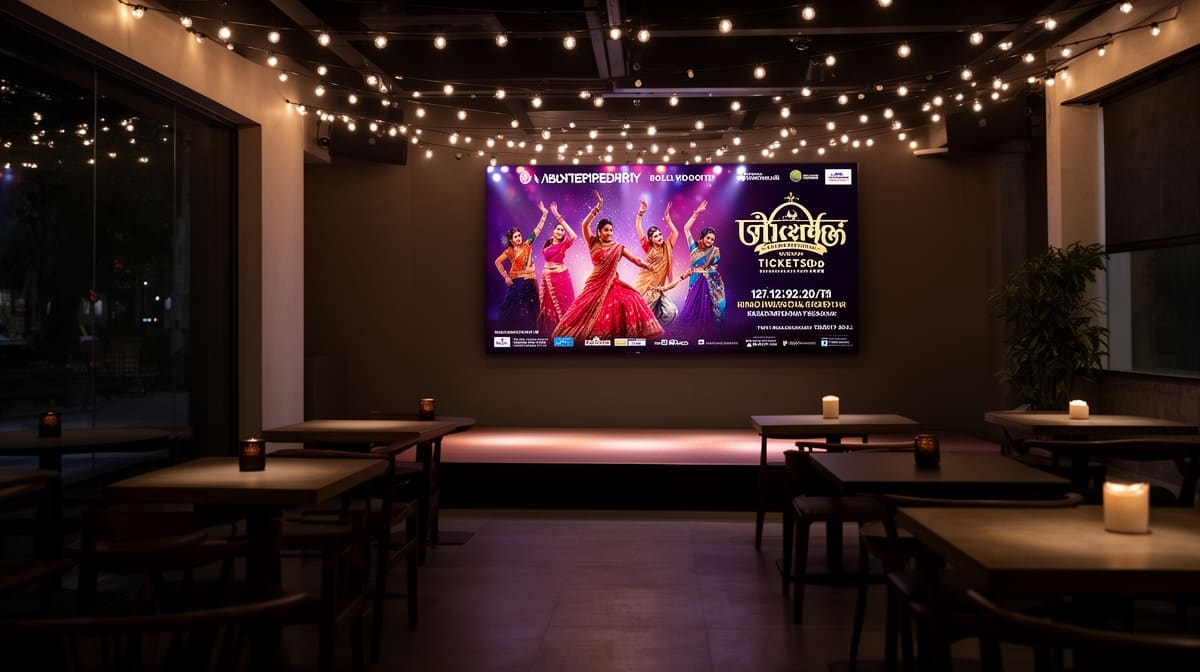
The Plaintiff, Phonographic Performance Limited, is the exclusive licensee of sound recordings from multiple music labels and holds the right to grant public performance licenses under Section 30 of the Copyright Act, 1957. The Defendant, Yashraj Satwara, operates a commercial cafe and rents out premises for ticketed events. On October 19, 2025, the Plaintiff discovered a promotional poster for a ticketed event titled 'Bollywood Diwali Tamasha' hosted at the Defendant’s premises, during which copyrighted sound recordings were played without authorization.
Procedural History
- October 19, 2025: Plaintiff’s representative observed unauthorized playback of copyrighted music at the event.
- October 19, 2025: Cease-and-desist email sent to Defendant demanding a license.
- November 14, 2025: Formal cease-and-desist notice issued; Defendant responded claiming exemption under Section 52(1)(za).
- December 31, 2025: Plaintiff’s representative confirmed further unauthorized playback at another event.
- December 2025: Defendant filed a suit in Vadodara seeking declaratory relief, but Plaintiff sought interim injunction in Bombay.
Relief Sought
The Plaintiff sought an ad-interim injunction restraining the Defendant from publicly performing or allowing the use of its copyrighted sound recordings without a license, pending final disposal of the suit.
The Legal Issue
The central question was whether the playing of copyrighted sound recordings at a ticketed, commercial Diwali event qualifies for exemption under Section 52(1)(za) of the Copyright Act, 1957, and whether the Plaintiff’s status as a non-registered copyright society affects its right to grant licenses.
Arguments Presented
For the Petitioner
The Plaintiff relied on Novex Communications Pvt. Ltd. v. Trade Wings Hotels Limited to establish that registration as a copyright society under Section 33 is not a precondition for licensing. It argued that the Defendant’s event was commercial, ticketed, and open to the public, thus falling squarely within the scope of public performance. The Plaintiff submitted documentary evidence including assignment deeds, affidavits of infringement, and the promotional material to establish prima facie ownership and infringement.
For the Respondent
The Defendant, though not appearing, had responded in writing claiming the event was a private gathering exempt under Section 52(1)(za), which permits use of copyrighted works in religious ceremonies. The Defendant also contended that the Plaintiff lacked standing due to its non-registration as a copyright society, citing a Delhi High Court judgment.
The Court's Analysis
The Court examined the language and intent of Section 52(1)(za), which provides an exemption for the performance of a work in any religious ceremony, including a marriage ceremony and its附属 functions. The Court held that the exemption is narrowly confined to religious contexts and cannot be extended to commercial, ticketed entertainment events, even if culturally associated with a religious festival.
"The exemption under Section 52(1)(za) is not a blanket cover for all events held during religious festivals; it is limited to ceremonies of a religious nature. A ticketed Bollywood Diwali party is a commercial entertainment event, not a religious ceremony."
The Court further affirmed its earlier ruling in Novex Communications, rejecting the Defendant’s argument that registration as a copyright society is mandatory for licensing. The Court emphasized that ownership or exclusive license under Section 30 is sufficient to enforce rights, regardless of registration status. The affidavits of infringement, coupled with the Defendant’s repeated violations despite notice, established a clear case of prima facie infringement and irreparable harm.
The Verdict
The Plaintiff won. The Court granted an ad-interim injunction restraining the Defendant from publicly performing or permitting the use of the Plaintiff’s copyrighted sound recordings without a license. The Court held that Section 52(1)(za) does not apply to commercial, ticketed events, and that exclusive licensees may enforce copyright without being registered copyright societies.
What This Means For Similar Cases
Ticketed Events Are Not Private Gatherings
- Practitioners must advise event organizers that any event with paid entry, advertising, or commercial sponsorship is presumed public under the Copyright Act.
- Cultural or festive themes (e.g., Diwali, Eid, Christmas parties) do not transform commercial events into religious ceremonies for exemption purposes.
Licensing Obligations Are Non-Optional for Venue Owners
- Cafes, hotels, and event spaces must secure public performance licenses before playing copyrighted music, regardless of whether they host live bands or use pre-recorded tracks.
- Failure to obtain licenses exposes venues to injunctions, damages, and reputational risk under Section 63 of the Copyright Act.
Non-Registration Does Not Invalidate Licensing Rights
- Copyright owners and exclusive licensees need not be registered societies to issue licenses or seek injunctions.
- The Novex precedent is now firmly entrenched in Bombay High Court jurisprudence, overriding conflicting interpretations from other jurisdictions.