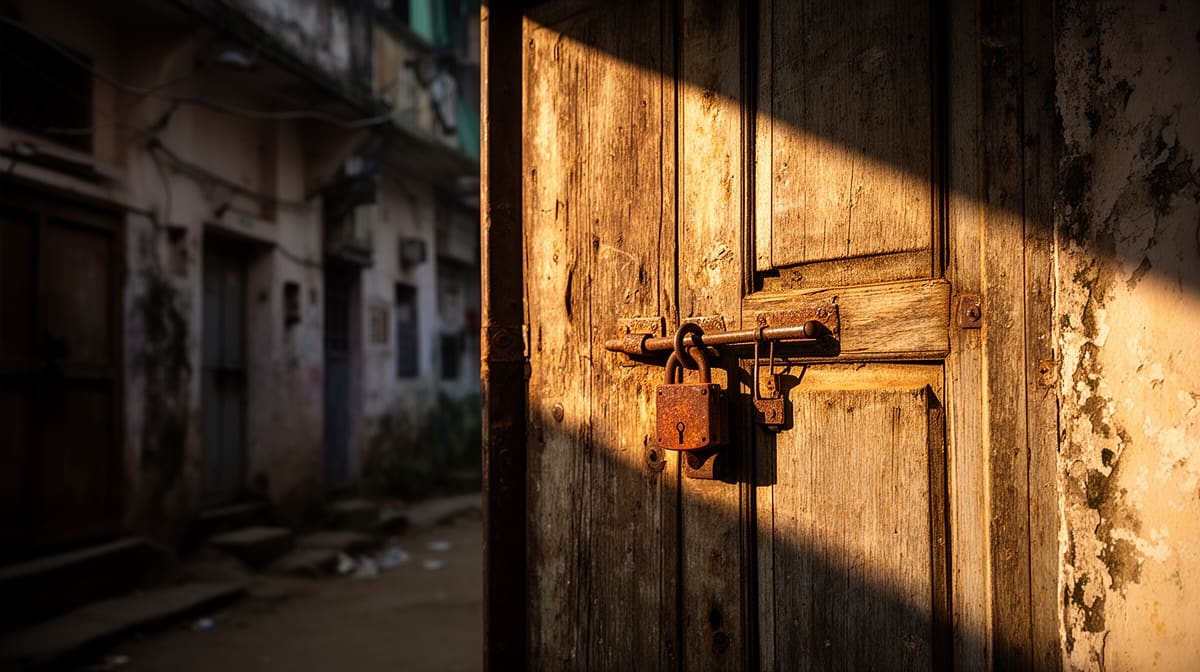
The Bombay High Court has reaffirmed that a suit under Section 6 of the Specific Relief Act, 1963, is not a substitute for a title-based recovery suit. The remedy is summary and limited to restoring possession only if the plaintiff proves actual, settled possession on the precise date of dispossession. Failure to establish this foundational fact renders the suit unsustainable, regardless of the defendant’s conduct or the plaintiff’s prior occupancy.
Background & Facts
The Dispute
The dispute centers on possession of residential and dispensary premises at Kannamwar Nagar, Vikhroli, Mumbai. Plaintiff No. 1, a qualified Ayurvedic doctor, purchased the property in 1972 - 73 but registered it in the name of his brother, Defendant Deoram Gawande, under a family arrangement. The Plaintiffs operated a medical dispensary from the premises for decades. The Defendant, with only a fifth-grade education, allegedly permitted this use gratuitously.
Procedural History
- 2006: Defendant filed Suit No. 2553/2006 for recovery of possession; plaint returned.
- 2009: Defendant filed L.E. Suit No. 131/177/2009 in Small Causes Court seeking possession from Plaintiffs.
- February 2010: Defendant applied to amend the L.E. Suit to implead Cosmos Prime Projects Ltd., alleging the developer had trespassed and occupied the premises.
- March 2011: Amendment granted; Cosmos was made a party.
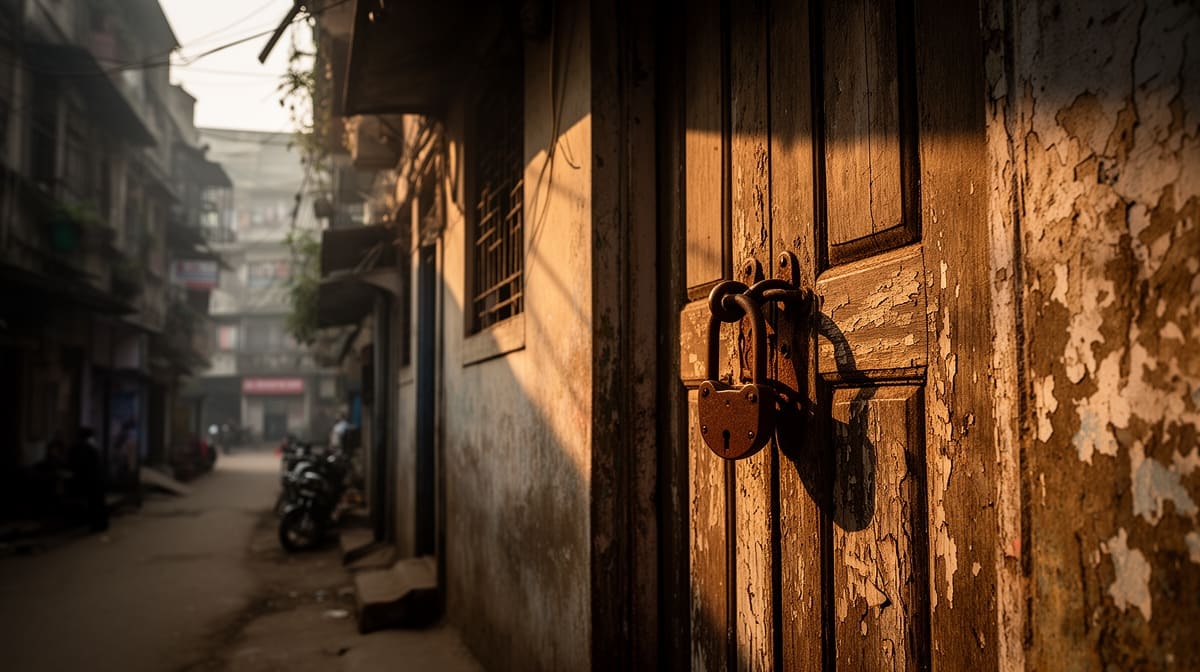
- November 2011: Plaintiffs allege Defendant broke open the lock on 28 November 2011 and took forcible possession.
- April 2012: Plaintiffs filed Suit No. 3192/2012 under Section 6 of the Specific Relief Act for restoration of possession.
- December 2022: City Civil Court decreed the suit in favor of Plaintiffs.
- 2023: Defendant’s heirs filed Civil Revision Application No. 185 of 2023 before the Bombay High Court.
Relief Sought
The Plaintiffs sought restoration of possession under Section 6 of the Specific Relief Act, claiming forcible dispossession on 28 November 2011. The Defendant’s heirs contended that Plaintiffs had lost possession long before, with Cosmos occupying the premises, and that the Defendant merely retook possession from the developer.
The Legal Issue
The central question was whether the Plaintiffs discharged their burden under Section 6 of the Specific Relief Act to prove they were in settled possession of the suit premises on the exact date of alleged dispossession - 28 November 2011 - or whether the Trial Court erred by inferring possession from past occupancy and the Defendant’s earlier suit.
Arguments Presented
For the Appellant/Petitioner
The Applicants argued that the Trial Court ignored critical evidence: (1) the Defendant’s 2010 amendment to the L.E. Suit, which pleaded Cosmos’ trespass and occupation; (2) the absence of any witness who saw Plaintiffs in possession on 28 November 2011; and (3) the Defendant’s unchallenged testimony that he found the premises unlocked and unoccupied on 3 October 2011. They relied on ITC Ltd. v. Adarsh Coop. Housing Society Ltd. and Jayashree Jaisingh Babar v. Shirish Ramdas Sarode to assert that Section 6 requires proof of possession on the date of dispossession, not merely prior use.
For the Respondent/State
The Respondents contended that the Trial Court correctly relied on the Defendant’s admission in the L.E. Suit that Plaintiffs were gratuitous licensees, and that the Plaintiffs examined eight witnesses corroborating their possession. They argued that the Defendant’s conduct - filing a suit for recovery and then forcibly taking possession - constituted taking the law into his own hands, justifying the summary remedy under Section 6.
The Court's Analysis
The Court emphasized that Section 6 of the Specific Relief Act is a summary remedy designed to prevent self-help and restore the status quo ante, but it does not dispense with the burden of proof. The three essential ingredients are: (i) plaintiff’s possession on the date of dispossession, (ii) dispossession without consent or due process, and (iii) filing within six months.
"The plaintiff needs to prove 'settled possession' on the date of dispossession. Mere prior use, or the defendant’s admission of past possession, cannot substitute for proof of possession on the critical date."
The Trial Court’s finding that "the possession of the plaintiffs and then the possession of the deceased defendant is not in dispute" was held to be patently perverse. The Defendant never admitted possession on 28 November 2011; he consistently claimed Cosmos had occupied the premises since 2009 - 10. The Court noted that the amendment application in February 2010 - nearly two years before the alleged dispossession - could not have been a fabricated defense. It was a contemporaneous assertion of fact.
The Court further held that the Plaintiffs’ eight witnesses failed to establish actual presence on 28 November 2011. Most deposed only to hearing about the lock-breaking on 29 November, which is hearsay. No witness testified to seeing the Plaintiffs inside the premises on the evening of 28 November.
The Court distinguished between past permission and present possession. The Defendant’s earlier suit for recovery implied a dispute over title, not current possession. The burden under Section 6 is not light; it requires credible, direct evidence of possession on the exact date claimed. The Trial Court’s failure to evaluate the rival claims regarding Cosmos’ occupation amounted to a jurisdictional error under Section 115 of the Code of Civil Procedure.
The Verdict
The Applicants succeeded. The Bombay High Court set aside the Trial Court’s decree and dismissed the Plaintiffs’ suit under Section 6 of the Specific Relief Act. The Court held that the Plaintiffs failed to prove possession on 28 November 2011, the essential precondition for relief under Section 6. The remedy is unavailable without this proof, regardless of the Defendant’s conduct.
What This Means For Similar Cases
Possession Must Be Proven On The Exact Date
- Practitioners must ensure that in Section 6 suits, the plaint and evidence specifically identify and corroborate possession on the precise date of dispossession.
- Hearsay or general testimony about prior use will not suffice.
- Witnesses must be prepared to testify to physical presence on the critical date.
Amendments In Prior Suits Are Critical Evidence
- If a defendant has previously pleaded third-party possession in another suit, the plaintiff must directly rebut it in the Section 6 suit.
- Failure to address such a plea in pleadings or evidence will be fatal to the plaintiff’s case.
- Courts will treat such amendments as credible contemporaneous records, not afterthoughts.
Summary Relief Is Not A Substitute For Title Suits
- Section 6 is not a shortcut to ownership. It is strictly about possession.
- If title is contested, the plaintiff must file a separate substantive suit.
- Judges must not conflate past occupancy with present possession, even if the defendant’s conduct appears inequitable.