The Bombay High Court has delivered a pivotal clarification on the scope of the Senior Citizens Act, 2007, holding that eviction from residential premises cannot be ordered by a Maintenance Tribunal unless a valid claim for maintenance is expressly made and substantiated. This ruling reinforces the principle that the Act is a welfare mechanism, not a summary eviction tool, and sets a critical boundary for tribunals navigating familial property disputes.
Background & Facts
The Dispute
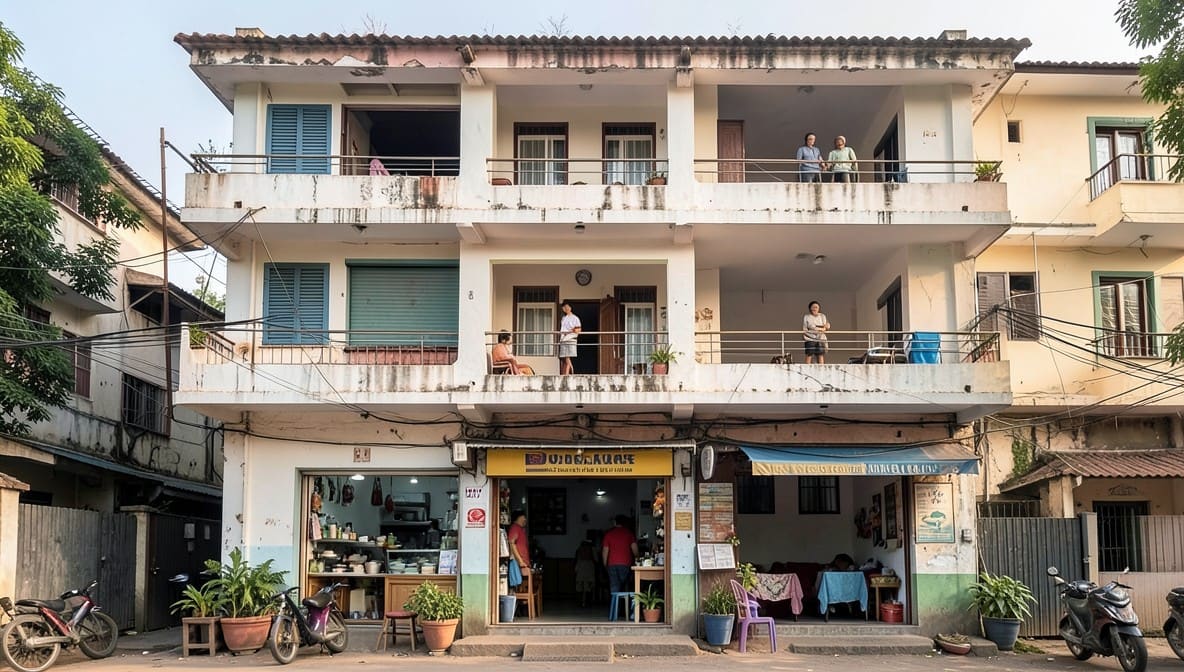
The dispute arises from a long-standing family conflict over tenancy rights in Room No. 428/8, Kohinoor Mills Chawl, Mumbai. The property was originally allotted to Sitaram Dongre Kumbhar, who had two sons: Shivaji Kumbhar (husband of Respondent No. 5) and Tanaji Kumbhar (husband of Petitioner No. 1). After Sitaram’s death in 1998, the family allegedly agreed to divide the premises, with Shivaji occupying the left side and Tanaji the right. However, tensions escalated, leading to mutual allegations of harassment, physical assault, and emotional abuse between the two branches of the family.
Procedural History
- 2013: Kohinoor Mills issued a certificate confirming Shivaji Kumbhar as the tenant since 1982.
- 2014 - 2015: Multiple non-cognizable complaints (NCs) were filed by both sides with police, alleging abuse and intimidation.
- 20 January 2023: Respondent No. 5 and her late husband filed an application before the Maintenance Tribunal seeking eviction of the petitioners, citing harassment.
- 10 June 2025: Maintenance Tribunal ordered eviction, relying on the petitioners’ possession of another house in Badlapur and the alleged harassment.
- 16 December 2025: Appellate Authority dismissed the petitioners’ appeal, upholding the eviction order.
- 2026: Writ petition filed under Article 227 challenging the legality of the eviction orders.
Relief Sought
The petitioners sought quashing of the eviction orders, arguing that the Maintenance Tribunal lacked jurisdiction to adjudicate proprietary rights and that no claim for maintenance had been made under the Act.
The Legal Issue
The central question was whether a Maintenance Tribunal under the Senior Citizens Act, 2007 can order eviction of family members from premises without a specific and substantiated claim for maintenance, and whether individuals who are not legal representatives of a childless senior citizen can be deemed ‘relatives’ under Section 2(g).
Arguments Presented
For the Petitioner
The petitioners relied on the Division Bench judgment in Jitendra Gorakh Megh v. Additional Collector & Appellate Tribunal, which held that eviction cannot be granted under the Act unless maintenance is claimed. They argued that the petitioners were not ‘relatives’ as defined under Section 2(g), since the senior citizen had two sons who were alive and residing with her. They further cited Samtola Devi v. State of Uttar Pradesh to emphasize that the Act does not expressly empower tribunals to decide property disputes. The petitioners also highlighted their long-standing occupation of the premises since 1978, as evidenced by voter lists, and the pendency of a civil suit on tenancy rights.
For the Respondent
Respondent No. 5 contended that the petitioners’ persistent harassment and refusal to vacate the room constituted cruelty under the Act. She argued that eviction was necessary to ensure the senior citizen’s safety and peaceful living. She relied on Smt. S. Vanitha v. Deputy Commissioner to assert that eviction may be an incident of maintenance if it ensures protection. The State supported this view, emphasizing the Act’s protective intent and the petitioners’ alternative accommodation in Badlapur.
The Court's Analysis
The Court undertook a detailed statutory interpretation of the Senior Citizens Act, 2007, beginning with the definition of ‘maintenance’ under Section 4 and ‘relative’ under Section 2(g). It emphasized that the Act’s primary objective is to secure financial and physical support for vulnerable elderly persons, not to resolve property disputes.
"The Act is a beneficial statute intended to safeguard the vulnerable (senior citizen), but it cannot be (mis) used by the senior citizen as a tool for summary eviction without the fulfilment of statutory requirements."
The Court found that the petitioners could not be classified as ‘relatives’ under Section 2(g), as the senior citizen had two sons who were alive and residing with her. The definition of ‘relative’ is strictly limited to legal representatives of a childless senior citizen, and the petitioners, being siblings-in-law, fell outside this scope. Consequently, the obligation to maintain under Section 4 did not apply to them.
Further, the Court noted that the application before the Tribunal contained no prayer for monthly maintenance, medical care, or any other form of support. The sole relief sought was eviction. The Tribunal’s reasoning - that the petitioners had another house - was not a valid basis for eviction under the Act, as it bypassed the statutory requirement of a maintenance claim.
The Court also held that the dispute over tenancy rights, evidenced by conflicting certificates and voter lists, was inherently proprietary and required adjudication by a civil court. The Maintenance Tribunal, bound by summary procedures under Section 8, lacked the jurisdiction to determine title or possession.
The Verdict
The petitioners won. The Court held that eviction under the Senior Citizens Act, 2007 is impermissible without a valid claim for maintenance, and that individuals who are not legal representatives of a childless senior citizen cannot be deemed ‘relatives’ under Section 2(g). The orders of the Maintenance Tribunal and Appellate Authority were quashed and set aside.
What This Means For Similar Cases
Maintenance Must Be Explicitly Claimed
- Practitioners must ensure that any application under the Senior Citizens Act includes a clear, specific prayer for maintenance - food, shelter, medical care, or financial support.
- Applications seeking eviction as the sole relief will be dismissed at the threshold, regardless of alleged harassment.
- Tribunals must record a finding that maintenance is necessary before considering eviction as an ancillary remedy.
Property Disputes Are Beyond Tribunal Jurisdiction
- Any dispute over tenancy, ownership, or possession of premises must be resolved by civil courts.
- Evidence of long-term occupation, voter lists, or allotment records cannot be adjudicated by Maintenance Tribunals.
- Tribunals must decline jurisdiction if the core issue is proprietary, even if the parties are family members.
‘Relative’ Is a Narrow Legal Term
- Only legal heirs or representatives of a childless senior citizen qualify as ‘relatives’ under Section 2(g).
- Spouses of siblings, in-laws, or other extended family members cannot be compelled to maintain under the Act.
- Practitioners must carefully assess familial relationships before filing or defending such applications.