Allahabad High Court judgments

902 Allahabad High Court judgments explained in plain English: what was decided, the law applied and why it matters. Page 30 of 38.

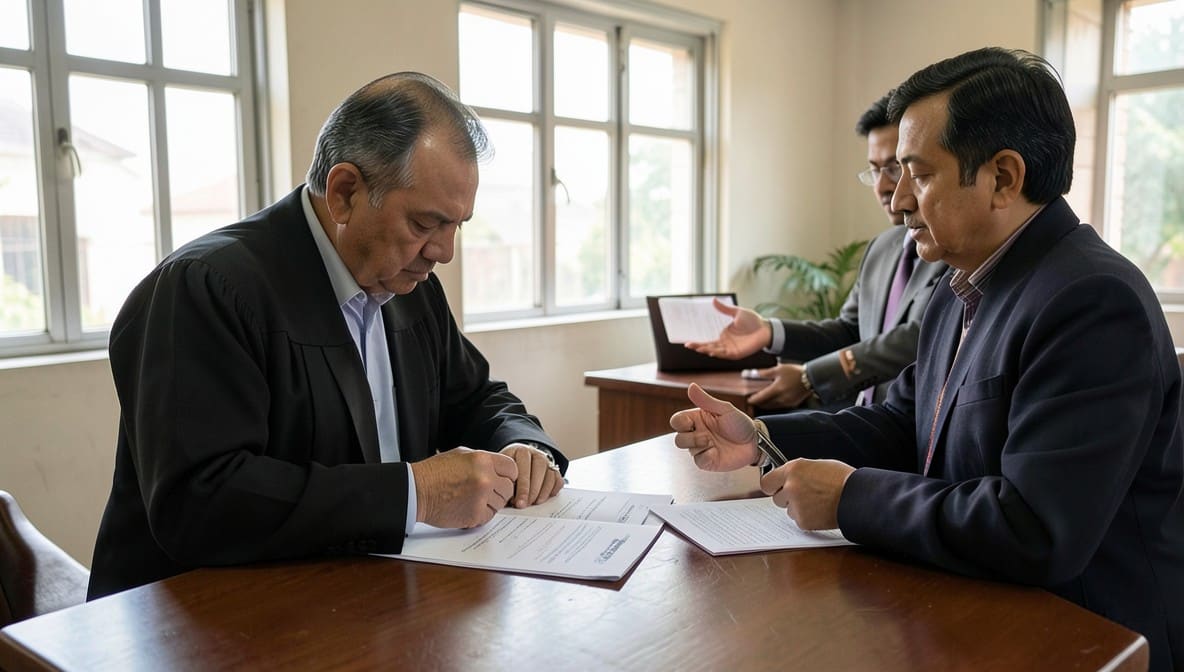
Section 319 CrPC | Omnibus Dowry Allegations Against Husband's Relatives Insufficient for Summoning: Allahabad HC Sets Evidentiary Threshold
Case Law Analysis
|Allahabad High Court

Section 319 CrPC | Omnibus Dowry Allegations Against Husband's Relatives Insufficient for Summoning: Allahabad HC Sets Evidentiary Threshold

Allahabad High Court rules that vague or general dowry harassment allegations against husband's relatives, without specific evidence linking them to the offence, cannot justify summoning under Section 319 CrPC. The judgment reinforces procedural safeguards against arbitrary expansion of criminal trials to peripheral accused.

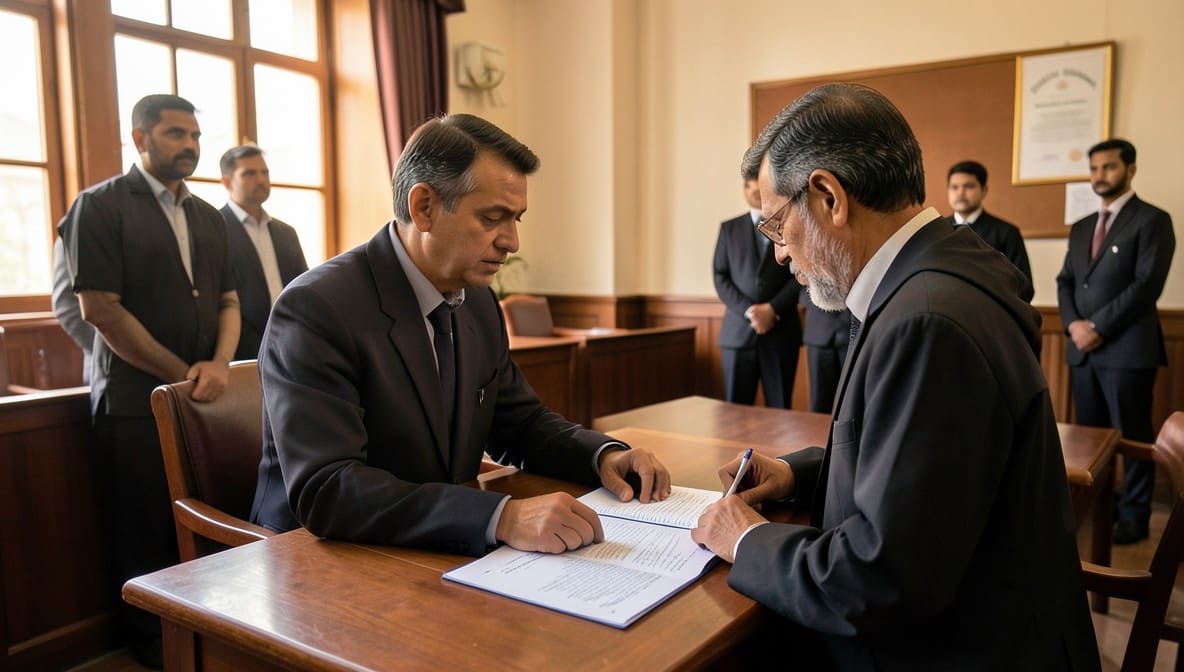
Section 166 MV Act | Non-Impleadment of Driver Not Fatal to Motor Accident Claims; Fair Compensation Mandatory : Allahabad HC
Case Law Analysis
|Allahabad High Court

Section 166 MV Act | Non-Impleadment of Driver Not Fatal to Motor Accident Claims; Fair Compensation Mandatory : Allahabad HC

Allahabad High Court holds that failure to implead the driver in motor accident claims does not invalidate the claim, emphasizing courts' duty to award just compensation regardless of procedural objections. The ruling reinforces that tribunals must apply the correct multiplier and dependency ratio, even in the absence of cross-objections, to ensure fair compensation under the Motor Vehicles Act.

SC/ST Act Section 3(1) | Vague Caste-Based Allegations Without Specific Humiliating Terms Insufficient for Bail Denial: Allahabad HC
Case Law Analysis
|Allahabad High Court

SC/ST Act Section 3(1) | Vague Caste-Based Allegations Without Specific Humiliating Terms Insufficient for Bail Denial: Allahabad HC

Allahabad HC rules that general allegations of caste-based insults, without explicit humiliating terms or public view, do not meet the threshold for denying bail under the SC/ST Act. The judgment reinforces that accusations must detail specific derogatory language to justify continued detention, impacting bail jurisprudence in caste atrocity cases.

SC/ST Act | Bail Granted Despite Custodial Confession Where Accused Not Named in FIR: Allahabad HC Sets Evidentiary Threshold
Case Law Analysis
|Allahabad High Court

SC/ST Act | Bail Granted Despite Custodial Confession Where Accused Not Named in FIR: Allahabad HC Sets Evidentiary Threshold

Allahabad HC ruled that bail under the SC/ST Act cannot be denied solely on custodial confession if the accused is not named in the FIR and lacks direct evidence linking them to the crime. The court emphasized simple injuries and absence of firearm involvement, reinforcing that parity in bail grants must consider evidentiary gaps, not just statutory severity.

Probation of Offenders Act Section 4 | Senior First-Time Offender Entitled to Probation Despite Arson Conviction : Allahabad HC Upholds Rehabilitative Justice Over Punitive Sentencing
Case Law Analysis
|Allahabad High Court

Probation of Offenders Act Section 4 | Senior First-Time Offender Entitled to Probation Despite Arson Conviction : Allahabad HC Upholds Rehabilitative Justice Over Punitive Sentencing

Allahabad HC sets a precedent by granting probation to a 65-year-old first-time offender convicted under Sections 436 and 452 IPC, emphasizing the mandatory consideration of age, lack of criminal antecedents, and rehabilitative potential under Section 4 of the Probation of Offenders Act. The ruling underscores that even grave offences like arson do not automatically preclude probation if the offender’s profile aligns with the Act’s rehabilitative objectives.

Section 149 MV Act | Insurance Liability Survives Despite Dishonored Premium Cheque: Allahabad HC Mandates Compensation with 7% Interest
Case Law Analysis
|Allahabad High Court

Section 149 MV Act | Insurance Liability Survives Despite Dishonored Premium Cheque: Allahabad HC Mandates Compensation with 7% Interest

Allahabad HC rules that insurers remain liable for motor accident compensation even if the premium cheque is dishonored, provided the policy was issued. The court directed payment with 7% interest, reinforcing third-party protection under the Motor Vehicles Act and rejecting insurer attempts to evade liability on technical grounds.

Contempt of Court | Voluntary Property Acquisition via Registered Sale-Deed Complies with Court Order: Allahabad HC Dismisses Contempt Application
Case Law Analysis
|Allahabad High Court

Contempt of Court | Voluntary Property Acquisition via Registered Sale-Deed Complies with Court Order: Allahabad HC Dismisses Contempt Application

Allahabad HC rules that acquisition of property through a registered sale-deed constitutes sufficient compliance with a court order requiring acquisition via voluntary or compulsory means. The court dismissed the contempt application, emphasizing that substantive compliance, not procedural rigidity, fulfills judicial directives.

POCSO Act Bail Jurisprudence | Delayed Witness Testimony & Absent DNA Match Compel Bail: Allahabad HC Emphasizes Reasonable Doubt Over Custody
Case Law Analysis
|Allahabad High Court

POCSO Act Bail Jurisprudence | Delayed Witness Testimony & Absent DNA Match Compel Bail: Allahabad HC Emphasizes Reasonable Doubt Over Custody

Allahabad HC grants bail in a POCSO, SC/ST, and BNS case, holding that delayed eyewitness statements (recorded 28 days post-incident) and the absence of DNA match create reasonable doubt, tilting the balance in favor of bail over prolonged custody. The ruling underscores that non-custodial interrogation suffices where forensic and testimonial gaps weaken the prosecution's case.

Regulation 493 U.P. Police Regulations | Criminal Acquittal Bars Departmental Proceedings : Allahabad HC Mandates Reinstatement with Full Arrears
Case Law Analysis
|Allahabad High Court

Regulation 493 U.P. Police Regulations | Criminal Acquittal Bars Departmental Proceedings : Allahabad HC Mandates Reinstatement with Full Arrears

Allahabad HC ruled that a police constable acquitted in a criminal corruption case cannot face parallel departmental proceedings under Regulation 493 of the U.P. Police Regulations. The court directed reinstatement with full salary arrears from the date of suspension, reinforcing that criminal acquittal is binding on departmental authorities.

RERA Section 2(zk) & 2(zn) | Leasehold Interest Without Sale Right Excludes Lessee from Promoter Definition : Allahabad HC
Case Law Analysis
|Allahabad High Court

RERA Section 2(zk) & 2(zn) | Leasehold Interest Without Sale Right Excludes Lessee from Promoter Definition : Allahabad HC

Allahabad High Court rules that a lessee without the right to sell units does not qualify as a 'promoter' under RERA, as the statutory definition mandates the ability to transfer or sell units. The judgment clarifies that leasehold arrangements lacking sale rights fall outside RERA's registration requirements, impacting real estate developers and regulatory authorities.

Section 233 CrPC | Absolute Right to Summon Defence Witnesses Non-Negotiable: Allahabad HC Overrules Trial Court's Discretionary Refusal
|Allahabad High Court

Section 233 CrPC | Absolute Right to Summon Defence Witnesses Non-Negotiable: Allahabad HC Overrules Trial Court's Discretionary Refusal

Allahabad High Court reaffirms that accused persons have an unconditional right to summon defence witnesses under Section 233 CrPC, striking down trial court orders that denied summons without valid grounds like vexation or delay. The ruling mandates fair trial principles, ensuring defence evidence is not arbitrarily curtailed in criminal proceedings.

CrPC Section 482 | No Mini-Trial at Quashing Stage; Prima Facie Case Suffices for Cognizance : Allahabad HC Reaffirms Judicial Restraint
Case Law Analysis
|Allahabad High Court

CrPC Section 482 | No Mini-Trial at Quashing Stage; Prima Facie Case Suffices for Cognizance : Allahabad HC Reaffirms Judicial Restraint

Allahabad HC dismisses a quashing petition, holding that courts cannot conduct a mini-trial or demand corroborative evidence at the summoning stage under CrPC 482. The ruling reaffirms that mere existence of a prima facie case-even with factual discrepancies-is sufficient for cognizance, protecting accused from premature judicial scrutiny while ensuring procedural fairness.

Section 75(4) UPGST Act | Physical Notice Mandatory for GST Adjudication After Registration Cancellation : Allahabad HC
Case Law Analysis
|Allahabad High Court

Section 75(4) UPGST Act | Physical Notice Mandatory for GST Adjudication After Registration Cancellation : Allahabad HC

Allahabad High Court holds that GST adjudication notices must be served physically-not electronically-after registration cancellation to comply with natural justice under Section 75(4) of the UPGST Act. The ruling sets aside an ex-parte order and directs fresh proceedings with proper notice, impacting all GST-registered entities facing cancellation.

Order VI Rule 17 CPC | Withdrawal of Admissions Requires Proof of Unknown Facts: Allahabad HC Rejects Amendment in Motor Accident Claim
Case Law Analysis
|Allahabad High Court

Order VI Rule 17 CPC | Withdrawal of Admissions Requires Proof of Unknown Facts: Allahabad HC Rejects Amendment in Motor Accident Claim

Allahabad High Court rules that amendments to withdraw admissions under Order VI Rule 17 CPC are permissible only if the facts were unknown at the time of pleading. The court dismissed the petitioner's plea to amend the written statement in a motor accident claim, emphasizing that admissions cannot be retracted without demonstrating due diligence and lack of prior knowledge.

CrPC Section 438 | Anticipatory Bail Cannot Be Denied Solely on Gravity of Offence: Allahabad HC Grants Relief to 72-Year-Old Woman
Case Law Analysis
|Allahabad High Court

CrPC Section 438 | Anticipatory Bail Cannot Be Denied Solely on Gravity of Offence: Allahabad HC Grants Relief to 72-Year-Old Woman

Allahabad High Court ruled that anticipatory bail under Section 438 CrPC cannot be denied merely on the gravity of the offence, especially when the accused is elderly, has no criminal history, and poses no flight risk. The court emphasized that personal liberty must be balanced with the nature of allegations, granting bail to a 72-year-old woman in a forgery case despite serious charges.

U.P. Gangster Act | Proceedings Quashed Post-Acquittal in Base Cases: Allahabad HC Bars Double Jeopardy & Abuse of Process
Case Law Analysis
|Allahabad High Court

U.P. Gangster Act | Proceedings Quashed Post-Acquittal in Base Cases: Allahabad HC Bars Double Jeopardy & Abuse of Process

Allahabad HC quashed Gangster Act proceedings against an applicant after acquittal in three underlying criminal cases, holding that continuing prosecution on the same facts constitutes double jeopardy and abuse of process. The ruling reinforces that acquittal in base cases nullifies subsequent charges under the Gangster Act, protecting accused from repetitive litigation.

Section 361 CrPC & U.P. First Offenders' Probation Act | Mandatory Reasons Required for Denying Probation : Allahabad HC Upholds Sentencing Discretion
|Allahabad High Court

Section 361 CrPC & U.P. First Offenders' Probation Act | Mandatory Reasons Required for Denying Probation : Allahabad HC Upholds Sentencing Discretion

Allahabad HC rules that courts must record 'special reasons' when denying probation under the U.P. First Offenders' Probation Act, 1938, even if Section 360 CrPC is inapplicable. The judgment reaffirms that sentencing discretion cannot override statutory safeguards for first-time offenders, impacting sentencing practices in Uttar Pradesh.

PWDVA Complaints | Quashing Not Permissible Against Non-Involved Family Members Without Trial Court Objection : Allahabad HC
Case Law Analysis
|Allahabad High Court

PWDVA Complaints | Quashing Not Permissible Against Non-Involved Family Members Without Trial Court Objection : Allahabad HC

Allahabad High Court rules that complaints under the Protection of Women from Domestic Violence Act cannot be quashed merely because extended family members are named. The court emphasized that respondents must first raise objections before the trial court, ensuring procedural fairness and preventing misuse of quashing powers in domestic violence cases.

Land Acquisition Act 1894 | Missing Records After 40 Years Require Mandatory Inquiry: Allahabad HC Directs Mutation of Title to Prevent Misappropriation
Case Law Analysis
|Allahabad High Court

Land Acquisition Act 1894 | Missing Records After 40 Years Require Mandatory Inquiry: Allahabad HC Directs Mutation of Title to Prevent Misappropriation

Allahabad HC ruled that the District Magistrate, Mau, must conduct an inquiry into untraceable 1979 land acquisition records for Baithauli Bypass and ensure mutation of title to the government. The court emphasized that failure to record acquired land enables third-party transfers, necessitating administrative accountability to prevent misappropriation.

CrPC Section 436 | Single Personal Bond & Sureties Suffice Across Multiple Bail Orders : Allahabad HC Relieves Indigent Accused
Case Law Analysis
|Allahabad High Court

CrPC Section 436 | Single Personal Bond & Sureties Suffice Across Multiple Bail Orders : Allahabad HC Relieves Indigent Accused

Allahabad HC rules that an indigent accused granted bail in multiple cases need not furnish separate sureties for each case, holding that one personal bond and two sureties can secure bail across all proceedings. This landmark interpretation of CrPC provisions eases financial and procedural burdens on economically disadvantaged litigants, reinforcing Article 21 rights.

Section 3(H)(4) National Highways Act | Statutory Remedy for Compensation Disputes Mandatory Before Writ Petition : Allahabad HC
Case Law Analysis
|Allahabad High Court

Section 3(H)(4) National Highways Act | Statutory Remedy for Compensation Disputes Mandatory Before Writ Petition : Allahabad HC

Allahabad HC reaffirms that landowners must exhaust the statutory remedy under Section 3(H)(4) of the National Highways Act before approaching writ courts for compensation disputes. The ruling underscores that bypassing the District Level Committee under the 2016 Government Order constitutes an abuse of judicial process, binding stakeholders to the prescribed administrative mechanism.