The Allahabad High Court has reaffirmed that complaints under the Protection of Women From Domestic Violence Act, 2005, cannot be summarily quashed on the ground that extended family members not directly involved in the alleged incident have been named. The Court emphasized that the remedy lies in raising objections before the trial court, not in seeking premature quashing under Section 528 BNSS.
Background & Facts
The Dispute
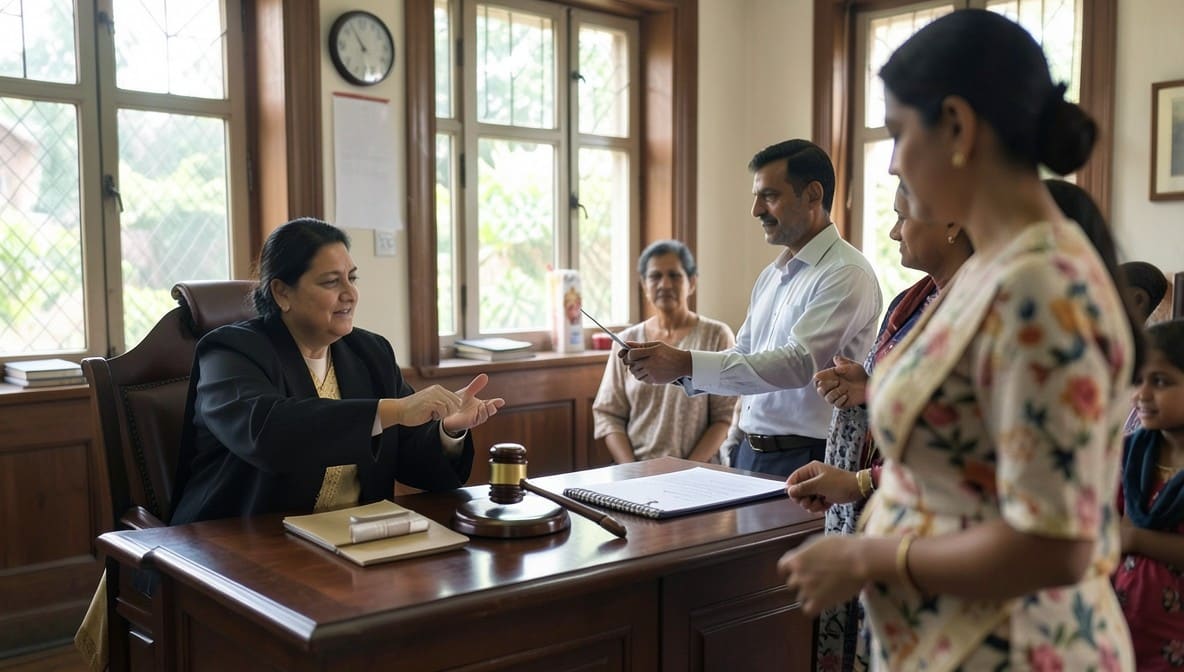
The applicants, six individuals including Manveer Singh, sought quashing of a complaint filed by Priyanka, their daughter-in-law and wife of applicant no.1, under Section 12 of the Protection of Women From Domestic Violence Act, 2005. The complaint, registered at Police Station Kurawali, District Mainpuri, named all members of applicant no.1’s family as respondents, despite allegations being confined to domestic relations between the wife and her husband.
Key Facts
- The complainant, Priyanka, is the wife of applicant no.1, Manveer Singh
- All applicants are in-laws of the complainant and reside in the same household
- The complaint was filed on an unspecified date prior to 19.11.2025
- A summoning order was issued by the Civil Judge (Junior Division)/F.T.C. (C.A.W.), Mainpuri on 19.11.2025
- The complaint implicates all family members, including those not alleged to have committed any act of domestic violence
- The complainant has previously initiated multiple criminal proceedings against the applicants
Procedural History
- Date of Complaint: Prior to 19.11.2025 (exact date not specified in judgment)
- 19.11.2025: Summoning order issued by Civil Judge (Junior Division)/F.T.C. (C.A.W.), Mainpuri in Complaint Case No.1774 of 2025
- 2026: Application under Section 528 BNSS filed before the Allahabad High Court seeking quashing of the summoning order and entire proceedings
- 30.04.2026: Hearing before the High Court; judgment delivered
The Parties' Positions
For the Applicants
- Argued that the complaint improperly named all family members, including those with no involvement in the alleged acts of domestic violence
- Contended that the proceeding is an abuse of process and should be quashed under Section 528 BNSS
- Relied on Ashish Dixit and others v. State of U.P. and another to assert that complaints under PWDVA must be confined to the husband and parents-in-law
For the Respondent/State
- Opposed the application, arguing that the complaint was legally maintainable
- Did not dispute the inclusion of multiple family members but maintained that the trial court is the appropriate forum to examine the merits
Relief Sought
The applicants sought:
- Quashing of the summoning order dated 19.11.2025
- Dismissal of Complaint Case No.1774 of 2025
- Cessation of all proceedings against all applicants except the husband
The Legal Issue
Can a complaint under Section 12 of the Protection of Women From Domestic Violence Act, 2005, be quashed at the threshold merely because extended family members, not directly alleged to have committed domestic violence, have been named as respondents?
Arguments Presented
For the Appellant/Petitioner
The applicants relied on Ashish Dixit and others v. State of U.P. and another to argue that the scope of a PWDVA complaint must be limited to the aggrieved woman’s husband and parents-in-law. They contended that naming all in-laws residing in the same household, without specific allegations against each, amounts to misuse of the statute. They asserted that the complaint lacks specificity and violates the principle of proportionality under Article 21 of the Constitution. They further argued that the remedy of quashing under Section 528 BNSS is available to prevent abuse of process.
For the Respondent/State
The Additional Government Advocate did not contest the factual assertion that multiple family members were named. However, the State maintained that the trial court is the proper forum to determine the relevance and liability of each respondent. The State emphasized that the PWDVA is a remedial statute designed for broad protection and that premature quashing undermines its protective intent.
The Court's Analysis
The Court examined the nature of proceedings under the Protection of Women From Domestic Violence Act, 2005, noting that they are hybrid in character - partly civil and partly criminal. The Court observed that while the Act permits naming multiple respondents, including relatives residing in the shared household, it does not mandate automatic liability for all.
The Court referred to the Apex Court’s observation in Ashish Dixit that complaints must be confined to the husband and parents-in-law. However, the Court clarified that this does not imply that other family members may never be included. Rather, the inclusion of additional respondents must be evaluated on the facts of each case.
"Instant proceeding is semi civil and semi criminal proceeding and opposite party no.2 is wife of applicant no.1, has lodged proceeding in the aforesaid sections against the applicants."
The Court held that the mere fact that non-involved family members are named does not render the complaint bad in law. The appropriate remedy for respondents who are wrongly implicated is to file a detailed written objection before the trial court, challenging the basis of their inclusion. The Court emphasized that the trial court is best positioned to sift through allegations, assess evidence, and determine liability.
The Court further noted that the applicants had not demonstrated any mala fide intent or abuse of process beyond the general assertion that others were named. The High Court declined to intervene at the threshold, as doing so would encroach upon the trial court’s fact-finding jurisdiction.
The Verdict
The application under Section 528 BNSS was dismissed. The Court refused to quash the summoning order or the complaint. However, it directed that if the applicants file objections before the trial court, such objections must be decided expeditiously in accordance with law. No monetary relief or costs were awarded.
What This Means For Similar Cases
Complaints Under PWDVA Cannot Be Quashed on Mere Inclusion of Family Members
- Practitioners must advise clients named in PWDVA complaints to file detailed written objections before the trial court, not seek quashing at the High Court
- Quashing petitions under Section 528 BNSS will not succeed unless there is clear evidence of mala fide, abuse of process, or complete absence of a prima facie case
- The burden shifts to the respondent to demonstrate lack of involvement, not to the court to presume guilt by association
Trial Courts Must Scrutinize Respondent Inclusion Proactively
- Magistrates must examine the specific allegations against each respondent and exclude those with no nexus to the alleged acts of domestic violence
- Blanket inclusion of all household members without individualized allegations is legally unsustainable and should be flagged during preliminary hearings
- This judgment reinforces that PWDVA’s protective intent must be balanced with the right to fair procedure under Article 21
Avoid Premature Intervention in Hybrid Proceedings
- Courts must resist the temptation to intervene prematurely in PWDVA proceedings, which are designed for swift relief
- High Courts should defer to trial courts on factual determinations unless the complaint is patently frivolous or legally unsustainable
- This approach preserves the statute’s remedial character while safeguarding against wrongful imputation