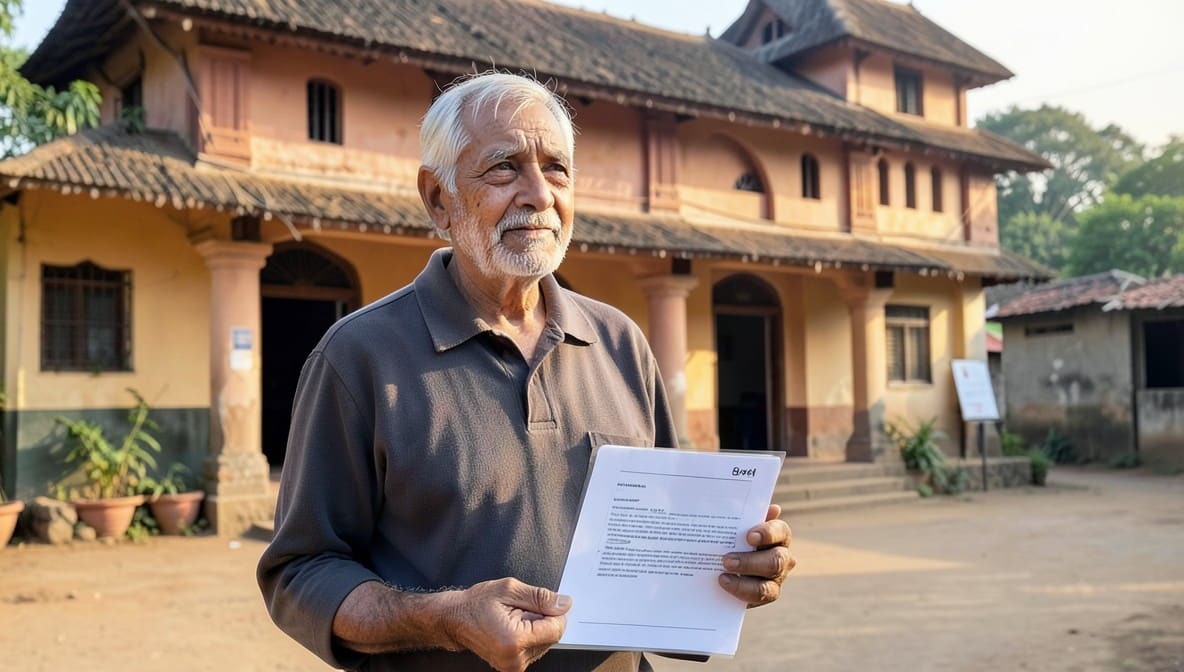
The Allahabad High Court has affirmed that the discretionary power under the Probation of Offenders Act, 1958, must be exercised in favor of elderly first-time offenders when the gravity of the offence, though serious, is balanced by prolonged litigation and absence of criminal antecedents. The judgment reiterates that delay in adjudication and the rehabilitative intent of the statute are critical factors in granting probation, even in cases involving attempted arson.
Background & Facts
The Dispute
The dispute arose from a violent incident on the night of 06.11.1981, involving a longstanding civil enmity between the family of the complainant, Jai Prakash Sharma, and the accused, including Lajja Ram, Raj Bahadur, Bhola, and Ram Pal. The enmity stemmed from a dispute over a Mahua tree and a prior criminal case under Section 379 IPC filed by Jai Prakash against the accused. On the night of the occurrence, the accused climbed onto the thatched roof of Jai Prakash’s house, barred the door from outside, and set fire to the roof using burning jute (san), intending to burn the occupants alive.
Key Facts
- The incident occurred at approximately 11:00 PM on 06.11.1981.
- The complainant, Jai Prakash, and his family were inside the house at the time.
- The fire caused property damage estimated at Rs. 300 to Rs. 400.
- Due to fear and the late hour, the FIR was not lodged until 07.11.1981 at 11:30 AM.
- The police station, Rasoolabad, was located approximately ten miles from the scene.
- There was sufficient moonlight at the time of the incident, enabling identification of the accused.
- The prosecution relied on oral testimony of three witnesses: P.W.-1 (Jai Prakash), P.W.-2 (Ram Singh), and P.W.-3 (Girdhari).
- The defence examined three witnesses: D.W.-1 (Sheo Nath), D.W.-2 (Sheo Narain), and D.W.-3 (Arjun).
- The accused-appellant, Ram Pal, was examined under Section 313 Cr.P.C. and claimed false implication due to enmity.
- No prior criminal record was established against Ram Pal.
Procedural History
- 06.11.1981: Occurrence of the alleged arson.
- 07.11.1981 at 11:30 AM: FIR registered at Police Station Rasoolabad.
- Ext. Ka-2: Chick F.I.R. filed.
- Ext. Ka-3: Site plan prepared.
- Ext. Ka-4: Memo of collection of burnt thatch ash.
- Ext. Ka-5: Copy of General Diary.
- Ext. Ka-6: Investigating Officer’s report recommending closure, later rejected by the Magistrate.
- 30.08.1984: Charges framed against the accused under Sections 452 and 436 IPC.
- 30.11.1984: Trial Court convicted all four accused and sentenced them to two years rigorous imprisonment under Section 436 IPC and one year under Section 452 IPC, with fines of Rs. 100 each.
- 1984: Criminal Appeal No. 3317 of 1984 filed before the High Court.
- 21.07.2025: Appeal abated with respect to appellants Lajja Ram, Raj Bahadur, and Bhola due to their deaths.
- 07.05.2026: Judgment delivered by the Allahabad High Court on the appeal of Ram Pal.
The Parties' Positions
For the Appellant
- Ram Pal, aged over 65 years, is a first-time offender with no criminal antecedents.
- The appeal has been pending for over 41 years.
- He seeks release on probation under Section 4 of the Probation of Offenders Act, 1958, citing his age, lack of prior record, and the undue delay in adjudication.
- No specific role distinct from co-accused was established against him.
For the Respondent
- The State, through the Additional Government Advocate, conceded that Ram Pal has no prior criminal record.
- Did not oppose the grant of probation, acknowledging the prolonged pendency and the appellant’s age.
- Accepted the conviction but did not contest the modification of sentence.
Relief Sought
The appellant sought modification of the sentence by replacing rigorous imprisonment with probation under Section 4 of the Probation of Offenders Act, 1958, and requested discharge of existing bail bonds and sureties. He also sought exemption from serving the original sentence due to his advanced age and the delay in the judicial process.
The Legal Issue
Can an elderly first-time offender, convicted under Sections 436 and 452 IPC for attempted arson, be granted probation under Section 4 of the Probation of Offenders Act, 1958, despite the serious nature of the offence, given the prolonged delay in adjudication and absence of criminal antecedents?
Arguments Presented
For the Appellant
The appellant’s counsel argued that Ram Pal, aged over 65, is a first-time offender with no prior criminal record. The appeal has remained pending for over four decades, during which the appellant has lived without reoffending. Citing Sitaram Paswan v. State of Bihar, Lakhanlal v. State of Madhya Pradesh, and Chellammal v. State, counsel emphasized that the Probation of Offenders Act is a reformative statute designed to prevent the criminalization of offenders due to prolonged incarceration. The discretion under Section 4 must be exercised in favor of such offenders, particularly when the delay in trial itself constitutes a form of punishment. The gravity of the offence, while serious, was mitigated by the lack of physical injury to persons and the fact that the fire was extinguished by neighbors.
For the Respondent
The Additional Government Advocate conceded that Ram Pal has no criminal antecedents and acknowledged the extraordinary delay of 41 years in the appellate process. The State did not oppose the grant of probation, recognizing that the conviction was legally sound but that the circumstances warranted leniency under the Probation of Offenders Act. The State accepted that the court’s discretion under Section 4 should be exercised in light of the appellant’s age and the fact that the appeal has been pending since 1984.
The Court's Analysis
The Court undertook a comprehensive review of the statutory framework under the Probation of Offenders Act, 1958, and the jurisprudence developed by the Supreme Court. It noted that Section 4 permits the court to release an offender on probation of good conduct if the offence is not punishable with death or life imprisonment, and if, having regard to the circumstances - including the nature of the offence and the character of the offender - it is expedient to do so.
"The word 'expedient' used in Section 4 of the PO Act... means 'apt and suitable to the end in view'... the court must consider whether releasing the offender on probation is suitable and appropriate for accomplishing the object of reform and reintegration."
The Court emphasized that while the offence under Sections 436 and 452 IPC is grave - attempting to burn occupants alive - the absence of physical harm, the extinguishing of the fire by neighbors, and the lack of any prior criminal record significantly mitigate the offender’s culpability. The Court further held that the delay of over 41 years in the appellate process is not merely procedural but substantive, as it has subjected the appellant to prolonged uncertainty and psychological burden.
The Court relied on Chellammal v. State, which held that when the conditions under Section 4 are attracted, the court has a mandatory duty to consider probation - not as a matter of right, but as a duty to evaluate its applicability. The Court observed that the failure to consider probation in such circumstances would render the statute ineffective.
The Court also noted that the appellant is not a habitual offender, and his advanced age makes reintegration into society more feasible through probation than incarceration. The Court rejected the notion that the seriousness of the offence alone disqualifies an offender from probation, stating that the Act was designed precisely to allow courts to distinguish between offenders who can be reformed and those who cannot.
The Verdict
The appellant, Ram Pal, succeeded in part. The High Court affirmed his conviction under Sections 436 and 452 IPC but set aside the sentence of two years rigorous imprisonment. He is released on probation under Section 4 of the Probation of Offenders Act, 1958, for a period of one year, subject to the following conditions: (i) execution of a personal bond of Rs. 50,000 with one surety of like amount; (ii) payment of Rs. 20,000 as compensation to the victim or his legal heirs within one month; and (iii) strict adherence to good behavior. In case of breach, he shall serve the original sentence. The earlier bail bonds and sureties are discharged. The trial court must ensure supervision by a Probation Officer and submit a compliance report to the High Court within two months.
What This Means For Similar Cases
Probation Is Not a Privilege but a Duty to Consider
- Practitioners must now argue that courts have a mandatory duty under Chellammal to consider probation whenever the conditions of Section 4 are met - even in serious cases - unless explicitly rejected with reasons.
- Failure to record reasons for denying probation may render the order liable to be set aside.
Delay in Trial as a Mitigating Factor
- A delay exceeding 30 - 40 years in appellate proceedings, especially for elderly accused, now constitutes a compelling mitigating factor under Section 4.
- Courts must weigh the psychological and physical toll of prolonged litigation against the punitive intent of the sentence.
Age and First-Time Status Are Decisive
-
Advanced age (over 60) combined with no prior criminal record significantly strengthens the case for probation, even in offences involving violence or arson.
-
The absence of reoffending during the pendency of appeal is a strong indicator of rehabilitative potential.
-
Always raise the Probation of Offenders Act at the appellate stage, even if not raised below.
-
Submit affidavits of good conduct and character references to support the claim.
-
Request a probation officer’s report under Section 4(2) to strengthen the application.