The Bombay High Court’s recent order in State of Maharashtra v. Dipak Harishchandra Bhopi establishes a clear, non-negotiable condition for granting stay of land acquisition awards: full deposit of the awarded compensation plus interest. This ruling reinforces the principle that equitable relief in land acquisition matters cannot be granted without full financial compliance, ensuring that claimants are not left without recourse while litigation proceeds.
Background & Facts
The Dispute
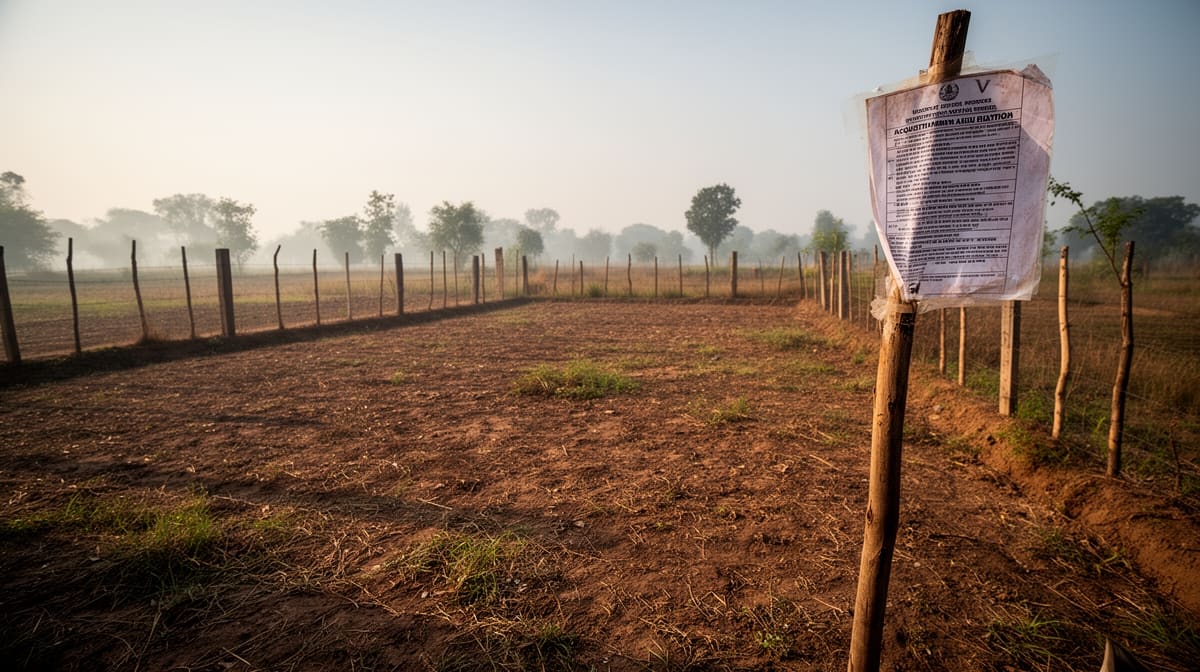
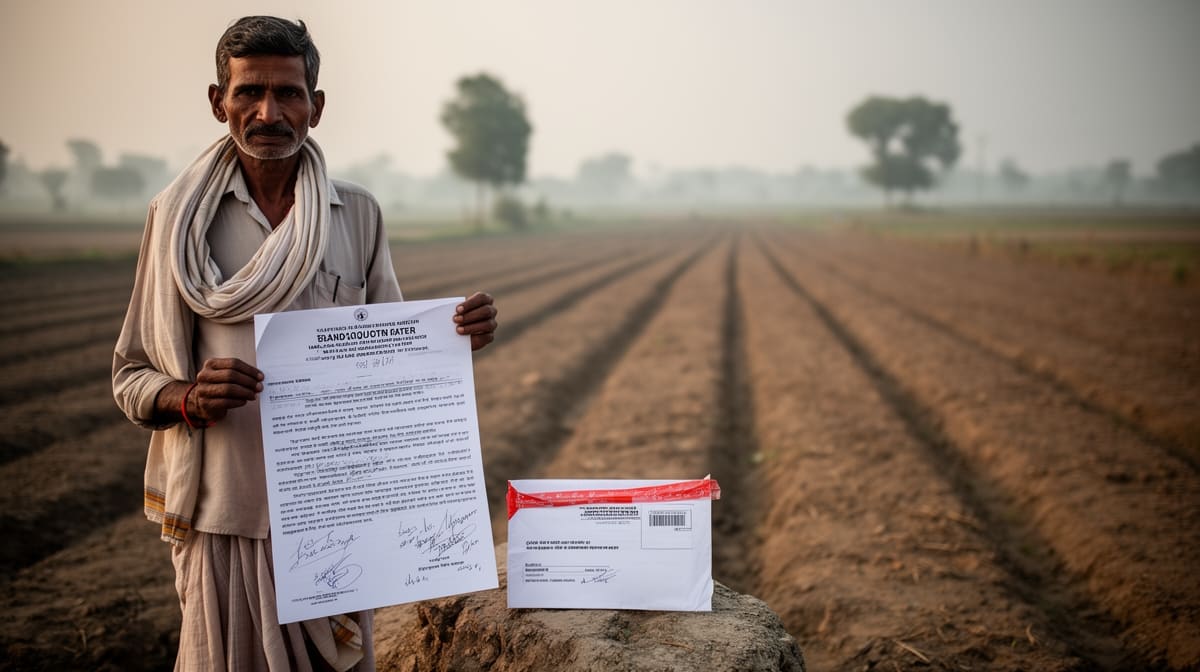
The dispute arose from the acquisition of agricultural land under the Land Acquisition Act, 1894, for public infrastructure purposes. The 4th Joint Civil Judge, Senior Division, Alibag, awarded compensation to the landowners in L.A.R. No. 103 of 2017, determining the market value and consequential damages based on evidence of comparable sales and loss of livelihood. The State challenged this award before the Bombay High Court through a first appeal.
Procedural History
- 2017: Land acquisition proceedings initiated under the Land Acquisition Act, 1894
- 2019: Reference Court awarded compensation of ₹X lakhs plus interest to respondents
- 2021: State filed first appeal (FA(ST)/9073/2021) challenging the award
- 2023: State filed IA/17128/2023 seeking condonation of delay in filing appeal
- 2023: State filed IA/17130/2023 seeking stay of execution of the award
- 2026: Interim applications for substitution of legal heirs and condonation of delay were heard
Relief Sought
The State sought a stay on the execution of the award pending disposal of the appeal. The respondents opposed the stay, arguing that delay in payment compounded their financial hardship. The State also sought condonation of delay in filing the appeal and substitution of legal heirs of a deceased respondent.
The Legal Issue
The central question was whether a stay on the execution of a land acquisition award can be granted without the appellant depositing the entire awarded amount, including accrued interest, and whether such a condition is consistent with the statutory scheme and constitutional guarantee of fair compensation under Article 300A.
Arguments Presented
For the Appellant/State
The State contended that the appeal raised substantial questions of law regarding valuation methodology and applicability of market trends. It argued that the delay in filing the appeal was due to administrative backlog and clerical oversight, and that the appeal had substantial merit warranting a stay. It relied on State of Haryana v. Sardar Singh to argue that stay should be granted where the appeal is not frivolous.
For the Respondents/Claimants
The respondents argued that the award was based on detailed evidence and that the State had not challenged the valuation in the Reference Court. They emphasized that Article 300A mandates just compensation and that allowing stay without deposit would defeat the purpose of the award. They cited Union of India v. Rameshwar Prasad to assert that delay in payment of compensation amounts to a violation of the right to property.
The Court's Analysis
The Court examined the balance of convenience, irreparable injury, and prima facie case, but found that the most decisive factor was the statutory and constitutional imperative to ensure prompt payment of compensation. The Court noted that the Land Acquisition Act, 1894, while not explicitly mandating deposit for stay, has been consistently interpreted by higher courts to require such a condition to prevent abuse of process.
"The purpose of compensation under the Land Acquisition Act is not merely to indemnify, but to restore the claimant to the position they would have occupied had the land not been acquired. Allowing a stay without deposit effectively deprives the claimant of the very remedy granted by law."
The Court distinguished State of Haryana v. Sardar Singh on the ground that it involved a challenge to the very validity of acquisition, whereas here, the dispute was confined to quantum of compensation. The Court held that the State’s administrative delay did not justify prejudicing the claimants’ rights. The substitution of legal heirs was permitted as a matter of procedural justice, and condonation of delay was granted only because the appeal was not patently without merit.
The Verdict
The State won on condonation of delay and substitution of heirs, but lost on the stay application. The Court held that stay of execution of a land acquisition award is conditional upon the deposit of the entire awarded amount plus accrued interest. The State was granted twelve weeks to deposit the sum in the Reference Court to obtain a stay.
What This Means For Similar Cases
Stay Is Not a Right - It Is a Conditional Remedy
- Practitioners must now treat deposit of full award amount + interest as a mandatory precondition for seeking stay in land acquisition appeals
- Courts will no longer entertain stay applications without proof of deposit, regardless of the merits of the appeal
- Failure to deposit within the stipulated time will result in automatic execution of the award
Constitutional Right to Compensation Overrides Procedural Delays
- The right to fair compensation under Article 300A is not suspended pending appeal
- Delay in payment, even if caused by litigation, cannot be used to justify withholding funds from displaced landowners
- Claimants may now seek contempt proceedings if the State fails to deposit within the court-ordered timeframe
Procedural Compliance Is Non-Negotiable
- Applications for substitution of parties or condonation of delay will be granted only if the substantive condition (deposit) is met
- Courts will not allow procedural leniency to undermine substantive rights
- Legal teams must now integrate deposit timelines into their litigation strategy from the outset