The Bombay High Court has recognized that residents suffering structural damage from infrastructure projects - such as rock blasting during highway construction - are entitled to compensation, even when their property is not formally acquired under statutory land acquisition regimes. This ruling establishes a critical precedent for non-acquired landowners affected by collateral damage from public works.
Background & Facts
The Dispute
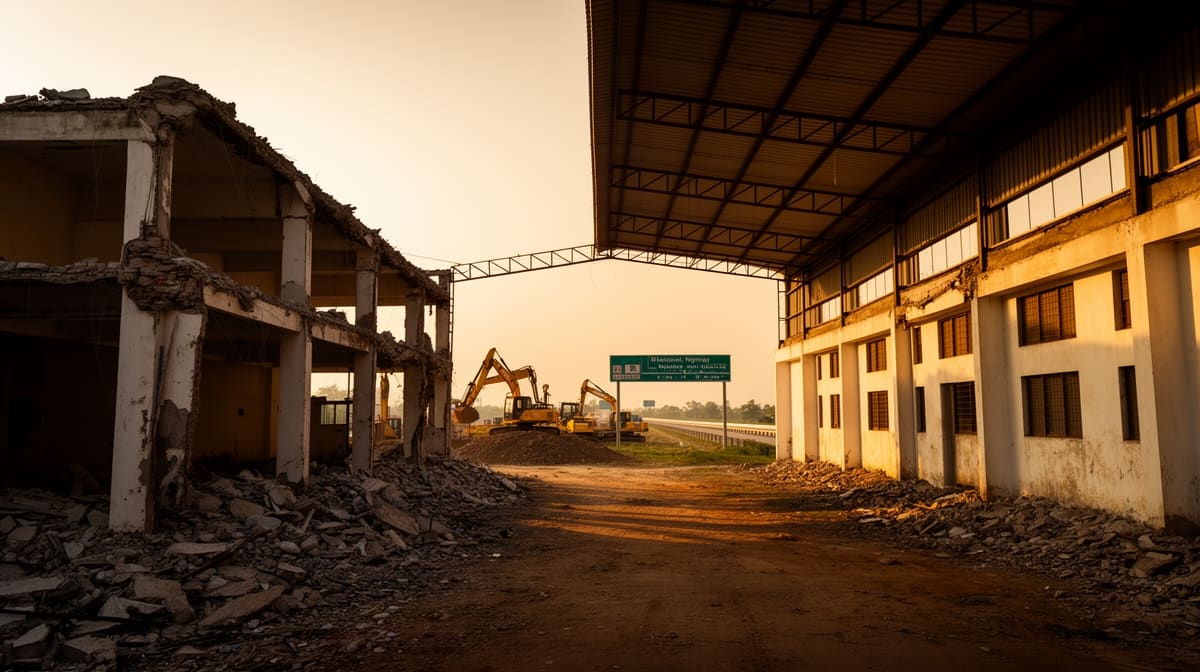
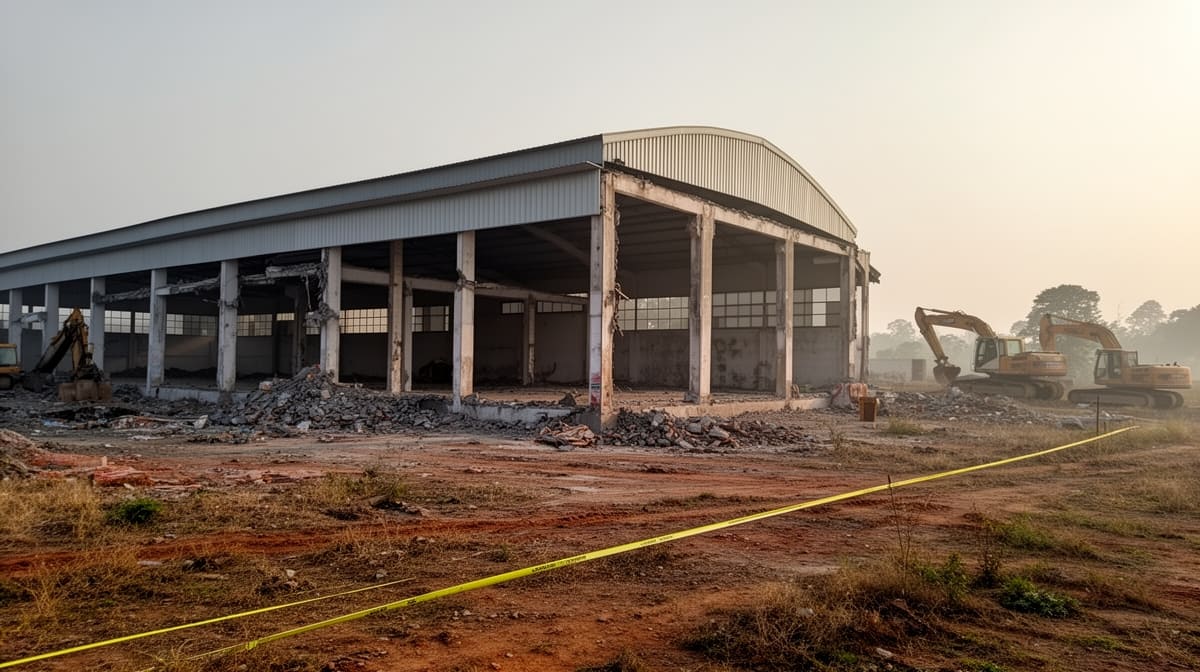
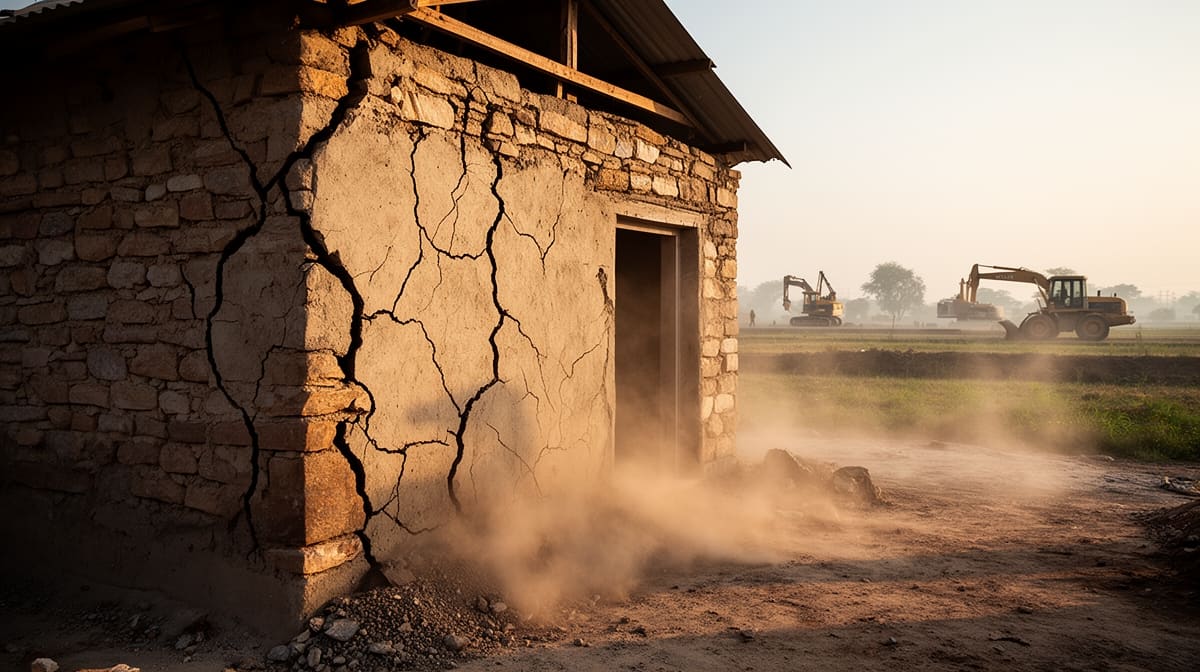
Residents of Dhamani, Belgaon Tarale in Nashik district filed multiple writ petitions alleging that rock blasting conducted during the construction of the Samruddhi Express Highway caused severe damage to their homes, wells, borewells, pipelines, and other structures. The petitioners contend that while the Maharashtra State Road Development Corporation (MSRDC) undertook the project, no legal mechanism exists under the Right to Fair Compensation and Transparency in Land Acquisition, Rehabilitation and Resettlement Act, 2013 (LARR Act) to address damages suffered by persons whose land was not acquired.
Procedural History
- Multiple writ petitions were consolidated before the Bombay High Court, spanning cases filed between 2024 and 2026.
- Petitioners sought judicial intervention after repeated administrative inaction and inadequate, unexplained compensation offers.
- The State had offered nominal payments to some petitioners without disclosing the methodology or basis for such determinations.
Relief Sought
The petitioners sought:
- A declaration that damage caused by blasting constitutes actionable harm under Article 21 of the Constitution.
- Immediate disbursement of fair compensation to affected households, pending final adjudication.
- Establishment of a transparent, standardized procedure for assessing and disbursing compensation for indirect damage.
The Legal Issue
The central question was whether Article 21 of the Constitution entitles non-acquired landowners to compensation for structural damage caused by state-sponsored infrastructure projects, even in the absence of a specific statutory provision under the LARR Act.
Arguments Presented
For the Petitioner
The petitioners’ counsel argued that:
- The LARR Act only covers land acquisition and does not extend to collateral damage to adjacent properties.
- The State’s failure to provide a remedy for such damage violates the right to life and personal security under Article 21, which includes the right to a safe and habitable dwelling.
- Precedents like Subhash Kumar v. State of Bihar and M.C. Mehta v. Union of India establish that the State has a duty to prevent environmental and structural harm arising from its projects.
- Nominal payments made without justification amount to arbitrary state action under Article 14.
For the Respondent
The State, represented by the Additional Government Pleader, contended that:
- The LARR Act is the exclusive statutory framework for compensation in infrastructure projects.
- Damage to non-acquired property falls outside the scope of statutory liability.
- No precedent obligates the State to compensate for incidental damage absent a statutory mandate.
- Petitioners may pursue civil remedies for tortious damage, but not under writ jurisdiction.
The Court's Analysis
The Court rejected the State’s narrow interpretation of its obligations. It held that the right to life under Article 21 encompasses protection against unreasonable harm caused by state actions, even where no formal acquisition occurs. The Court emphasized that the LARR Act is not an exhaustive code for all damages arising from public infrastructure projects.
"The Constitution does not permit the State to undertake massive public works at the cost of destroying the homes and livelihoods of those whose land it has not acquired. If the State causes harm through its actions, it cannot hide behind the absence of a specific statute to evade its constitutional duty."
The Court distinguished State of Haryana v. Rattan Singh and Union of India v. Rameshwar Prasad, noting those cases involved direct acquisition, whereas here, the harm was indirect but equally consequential. The Court further held that the State’s ad hoc payments, devoid of any transparent criteria, violated the principle of non-arbitrariness under Article 14.
The Court also affirmed that writ jurisdiction under Article 226 is available to enforce fundamental rights against state action, even in the absence of a specific statutory remedy. The burden, therefore, shifted to the State to justify its inaction and to establish a fair, objective mechanism for assessing damage.
The Verdict
The petitioners succeeded. The Court held that non-acquired landowners suffering structural damage from state infrastructure projects are entitled to compensation under Article 21, and that the State must establish a transparent, standardized procedure for assessing and disbursing such compensation. The Court directed the State to file detailed affidavits explaining the basis of any prior payments and to initiate a claims process within six weeks.
What This Means For Similar Cases
Compensation Is Not Limited to Acquired Land
- Practitioners must now argue that Article 21 imposes a constitutional duty on the State to compensate for collateral damage from public works, regardless of acquisition status.
- Claims for damage to wells, borewells, and foundations can now be framed as violations of the right to safe housing, not merely as civil torts.
Administrative Discretion Must Be Transparent
- Any compensation offered by the State must be accompanied by a written methodology, including engineering assessments and valuation criteria.
- Arbitrary or nominal payments without justification are voidable under Article 14.
Writ Jurisdiction Is Available for Structural Harm
-
Writ petitions under Article 226 are maintainable for structural damage caused by state projects, even where no specific statute applies.
-
Petitioners need not exhaust civil remedies before approaching the High Court when fundamental rights are implicated.
-
File writ petitions immediately upon documented damage from blasting or vibration.
-
Collect photographic, structural, and hydrological evidence to substantiate claims.
-
Demand disclosure of the valuation methodology used by the State for any prior payments.