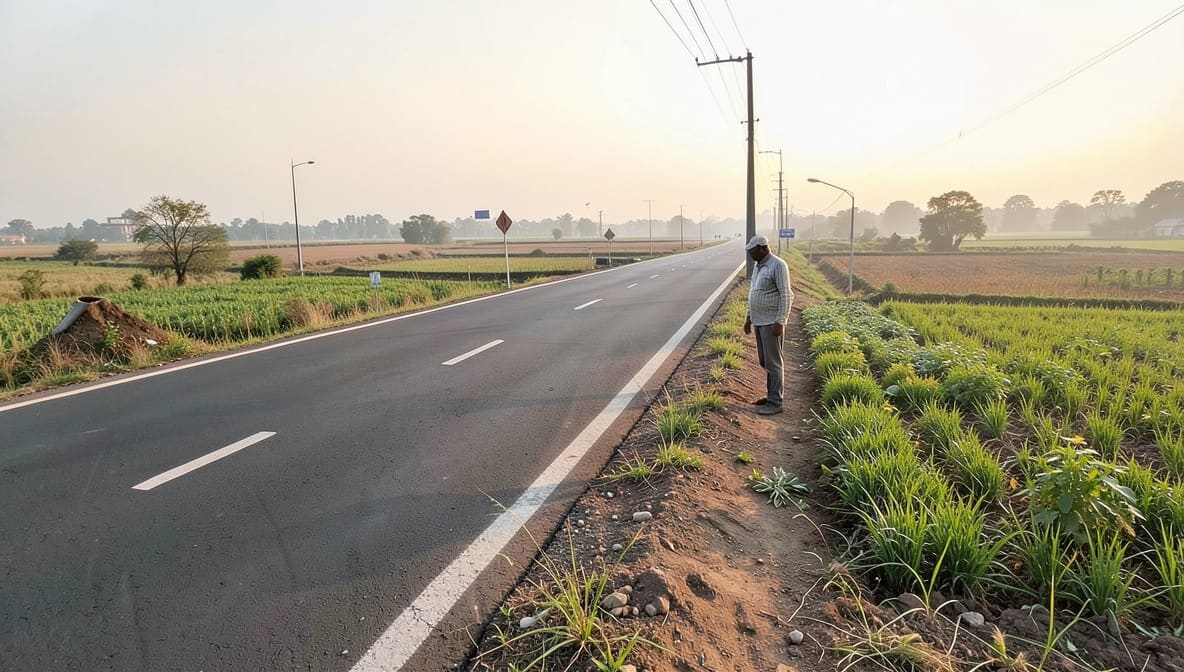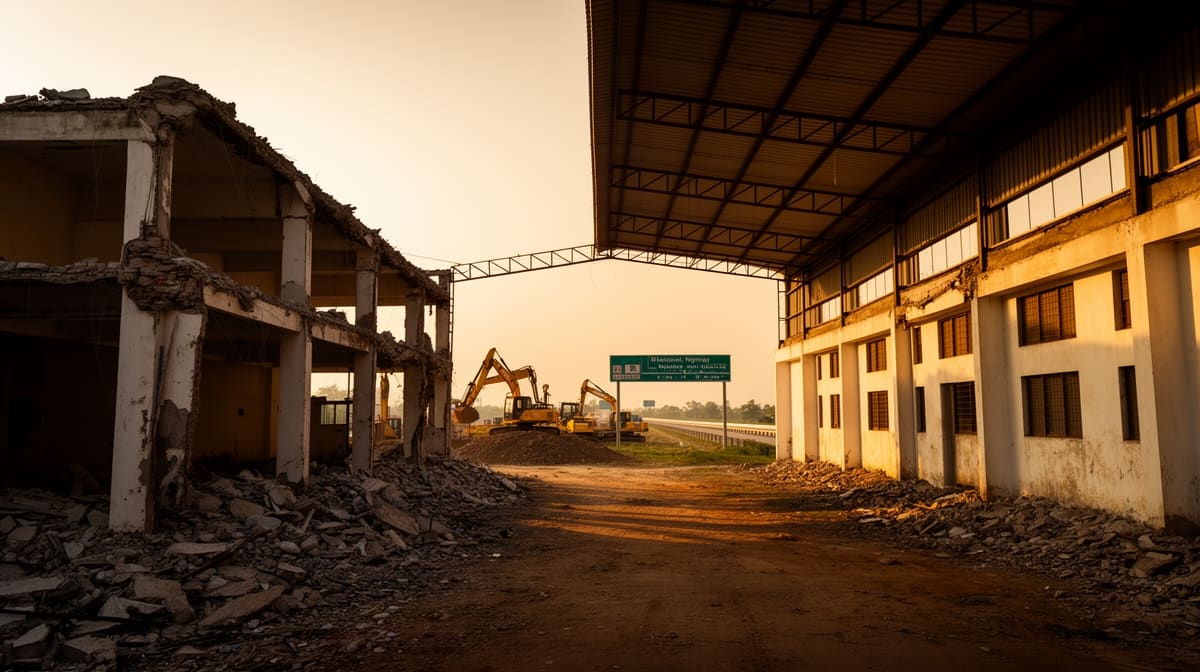
The Bombay High Court has clarified that Section 94 of the Right to Fair Compensation and Transparency in Land Acquisition, Rehabilitation and Resettlement Act, 2013, cannot be invoked to halt acquisitions undertaken under the National Highways Act, 1956. This ruling reinforces statutory boundaries between general land acquisition frameworks and sector-specific regimes, with critical implications for infrastructure projects and property rights.
Background & Facts
The Dispute
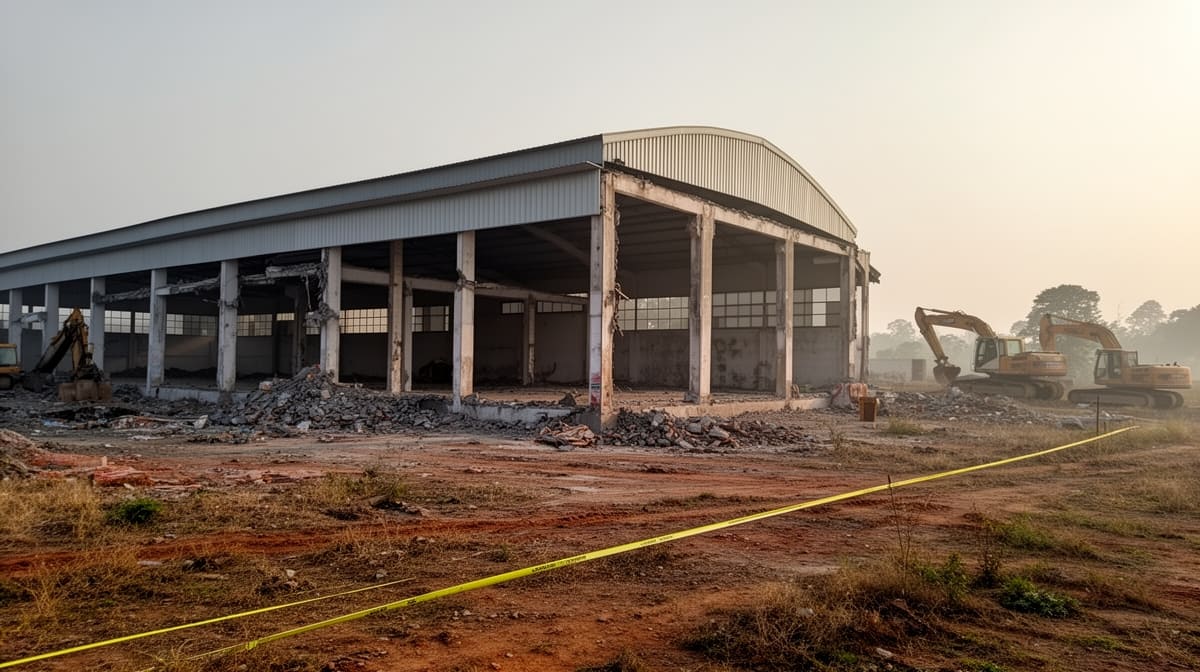
The petitioners, owners of independent galas within Godown L1 at Bhoirgaon, Thane, sought to prevent partial demolition of the structure by invoking Section 94 of the LARR Act, 2013. They claimed that since their galas formed part of a single building, the entire structure should be acquired to preserve structural integrity and their business interests. The National Highway Authority of India (NHAI), however, had acquired only a portion of Godown L1 under the National Highways Act, 1956, and relied on an IIT Bombay report asserting no structural risk to the remaining portion.
Procedural History
- December 2020: Central Government issued Notification under Section 3-A of the National Highways Act for acquisition of land for the Vadodara-Mumbai Expressway.
- January 2021: Public notices published in Marathi and English newspapers inviting objections.
- January 2022: Notices under Section 3-G(3) of the National Highways Act invited claims from persons interested.
- November 2023: Land acquisition award issued by the Competent Authority; petitioners did not file any claims.
- October 2025: Petitioners first raised claims under Section 94 of the LARR Act, nearly two years after the award.
- November 2025: Petitioners filed writ petition challenging NHAI’s letter authorizing demolition.
Relief Sought
The petitioners sought quashing of NHAI’s demolition notice, a stay on demolition, and invocation of Section 94 to compel acquisition of the entire Godown L1. They also invoked Article 300-A of the Constitution, alleging violation of their right to property.
The Legal Issue
The central question was whether Section 94 of the Right to Fair Compensation and Transparency in Land Acquisition, Rehabilitation and Resettlement Act, 2013 applies to land acquisitions carried out under the National Highways Act, 1956, particularly when the Central Government has issued a notification under Section 105(3) of the LARR Act only partially extending its provisions.
Arguments Presented
For the Petitioner
The petitioners argued that Section 94, which protects owners of buildings from partial acquisition, should apply because it pertains to compensation determination. They relied on the Central Government’s Notification dated 28.08.2015 under Section 105(3), which extended the First, Second, and Third Schedules of the LARR Act to acquisitions under the National Highways Act. They contended that since Section 94 affects compensation outcomes, it must be included. They cited State of Maharashtra v. Reliance Industries and Union of India v. Tarsem Singh to argue against discrimination in compensation principles.
For the Respondent
The Union of India and NHAI countered that Section 105 of the LARR Act, read with the Fourth Schedule, explicitly excludes the entire Act from applying to acquisitions under the National Highways Act. The 2015 Notification only extended provisions relating to compensation, rehabilitation, and infrastructure amenities - not miscellaneous provisions like Section 94. They emphasized that the petitioners failed to raise objections during statutory notice periods under Sections 3-A and 3-G of the National Highways Act, rendering their belated claim invalid. They also cited NHAI v. K. Raveendran and Saramma Itticheriya to show that Section 94 is not automatically applicable to highway acquisitions.
The Court's Analysis
The Court undertook a rigorous textual and contextual analysis of Section 105 and the 2015 Notification. It held that Section 105(3) permits the Central Government to extend only specific beneficial provisions of the LARR Act to acquisitions under the National Highways Act. The Notification explicitly limits extension to the First, Second, and Third Schedules - covering compensation calculation, rehabilitation, and infrastructure amenities. Section 94, located in the Chapter on Miscellaneous Provisions, was not included.
"The exceptions carved out by the Notification dated 28.08.2015 have to be read strictly. As noted hereinabove, they pertain only to the First, Second and Third Schedules..."
The Court distinguished Union of India v. Tarsem Singh, which mandated uniformity in compensation principles like solatium and interest, from Section 94, which concerns procedural entitlement to full acquisition of a building. The latter is not a compensation principle but a procedural safeguard with potential to delay infrastructure projects. The Court emphasized that the 1997 amendments to the National Highways Act were designed for speedy acquisition, and extending Section 94 would undermine this objective.
The Court also rejected the petitioners’ reliance on State of Maharashtra v. Reliance Industries, noting that the case dealt with Section 49 of the 1894 Act and involved a different factual matrix where the entire building was owned by one party. Here, the petitioners owned only independent galas, not the whole structure.
The Court further noted the petitioners’ failure to respond to statutory notices under Sections 3-A and 3-G of the National Highways Act, which deprived them of standing to raise objections after the award. Their delay of over two years rendered their claim time-barred in principle.
The Verdict
The petitioners lost on their primary claim. The Court held that Section 94 of the LARR Act does not apply to acquisitions under the National Highways Act. However, the Court permitted the petitioners to approach the Competent Authority to claim compensation for any adverse effect on their business or easement rights arising from the partial acquisition and demolition, provided such claims are raised within six months.
What This Means For Similar Cases
Section 94 LARR Act Is Not Automatically Applicable to Highway Acquisitions
- Practitioners must verify whether a statutory provision is explicitly extended under Section 105(3) Notification before invoking LARR Act provisions in highway projects.
- Section 94 remains confined to acquisitions under the LARR Act itself and cannot be stretched to cover National Highways Act projects.
- Any attempt to invoke Section 94 in highway acquisitions will be dismissed unless the Central Government issues a specific notification extending it.
Belated Claims Under Highway Act Are Not Permissible
- Failure to respond to public notices under Sections 3-A and 3-G of the National Highways Act bars subsequent claims, even if based on constitutional rights.
- Courts will not entertain belated objections raised years after acquisition awards, especially when statutory opportunities were available.
- Practitioners must advise clients to file claims during the statutory notice window, not after construction has progressed.
Compensation for Easement or Business Disruption Remains Available
- Even if Section 94 is inapplicable, affected parties may claim compensation under Section 3-G(2) of the National Highways Act for loss of easement or business disruption.
- Competent Authorities must consider such claims based on expert reports and evidence of actual adverse impact.
- This creates a two-track system: no structural acquisition rights under LARR Act, but residual compensation rights under highway law.