A significant clarification has been issued by the Punjab and Haryana High Court on the interpretation of payment clauses in government work orders, affirming that cost reduction cannot be arbitrarily invoked merely because actual expenditure is lower than estimated. The judgment reinforces the principle that contractual obligations must be interpreted in light of performance satisfaction, not economic efficiency alone.
Background & Facts
The Dispute
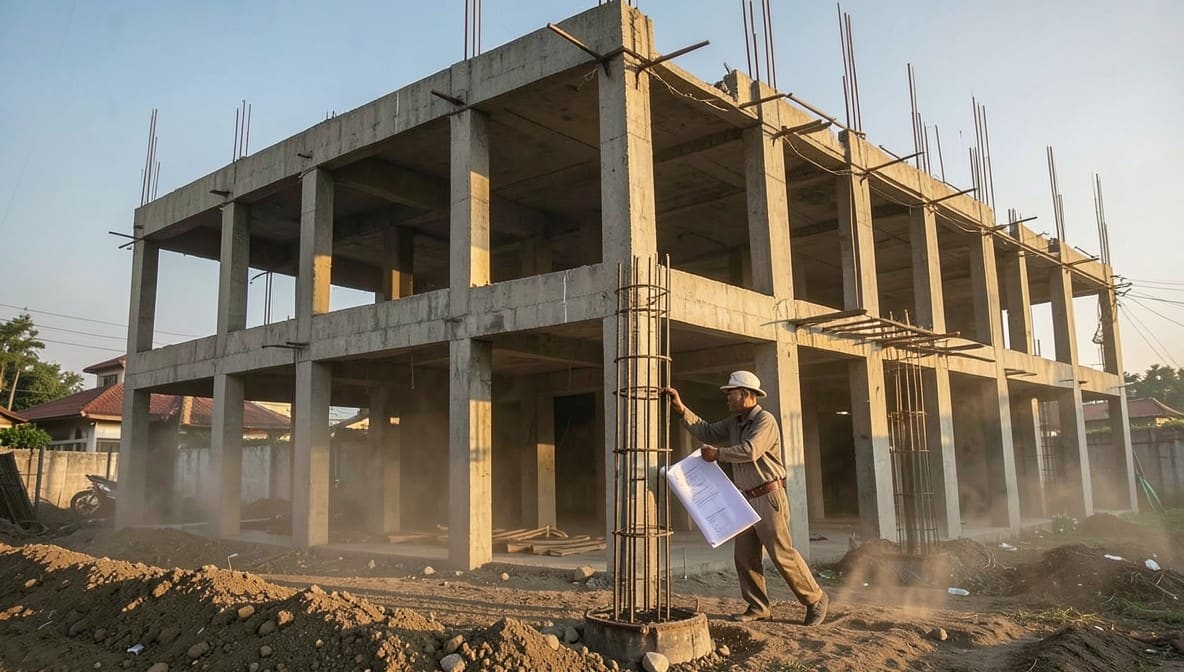
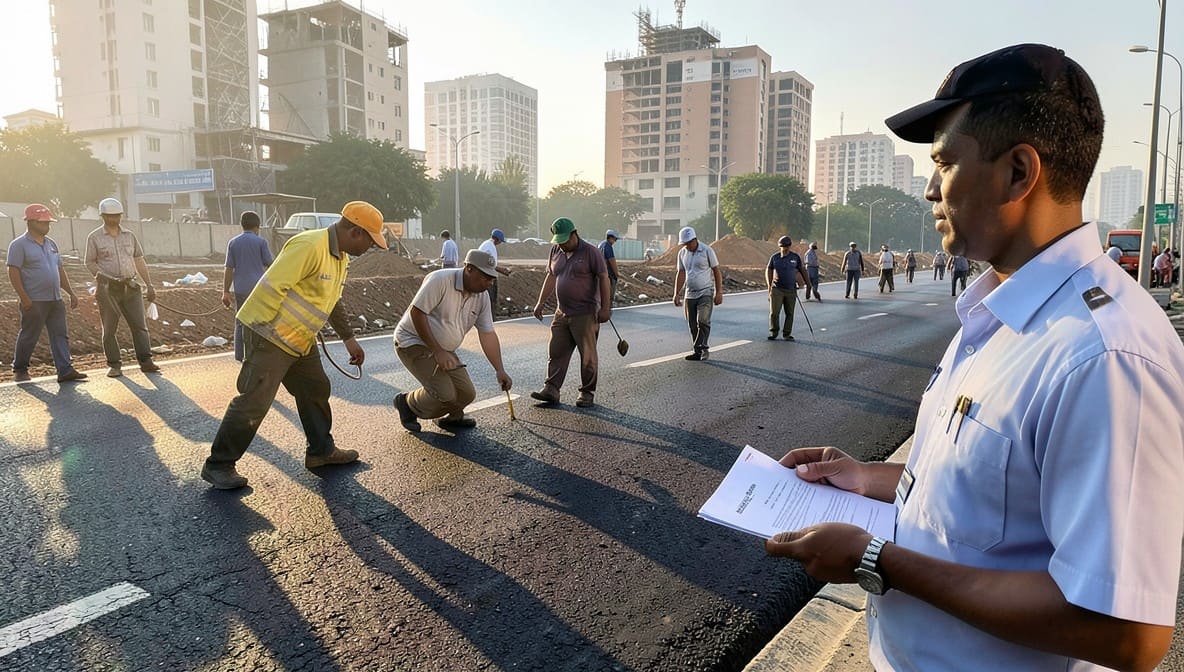
The petitioner, Jai Bhagwan Sharma, undertook a public works contract under a Work Order issued by the Public Works Department (PWD), Haryana. The work was executed under emergency conditions to address urgent infrastructure needs. Upon completion, the petitioner submitted a claim for payment based on the agreed rate of Rs. 555 per cubic metre as stipulated in the Work Order. However, the respondent authorities, relying on Clause 9 of the Work Order, reduced the payment rate to Rs. 397 per cubic metre, citing that the actual cost of execution was lower than the estimated rate.
Key Facts
- The work was undertaken under an emergency situation, as conceded by the State counsel
- The estimated cost per cubic metre under the Work Order was Rs. 555
- The actual cost of execution, as determined by the respondent, was Rs. 397 per cubic metre
- The petitioner completed the work in accordance with PWD specifications
- The work was duly certified by the Officer-in-Charge
- No vigilance enquiry or complaint regarding quality or deviation was pending
- The petitioner issued a legal notice dated 01.04.2024 demanding release of the full contractual amount
- The respondent failed to respond to the notice within a reasonable time
Procedural History
- 01.04.2024: Legal notice issued by petitioner demanding payment of contractual dues
- 08.12.2025: Petition filed under Articles 226/227 of the Constitution of India before the Punjab and Haryana High Court
- 08.12.2025: Court heard preliminary submissions; State counsel requested time to file affidavit
- 30.01.2026: Matter listed for further hearing after affidavit filing
- 23.03.2026: Final hearing and disposal of petitions
Relief Sought
The petitioner sought a writ direction to the State to: (1) release the full contractual payment of Rs. 555 per cubic metre; (2) decide the legal notice dated 01.04.2024 within a stipulated time; and (3) refrain from unilaterally reducing payment without establishing non-satisfaction of work under Clause 9.
The Legal Issue
The central question was whether Clause 9 of the Work Order permits the Sub-Divisional Officer to reduce payment merely because the actual cost of execution is lower than the estimated rate, or whether reduction is permissible only if the work is not executed to the satisfaction of the Executive Engineer.
Arguments Presented
For the Petitioner
The petitioner argued that Clause 9 of the Work Order is conditional and operates only upon a finding of non-satisfaction by the Executive Engineer. He submitted that the work had been completed as per specifications and certified by the Officer-in-Charge, with no pending vigilance enquiry. Relying on the principle of pacta sunt servanda, he contended that the State cannot unilaterally alter the agreed price without proving breach or deficiency. He further cited Union of India v. M/s. R.K. Gupta & Co. to affirm that contractual rates cannot be revised post-performance absent contractual provision for variation.
For the Respondent
The State contended that Clause 9 grants the Sub-Divisional Officer discretion to reduce payment if the actual cost is lower than the estimated rate, arguing that this is a fiscal safeguard against overpayment. It submitted that the reduction to Rs. 397 per cubic metre was a reasonable adjustment based on actual expenditure and that the petitioner had no vested right to the higher rate once the work was completed at lower cost.
The Court's Analysis
The Court undertook a textual and contextual interpretation of Clause 9, which states: "Payment will only be made work executed to the satisfaction of Executive Engineer and any work not so executed to shall be rejected or paid at a lower rate at the option of the Sub-Divisional Officer."
The Court observed that the clause is structured as a conditional provision: payment is contingent upon satisfaction of the Executive Engineer. The phrase "any work not so executed" clearly refers to work that fails to meet the required standard, not work that is executed more economically. The Court emphasized that the clause does not authorize reduction based on cost efficiency or market fluctuations, but only on quality or performance deficiency.
"The language of Clause 9 is unambiguous: reduction in payment is permissible only if the work is not executed to the satisfaction of the Executive Engineer. The fact that the actual cost was lower than the estimated cost does not, by itself, justify a reduction."
The Court further noted that the State had conceded the work was completed in an emergent situation and duly certified. No allegation of substandard work, deviation, or non-compliance was raised. Therefore, invoking Clause 9 to reduce payment was legally untenable.
The Court also clarified that while Clause 9 cannot be used to reduce payment in the absence of non-satisfaction, the State remains free to rely on any other clause of the Work Order - such as those relating to variation orders, price adjustment mechanisms, or audit findings - provided they are lawfully applicable.
The Verdict
The petitioner succeeded. The Court directed the State to decide the petitioner’s claim under the legal notice dated 01.04.2024 within two months from the date of judgment. The State is prohibited from reducing the payment rate below Rs. 555 per cubic metre under Clause 9, as the work was certified as satisfactory. The Court ordered the release of the full contractual amount, with interest at 6% per annum from the date of certification until payment, and directed compliance with the order within the stipulated timeframe.
What This Means For Similar Cases
Contractual Rates Cannot Be Reduced Without Performance Deficiency
- Practitioners must now argue that any reduction in contract rates under performance-based clauses requires proof of non-satisfaction, not merely lower actual cost
- Government departments cannot invoke clauses like Clause 9 as a backdoor mechanism to renegotiate prices post-completion
- Certification by the Officer-in-Charge, absent contrary evidence, creates a rebuttable presumption of satisfaction
Emergency Works Are Not Subject to Post-Hoc Cost Scrutiny
- Work executed under emergency conditions, as acknowledged by the State, must be evaluated on completion and certification, not on economic efficiency
- Estimation figures are predictive tools, not binding benchmarks for payment adjustment
- Courts will not permit fiscal conservatism to override contractual certainty in public works
Procedural Fairness in Contractual Disputes
- Legal notices must be responded to within a reasonable time; delay constitutes arbitrariness under Article 14
- Petitioners may now seek writ relief for delayed adjudication of contractual claims, even without a final order
- The two-month deadline set by the Court establishes a new benchmark for administrative response timelines in public contract disputes