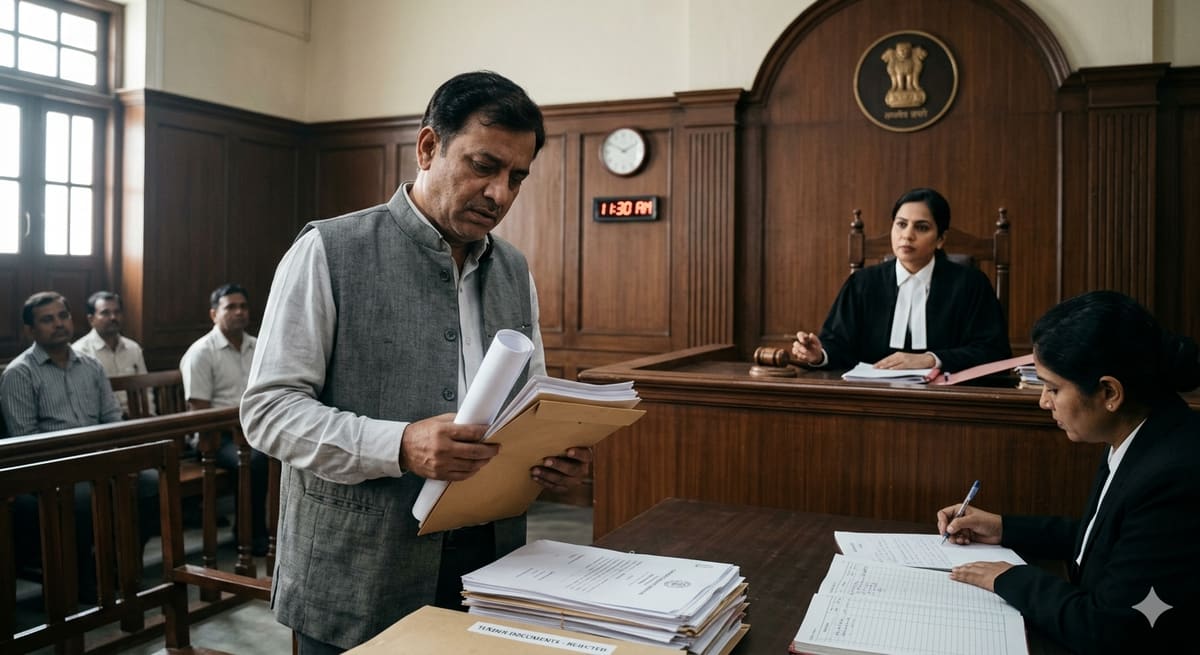
The Karnataka High Court has clarified that mere verbal assurances or pending administrative consideration of price escalation requests do not create binding contractual obligations when tender terms explicitly prohibit such modifications. This judgment reinforces the primacy of written contract terms over alleged oral understandings in public works contracts.
Background & Facts
The Dispute
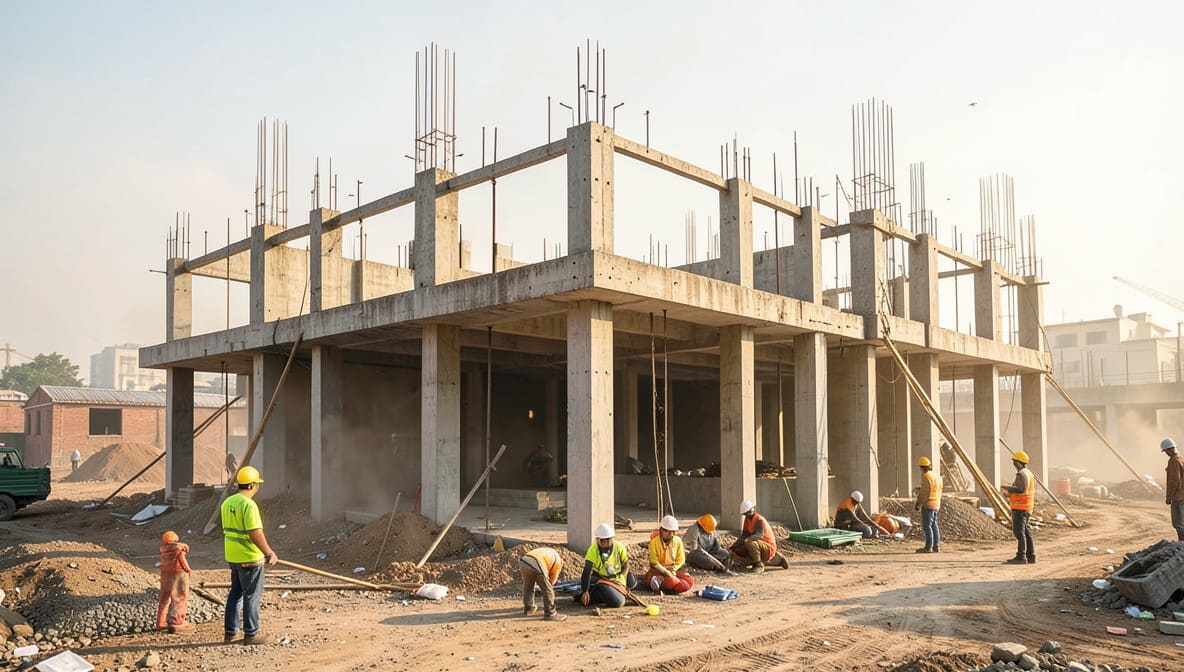
The dispute arose from a construction contract awarded by the University of Agricultural Sciences (UAS), Dharwad, to M/s Shankar Construction Company for the construction of its Main Administrative Building in 1992. The estimated cost was Rs. 1,57,00,000, but the contract value was ultimately fixed at Rs. 1,94,89,161 after acceptance of the plaintiff’s tender. The contract required completion within 24 months, excluding the rainy season.
Key Facts
- Tender notice issued in 1992 with explicit clause: "Conditional tenders will not be accepted"
- Plaintiff submitted tender on 10.04.1992 along with a letter dated 09.04.1992 requesting price escalation for cement, steel, and other materials
- UAS responded on 17.07.1992 (Ex.D4) rejecting all escalation requests, stating: "...the requests/conditions mentioned in your letter dated 09.04.1992, 19.05.1992 and 15.07.1992 cannot be considered as there is no provision in the conditions of tender..."
- Plaintiff executed the agreement on 06.08.1992 (Ex.D5), acknowledging terms of the tender
- Plaintiff appended a document requesting escalation based on prevailing prices at tender opening, but UAS never signed or accepted it
- Plaintiff claimed UAS orally agreed to escalation during meetings in July 1994, but no written confirmation exists
- UAS terminated the contract on 22.09.1994 citing breach and non-performance
- Plaintiff filed W.P. No. 30585/1994 challenging termination; dismissed on 25.01.1995 with findings that no unequivocal promise of escalation was made
- Plaintiff filed O.S. No. 211/1998 on 19.09.1997 seeking:
- Declaration that termination was illegal
- Payment of Rs. 42,22,105 under heads: escalation, cement difference, encashed bank guarantee, profit on balance work, and site materials
- Interest at 18.5% from date of suit
Procedural History
- 06.08.1992: Contract awarded and executed
- 17.07.1992: UAS formally rejected escalation requests in writing
- 22.09.1994: UAS terminated contract
- 25.01.1995: W.P. No. 30585/1994 dismissed by High Court; findings binding
- 19.09.1997: O.S. No. 211/1998 filed by plaintiff
- 27.01.2001: Suit against Defendant No. 2 (Sri Kempayya) dismissed for non-service
- 30.10.2017: Trial Court partially decreed suit, awarding Rs. 85,000 with interest
- 27.03.2026: Karnataka High Court delivered judgment on appeals
The Parties' Positions
Plaintiff (M/s Shankar Construction): Contended that UAS induced them to proceed by promising escalation for cement, steel, and materials; termination was wrongful; they completed 70-80% work; UAS encashed bank guarantee illegally; no final settlement was made.
Defendant (UAS): Contended that plaintiff submitted conditional tender in violation of tender terms; no binding promise of escalation was made; plaintiff failed to complete work on time; progress was only 46% after 18 months; termination was justified; all dues including cement escalation were paid.
Relief Sought
Plaintiff sought: (i) declaration that termination was illegal; (ii) Rs. 42,22,105 with 18.5% interest; (iii) recovery of encashed bank guarantee; (iv) compensation for profit on balance work; (v) payment for materials left at site.
Defendant sought: dismissal of entire suit with costs.
The Legal Issue
The central question was whether a party to a public works contract can claim price escalation when the tender terms explicitly prohibit conditional bids, the contracting authority has unequivocally rejected such requests in writing, and the contractor proceeds to sign the agreement without obtaining written modification.
Arguments Presented
For the Appellant/Petitioner
The plaintiff’s counsel relied on M/s J.G. Engineers Pvt. Ltd. v. Union of India to argue that UAS lacked authority to unilaterally terminate. He contended that oral assurances during the July 1994 meeting created a binding obligation under the doctrine of promissory estoppel. He argued that the plaintiff acted to its detriment by commencing work based on these assurances and that the trial court correctly appreciated the evidence.
For the Respondent/State
UAS’s counsel argued that Clause 44 of the contract limited price adjustment to contracts exceeding two years and excluded the first 12 months. He emphasized that the tender conditions explicitly barred conditional bids and that UAS’s 17.07.1992 letter was a clear, unambiguous rejection. He cited Puran Lal Sah v. State of U.P. to argue that a defaulting contractor cannot claim quantum meruit or profit on unperformed work.
The Court's Analysis
The Court began by examining the binding nature of the 1995 writ petition dismissal, which held that UAS had not made any unequivocal promise of price escalation. The Court noted:
"...the question of the petitioner having been given any promise in that regard may not be well founded. All that is stated is that the matter would be placed before the Board of Regents and thereafter decision will be taken. The decision being taken either then or later was all that promise was made."
This finding, the Court held, attained finality and estopped the plaintiff from relitigating the same issue in the civil suit. The Court further analyzed Clause 44 of the contract, which explicitly restricted price adjustment to contracts exceeding two years and excluded the first 12 months of performance. Since the contract was terminated after 18 months, and the plaintiff had already received Rs. 1,40,000 for cement escalation, no further claim was sustainable.
The Court rejected the plaintiff’s claim of 70-80% completion, noting that PW-2, the plaintiff’s engineer, admitted only 70% completion, and no documentary evidence supported the figure. The Court also held that the encashment of the bank guarantee was contractually valid, as breach was established. Regarding the Rs. 85,000 awarded by the trial court for cement difference, the Court found no evidence to support the claim, as UAS had already paid Rs. 1,41,476 via RA Bill No. 12 and subsequent bills.
The Court emphasized that the plaintiff’s conduct - submitting a conditional tender, persistently requesting modifications despite clear rejections, and then halting work - constituted a material breach justifying termination.
The Verdict
The appellant University of Agricultural Sciences succeeded. The Karnataka High Court set aside the trial court’s judgment and decree dated 30.10.2017, dismissed the suit in its entirety, and directed both parties to bear their own costs. The plaintiff’s claims for price escalation, profit on balance work, encashed bank guarantee, and site materials were all rejected. No monetary relief was granted to the plaintiff.
What This Means For Similar Cases
Written Tender Terms Override Oral Assurances
- Practitioners must treat tender conditions as binding; any deviation requires written amendment
- Oral promises made during negotiations, even if relied upon, are unenforceable if contradicted by written terms
- Contractors cannot claim promissory estoppel where the authority’s response is equivocal or subject to higher approval
Burden of Proof Lies with Claimant for Escalation
- A claimant must produce documentary evidence of agreed modification; mere assertion or pending administrative consideration is insufficient
- In public contracts, courts will strictly enforce contractual limitations on price adjustment
- Failure to challenge a prior judicial finding on the same issue (e.g., dismissal of writ petition) bars relitigation under res judicata
Termination for Breach Is Valid If Supported by Evidence
-
Delay and non-performance, even without formal notice, can constitute breach if progress is demonstrably inadequate
-
Encashment of bank guarantees is lawful if breach is established
-
Contractors cannot claim anticipated profit if they are the defaulting party
-
Always verify whether prior litigation on the same subject matter has been concluded
-
Never assume verbal assurances override written contract terms in public procurement
-
Document every communication and ensure modifications are signed and stamped