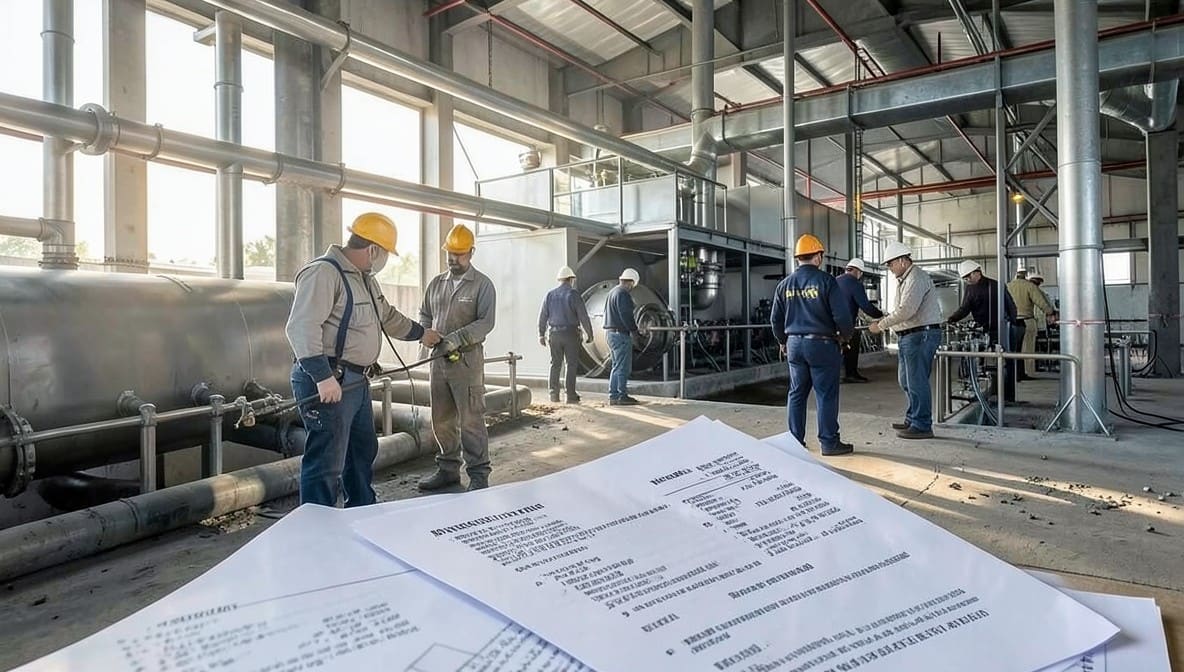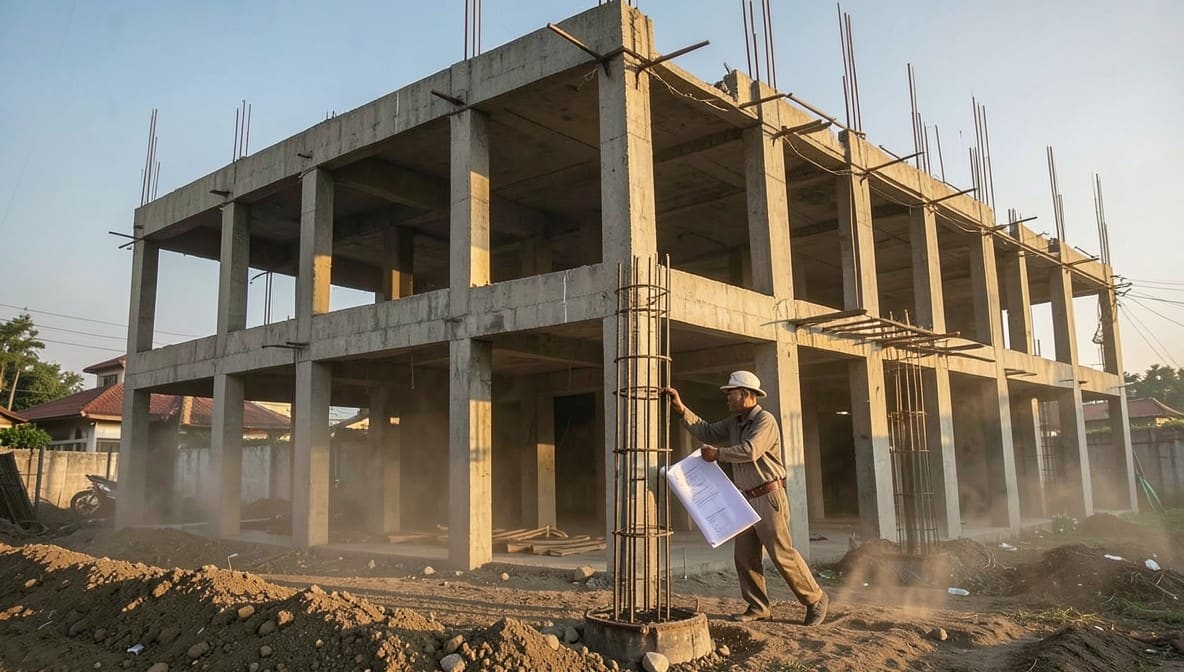
The Kerala High Court has clarified that a contractor is entitled to payment for work completed, even when the contract is terminated prematurely, but must account for admitted liabilities such as unreturned materials supplied by the principal. This judgment reinforces the principle that contractual obligations are reciprocal and that admissions in writing cannot be ignored in the absence of contrary evidence.
Background & Facts
The Dispute
The dispute arose from a construction contract awarded by the Kerala State Construction Corporation Limited (KSCC), a government company, to the respondent, Palattukavil Sudhakaran, a contractor. The contract, documented in Ext.A1 dated 18.03.1999, stipulated the construction of a Fire Station at Payyannur for a total value of Rs. 16.04 lakhs, to be completed within 18 weeks. The contractor was also entitled to 40.75% of any tender excess.
Key Facts
- Work commenced on 19.03.1999 as per the agreement.
- The work was halted multiple times at the request of the Corporation, allegedly due to plan alterations and financial constraints.
- The contractor claimed to have completed 80% of the work before termination.
- The Corporation estimated the value of work completed at Rs. 7,75,261/- and paid Rs. 6,63,348/- after deducting taxes, surcharges, and other statutory amounts.
- The balance amount of Rs. 1,94,114/- was withheld by the Corporation.
- The Corporation alleged a shortage of steel supplied to the contractor, valued at Rs. 69,084/-. This was admitted by the contractor in a written reply dated 13.10.2001 (Ext.B3).
- No counterclaim was filed by the Corporation in the suit.
- The Corporation later engaged third parties to complete the remaining work.
Procedural History
- 18.03.1999: Contract awarded under Ext.A1.
- 19.03.1999: Work commenced.
- 13.10.2001: Contractor’s written reply (Ext.B3) admitting non-return of steel worth Rs. 69,084/-.
- 2002: Suit filed by contractor before Subordinate Judge’s Court, Payyannur (O.S. No. 123 of 2002).
- 30.10.2004: Trial Court decreed payment of Rs. 1,94,114/- with 6% interest from date of suit.
- 2006: Regular First Appeal (RFA No. 243 of 2006) filed before Kerala High Court.
- 03.06.2026: Final hearing concluded.
- 05.06.2026: Judgment delivered.
Relief Sought
The appellant sought to set aside the trial court’s decree, arguing that the retention amount and security deposit were not payable due to incomplete work, and that the cost of unreturned steel (Rs. 69,084/-) must be deducted. The respondent sought confirmation of the decree with interest.
The Legal Issue
The central question was whether a contractor who has completed a substantial portion of work is entitled to payment for that work, and whether an admitted liability for unreturned materials supplied by the principal must be deducted from the claim even in the absence of a formal counterclaim.
Arguments Presented
For the Appellant
The appellant contended that under the terms of the contract, retention and security amounts were payable only upon full completion of work, which did not occur. It further argued that the contractor had admitted in writing (Ext.B3) to the non-return of steel worth Rs. 69,084/-, and that the Trial Court erred in ignoring this admission. The Corporation had incurred additional costs to complete the work and was entitled to recover the value of materials misappropriated.
For the Respondent
The respondent argued that the work was halted due to the Corporation’s directives and financial difficulties, not due to any default by the contractor. He was entitled to payment for work done, as the Corporation had accepted the valuation and paid part of the amount. The admission in Ext.B3 was made under duress and was not a legally enforceable admission of liability. The Corporation’s failure to file a counterclaim barred it from raising the issue as a defense.
The Court's Analysis
The Court examined the evidence, including Ext.A1 (contract), Ext.B3 (admission of steel non-return), and the oral testimony of PW1 (contractor). It noted that the value of work completed (Rs. 7,75,261/-) and the amount paid (Rs. 6,63,348/-) were not disputed. The Trial Court had correctly held that the contractor was entitled to the balance for work done, as the termination was attributable to the Corporation’s actions.
"A reading of the evidence of PW1 also shows that he is bound to return the cost of the unused steel supplied by the defendant. This is admitted in the reply given by him in writing to the appellant Corporation."
The Court emphasized that while the Corporation did not file a counterclaim, the admission in Ext.B3 constituted a clear acknowledgment of liability. In civil suits, admissions of fact by a party are binding and may be relied upon even without a formal counterclaim, particularly when they are documentary and unambiguous. The Trial Court’s failure to deduct the admitted amount of Rs. 69,084/- was an error in law.
The Court further held that the absence of a counterclaim does not preclude the defendant from asserting a set-off based on a clear admission by the plaintiff. The principle of equity and fair dealing required that the admitted liability be accounted for in the final decree.
The Verdict
The appeal was allowed in part. The decree of the Trial Court was modified: the amount payable to the respondent was reduced from Rs. 1,94,114/- to Rs. 1,25,030/- (Rs. 1,94,114 minus Rs. 69,084). Interest at 6% per annum shall continue to accrue from the date of the suit (12.06.2002) until realization. The balance amount of Rs. 1,25,030/- shall be paid within 6 weeks from the date of this judgment.
What This Means For Similar Cases
Admissions in Writing Bind Parties
- Practitioners must treat written admissions by clients as binding unless withdrawn with court permission.
- Even in the absence of a counterclaim, a defendant may rely on a plaintiff’s admission to reduce liability.
Partial Performance Entitles Contractor to Proportionate Payment
- Contractors are entitled to payment for work completed, even if the contract is terminated by the principal.
- Estimation of work done by the principal, if accepted and partially paid, creates a prima facie case for recovery.
Retention and Security Clauses Are Not Absolute
- Retention amounts cannot be withheld indefinitely if the principal terminates the contract and engages third parties.
- The burden shifts to the principal to prove non-completion due to contractor default to justify withholding.