Topic

Contractual Interpretation

Contractual interpretation in Indian law involves determining the meaning and enforceability of terms agreed upon in contracts, as adjudicated by courts and tribunals under the Indian Contract Act, 1872, and arbitration laws.

19 articlesLatest 0 month ago
Contractual Interest Rates Must Be Literally Text-Bound | Bombay HC Stays Lok Adalat Award Imposing 9%/15% Monthly Interest Contrary to Tripartite Agreement: Bombay HC
|Bombay High Court

Contractual Interest Rates Must Be Literally Text-Bound | Bombay HC Stays Lok Adalat Award Imposing 9%/15% Monthly Interest Contrary to Tripartite Agreement: Bombay HC

The Bombay High Court set aside a Lok Adalat award imposing 9% and 15% monthly interest on an insurance claim, ruling that such an interpretation directly contradicts the unambiguous language of the tripartite agreement, which only references 9% and 15% without specifying monthly compounding. This reinforces that contractual interpretation in insurance disputes must adhere strictly to textual precision, not speculative extrapolation - a critical warning to arbitral forums and insurers alike.

Section 34 Arbitration Act | Judicial Review Limited to Patent Illegality; Arbitrator’s Contract Interpretation Binding Unless Perverse: Bombay HC
Case Law Analysis
|Bombay High Court

Section 34 Arbitration Act | Judicial Review Limited to Patent Illegality; Arbitrator’s Contract Interpretation Binding Unless Perverse: Bombay HC

Bombay High Court dismisses a Section 34 challenge, reinforcing that courts cannot re-examine arbitral awards unless the arbitrator’s interpretation is patently illegal or arbitrary. The ruling underscores the narrow scope of judicial review, protecting finality in commercial disputes and limiting interference to violations of public policy or fundamental legal errors.

Section 34 Arbitration Act | Damages Cap Unenforceable for Fundamental Breach of EPC Contract: Bombay HC
Case Law Analysis
|Bombay High Court

Section 34 Arbitration Act | Damages Cap Unenforceable for Fundamental Breach of EPC Contract: Bombay HC

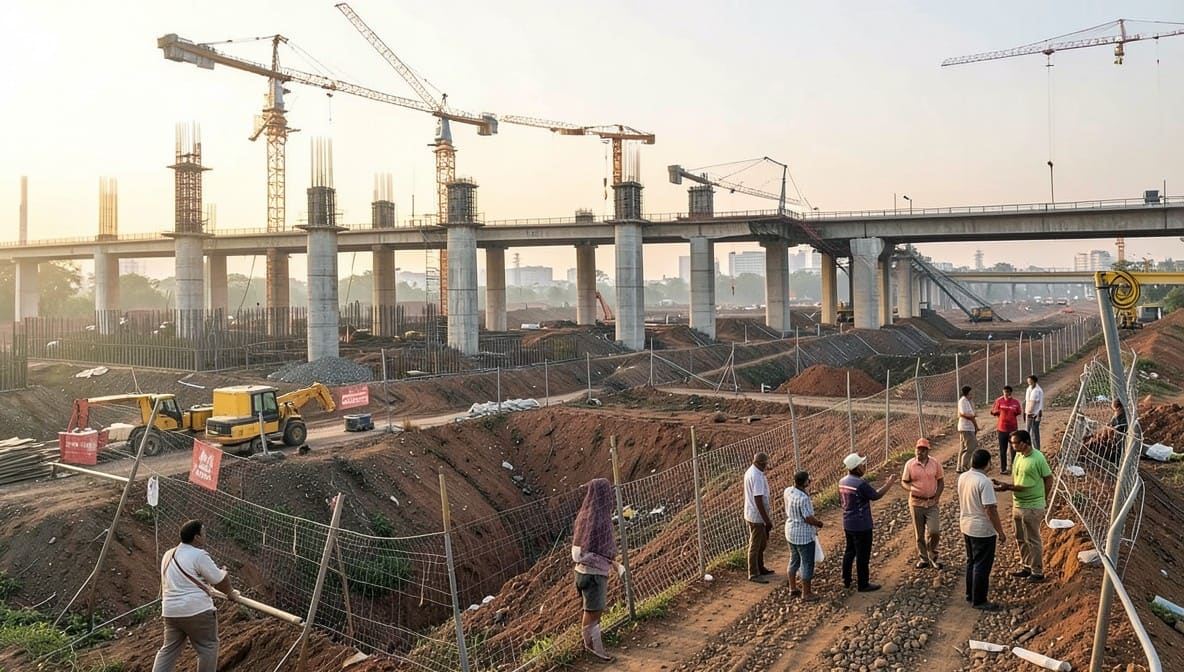
Bombay High Court rules that a 1% damages cap in an EPC contract cannot limit liability when the employer fails to provide critical right-of-way, constituting a fundamental breach. The judgment reinforces the business efficacy test and restricts judicial interference under Section 34 to only patent illegality, while setting aside compounded interest for violating contractual terms.

Section 11B Central Excise Act | Contractual Exclusion of OID Cess Incidence Bars Unjust Enrichment Claim: CESTAT Chennai
Case Law Analysis
|Custom, Excise & Service Tax Tribunal

Section 11B Central Excise Act | Contractual Exclusion of OID Cess Incidence Bars Unjust Enrichment Claim: CESTAT Chennai

CESTAT Chennai rules that when a contract explicitly prohibits passing on the Oil Industry Development Cess to the buyer, and documentary evidence confirms non-passing of incidence, the refund claim cannot be denied on grounds of unjust enrichment. This sets a critical precedent for oil and energy producers seeking refunds on excess cess paid due to valuation errors, reinforcing contractual intent over presumptive pass-on.

Section 34(2A) Arbitration Act | Patent Illegality Ground Invalid for International Commercial Arbitrations Seated in India : Bombay HC
Case Law Analysis
|Bombay High Court

Section 34(2A) Arbitration Act | Patent Illegality Ground Invalid for International Commercial Arbitrations Seated in India : Bombay HC

The Bombay High Court has ruled that the domestic ground of patent illegality under Section 34(2A) of the Arbitration Act cannot be invoked to challenge awards in international commercial arbitrations seated in India, reinforcing the pro-enforcement stance under Part I of the Act. This clarifies a critical jurisdictional boundary, shielding foreign-party arbitrations from domestic judicial overreach and aligning India’s practice with global arbitration norms.

Arbitration and Conciliation Act, Section 34 | Termination Payment Enforceable Under BOT Contract Even Without Explicit Claim : SC
Case Law Analysis
|Supreme Court of India

Arbitration and Conciliation Act, Section 34 | Termination Payment Enforceable Under BOT Contract Even Without Explicit Claim : SC

The Supreme Court upholds an arbitral award for termination payment under a BOT concession agreement, ruling that contractual obligations can be enforced based on implied intent and performance, even if not expressly pleaded. This reinforces party autonomy and narrows judicial review under Section 34, setting a critical precedent for infrastructure arbitrations across public-private partnerships.

Section 7 Arbitration Act | Use of 'Can' in Arbitration Clause Indicates Permissive, Not Mandatory, Dispute Resolution : SC
Case Law Analysis
|Supreme Court of India

Section 7 Arbitration Act | Use of 'Can' in Arbitration Clause Indicates Permissive, Not Mandatory, Dispute Resolution : SC

The Supreme Court holds that arbitration clauses using the word 'can' express possibility, not obligation, and therefore fail to satisfy the mandatory language required under Section 7 of the Arbitration and Conciliation Act, 1996. This clarifies that party autonomy demands unequivocal intent - businesses must draft arbitration clauses with 'shall' or 'must' to ensure enforceability, affecting thousands of commercial contracts with ambiguous dispute resolution language.

Section 34 Arbitration Act | Security Deposit Refund Mandatory Unless Contract Explicitly Allows Forfeiture: Bombay HC
Case Law Analysis
|Bombay High Court

Section 34 Arbitration Act | Security Deposit Refund Mandatory Unless Contract Explicitly Allows Forfeiture: Bombay HC

Bombay High Court rules that a security deposit cannot be forfeited upon valid termination of a contract unless the agreement expressly permits it. The ruling underscores that arbitration awards directing refunds of deposits and license fees stand unless contractual terms provide otherwise, impacting commercial disputes involving public procurement and licensing agreements.

Clause 9 of Work Order | Payment Reduction Permissible Only for Unsatisfactory Work, Not Lower Cost: Punjab & Haryana HC
Case Law Analysis
|Punjab and Haryana High Court

Clause 9 of Work Order | Payment Reduction Permissible Only for Unsatisfactory Work, Not Lower Cost: Punjab & Haryana HC

The Punjab & Haryana High Court ruled that under Clause 9 of a work order, payment can only be reduced if the work fails to satisfy the Executive Engineer-not merely because the actual cost is lower than estimated. Certification of completion bars unilateral rate reduction, reinforcing contractual sanctity in public works contracts.

Suicide Exclusion Clause Applies from Date of Policy Revival, Not Original Issuance : State Consumer Commission, Chandigarh
Case Law Analysis

Suicide Exclusion Clause Applies from Date of Policy Revival, Not Original Issuance : State Consumer Commission, Chandigarh

The Chandigarh State Consumer Commission ruled that the suicide exclusion clause in life insurance policies is triggered from the date of policy revival, not the original issuance. This decision impacts claim settlements, as insurers may now deny full payouts if suicide occurs within one year of revival, even if the policy was active for years prior.

Section 36 Arbitration Act | Mandatory Deposit of Full Award Amount for Stay Unless Exceptional Circumstances Proved : Bombay HC
Case Law Analysis
|Bombay High Court

Section 36 Arbitration Act | Mandatory Deposit of Full Award Amount for Stay Unless Exceptional Circumstances Proved : Bombay HC

Bombay High Court reinforces that parties seeking a stay on arbitration award enforcement must deposit the full award amount under Section 36 of the Arbitration and Conciliation Act, 1996, unless they prove the award is egregiously perverse or fraud-tainted. The ruling clarifies that unconditional stays are an exception, not the norm, impacting businesses and litigants challenging arbitral awards.

Section 34 Arbitration Act | Plausible Contractual Interpretation & Unrebutted Oral Testimony Shield Award from Challenge : Delhi HC
Case Law Analysis
|Delhi High Court

Section 34 Arbitration Act | Plausible Contractual Interpretation & Unrebutted Oral Testimony Shield Award from Challenge : Delhi HC

Delhi High Court reinforces that arbitral awards based on a plausible contractual interpretation and unrebutted oral testimony cannot be set aside under Section 34 of the Arbitration and Conciliation Act, absent patent illegality or perversity. The ruling clarifies the high threshold for judicial interference in arbitration awards, benefiting parties relying on contractual ambiguity defenses.

Section 28(2) Arbitration Act | Arbitrators Cannot Override Express Contract Terms on Equitable Grounds : Bombay HC
Case Law Analysis
|Bombay High Court

Section 28(2) Arbitration Act | Arbitrators Cannot Override Express Contract Terms on Equitable Grounds : Bombay HC

Bombay High Court sets aside an arbitration award that denied redevelopment compensation based on equity, ruling that arbitrators under Section 28(2) of the Arbitration Act must adhere strictly to express contract terms. The court reinstated the petitioners' entitlement to corpus fund and monthly displacement compensation from March 2018, reinforcing the primacy of contractual clauses over equitable considerations in arbitration.