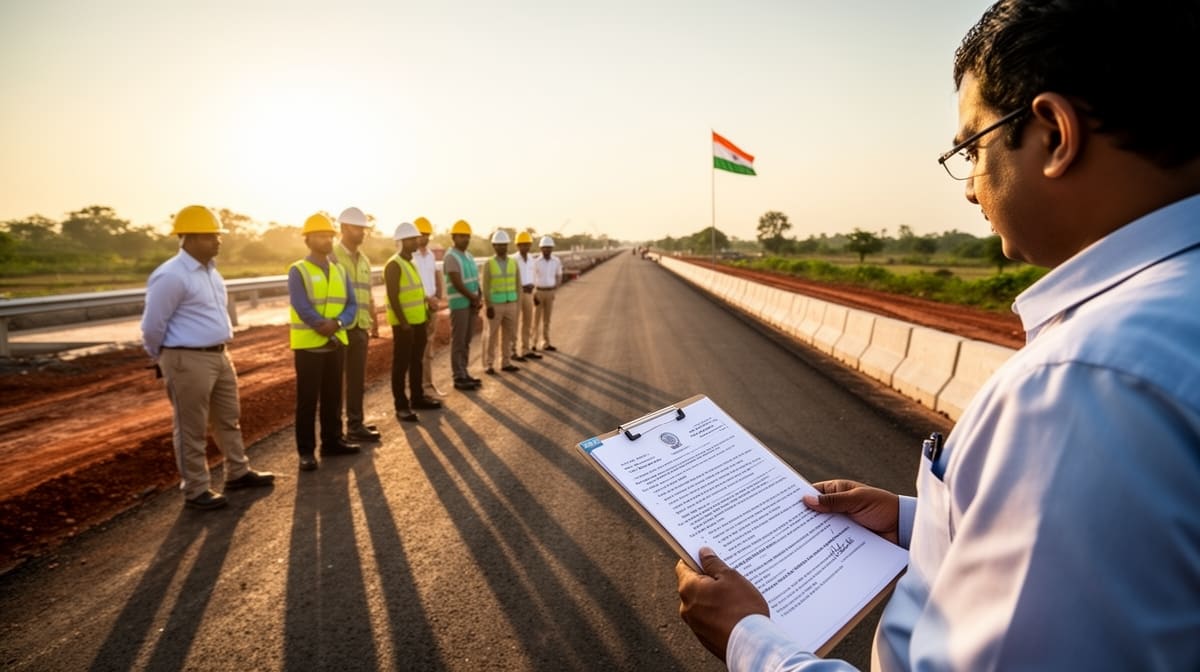
The Andhra Pradesh High Court has issued a decisive order addressing systemic delays in the payment of dues to private contractors who have fully completed public works under municipal and state agreements. In a batch of 30 writ petitions, the Court intervened not on the merits of individual claims but to compel administrative coordination and timely disbursement, reinforcing the principle that public bodies cannot indefinitely defer financial obligations due to bureaucratic inertia.
Background & Facts
The Dispute
The writ petitions were filed by private contractors who had executed works under various work orders and agreements with the Kurnool Municipal Corporation and other state departments. The petitioners had completed all contractual obligations, including construction, infrastructure development, and civic improvement works, as certified by the executing authorities. Despite satisfactory completion, payment of dues remained pending due to procedural delays across multiple government departments.
Key Facts
- The petitioners entered into agreements with Kurnool Municipal Corporation for execution of public works between 2020 and 2024.
- All works were certified as completed by the Municipal Corporation as per the terms of the work orders.
- The Municipal Corporation issued a Written Instruction dated 13.03.2026 confirming completion and recommending processing of claims.
- The District Collector, on 14.03.2026, forwarded the claims to the Principal Secretary, Planning Department, for fund allocation.
- The Planning Department, in its Written Instruction dated 17.03.2026, acknowledged receipt of the proposals and confirmed that the files would be circulated to the Finance Department for release of additional funds.
- No payment had been made to any petitioner despite completion of works and formal recommendations from all concerned authorities.
- The aggregate value of unpaid dues across all petitioners was substantial, though exact amounts were not specified in the judgment.
Procedural History
- Multiple writ petitions (WP/6032/2026 to WP/6636/2026) were filed between January and March 2026.
- All petitions were listed together for hearing on 17.03.2026.
- No interim orders had been granted prior to this hearing.
- No counter-affidavits or objections were filed by respondents challenging the completion of works.
The Parties' Positions
- Petitioners: Argued that they had fulfilled all contractual obligations and were entitled to prompt payment. They contended that prolonged administrative inaction amounted to violation of Article 14 and Article 21 of the Constitution.
- Respondents (Kurnool Municipal Corporation, District Collector, Planning & Finance Departments): Did not dispute completion of works. Submitted Written Instructions confirming procedural steps taken and acknowledging the need for fund release.
Relief Sought
The petitioners sought immediate payment of all outstanding dues, interest on delayed payments, and directions to the authorities to complete pending administrative formalities without further delay.
The Legal Issue
The central question was whether the State and its instrumentalities may indefinitely delay payment to contractors who have fully performed their contractual obligations, merely due to inter-departmental procedural inertia, and whether such delay violates constitutional guarantees of equality and fair treatment.
Arguments Presented
For the Petitioner
The petitioners’ counsel argued that the completion of works had been formally acknowledged by the executing authority (Municipal Corporation), and subsequent departments had not raised any objection to the quality or scope of work. The continued non-payment, despite clear recommendations from all departments, constituted arbitrary and unreasonable conduct under Article 14. They cited State of Haryana v. Bhagwan Das to emphasize that public bodies must act with promptness and fairness in contractual obligations.
For the Respondent
The respondents did not contest the factual position. The Standing Counsel for the Municipal Corporation, the Assistant Government Pleader for Revenue, and the Assistant Government Pleader for Finance & Planning all submitted Written Instructions confirming that the claims were valid and that administrative steps were underway. No legal objection was raised to the petitioners’ entitlement to payment.
The Court's Analysis
The Court observed that the factual matrix was unambiguous: the works had been completed, certified, and recommended for payment by all relevant authorities. The only impediment was the lack of coordination between departments. The Court noted that the Planning Department had acknowledged receipt of the proposals and committed to circulating the files to the Finance Department for fund release. The Court emphasized that constitutional obligations under Article 14 and Article 21 extend to ensuring that citizens who perform public works are not left in financial limbo due to administrative apathy.
"The State cannot permit its own machinery to become an instrument of delay in discharging its contractual and constitutional obligations. Where completion is certified and no dispute exists, the burden shifts to the authorities to act expeditiously."
The Court declined to adjudicate the quantum of dues, as no dispute existed on the fact of completion. Instead, it focused on the procedural failure. The Court held that the respondents’ inaction, despite clear internal recommendations, amounted to a failure of public duty. The Court rejected the notion that inter-departmental coordination could justify indefinite delay.
The Verdict
The writ petitions were allowed at the admission stage. The Court directed all respondents, including the Kurnool Municipal Corporation, to complete all inter-departmental and intra-departmental administrative processes within ten weeks from the date of judgment (17.03.2026). The due amounts were to be transferred to the petitioners’ bank accounts within four weeks thereafter. Petitioners were directed to submit their bank account details to the competent authority within four weeks from the date of judgment. No costs were awarded.
What This Means For Similar Cases
Administrative Inaction Cannot Justify Non-Payment
- Practitioners representing contractors in public works disputes can now cite this order to argue that certification of completion by the executing authority triggers an automatic duty to pay, absent a bona fide dispute.
- Delays caused by inter-departmental bureaucracy are not a valid defense against claims for payment.
Timelines Are Now Binding
- The Court’s imposition of a 10-week deadline for administrative clearance and a 4-week deadline for payment sets a precedent for enforceable timelines in similar cases.
- Failure to comply may now attract contempt proceedings or further judicial intervention.
Writ Jurisdiction as a Tool for Contractual Enforcement
- This judgment reinforces that writ jurisdiction under Article 226 is available not only for rights violations but also for enforcement of contractual obligations by public bodies.
- Contractors need not wait for a cause of action to accrue through prolonged delay; the mere existence of completed work and official certification suffices for relief.
Documentary Certification Trumps Procedural Formalities
- Where works are certified as complete by the executing agency, subsequent departments cannot impose additional conditions or demand fresh documentation without justification.
- The judgment affirms that administrative convenience cannot override contractual rights.
Practical Takeaways for Practitioners
- File writ petitions early when completion is certified but payment delayed.
- Submit all certifications, work orders, and departmental recommendations as evidence.
- Seek specific timelines for payment, not just a generic direction to pay.
- Use this judgment to oppose adjournments or stay applications in pending cases involving delayed public contract payments.