The Central Excise and Service Tax Appellate Tribunal, Chandigarh, has clarified that services undertaken to comply with environmental regulations are integral to the manufacturing process and qualify as input services under the Cenvat Credit Rules, 2004. This ruling reinforces the principle that statutory compliance costs directly linked to production are not merely ancillary but foundational to the manufacture of excisable goods.
Background & Facts
The Dispute
Kandhari Beverages Pvt Ltd manufactures Minute Maid Nimbu Fresh, a carbonated fruit beverage containing over five percent fruit juice. The Revenue assessed the company for misclassification of the product under Tariff Item 22029020 instead of 22021020, leading to a demand of Rs. 1.33 crore in excise duty. Additionally, the department disallowed CENVAT credit on two categories of services: (1) waste disposal and pollution control infrastructure, and (2) air quality surveys conducted around the factory premises.
Procedural History
- 2014: Show cause notices issued under Central Excise Tariff Act demanding duty and disallowing CENVAT credit for the period 2009 - 2014.
- 2014: Commissioner of Central Excise, Chandigarh, confirmed the demand in Order-in-Original dated 23.12.2014.
- 2015: Another show cause notice issued for May - October 2014, confirmed by Assistant Commissioner on 19.11.2015.
- 2018: Commissioner (Appeals), Ludhiana, upheld the demand in Order-in-Appeal dated 21.02.2018.
- 2026: Appeals filed before CESTAT Chandigarh challenging both classification and CENVAT credit denial.
Relief Sought
The appellant sought: (1) deletion of duty demand on classification grounds, (2) allowance of CENVAT credit on waste disposal and air pollution survey services, (3) cancellation of penalties and interest on grounds of bonafide interpretation, and (4) application of settled precedents.
The Legal Issue
The central question was whether services for environmental compliance, such as waste disposal and air pollution monitoring, qualify as input services under Rule 2(1) of the Cenvat Credit Rules, 2004, and whether misclassification of a fruit beverage under the Central Excise Tariff Act can be sustained when higher benches have already settled the issue.
Arguments Presented
For the Appellant
The appellant relied on multiple precedents to argue that:
- Classification of Minute Maid Nimbu Fresh under 22029020 is settled by Brindavan Beverages Pvt Ltd and Hindustan Coca Cola Beverages Pvt Ltd, which held that beverages with ≥5% fruit juice are fruit juice-based drinks under Regulation 2.3.10/2.3.30.
- Waste disposal services are mandatory under the Factories Act, 1948 and Pollution Control laws; Hindustan Zinc Ltd held such services are indirectly used in manufacture and thus eligible for CENVAT credit.
- Air pollution surveys were mandated by Coca-Cola as a quality control condition; the definition of input services post-2011 is broad enough to cover services used indirectly in relation to manufacture.
- Extended period of limitation cannot be invoked for interpretational disputes, as per FMI Automotive and Clix Capital Services; no mens rea or suppression exists.
For the Respondent
The Revenue reiterated the classification error and argued that:
- The product was essentially a flavored water and should be classified under 22021020.
- Environmental compliance services are not directly linked to production and are regulatory obligations outside the scope of input services.
- Air pollution surveys are unrelated to manufacturing and serve corporate branding, not production.
- Penalties were justified due to apparent misclassification and incorrect credit availed.
The Court's Analysis
The Tribunal conducted a two-pronged analysis: first on classification, and second on the scope of input services under the Cenvat Credit Rules.
On classification, the Court relied on the larger bench decision in Brindavan Beverages, which applied both the common parlance test and the supporting legislation test under the Food Safety and Standards Regulations. The Court emphasized that products with ≥5% fruit juice content and ≥10% total soluble solids are unambiguously fruit juice-based drinks under Regulation 2.3.30. The Revenue’s reliance on the term "lemonade" was rejected as irrelevant where statutory definitions govern classification.
"The irresistible conclusion, therefore, that follows from both the common parlance test and the supporting legislation test is, therefore, that the three products MMNF, Nimbu Masala Soda and Nimbooz would classify under Tariff Item No. 2202 90 20 as fruit juice based drinks."
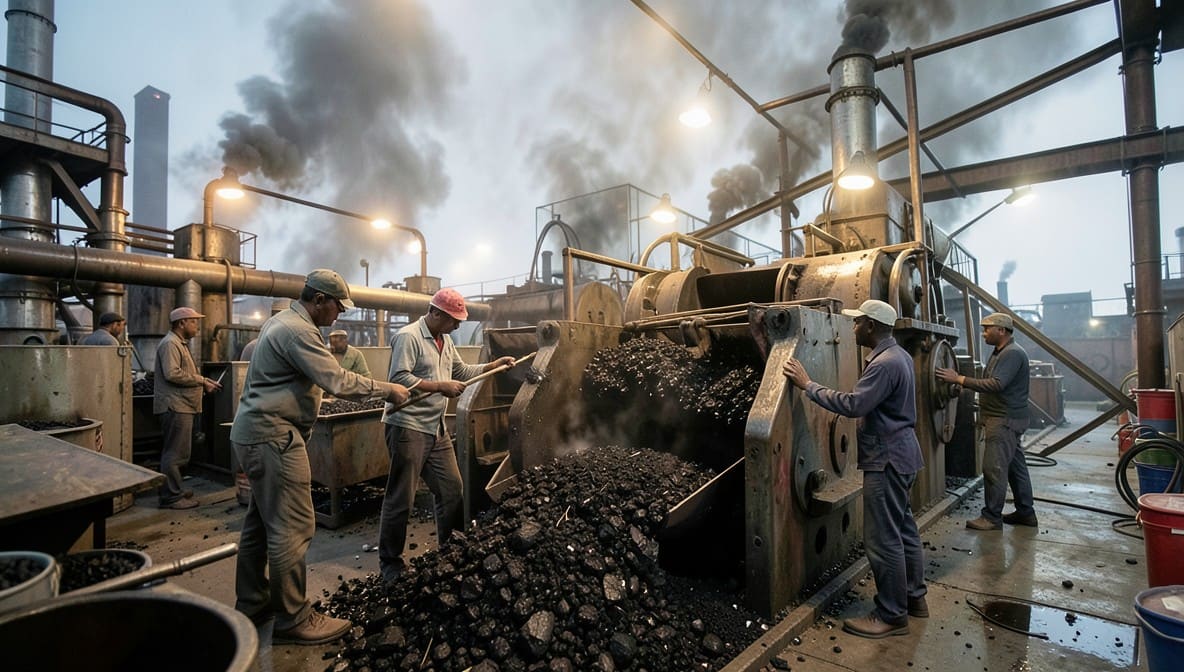
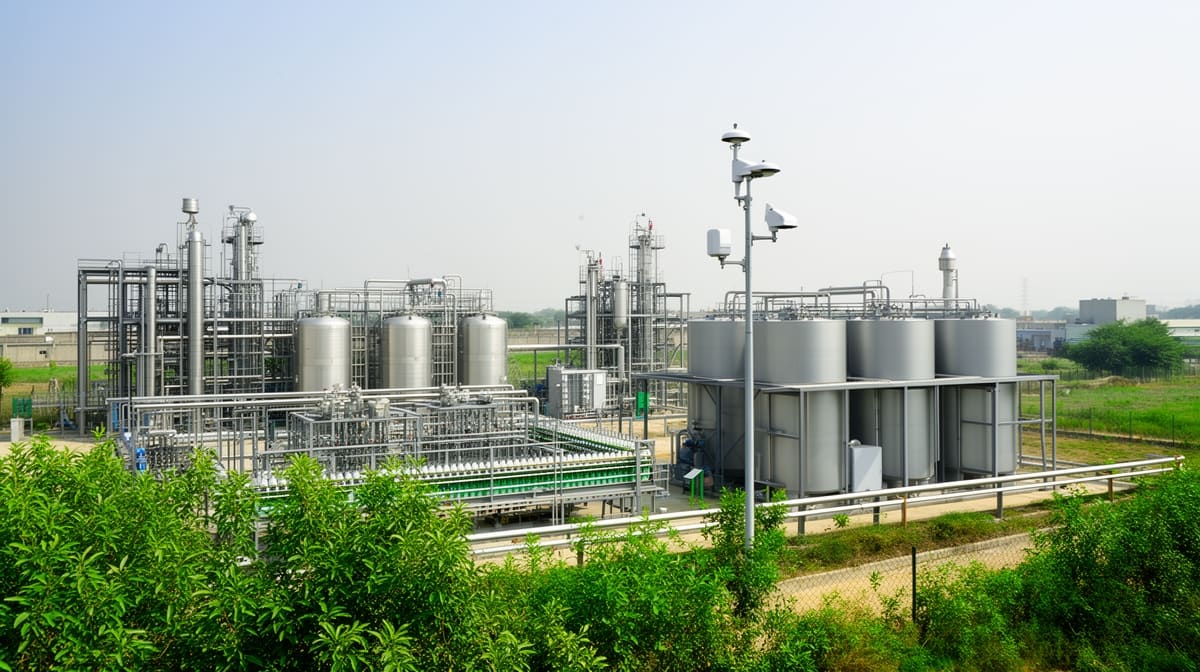
On CENVAT credit, the Tribunal examined the definition of "input service" under Rule 2(1), noting its expansive language: "any service used by the manufacturer directly or indirectly in relation to the manufacture of final products." The Court held that compliance with environmental laws is not optional - it is a statutory condition without which manufacturing cannot legally proceed. Failure to dispose of waste or monitor pollution exposes the company to prosecution under the Water (Prevention and Control of Pollution) Act and Air (Prevention and Control of Pollution) Act.
"Compliance with the directions of the State Pollution Control Board if not done by the appellant industry, may result in prosecution of the appellant company and its key personnel under the various Pollution Control laws for violation."
The Court further held that air pollution surveys, though initiated by Coca-Cola, were a mandatory condition for plant operation and product quality assurance. Since the final product’s integrity depended on ambient air quality, the service was integrally connected to manufacture.
The Court also rejected the invocation of extended period of limitation, noting that the dispute was interpretational, not fraudulent. The appellant’s belief in its classification and credit availing was bonafide, as supported by multiple tribunal rulings.
The Verdict
The appellant won. The Court held that Minute Maid Nimbu Fresh is correctly classified under Tariff Item 22029020, and CENVAT credit on waste disposal and air pollution survey services is allowable as input services under Rule 2(1) of the Cenvat Credit Rules, 2004. Penalties and interest were set aside. Both appeals were allowed with consequential relief.
What This Means For Similar Cases
Environmental Compliance Costs Are Input Services
- Practitioners can now confidently claim CENVAT credit for services related to pollution control, waste management, and environmental monitoring if they are statutorily mandated or contractually required for production.
- The burden shifts to the Revenue to prove that such services are not "in relation to manufacture," not to the assessee to prove they are.
Interpretational Disputes Shield Against Penalties
- Where a classification or credit issue is debatable and supported by precedent, penalties under Section 11AC cannot be imposed.
- Extended period of limitation under Section 11A cannot be invoked for interpretational differences, even if the department disagrees with the assessee’s view.
Precedents Bind Revenue in Classification Matters
-
Once a larger bench or coordinate bench settles a classification issue, the Revenue cannot re-litigate the same product under the same facts.
-
Practitioners should cite Brindavan Beverages and Hindustan Coca Cola as binding authority for all fruit juice-based beverages with ≥5% juice content.
-
Always document contractual obligations from principals (e.g., Coca-Cola) mandating environmental checks.
-
Maintain records of statutory compliance notices from Pollution Control Boards to substantiate the necessity of waste disposal services.
-
File appeals against penalty orders on grounds of bonafide interpretation, citing Clix Capital Services and Bharti Airtel.