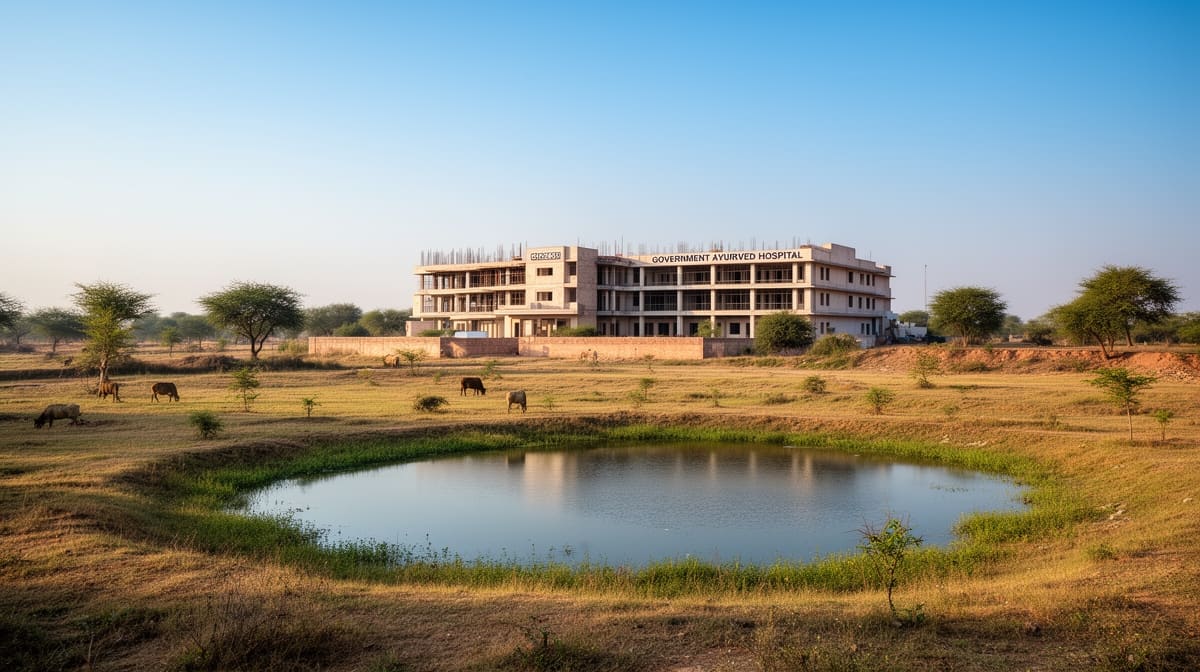
The Rajasthan High Court's recent dismissal of a writ petition challenging the allotment of land for a Government Ayurved Hospital underscores the critical burden of proof on petitioners to demonstrate ecological violations in public projects. The judgment reinforces that while environmental concerns are legitimate, mere assertions without cogent evidence cannot invalidate administrative decisions made for public welfare.
Background & Facts
The Dispute
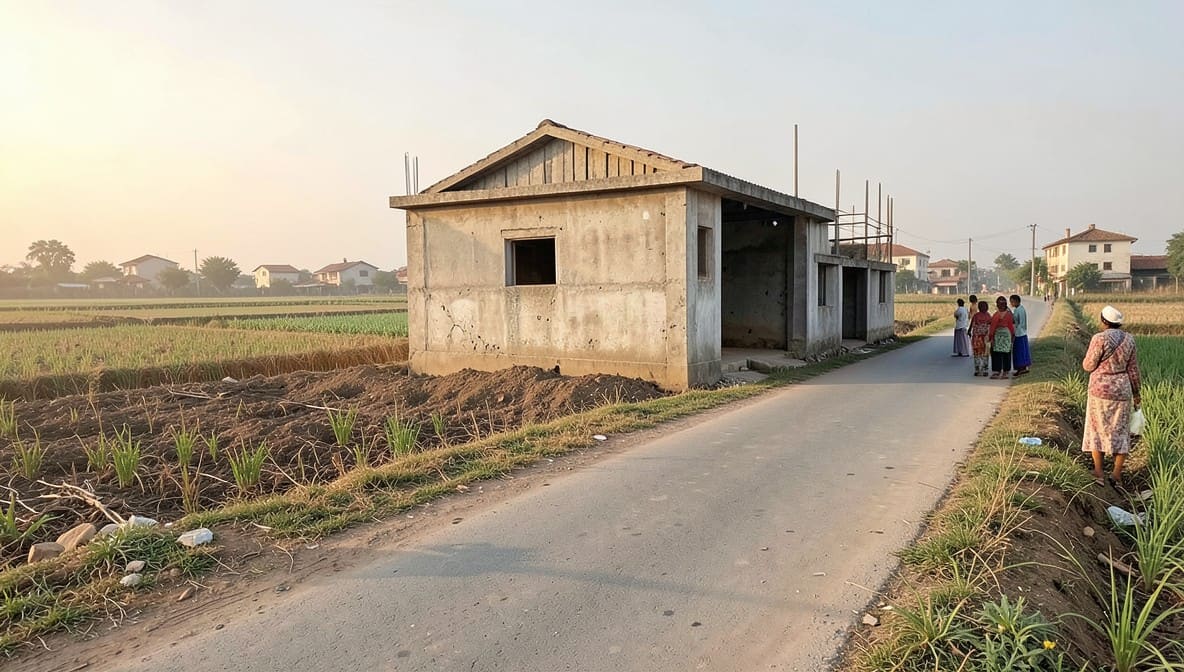
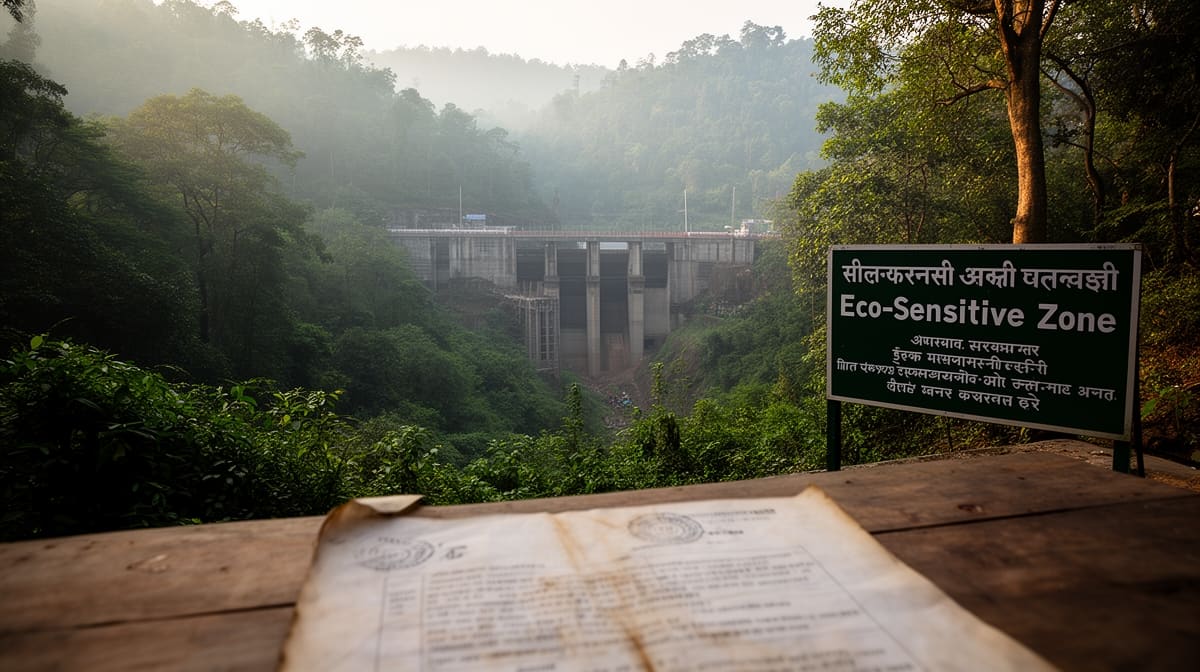
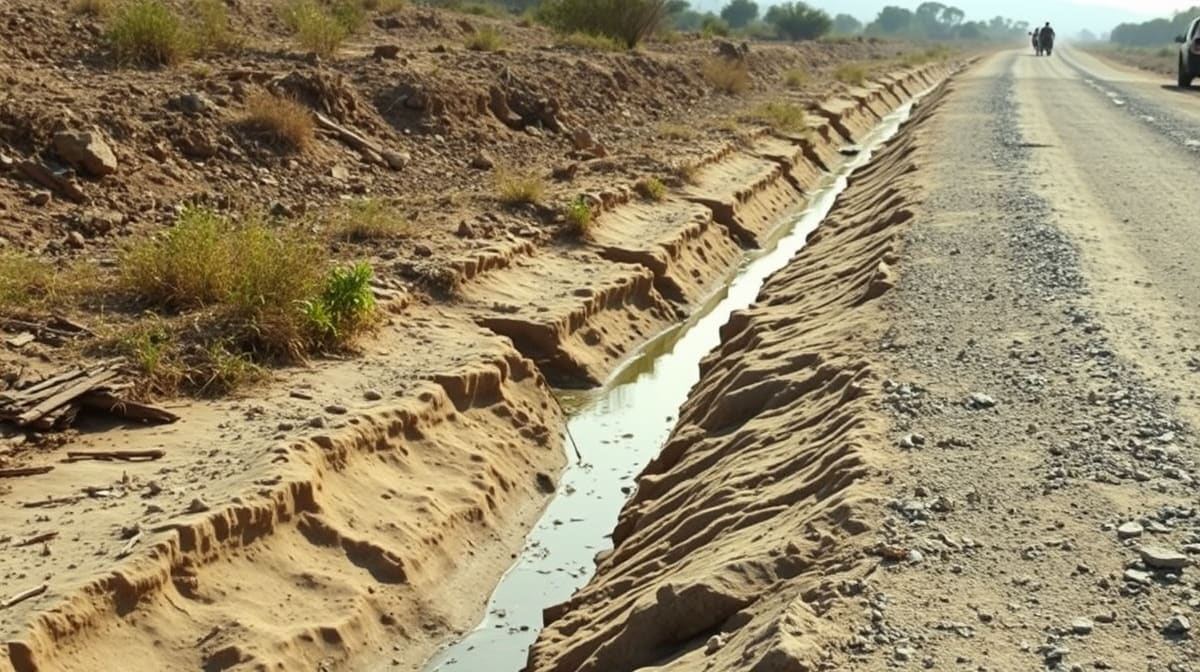
The petitioners, residents of Village Shop, Tonk District, challenged the allotment of 0.15 hectares of land (Khasra No. 2872) for the construction of a Government Ayurved Hospital. They contended that the land forms part of the Gomati Talab catchment area, drainage system, and grazing land, and that its allotment would disrupt the local ecology.
Procedural History
- August 2025: The State Government allotted the land for the Ayurved Hospital.
- 2026: The petitioners filed Civil Writ Petition No. 893/2026 before the Rajasthan High Court, seeking:
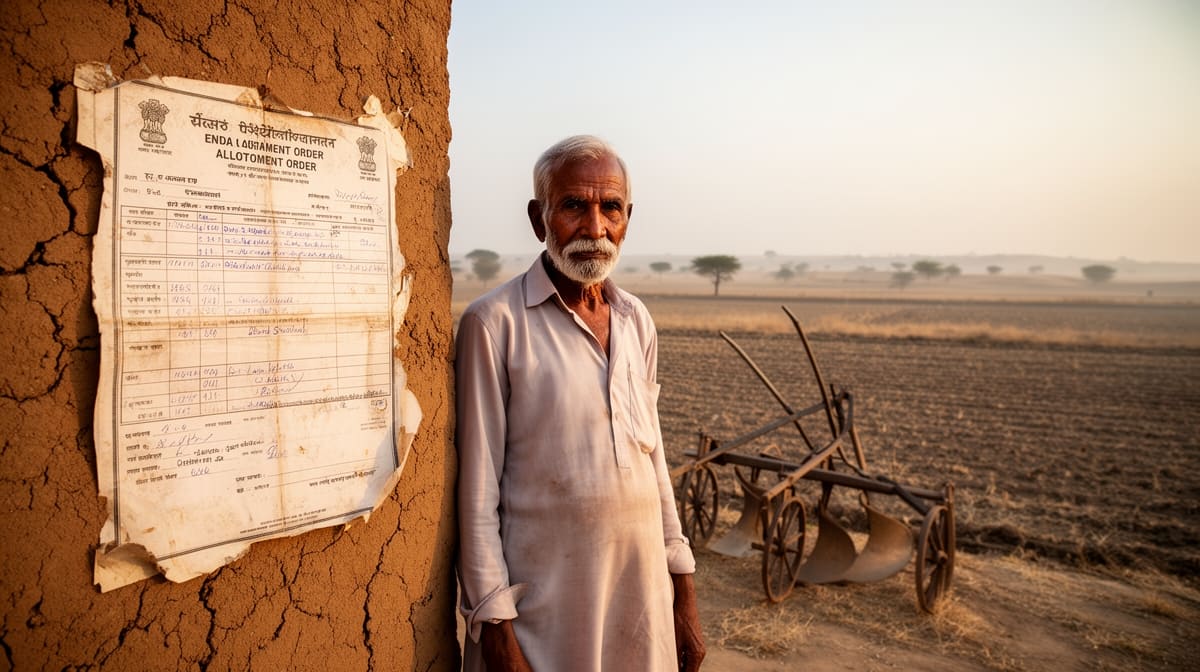
- Quashing of the allotment order dated 18.08.2025.
- Directions to preserve the natural flow, catchment area, and drainage system of Gomati Talab.
- Alternative land allotment for the hospital, considering Gram Panchayat resolution, environmental feasibility, and public interest.
The Parties' Positions
The petitioners argued that the allotment was illegal and arbitrary, violating environmental norms and local ecological balance. The respondents, represented by the Additional Advocate General (AAG), contended that the allotment was lawful and served a public purpose.
The Legal Issue
The central question before the Court was whether the petitioners had established a prima facie case to challenge the land allotment on grounds of:
- Ecological sensitivity of the land in question.
- Violation of environmental norms in the allotment process.
- Arbitrariness in the administrative decision.
Arguments Presented
For the Petitioners
The petitioners relied on:
- Environmental Protection Act, 1986 and related regulations, arguing that the land was part of a catchment area and grazing land.
- Public Trust Doctrine, contending that the State holds natural resources in trust for the public and cannot alienate them without due consideration of ecological impact.
- Gram Panchayat resolutions, asserting that local governance had not been adequately consulted.
For the Respondents
The State, through the AAG, argued:
- The allotment was made for a public purpose (construction of an Ayurved Hospital) and was lawful.
- The petitioners failed to produce cogent evidence proving the land was ecologically sensitive or part of a protected area.
- The administrative decision was not arbitrary, as it followed due process.
The Court's Analysis
The Court observed that while environmental concerns are legitimate and important, they must be substantiated with tangible evidence. Key aspects of the Court's reasoning included:
-
Burden of Proof:
"Learned counsel for the petitioners is unable to point out from the record or produce any material to show that the land bearing Khasra No. 2872... forms part of any water flow, catchment area, drainage system, or that it is otherwise protected as pond/grazing land or ecologically sensitive area."
The Court emphasized that mere assertions without documentary or scientific evidence cannot invalidate an administrative decision.
-
Public Purpose vs. Environmental Concerns: The Court acknowledged that public projects must balance development with environmental protection. However, in the absence of evidence demonstrating ecological harm, the allotment for a Government Ayurved Hospital was deemed a valid public purpose.
-
Judicial Restraint: The Court reiterated the principle of judicial restraint in administrative matters, holding that interference is warranted only when illegality or arbitrariness is clearly established.
The Verdict
The Rajasthan High Court dismissed the writ petition, holding that:
- The petitioners failed to establish that the land was ecologically sensitive or protected.
- The allotment for the Government Ayurved Hospital was lawful and served a public purpose.
- No cogent material was produced to substantiate the claim of illegality or arbitrariness.
What This Means For Similar Cases
Evidence Is Paramount in Environmental Challenges
- Practitioners must substantiate environmental claims with scientific or documentary evidence (e.g., ecological surveys, land records, expert opinions).
- Mere assertions about ecological sensitivity, without proof, are insufficient to challenge administrative decisions.
Public Purpose Trumps Unsubstantiated Claims
- Courts are likely to uphold land allotments for public projects (e.g., hospitals, schools) unless clear evidence of ecological or legal violations is presented.
- The burden of proof lies on the petitioner to demonstrate arbitrariness or illegality.
Gram Panchayat Resolutions Alone Are Not Conclusive
- While local governance resolutions are relevant, they must be corroborated with evidence to challenge State decisions.
- Petitioners should combine Gram Panchayat resolutions with technical reports or land records to strengthen their case.