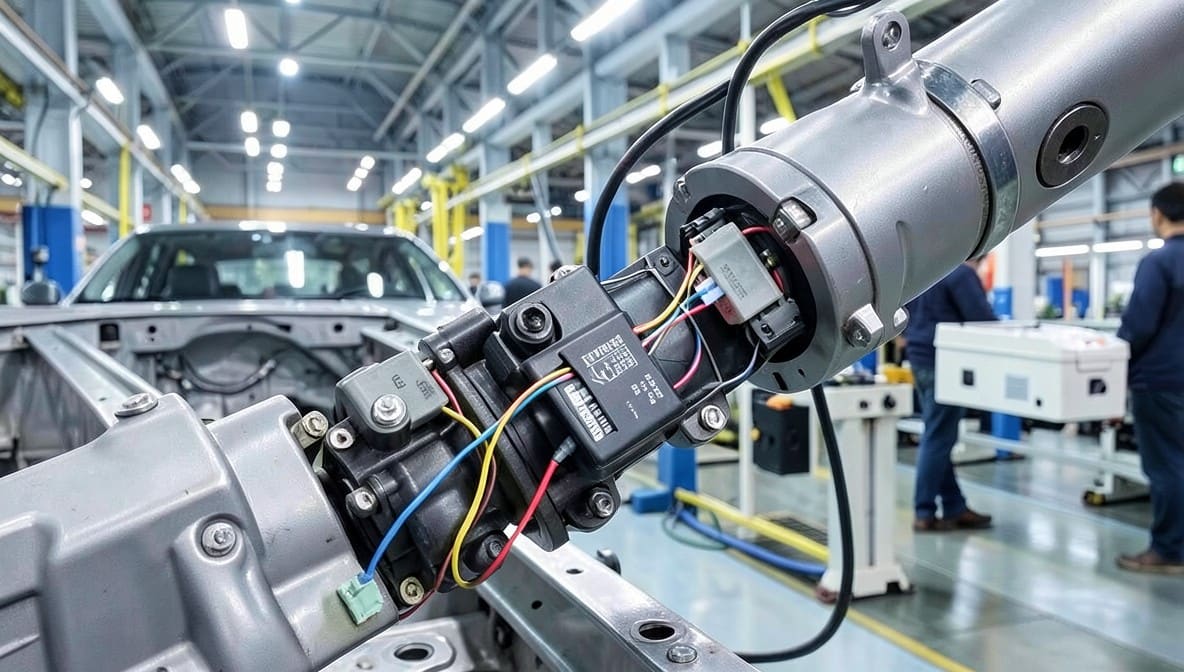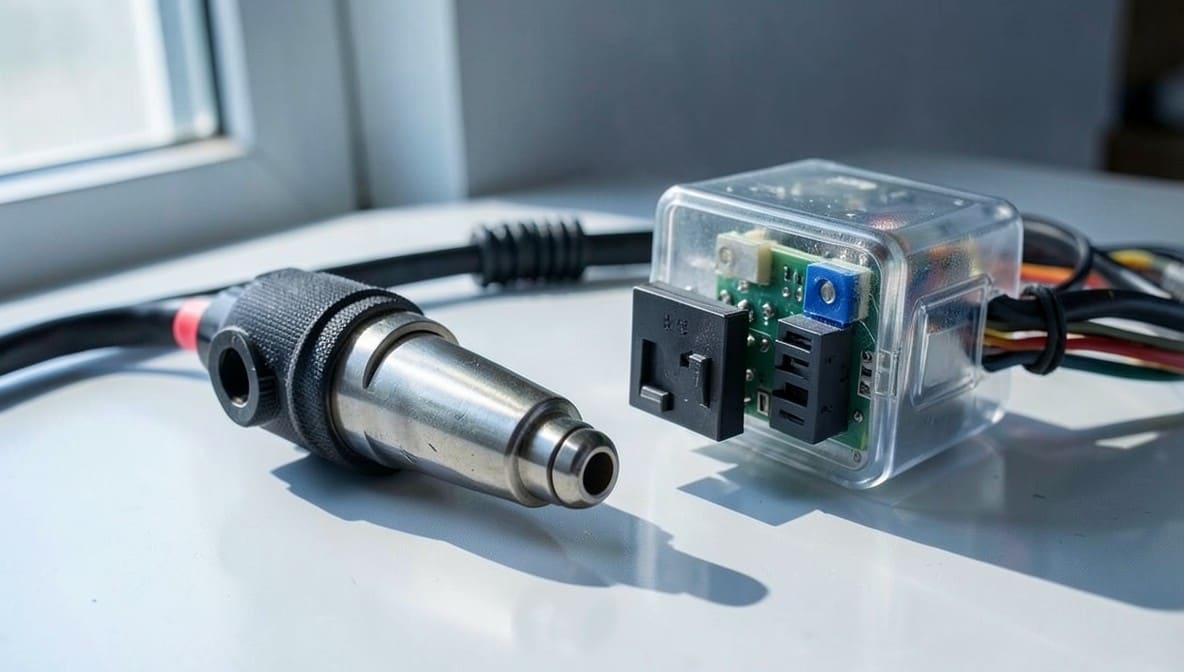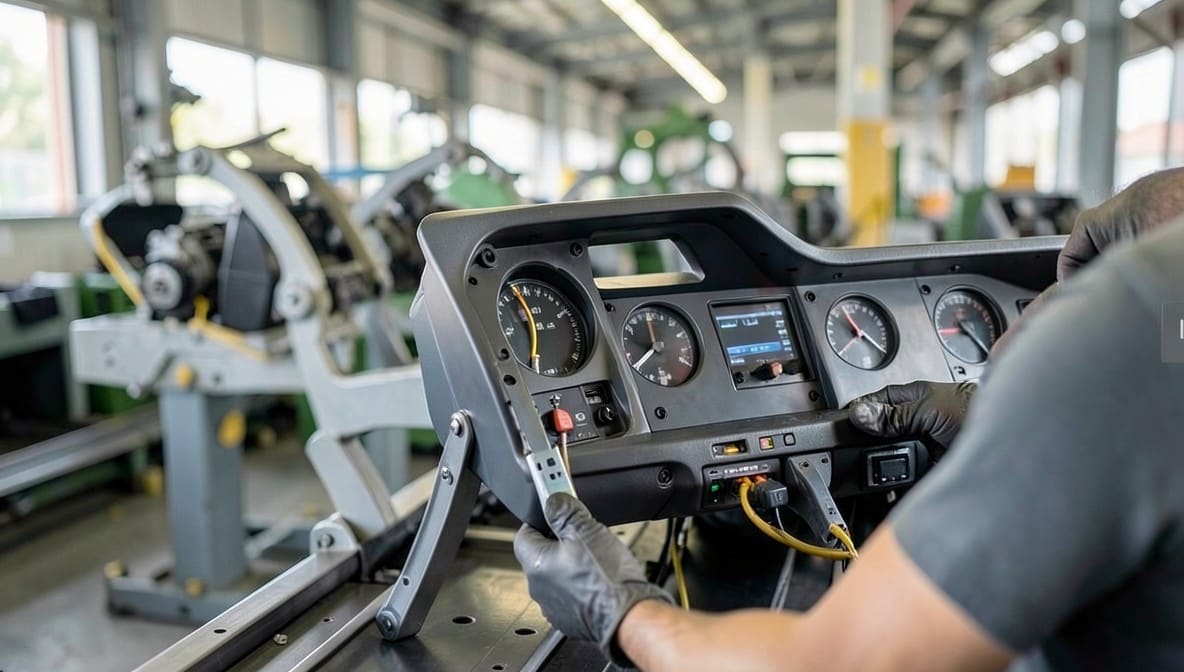
The Chennai Customs Appellate Tribunal clarified that automotive electronic control units such as Body Control Modules (BCM), Integrated Body Units (IBU) and Tyre Pressure Monitoring Systems (TPMS) qualify as "automatic regulating or controlling apparatus" under Chapter 90 heading 9032, overturning a revenue classification under heading 8708 and setting aside a substantial duty demand.
Background & Facts
The Dispute
The appellant, M/s. Mobis India Ltd., imported three categories of automotive electronic components - "Unit Assy - BCM", "Unit Assy - I.B.U." and "Tyre Pressure Monitor System (T.P.M.S.)" - under Bills of Entry that classified them under CTH 9032 8910. The importer claimed concessional duty under Notification No. 152/2009 and Notification No. 50/2017 and paid the applicable IGST.
Key Facts
- Import classification claimed: CTH 9032 8910 (automatic regulating or controlling apparatus).
- Concessional duty claimed: under Notification No. 152/2009 (0% BCD) and Notification No. 50/2017 (7.5% BCD).
- Show Cause Notice (SCN): dated 01.09.2021, demanding differential customs duty of Rs.1,22,76,931 with interest and proposing confiscation and penalty.
- Impugned order (28.09.2024): re-classified the goods under CTH 8708 9900, upheld the duty demand, but dropped the penalty under Section 112(a) of the Customs Act, 1962.
- Prior CESTAT order (07.08.2025, Final Order No. 40800/2025): held that similar ECUs are classifiable under heading 9032.
- Assistant Commissioner order (29.07.2025): classified an Airbag Control Unit (similar to BCM/IBU) under CTH 9032 8990 and dropped duty demand.
- Functional description (impugned order, para 28): BCM is an embedded system that controls load drivers, coordinates vehicle electronics, processes sensor inputs and issues control signals without human interface.
Procedural History
- 28.09.2024: Order in Original No. 3023/2024 passed by the Principal Commissioner of Customs, Chennai VII (impugned order).
- 01.09.2021: Show Cause Notice issued demanding differential duty.
- 07.08.2025: Final Order No. 40800/2025 by Chennai Bench of CESTAT in appellant’s own case, classifying the goods under heading 9032.
- 29.07.2025: Assistant Commissioner order classifying Airbag Control Unit under heading 9032 8990.
- 26.02.2026: Hearing of the appeal before the Appellate Tribunal, Chennai.
- 11.08.2026: Date of Decision (present judgment).
Parties' Positions
- Appellant (Mobis India Ltd.): Asserted that BCM, IBU and TPMS are automatic regulating apparatuses under heading 9032, relying on the CESTAT order, the Assistant Commissioner’s classification, and technical notes (Note 2(g) to Section XVII, Note 7(b) to Chapter 90). Requested that the impugned order be set aside.
- Respondent (Commissioner of Customs, Chennai VII): Contended that the goods are merely programmable controllers or communication hubs, better placed under heading 8537 or 8708 9900, and that the appellant’s claim of concessional duty was misplaced.
Relief Sought
The appellant prayed that the impugned order be set aside, the classification under heading 9032 8910 be affirmed, and the demand for differential duty with interest be vacated. The tribunal was also asked to grant any consequential relief as per law.
The Legal Issue
What is the correct customs tariff classification of the imported automotive electronic components - Body Control Module, Integrated Body Unit and Tyre Pressure Monitoring System - : are they "automatic regulating or controlling apparatus" under Chapter 90 heading 9032 8910, or "parts and accessories of motor vehicles" under Chapter 87 heading 8708 9900?
Arguments Presented
For the Appellant
- The appellant relied on the CESTAT Final Order No. 40800/2025 (07.08.2025) which expressly classified similar ECUs under heading 9032.
- Cited the Assistant Commissioner’s order (29.07.2025) that placed an Airbag Control Unit - functionally analogous to BCM/IBU - under heading 9032 8990.
- Emphasised that Note 2(g) to Section XVII of the Customs Tariff excludes regulating apparatus of Chapter 90 from heading 8708, mandating classification under 9032.
- Highlighted that the goods perform continuous measurement and automatic regulation of vehicle functions, satisfying Note 7(b) to Chapter 90.
- Asserted that the Department’s reliance on Continental Automotive Systems India Pvt. Ltd. v. Commissioner of Customs (2024) was misplaced because that case dealt with PCB-type devices, not ECUs.
For the Respondent
- Argued that BCM/IBU function merely as communication hubs, executing pre-programmed instructions without autonomous regulation, thus fitting the description of programmable controllers under heading 8537.
- Relied on the HSN Explanatory Notes that classify such devices as “programmable controllers” and not “automatic regulators”.
- Cited international rulings (US CBP, EU BTI) that place similar automotive ECUs under heading 8537.
- Maintained that the Department’s classification under heading 8708 9900 was based on the end-use of the goods in motor vehicles, a permissible criterion under the tariff.
The Court's Analysis
The Tribunal began by identifying the statutory framework governing tariff classification: the Customs Tariff (CTH), the General Interpretative Rules (GIR), and the Chapter Notes. It noted that Note 2(g) to Section XVII expressly excludes “automatic regulating or controlling apparatus” of Chapter 90 from being classified under Chapter 87. The Tribunal therefore examined whether the imported items satisfy the definition of “automatic regulating or controlling apparatus” under Heading 9032.
"The impugned products do not control various types of machines. It controls various features of the car… The impugned items compare inputs with the desired level and give out-put signals… This is a continuous one… The role of the impugned item as a regulatory one is beyond doubt."
The Tribunal evaluated the functional description provided in the impugned order (para 28) and the appellant’s submissions. It found that the BCM and IBU:
- Continuously monitor vehicle parameters (e.g., door status, lighting, power distribution).
- Compare sensor inputs with preset values and automatically issue control commands to actuators.
- Operate without human intervention once programmed, thereby maintaining variables at desired levels. These characteristics align with Note 7(b) to Chapter 90, which requires continuous measurement and regulation of variables.
The Tribunal distinguished the respondent’s reliance on Continental Automotive by observing that the latter dealt with printed circuit boards that merely processed data, whereas the present goods perform autonomous regulation. It also rejected the respondent’s citation of international rulings, noting that the Indian tariff’s internal hierarchy (GIR 3(a) and 3(c)) gives precedence to a specific heading over a general one when the goods fall within the specific description.
The burden of proof, as reiterated from HPL Chemicals Ltd. v. Commissioner of Central Excise (2006), rests on the revenue. The Department had not produced independent technical evidence to demonstrate that the goods lack the regulatory function required for heading 9032. Consequently, the Tribunal held that the Department failed to discharge its evidentiary burden.
Applying the above principles, the Tribunal concluded that the classification under CTH 9032 8910 is correct. Accordingly, the demand for differential duty of Rs.1,22,76,931 with interest is unsustainable and is set aside. The penalty under Section 112(a) of the Customs Act, already dropped by the impugned order, remains omitted.
The Verdict
The appeal is allowed. The Tribunal sets aside the impugned order dated 28 September 2024, affirms the classification of the imported Body Control Module, Integrated Body Unit and Tyre Pressure Monitoring System under CTH 9032 8910, and vacates the demand for differential customs duty of Rs.1,22,76,931 with interest. The appellant is eligible for any consequential relief as per law.
What This Means For Similar Cases
Burden of Proof Lies With Revenue
- The Department must produce independent technical evidence to rebut an assessee’s classification claim.
- Absence of such evidence leads to acceptance of the assessee’s classification under the specific heading.
Prior CESTAT Orders Carry Persuasive Weight
- Earlier CESTAT decisions on analogous goods (e.g., Final Order No. 40800/2025) can be decisive when the functional description matches.
- Courts will give effect to such precedents unless clearly distinguishable.
Functional Description Trumps End-Use Argument
- Classification must be based on the nature and function of the goods, not merely their end-use in a vehicle.
- Detailed technical explanations, like those in para 28 of the impugned order, are essential for establishing regulatory function.
Practical takeaways:
- Prepare comprehensive functional dossiers when claiming classification under heading 9032.
- Anticipate revenue’s challenge on the basis of end-use and be ready with GIR and Chapter Note citations.
- Cite relevant CESTAT orders and Assistant Commissioner rulings to strengthen the position.