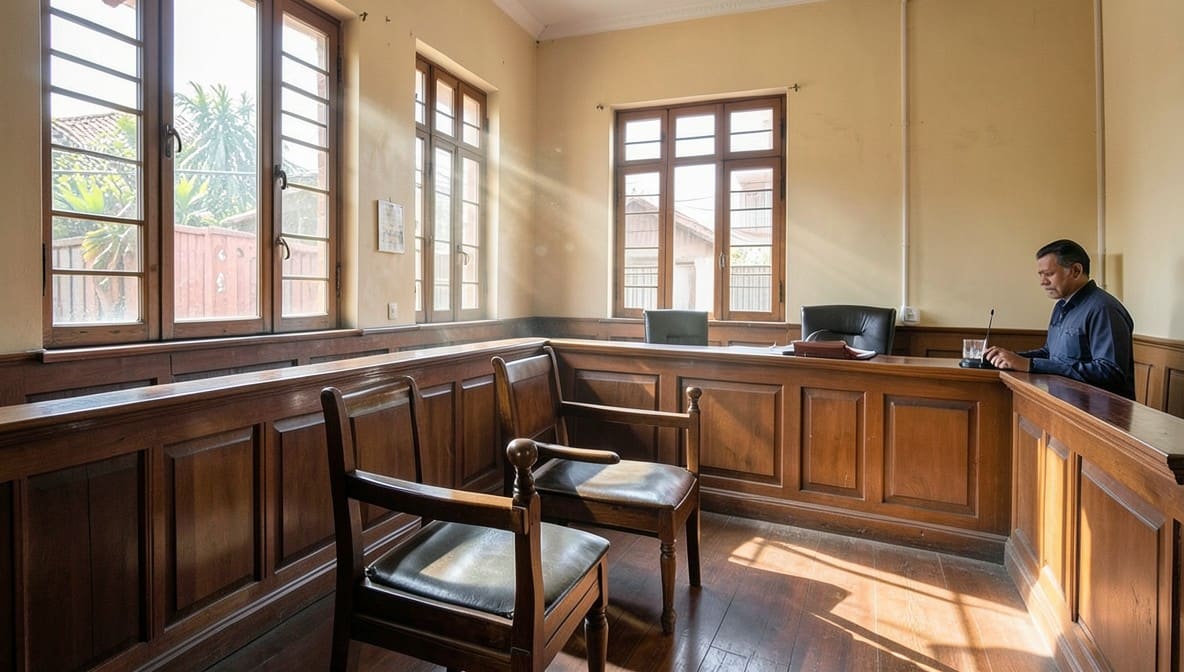
The Kerala High Court has affirmed that pre-trial detention for minor contraband offenses must be justified by investigative necessity, not mere possession. In granting bail to two accused found with 40 litres of Indian Made Foreign Liquor, the Court underscored that absence of criminal antecedents and lack of intent to sell are material factors in assessing the necessity of custody.
Background & Facts
The Dispute
The petitioners, Basheer (aged 39) and Rajesh (aged 28), both residents of Anamooli, Mannarkkad, Palakkad, were arrested on 31.03.2026 for possession of 40 litres of Indian Made Foreign Liquor (IMFL) while traveling on a motorbike on a public road. The contraband was seized at the time of arrest under the Kerala Abkari Act. The petitioners were remanded to judicial custody on the same day.
Key Facts
- The alleged offense occurred on 31.03.2026 at 9:30 a.m. at a public road in Palakkad district
- The petitioners were apprehended by Agali Police Station, Crime No. 145/2026
- The quantity of IMFL seized was 40 litres
- The petitioners claimed the liquor was intended for personal consumption during a housewarming celebration
- No evidence was presented to establish intent to sell or distribute
- The petitioners have no prior criminal record, as confirmed by the Public Prosecutor
- The petitioners have been in custody since 31.03.2026, amounting to 17 days at the time of the bail hearing
Procedural History
- 31.03.2026: Arrest and remand to judicial custody
- 04.04.2026: Judicial Magistrate First Class, Attappadi, rejected the initial bail application in CRMP No. 1/2026
- 17.04.2026: Bail application filed before the High Court of Kerala, Ernakulam
Relief Sought
The petitioners sought bail on the grounds that: (1) the offense is non-violent and non-commercial; (2) they have no criminal antecedents; (3) their continued detention serves no investigative purpose; and (4) the period of custody already served is sufficient to satisfy procedural requirements.
The Legal Issue
The central question was whether continued judicial custody of accused persons possessing a small quantity of contraband for personal use, with no criminal history and no evidence of commercial intent, is justified under Section 439 of the CrPC when the investigation is not materially dependent on their detention.
Arguments Presented
For the Petitioner
The learned counsel, Adv. V.A. Johnson, argued that possession of 40 litres of IMFL, without any evidence of distribution, sale, or prior trafficking, constitutes a minor offense under the Abkari Act. He emphasized that the petitioners’ stated purpose - personal use for a housewarming - is plausible and unchallenged. He cited Arnesh Kumar v. State of Bihar to argue that arrest and prolonged custody must be proportionate to the offense, and that the presumption of innocence requires minimal restraint where no flight risk or tampering risk exists.
For the Respondent
The Public Prosecutor, Sri Renjith George, conceded that the petitioners have no criminal antecedents and that the investigation into the source of the liquor is not dependent on their continued custody. He did not oppose bail but sought standard conditions to ensure compliance with the law.
The Court's Analysis
The Court examined the nature of the offense, the duration of custody, and the absence of any indicia of criminal enterprise. It noted that the quantity of liquor - 40 litres - is not indicative of large-scale trafficking, particularly in the absence of any packaging, invoices, or communication suggesting commercial intent. The Court observed that the petitioners’ detention since 31.03.2026 had already exceeded two weeks, with no indication that their presence in custody was necessary for further investigation, recovery of evidence, or witness protection.
"The prolonged detention of the petitioners, who have no criminal antecedents and whose alleged offense is non-violent and non-commercial, serves no legitimate investigative purpose. The law does not permit incarceration as a default response to minor contraband offenses."
The Court further held that the petitioners’ claim of personal use, while not proven, was not contradicted by any material evidence. In such circumstances, the burden to justify continued custody lies with the State, which has not discharged it. The Court emphasized that bail is the rule and jail the exception, particularly where the offense does not involve violence, organized crime, or risk to public order.
The Verdict
The petitioners succeeded. The Court allowed the bail application and ordered their release on the following conditions: (1) execution of a personal bond of Rs. 1 Lakh with two solvent sureties each for the like amount; (2) no commission of any offense during the bail period; (3) no attempt to influence witnesses or tamper with evidence; (4) no departure from the State of Kerala without prior permission of the jurisdictional court; and (5) the jurisdictional court may cancel bail for breach without reference to this Court. The petitioners shall be released within 24 hours of compliance with the bond conditions.
What This Means For Similar Cases
Personal Use Can Defeat Presumption of Commercial Intent
- Practitioners may now argue that possession of small quantities of contraband (e.g., liquor, tobacco) without packaging, sales records, or prior history does not automatically imply commercial intent
- The burden shifts to the prosecution to prove intent to sell; mere possession is insufficient
- Housewarming, religious, or social occasions may be cited as plausible non-commercial purposes
Pre-Trial Detention Must Be Proportionate and Justified
- Courts must assess whether continued custody serves a concrete investigative need
- Absence of criminal antecedents and minor nature of offense are decisive factors
- Detention beyond 14 - 21 days without a compelling reason may be deemed arbitrary under Article 21
Bail Conditions Should Be Tailored, Not Standardized
- Courts should avoid blanket conditions; restrictions like travel bans must be tied to specific risks
- Conditions must be reasonable and not punitive
- The Court’s directive allowing the trial court to cancel bail for breach without higher court intervention is a procedural efficiency measure that may be replicated in similar cases