The Rajasthan High Court has affirmed that bail cannot be denied in NDPS cases solely on the basis of the nature of the offence when the contraband recovered is demonstrably below the statutory commercial quantity. This decision reinforces the principle that pre-trial detention must be proportionate and not punitive, particularly where the accused has no prior criminal record and the trial is likely to be protracted.
Background & Facts
The Dispute
The petitioner, Prem Kumar S/o Kumbharam, aged approximately 26 years, resident of Bhakhar Khunt, Tehsil Panchpadra, District Barmer, was arrested in connection with an alleged offence under the Narcotic Drugs and Psychotropic Substances Act, 1985. The case originated from an FIR filed at Police Station Pindwara, District Sirohi, on the basis of a seizure operation conducted by the Narcotics Control Bureau.
Key Facts
- FIR No. 173/2026 was registered under Section 8/15 of the NDPS Act
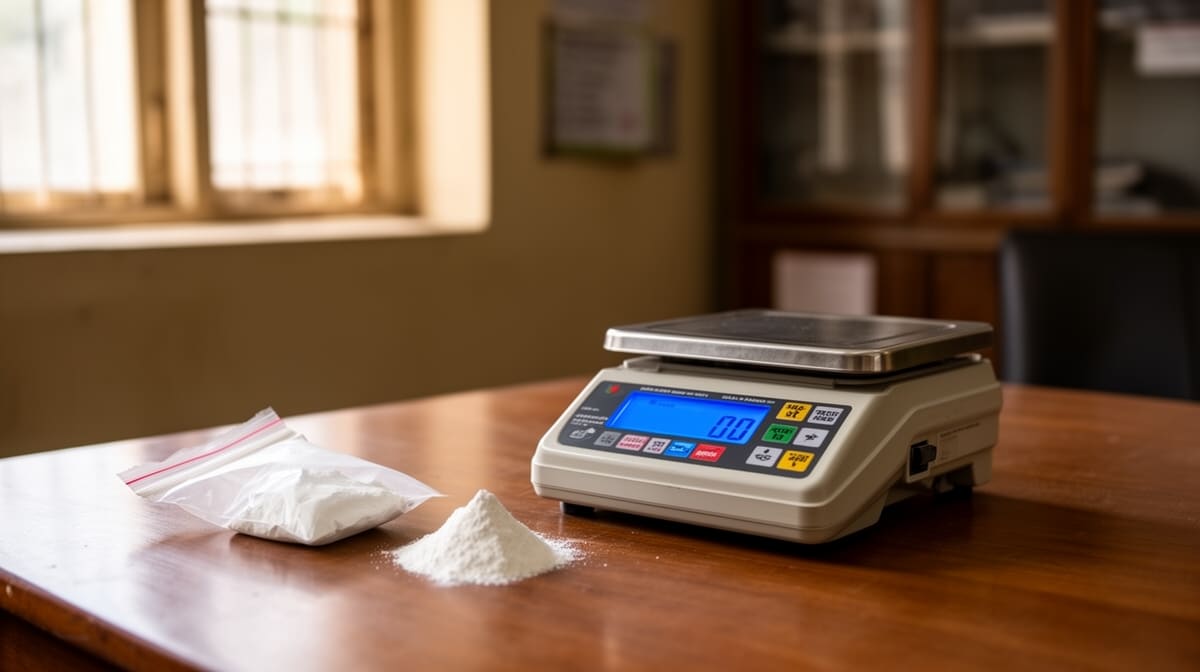
- The contraband recovered was determined by the court to be "well below the demarcated commercial quantity" as defined under the NDPS Act and relevant notifications
- The petitioner has no prior criminal antecedents
- The petitioner was taken into judicial custody on 07.05.2026
- No additional offences were added to the original FIR
- The petitioner has remained in custody since the date of arrest without trial commencing
Procedural History
- 07.05.2026: Arrest and judicial custody ordered
- 25.05.2026: Bail application rejected by the trial court
- 04.06.2026: Criminal Miscellaneous Bail Application No. 7137/2026 filed before the High Court of Judicature for Rajasthan at Jodhpur
Relief Sought
The petitioner sought bail on the grounds that:
- The quantity of contraband recovered is below the threshold for commercial quantity
- He has no criminal history
- He has been in custody since 07.05.2026
- The trial is likely to take a considerable time
- Prolonged detention without trial would violate his right to personal liberty under Article 21 of the Constitution
The Legal Issue
The central question was whether an accused person charged under Section 8/15 of the NDPS Act is entitled to bail when the contraband recovered is well below the statutory commercial quantity, and the trial is likely to be protracted, despite the serious nature of the offence.
Arguments Presented
For the Petitioner
Learned counsel, Mr. Vijay Raj Bishnoi, submitted that:
- The quantity of contraband recovered is not commercial, thereby reducing the gravity of the offence
- The petitioner has no prior criminal record
- He has been in custody for nearly a month without trial commencement
- The delay in trial is inevitable due to judicial backlogs
- Denial of bail under these circumstances amounts to pre-trial punishment, violating Article 21
- Precedents such as Nikesh Tarachand Shah v. Union of India and Sanjay Chandra v. CBI support bail in cases involving non-commercial quantities
For the Respondent
The Public Prosecutor, Mr. Hanuman Prajapati, opposed the bail application on the ground that offences under the NDPS Act are inherently serious and that bail should be granted only in exceptional circumstances, regardless of the quantity recovered.
The Court's Analysis
The Court examined the nature of the offence, the quantity of contraband, and the duration of custody. It emphasized that while the NDPS Act is a stringent statute, its application must be tempered by principles of proportionality and personal liberty.
"It is found that the recovered contraband is well below demarcated commercial quantity; that accused-applicant is in custody since 07.05.2026; that the trial is likely to take its own considerable time, therefore, this Court feels that no useful purpose would be served by keeping the accused-applicant in detention for an indefinite period."
The Court declined to pre-judge the merits of the case, noting that bail is not an acquittal but a procedural safeguard. It held that the combination of non-commercial quantity, absence of criminal history, and prolonged pre-trial detention justified the grant of bail. The Court further observed that the denial of bail in such circumstances would undermine the presumption of innocence and violate the constitutional mandate under Article 21.
The Verdict
The bail application was allowed. The petitioner, Prem Kumar S/o Kumbharam, is granted bail subject to furnishing a personal bond of Rs. 50,000 with two sureties of Rs. 25,000 each, to be approved by the trial court. He must appear before the court on all hearing dates until trial completion. The Court further clarified that any future involvement in a similar offence or misuse of bail will render the bail liable for cancellation upon application by the Public Prosecutor.
What This Means For Similar Cases
Non-Commercial Quantity Triggers Bail Entitlement
- Practitioners must now argue that non-commercial quantity under the NDPS Act is a decisive factor in bail applications, even for offences under Section 8/15
- The burden shifts to the prosecution to demonstrate exceptional circumstances justifying denial of bail when quantity is below threshold
- Courts must conduct a proportionality analysis: custody duration vs. likely sentence
Pre-Trial Detention Must Be Justified
- Prolonged custody without trial commencement, especially beyond 30 days, must be explicitly justified by the prosecution
- Courts are now expected to consider trial delays as a factor in bail decisions, not merely the nature of the offence
- This judgment aligns with Nikesh Tarachand Shah and reinforces that NDPS cases are not per se ineligible for bail
Conditional Bail as Standard Practice
- Personal bonds with sureties remain the norm; courts are unlikely to impose excessive financial conditions
- Conditions must be reasonable and enforceable by the trial court
- Cancellation clauses for future misconduct are now standard and should be included in all bail orders under NDPS