Topic

proportionality

Proportionality in Indian law requires that state actions or penalties must be balanced, necessary, and not excessive in relation to their objective, especially in administrative, disciplinary, or enforcement contexts.

77 articlesLatest 1 hour ago
Proportionality Bars Blanket Bank Account Freeze Where Only Fraction Linked to Fraud & Holder Not Named Accused : Calcutta HC
Case Law Analysis
|Calcutta High Court

Proportionality Bars Blanket Bank Account Freeze Where Only Fraction Linked to Fraud & Holder Not Named Accused : Calcutta HC

Freezing an entire account is disproportionate when only Rs. 89,415 of Rs. 1.75 lakh alleged fraud entered it, the holder wasn't among named fraudsters, and no investigation linked the account to the crime. The ruling protects legitimate account holders from blanket freezes on tenuous police directions and affirms writ jurisdiction where the account and branch are located.


Maharashtra Poisons Rules 18A & 18B struck down as arbitrary | Challenge to methanol poison rules under Arts 14 & 19(1)(g) : SC
Case Law Analysis
|Supreme Court of India

Maharashtra Poisons Rules 18A & 18B struck down as arbitrary | Challenge to methanol poison rules under Arts 14 & 19(1)(g) : SC

The Supreme Court held that Maharashtra Poisons Rules 18A and 18B, which mandated denaturing methanol to curb hooch tragedies, lack a proximate nexus to the objective and impose a disproportionate burden on industries, thus violating Articles 14 and 19(1)(g). The ruling protects chemical manufacturers and traders from arbitrary state regulation while affirming the proportionality test in economic legislation.

Disciplinary Authority Cannot Depart From Inquiry Findings Without Reasons; Chairman's Dual Role as Appellate Authority Violates Natural Justice | IOCL Dismissal Set Aside : Delhi HC
Case Law Analysis
|Delhi High Court

Disciplinary Authority Cannot Depart From Inquiry Findings Without Reasons; Chairman's Dual Role as Appellate Authority Violates Natural Justice | IOCL Dismissal Set Aside : Delhi HC

The Delhi High Court set aside an IOCL Chief Manager's dismissal, holding that the disciplinary authority cannot adopt findings more adverse than the inquiry officer's without reasons and a hearing. The Chairman's dual role as disciplinary and appellate authority violated natural justice, and the penalty was grossly disproportionate to the proven misconduct of backdating and shared negligence.

Service Confirmation | Prolonged Service Without Misconduct Entitles Cooperative Bank Employees to Regularization: Allahabad HC
Case Law Analysis
|Allahabad High Court

Service Confirmation | Prolonged Service Without Misconduct Entitles Cooperative Bank Employees to Regularization: Allahabad HC

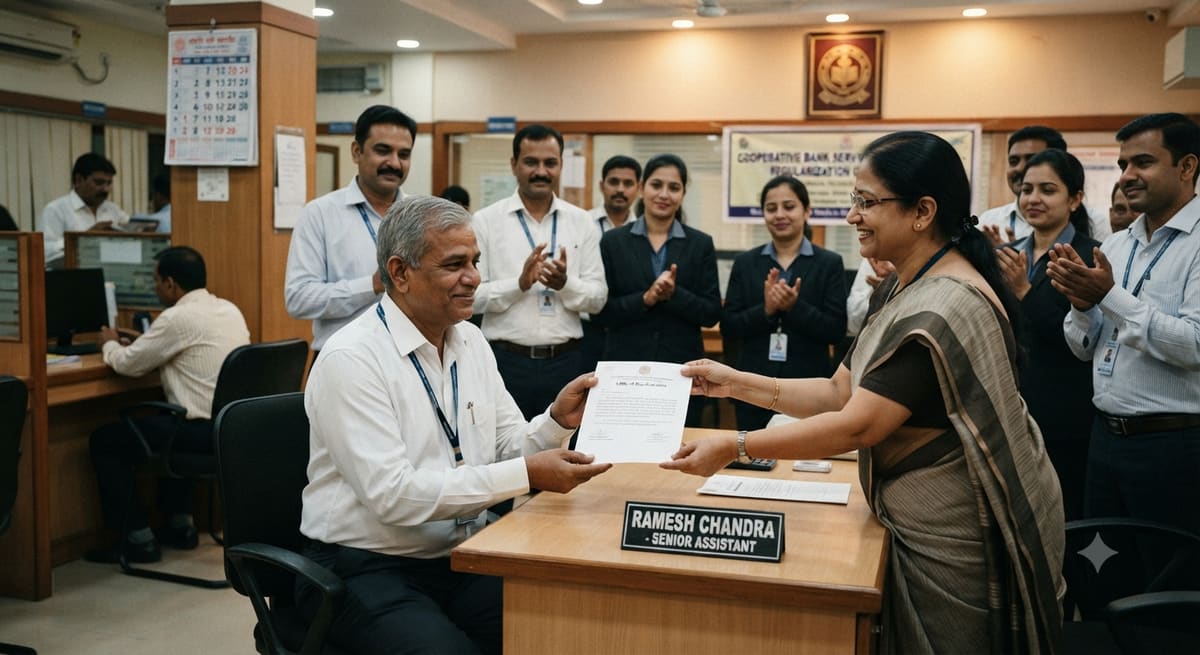
The Allahabad High Court has ruled that employees of cooperative banks who have served for over a decade without any proven misconduct cannot be denied confirmation solely due to unrelated administrative investigations. This reinforces the doctrine of proportionality and natural justice in service law, setting a critical precedent for thousands of contractual and temporary staff in cooperative financial institutions across Uttar Pradesh.

Compassionate Appointment | Failure in CPC T Exam Requires Alternative Class III/IV Posting, Not Termination : MP HC Jabalpur
Case Law Analysis
|Madhya Pradesh High Court

Compassionate Appointment | Failure in CPC T Exam Requires Alternative Class III/IV Posting, Not Termination : MP HC Jabalpur

The Madhya Pradesh High Court has ruled that terminating a compassionate appointee for failing the CPC T exam violates proportionality and legitimate expectation. Authorities must explore suitable alternative Class III or IV posts where such certification is not mandatory, ensuring compassionate appointments retain their humanitarian purpose without punitive rigidity.

Proportionality in Disciplinary Action | Bombay HC Reduces Dismissal to Lesser Penalty for Minor Misconduct Under Maharashtra Universities Act
Case Law Analysis
|Bombay High Court

Proportionality in Disciplinary Action | Bombay HC Reduces Dismissal to Lesser Penalty for Minor Misconduct Under Maharashtra Universities Act

Bombay High Court ruled that dismissal from service for misconduct must be proportionate to the offence, considering the employee's service record and statutory principles. The Court set aside a dismissal order, emphasizing that minor misconduct-such as verbal altercations-does not warrant termination, especially where no financial or institutional harm was proven.

Inadvertent Alteration & Proportionality | Penalty Imposed But Seal Must Be Removed Pending Compounding: MP HC Gwalior
Case Law Analysis
|Madhya Pradesh High Court

Inadvertent Alteration & Proportionality | Penalty Imposed But Seal Must Be Removed Pending Compounding: MP HC Gwalior

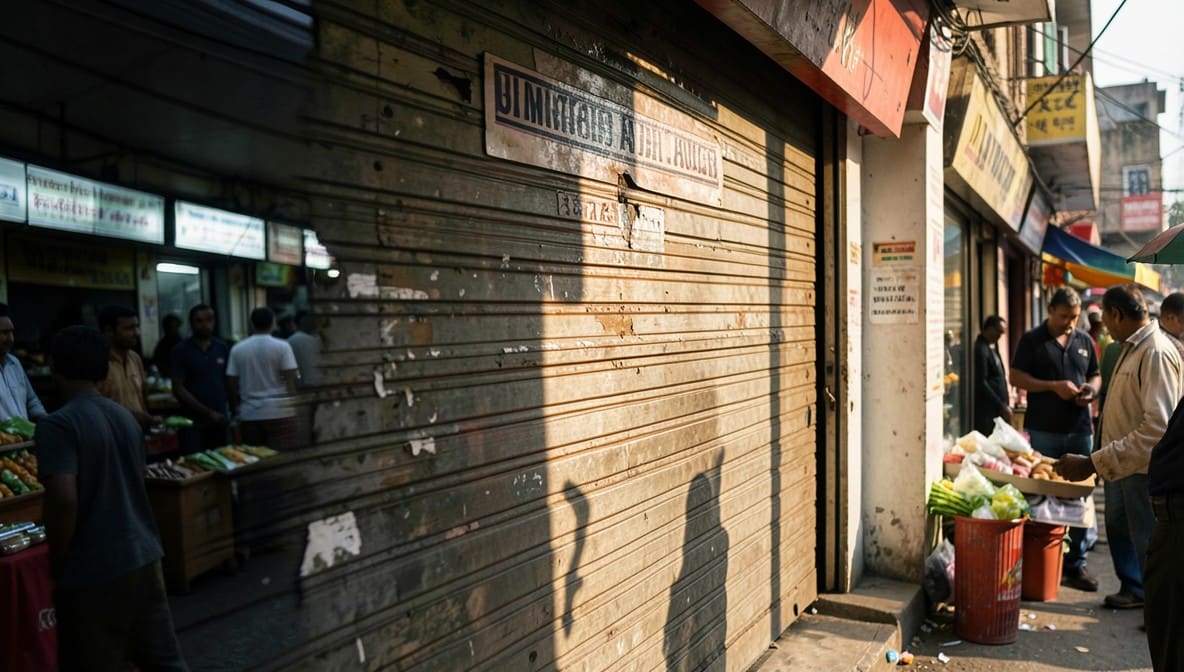
The Madhya Pradesh High Court ruled that an inadvertent, bona fide shop alteration by a lessee does not bar compounding of the violation - while the penalty must be paid, the municipal seal must be lifted immediately to restore livelihood rights. This affirms that administrative penalties must yield to the constitutional right to trade when no malice or intent to evade law exists, setting a critical precedent for small traders facing rigid municipal enforcement.

Bank Guarantee Imposed for Vehicle Release Violates Proportionality Doctrine | Rajasthan HC Quashes Rs.20 Lakh Condition Under Forest Act
Case Law Analysis
|Rajasthan High Court

Bank Guarantee Imposed for Vehicle Release Violates Proportionality Doctrine | Rajasthan HC Quashes Rs.20 Lakh Condition Under Forest Act

The Rajasthan High Court struck down a Rs.20 lakh bank guarantee as an excessive and disproportionate condition for releasing a seized vehicle in a forest offence case, aligning with the Supreme Court’s precedent in Sunder Bhai Ambalal Desai. This ruling protects property rights of innocent owners and curbs arbitrary financial demands by authorities in non-commercial regulatory offences.

Anticipatory Bail | Daily Police Attendance Imposed in Mutual Property Dispute FIRs Violates Proportionality: Karnataka HC
Case Law Analysis
|Karnataka High Court

Anticipatory Bail | Daily Police Attendance Imposed in Mutual Property Dispute FIRs Violates Proportionality: Karnataka HC

The Karnataka High Court struck down the condition requiring daily police attendance for accused in mutual property dispute FIRs, ruling it imposes disproportionate hardship on non-criminal agricultural families with no prior antecedents. This sets a critical precedent for tailoring bail conditions to the nature of the dispute and the accused’s social context, not procedural formality.

SARFAESI Act | Farmer Entitled to Installment Repayment Over Land Auction Under Proportionality Principle : Allahabad HC
Case Law Analysis
|Allahabad High Court

SARFAESI Act | Farmer Entitled to Installment Repayment Over Land Auction Under Proportionality Principle : Allahabad HC

The Allahabad High Court has ruled that agricultural loan recovery cannot proceed through forced land auction when the borrower is a small farmer willing to repay in installments, affirming that livelihood protection overrides rigid asset recovery. This sets a critical precedent for banks and recovery officers to apply proportionality and humane discretion under SARFAESI proceedings, especially when the debtor’s primary asset is their means of subsistence.

Pre-Arrest Bail Under BNSS Section 482 | Age 90 and Absence of Overt Act Justify Liberty, While Younger Accused Must Surrender : Kerala HC
Case Law Analysis
|Kerala High Court

Pre-Arrest Bail Under BNSS Section 482 | Age 90 and Absence of Overt Act Justify Liberty, While Younger Accused Must Surrender : Kerala HC

The Kerala High Court granted pre-arrest bail to a 90-year-old accused due to the complete absence of any overt act linking her to the alleged assault, emphasizing proportionality and humane considerations under BNSS Section 482. Meanwhile, the younger co-accused was directed to surrender for interrogation, reinforcing that age and factual detachment from the crime are decisive factors in anticipatory bail - not mere accusation.