The Chhattisgarh High Court has affirmed that possession of a substantial quantity of illicit liquor under Section 34(2) of the Chhattisgarh Excise Act does not automatically disqualify an accused from bail, particularly when there are no prior criminal records and the trial is likely to be protracted. This ruling reinforces the principle that bail is the rule and jail the exception, even in statutory offences with mandatory minimum sentences.
Background & Facts
The Dispute
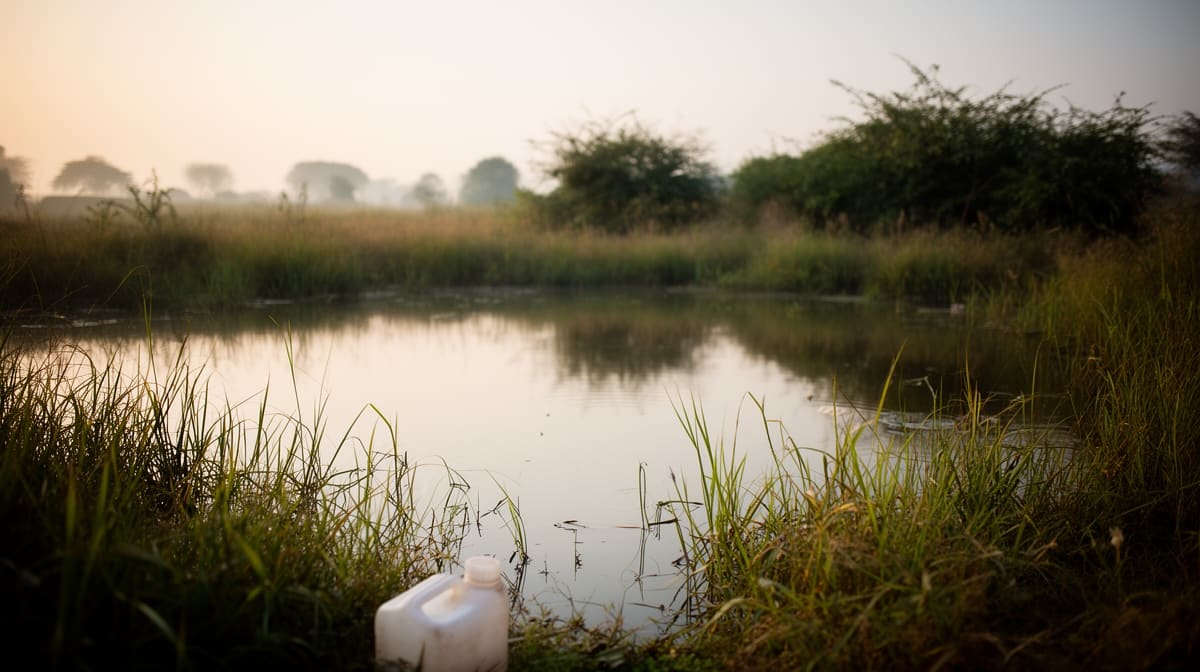
The applicant, Jitendra Kosariya, was arrested in connection with Crime No. 74/2026 registered at Police Station Pithoura, District Mahasamund, Chhattisgarh, for allegedly manufacturing and possessing illicit country-made liquor in violation of Section 34(2) of the Chhattisgarh Excise Act. The prosecution alleges that on 13.03.2026, during a routine patrol, police received secret information about illicit liquor production at the applicant’s residence in Village Lakhagarh. Upon raiding the premises, police recovered two plastic jerrycans, each of 20-liter capacity, containing 10 liters of mahua liquor each, totaling 20 liters of illicit country-made liquor. The applicant was found present at the scene and admitted his identity. No other contraband or equipment for distillation was recovered.
Key Facts
- The applicant is aged 46 years and resides at Village Lakhagarh, Thana Pithoura, District Mahasamund (CG)
- The illicit liquor recovered amounted to 20 liters of mahua-based country-made liquor
- No distillation apparatus, raw materials, or additional quantities were seized
- The applicant has no prior criminal record or pending cases
- The charge-sheet was filed on or before the date of the bail application
- The applicant has been in judicial custody since 13.03.2026
- The offence under Section 34(2) of the CG Excise Act attracts a minimum punishment of one year and maximum of three years
Procedural History
- 13.03.2026: Arrest of applicant following raid and recovery of 20 liters of illicit liquor
- Between 13.03.2026 and 04.05.2026: Applicant remained in custody without bail
- Before 04.05.2026: Charge-sheet filed in Crime No. 74/2026
- 04.05.2026: First bail application filed under Section 483 of the Bharatiya Nagarik Suraksha Sanhita, 2023
Relief Sought
The applicant sought regular bail on the grounds that he has no criminal antecedents, the charge-sheet has been filed, and the trial is likely to take considerable time. He requested release on personal bond with sureties, subject to reasonable conditions to ensure his presence during trial.
The Legal Issue
The central question was whether the mere possession of 20 liters of illicit liquor under Section 34(2) of the Chhattisgarh Excise Act, coupled with a mandatory minimum sentence of one year, justifies denial of bail in the absence of prior criminal history and where the trial is expected to be prolonged.
Arguments Presented
For the Appellant/Petitioner
The applicant’s counsel argued that the applicant is a first-time offender with no criminal antecedents, and the quantity of liquor, while significant, does not indicate large-scale trafficking or organized crime. He emphasized that the charge-sheet has been filed, indicating the investigation is complete and the risk of evidence tampering or witness intimidation is minimal. The counsel further submitted that the applicant has been in custody since 13.03.2026, and with trial likely to extend for months or years, continued detention would violate the principle of presumption of innocence and the right to speedy trial under Article 21 of the Constitution. Reliance was placed on Arnesh Kumar v. State of Bihar to argue that bail should not be denied merely on the basis of the nature of the offence or quantity involved, especially where no prior record exists.
For the Respondent/State
The State counsel conceded that the applicant has no criminal antecedents and that the charge-sheet has been filed. However, the counsel opposed bail on the ground that the quantity of illicit liquor recovered - 20 liters - is substantial and falls squarely within the ambit of Section 34(2), which carries a mandatory minimum sentence. The State contended that offences under the Excise Act are serious due to their impact on public health and revenue, and that granting bail in such cases sets a dangerous precedent.
The Court's Analysis
The Court examined the nature of the offence, the applicant’s personal history, and the procedural posture of the case. It noted that while Section 34(2) prescribes a mandatory minimum sentence, the legislature has not made the offence non-bailable. The Court emphasized that the absence of prior criminal antecedents is a critical factor under the bail jurisprudence laid down in Arnesh Kumar v. State of Bihar and State of Rajasthan v. Balchand. The Court observed that the recovery of 20 liters of liquor, while not trivial, does not suggest commercial-scale production or distribution, as no distillation equipment, packaging materials, or additional quantities were found.
"The fact that the charge-sheet has been filed indicates that the investigation is complete and the risk of tampering with evidence or influencing witnesses is negligible."
The Court further noted that the applicant has been in custody for over 40 days, and given the nature of the case, the trial is unlikely to conclude swiftly. The Court held that prolonged pre-trial detention without a compelling reason to deny liberty is contrary to the constitutional guarantee under Article 21. The Court rejected the State’s argument that the quantity alone justifies denial of bail, stating that such an approach would render the bail provisions under the Bharatiya Nagarik Suraksha Sanhita, 2023, otiose in statutory offences.
The Court also considered the applicant’s personal circumstances, including his age, residence, and lack of any history of non-compliance with law. It concluded that the applicant is not a flight risk and that conditions can be imposed to ensure his presence during trial.
The Verdict
The applicant succeeded. The Court granted regular bail to Jitendra Kosariya on furnishing a personal bond of Rs. 50,000 with two sureties in the like sum. The applicant is directed to comply with four conditions: (i) not seek adjournments when witnesses are present; (ii) appear before the trial court on all dates personally or through counsel; (iii) face consequences under Section 209 of the Bharatiya Nyaya Sanhita if proclamation is issued and he fails to appear; and (iv) personally appear on dates for opening of case, framing of charge, and recording of statement under Section 351 of BNSS. The trial court is directed to treat any deliberate absence as abuse of bail and act accordingly. The order was to be communicated to the trial court forthwith.
What This Means For Similar Cases
Bail Is Not Denied Solely on Quantity of Contraband
- Practitioners must argue that quantity alone, without evidence of commercial scale or prior involvement, cannot justify denial of bail under statutory offences
- Courts must distinguish between personal use, small-scale production, and organized trafficking when assessing risk
- The absence of criminal antecedents remains a decisive factor even in offences with mandatory minimum sentences
Procedural Posture Matters: Charge-Sheet Filing Is Critical
- Once the charge-sheet is filed, the presumption shifts toward liberty, as investigation is complete and risk of evidence tampering diminishes
- Delay in trial is a valid ground for bail under Section 483 BNSS, especially where custody exceeds 30 - 40 days
- Courts must balance public interest with the accused’s right to liberty under Article 21
Conditions Can Replace Custody
- Courts are empowered to impose tailored conditions to ensure trial compliance without resorting to custody
- Conditions such as mandatory personal appearance on key dates and prohibition on seeking adjournments are enforceable and effective
- Non-compliance triggers automatic consequences under BNSS, making bail conditional rather than absolute