The Chennai Regional Bench of the Customs, Excise and Service Tax Appellate Tribunal has clarified a long-standing ambiguity in indirect tax jurisprudence by affirming that CENVAT credit on Countervailing Duty paid at concessional rates on imported goods remains legally admissible, provided the duty is levied under Section 3 of the Customs Tariff Act. This ruling reinforces the principle that statutory eligibility for credit depends on the nature of the duty, not its quantum or rate.
Background & Facts
The Dispute
The dispute centers on whether M/s India Cements Ltd. (the Appellant) was entitled to avail CENVAT credit on Countervailing Duty (CVD) paid at concessional rates of 1% and 2% on imported steam coal during the period from September 2012 to June 2017. The Commissioner of GST and Central Excise, Tiruchirappalli, denied the credit in Order-in-Original No. 33/COMMR/CE/2017 dated 14.12.2017, asserting that concessional CVD was not "equivalent to duty of excise" as required under Rule 3(1)(vii) of the CENVAT Credit Rules, 2004. The Department further confirmed a demand of Rs. 3,63,85,392 for disallowed CENVAT credit, along with interest and penalty of Rs. 2,42,57,680.
Key Facts
- The Appellant is engaged in the manufacture of clinker and cement and is a registered manufacturer under the Central Excise Act, 1944.
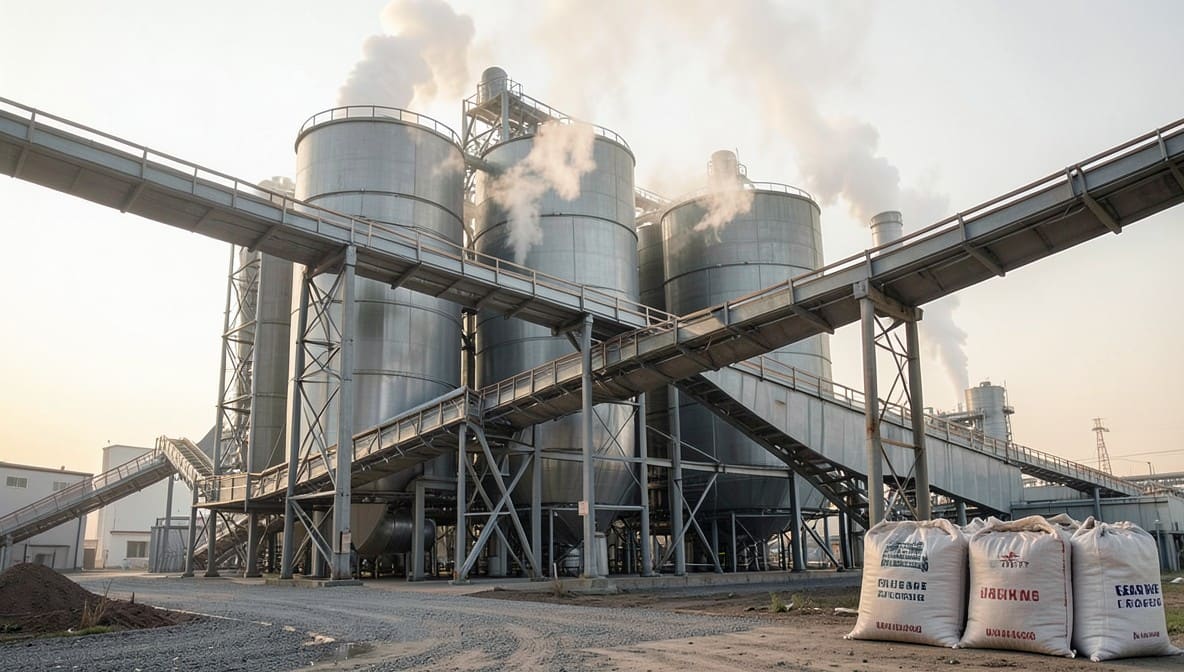
- Steam coal was imported during the period 01.09.2012 to 30.06.2017 for use as fuel in cement kilns.
- CVD was paid on such imports under Notification No. 12/2012-Cus dated 17.03.2012, as amended by Notification No. 12/2013-Cus dated 01.03.2013, which prescribed concessional rates of 1% (up to 28.02.2013) and 2% (thereafter).
- The Appellant claimed CENVAT credit on the CVD paid, as reflected in its monthly returns and accounting records.
- The Department contended that since the concessional rate differed from the standard excise duty rate of 6% on domestically manufactured coal, the CVD was not "equivalent" and thus ineligible for credit.
- The Appellant had disclosed all import details, duty payments, and credit claims in its statutory returns and did not conceal any transaction.
Procedural History
- 01.09.2012 to 30.06.2017: Period of alleged irregular credit availed by the Appellant.
- 14.12.2017: Order-in-Original No. 33/COMMR/CE/2017 issued by Commissioner of GST and Central Excise, Tiruchirappalli, confirming demand of Rs. 3,63,85,392 for CENVAT credit, plus interest and penalty of Rs. 2,42,57,680.
- 19.03.2026: Hearing before the Chennai Regional Bench of CESTAT.
- 17.04.2026: Final Order No. 40499/2026 passed by the Tribunal.
The Parties' Positions
For the Appellant
- Argued that CVD paid under Section 3 of the Customs Tariff Act, regardless of rate, qualifies as "additional duty leviable under Section 3" under Rule 3(1)(vii).
- Emphasized that the statutory text contains no qualification regarding tariff or concessional rates.
- Relied on multiple Tribunal decisions from Chennai, Kolkata, and Calcutta High Court affirming eligibility of credit on concessional CVD.
- Contended that TRU and CBEC circulars cannot override statutory provisions.
- Asserted that the issue is purely interpretational and all facts were disclosed; hence, extended period of limitation and penalty are inapplicable.
For the Respondent
- Maintained that concessional CVD at 1% or 2% is not "equivalent to excise duty" because it does not match the standard excise rate of 6% on domestically manufactured coal.
- Relied on TRU Circular dated 25.03.2011 and CBEC Circular No. 41/2013-Cus to argue that concessional CVD is ineligible for credit.
- Alleged that the Appellant had wrongly availed credit and therefore deserved penalty under Section 11AC of the Central Excise Act, 1944.
- Invoked extended period under Section 11A on grounds of suppression of facts.
Relief Sought
The Appellant sought:
- Setting aside of the impugned Order-in-Original dated 14.12.2017.
- Confirmation of CENVAT credit of Rs. 3,63,85,392 on CVD paid on imported steam coal.
- Cancellation of interest and penalty of Rs. 2,42,57,680.
- Declaration that the extended period of limitation under Section 11A is not invokable.
The Legal Issue
The central question was whether Rule 3(1)(vii) of the CENVAT Credit Rules, 2004 permits CENVAT credit on Countervailing Duty paid at concessional rates under a Customs Notification, or whether the term "equivalent to duty of excise" requires numerical parity with the standard excise duty rate.
Arguments Presented
For the Appellant
The Appellant relied on the statutory language of Rule 3(1)(vii), which permits credit of "additional duty leviable under Section 3 of the Customs Tariff Act" without any qualification as to rate. It argued that the expression "equivalent to duty of excise" refers to the nature of the levy as a customs duty measured by reference to excise duty, not its exact quantum. The Appellant cited binding precedents from Seshasayee Paper and Boards Ltd., Shyam Steel Industries Ltd., Chettinad Cement Corporation Pvt. Ltd., and Hindalco Industries Ltd., all of which held that concessional rates do not negate eligibility. It further relied on Pushpam Pharmaceuticals Co. v. CCE to argue that mere legal interpretation, without suppression, cannot trigger extended limitation or penalty.
For the Respondent
The Respondent contended that the concessional rate of CVD (1% or 2%) was not "equivalent" to the 6% excise duty on domestically manufactured coal, and therefore did not satisfy the statutory condition. It relied on administrative circulars issued by TRU and CBEC to argue that such credits were not intended to be allowed. The Respondent also asserted that the Appellant’s claim was a deliberate misinterpretation warranting penalty under Section 11AC and invocation of the extended period under Section 11A.
The Court's Analysis
The Tribunal undertook a detailed statutory interpretation of Rule 3(1)(vii) and Section 3(1) of the Customs Tariff Act, 1975. It emphasized that while CVD is measured with reference to excise duty, it retains its character as a customs duty. The Court held that the word "equivalent" in the Rule refers to the nature and structure of the levy, not its numerical value.
"The expression 'equivalent to duty of excise' has been judicially interpreted to refer to the measure or yardstick of levy and not to its intrinsic nature. Thus, the levy under Section 3 remains a customs duty, albeit quantified with reference to excise duty."
The Tribunal rejected the Department’s reliance on circulars, noting that administrative instructions cannot override statutory provisions. It observed that the circulars cited did not expressly prohibit credit and were inconsistent with the plain language of the Rule.
The Court further examined the precedents cited by the Appellant and found them to be consistent and binding. In Seshasayee Paper and Boards Ltd., the Tribunal held that denying credit on the basis of rate would amount to reading words into the statute. Similarly, in Chettinad Cement, the Tribunal clarified that restrictions under Excise Notification No. 12/2012 do not apply to imports governed by Customs Notifications.
On the issue of limitation, the Tribunal applied the Supreme Court’s ruling in Pushpam Pharmaceuticals, holding that suppression requires wilful intent to evade duty. Since all transactions were disclosed in returns and the issue was one of legal interpretation, the extended period under Section 11A could not be invoked. The Court also held that penalty under Section 11AC was inapplicable in the absence of fraud or suppression.
"When an issue is subject to differing interpretations and judicial scrutiny, it cannot be said that the assessee has suppressed facts or acted with intent to evade duty."
The Tribunal concluded that the CENVAT scheme’s objective of avoiding cascading taxes would be defeated if credit were denied merely because a concessional rate was applied under a valid Customs Notification.
The Verdict
The Appellant succeeded in full. The Tribunal set aside the impugned Order-in-Original dated 14.12.2017 and allowed the appeal. The CENVAT credit of Rs. 3,63,85,392 on CVD paid on imported steam coal is confirmed. The interest of Rs. 2,42,57,680 and penalty imposed under Rule 15(2) of the CENVAT Credit Rules, 2004, are cancelled. The invocation of the extended period under Section 11A of the Central Excise Act, 1944, is held to be unsustainable. The Appellant is entitled to consequential relief, including refund of any amount already paid, in accordance with law.
What This Means For Similar Cases
Credit Eligibility Is Based on Nature, Not Rate
- Practitioners may now confidently claim CENVAT credit on CVD paid at concessional rates under Customs Notifications, provided the duty is levied under Section 3 of the Customs Tariff Act.
- Any denial of credit on the ground of rate differential is legally untenable and must be challenged on appeal.
- The term "equivalent to duty of excise" must be interpreted as referring to the structure of the levy, not its numerical equivalence.
Extended Period and Penalty Are Not Automatic
- Mere difference in legal interpretation, even if later rejected, does not constitute suppression of facts.
- All disclosures in statutory returns negate the element of wilful intent required for invoking extended limitation under Section 11A.
- Penalty under Section 11AC cannot be imposed unless fraud, collusion, or wilful misstatement is established by evidence.
Circulars Cannot Override Statutes
- TRU and CBEC circulars that conflict with statutory provisions are not binding on taxpayers.
- Taxpayers may rely on judicial precedents even when administrative guidance is contrary.
- Departments must justify denials based on statutory text, not internal instructions.
Strategic Implications for Tax Planning
- Manufacturers importing raw materials with concessional CVD should continue claiming credit, provided documentation is complete.
- Legal opinions should be obtained before accepting departmental denials based on circulars.
- Appeals against similar denials should cite Seshasayee Paper, Chettinad Cement, and Pushpam Pharmaceuticals as binding authority.