The Chhattisgarh High Court has reaffirmed that acquisition of private land without payment of compensation constitutes a violation of Article 300A of the Constitution, reinforcing that due process cannot be reduced to procedural formalities. This judgment underscores the non-negotiable link between lawful acquisition and just compensation, offering immediate relief to affected landowners whose representations remain unaddressed.
Background & Facts
The Dispute
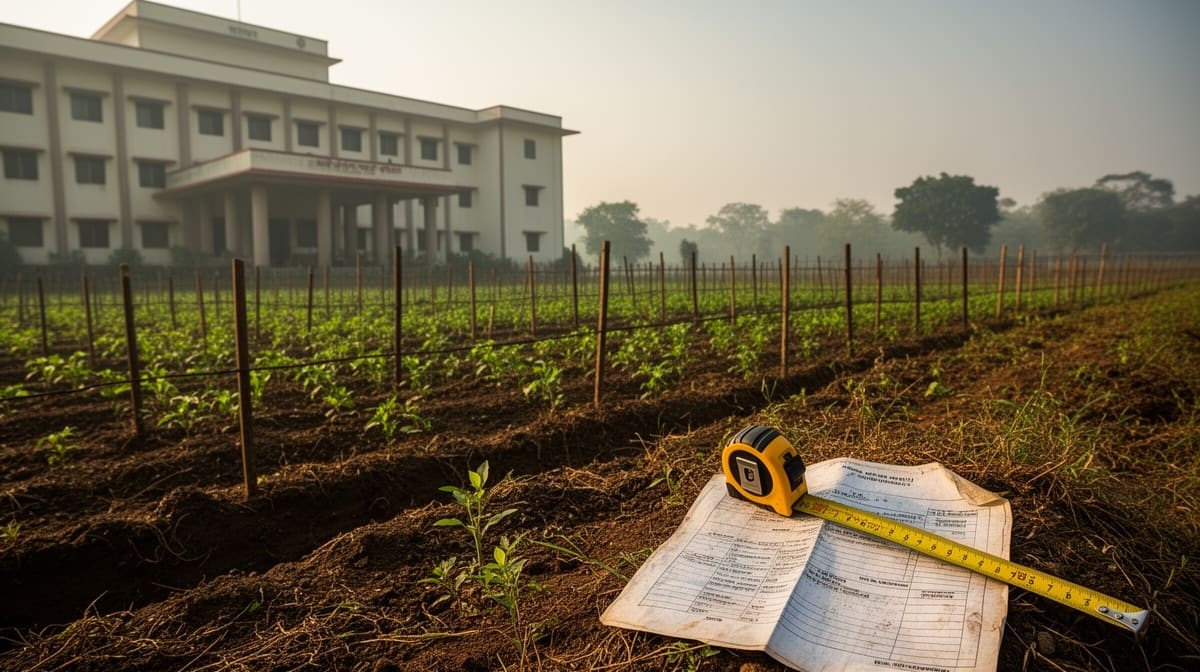
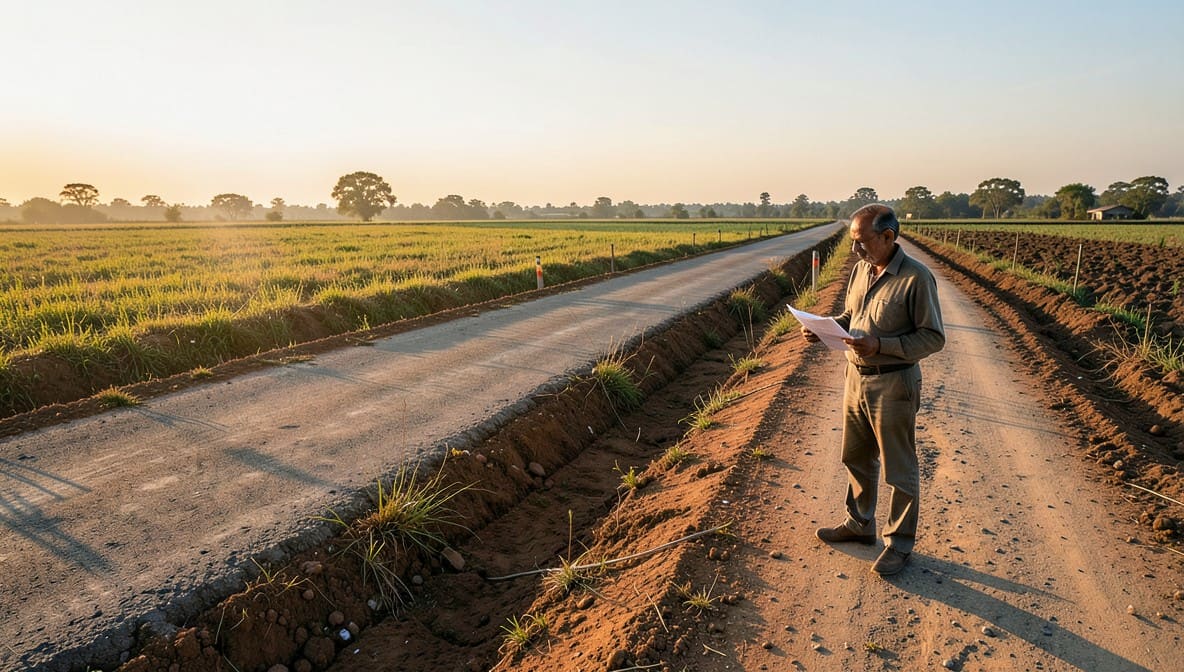
The petitioners, seven landowners from Village Pirhid in District Sakti, Chhattisgarh, allege that their agricultural and residential land was acquired for the construction of the Jaijaipur-Malkharoada-Gobrabhatha road under the Chhattisgarh State Road Development Project (ADB Project). The acquisition was carried out under the Mutual Consent Purchasing Policy, 2016, which permits voluntary sale of land to the state. However, despite the transfer of possession and completion of the road, no compensation or other benefits have been disbursed to the petitioners.
Procedural History
- 2024: Land acquired under Mutual Consent Purchasing Policy, 2016
- May 2025: Petitioners filed a formal representation (Annexure-P/5) before the Collector, District Sakti, demanding payment of compensation and related benefits
- December 2025 to February 2026: No response or decision issued by the Collector
- March 2026: Writ petition filed under Article 226 before the Chhattisgarh High Court
Relief Sought
The petitioners sought a direction to the Collector to decide their pending representation within a stipulated time, asserting that continued inaction violates their constitutional right to property under Article 300A.
The Legal Issue
The central question was whether the state’s acquisition of land under a voluntary policy, followed by prolonged non-payment of compensation, amounts to deprivation of property without due process of law under Article 300A of the Constitution.
Arguments Presented
For the Petitioners
Counsel for the petitioners relied on State of Haryana v. Mukesh Kumar and K. S. Puttaswamy v. Union of India to argue that even voluntary acquisition under policy cannot override constitutional safeguards. They contended that Article 300A mandates that deprivation of property must be accompanied by payment of just compensation, and that administrative delay in deciding representations amounts to constructive denial of rights. The representation filed on 05.05.2025 remained pending for over ten months, rendering the acquisition procedurally defective.
For the Respondent
The State, through its panel lawyer, did not dispute the factual allegations. No counter-affidavit was filed, and the State conceded that the representation remained undecided due to administrative backlog. The State did not contest the constitutional violation but expressed willingness to comply with the Court’s direction.
The Court's Analysis
The Court examined the nature of the Mutual Consent Purchasing Policy, 2016, and held that while the policy frames acquisition as consensual, it does not absolve the state of its constitutional obligation under Article 300A. The Court emphasized that consent cannot be equated with waiver of the right to compensation.
"The fact that land was acquired under a policy labelled 'mutual consent' does not negate the constitutional mandate that no person shall be deprived of his property save by authority of law, and that law must include payment of just compensation."
The Court distinguished this from cases of temporary possession or easement, noting that the land had been permanently utilized for public infrastructure. The prolonged inaction on the representation - over ten months - was deemed unreasonable and violative of the principle of reasonable time in administrative adjudication. The Court further held that the Collector, as the designated authority under the policy, had a statutory and constitutional duty to decide the representation expeditiously.
The Verdict
The petitioners succeeded. The Court held that Article 300A requires compensation to be paid as an integral part of any land acquisition, even under voluntary schemes. The Collector was directed to decide the representation dated 05.05.2025 within 45 days of receiving a copy of the order.
What This Means For Similar Cases
Compensation Is Non-Negotiable Even Under 'Consent' Policies
- Practitioners must now treat any acquisition under state policy - whether labeled 'voluntary' or 'mutual consent' - as subject to Article 300A
- Failure to pay compensation within a reasonable time renders acquisition unconstitutional, regardless of signed agreements
- Landowners can file writ petitions if compensation remains unpaid beyond six months
Administrative Delay Is a Ground for Writ Relief
- Delay in deciding representations exceeding six months constitutes a violation of the right to effective remedy
- Courts will not tolerate passive inaction by revenue authorities in land acquisition matters
- Writ petitions under Article 226 are maintainable even without a final order, if the delay is palpable and prejudicial
Collector’s Duty Is Statutory and Constitutional
- The Collector is not merely an administrative officer but the constitutional custodian of property rights in acquisition matters
- Representation under policy must be treated as a quasi-judicial proceeding with timelines
- Failure to decide within 45 days may attract contempt proceedings or mandatory compensation for delay